This Week at First Nations: September 30, 2022
September 30, 2022
 Apply Now for Funding to Support Native Language Immersion Programs
First Nations is now accepting grant applications to strengthen Native language immersion education programs that preserve Indigenous languages and cultures throughout the U.S. Through our Native Language Immersion Initiative, First Nations will award 6 to 10 grants ranging from $45,000 to $75,000 to Native-controlled nonprofit organizations and tribal government programs actively supporting Native language immersion programs.
Apply here by November 2, 2022. Questions about the application process? Attend the Q&A webinar sessions, October 5 and 20.
The new grant cycle is made possible through funding from the NoVo Foundation, as well as Sunderland Foundation, which recently awarded First Nations a three-year $1.5 million general operating grant in support of First Nations’ programs and projects. Read the press release.
 Community Partners Attend Summit on Instilling the Roots of Indigenous Agriculture
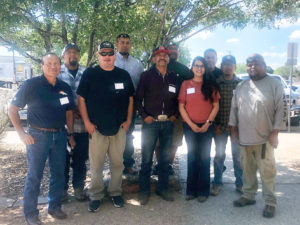
First Nations was honored to help sponsor the Intertribal Agriculture Council Southwest Regional Summit this week at the Indian Pueblo Cultural Center in Albuquerque. First Nations community partners White Mountain Apache Tribe and Pueblo of Jemez attended, along with First Nations Program Officer Leiloni Begaye, who said the event engaged Native agricultural producers in presentations on tribal water initiatives, restoring lands, improving irrigation methods, and more. The sponsorship was provided as part of First Nations’ Increasing Native Producer and Community Access to Quality Water Resources project.
 In Case You Missed It: The September Indian Giver is Out Today
This morning, First Nations distributed the September 2022 issue of our quarterly newsletter Indian Giver. The issue features a profile of one of our 2021 Luce Indigenous Knowledge Fellows, as well as highlights from Community Partners Oneida Nation and YAKANAL, and a Donor Spotlight on Dr. Norbert Goldfield, who is passionate about bringing peace and improved health to the world.
Access the full issue here.
 What We’re Listening to: Working with Tribes to Co-Steward National Parks
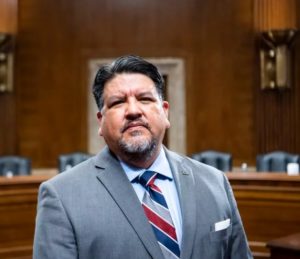
In the final episode of NPR’s Short Wave’s Summer Road Trip series, Charles F. “Chuck” Sams III discusses new guidance from the U.S. Department of the Interior, which outlines how the Bureau of Land Management, National Park Service, and U.S. Fish and Wildlife Service will each facilitate and support agreements with tribes to collaborate in the co-stewardship of federal lands and waters.
In the podcast, Sams, the first Native American director of the National Park Service, discusses how he hopes this will change the way parks are managed, how the parks are already incorporating Traditional Ecological Knowledge, and what national parklands meant to him growing up as a member of the Cayuse and Walla Walla tribes on the Umatilla Indian Reservation in eastern Oregon.
 REMINDER: Funder Opportunity to Learn from SAFSF Indigenous Food Systems Community of Practice
On October 4, 2022, at 12:30 pm MT, food systems funders are invited to join 2021-2022 Indigenous Food Systems Community of Practice members as they share their experience on how to increase investment in Indian Country. Key takeaways and personal and professional experiences will be shared, creating an opportunity for funders to talk about how to be a better ally for Native communities.
Funders: Learn more and register here.
 Reminder: Apply Now for Food & Agriculture Scholarship
To encourage more Native American, Alaska Native, and Native Hawaiian college students to enter agriculture and food systems fields so that they can better assist their communities with food systems efforts, First Nations will award 20 to 25 $1,000 to $1,500 scholarships to Native college students majoring in agriculture and agriculture-related fields. The application window for scholarships for the 2022-2023 academic year is now open. Apply here by October 18, 2022.
 California Senators Introduce Legislation to Recognize Tule River Tribe’s Water Rights
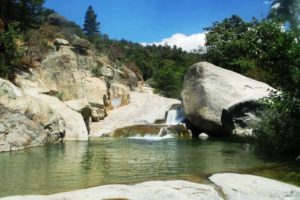
Legislation has been introduced to formally recognize the water rights of Tule River Tribe and provide up to $568 million in funding, reports Native News Online. Senate Bill 4870, which now heads to the Senate Committee on Indian Affairs, would also transfer nearly 10,000 acres of federal lands in the Sequoia National Forest into trust so that the tribe can manage the headwaters of the watershed. The Tule River Economic Development Corporation, a nonprofit organization serving the Tule River Indian Tribe, is a 2020 grantee of First Nations’ California COVID-19 Recovery and Resiliency Fund.
Photo credit Native News Online: Gerry & Bonni, CC BY 2.0
 Cultural Taxidermy, Not Appropriation
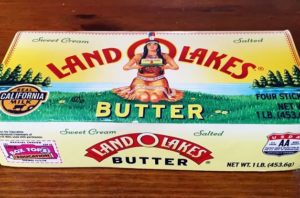
A commentary in Salon discusses how the concept of cultural appropriation doesn’t capture the full scope of the problem in the use of Indigenous imagery in media and sports. A more correct term is cultural taxidermy: “Like the taxidermist who poses the animal they are working to function almost as a prop in a story, Indigenous People have also been ‘posed’ in a manner meant to conjure specific ideas and colonial stereotypes in the settler’s story.” Further, “Each instance of cultural taxidermy put on display echoes the colonial power structure, tantamount to parading enemies of the state through the streets as a reminder to not step out of line again.” Read more.
 1,200-year-old Canoe Serving as a Bridge for Tribal Relations
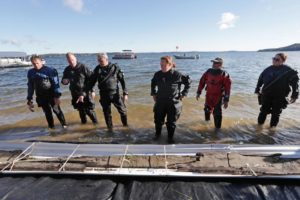
In July, we shared how the Wisconsin Historical Society discovered a 1,200-year-old dugout canoe buried under sediment at the bottom of Lake Mendota in Madison, the ancestral homeland of the Ho-Chunk Nation. Now, Madison.com reports that archaeologists have pulled another dugout canoe from the lake, one that is much older and more fragile than the first canoe, which was the most intact, oldest boat ever found in Wisconsin. Marlon WhiteEagle, president of the Ho-Chunk Nation, headquartered in Black River Falls, said, “It’s significant. It’s a great find. It gives more physical proof that this is our ancestral land.” Read more.
Photo credit Amber Arnold, State Journal
 American Heritage Chocolate Opens Application for Chocolate History Grants
The Forrest E. Mars, Jr. Chocolate History Grant, named after the company’s owner and advocate of the history of the Americas, emphasizes the uncovering and sharing of chocolate’s role in global history as well as its influence on heritage and culture. Grant funds will be awarded for projects that investigate or educate on the history of chocolate or the chocolate-making process. A minimum of $50,000 in grant funds will be awarded through the competitive process. Learn more and apply by October 29, 2022.