Abra Nungasuk Patkotak
Iñupiaq

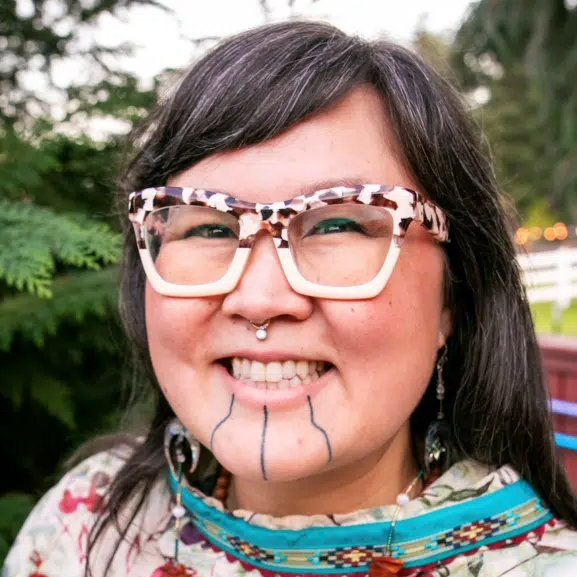
Iñupiaq
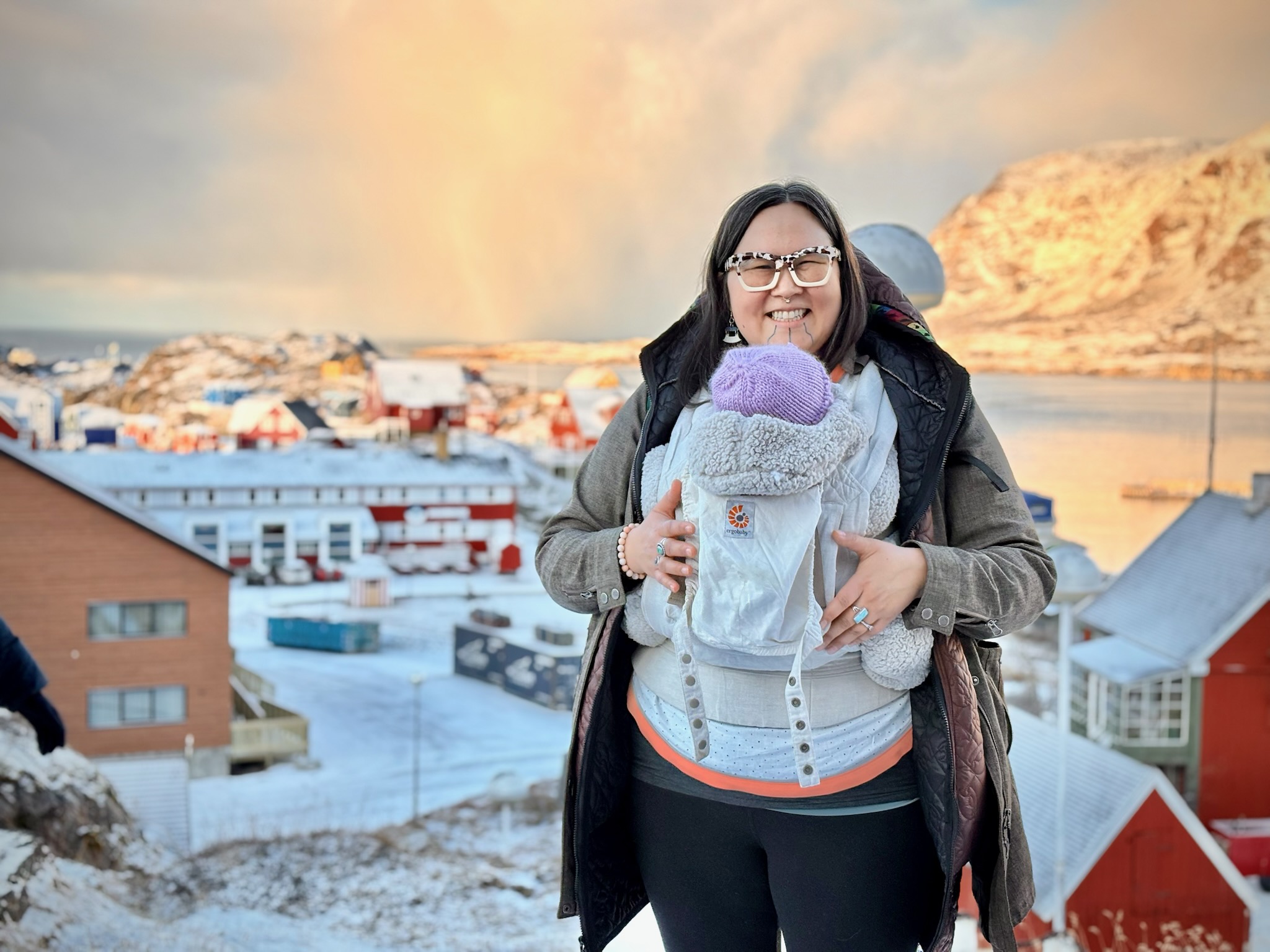
The Luce Fellow and her baby journeyed to Sisimiut, Greenland, for the first-ever Inuit Women’s Summit hosted by the Inuit Circumpolar Council.
Giving birth in rural Alaska is no small feat. For most rural communities in Alaska, the closest hospitals and birthing centers are hundreds of miles away. Many Alaska Native women must leave their rural communities and villages when they are in their eighth month of pregnancy (or earlier if it is a high-risk pregnancy) and fly to Anchorage or other communities with a birthing facility to await giving birth, often alone, leaving behind their crucial support system of community, family, and friends.
This is not the traditional way, says Abra Nungasuk Patkotak (Iñupiaq), a birthworker and 2025 Luce Indigenous Knowledge Fellow who is from Gifford, Idaho, and Utqiaġvik, Alaska (formerly Barrow) — the northernmost community in the United States (north of the Arctic Circle), and 750 miles from Anchorage.
“Historically, we used to have a midwife in every single Alaska Native community to support Indigenous birthing people through traditional, at-home birthing practices centered around culture and connection. I have iġñipkairi, or midwives, in my own family lineage,” says Patkotak, who trained to become a doula in 2010. She explains the difference between the two roles: “Doulas are people who support the birthing process; midwives are healthcare professionals who can deliver babies.”
Today, there are less than 10 Alaska Native midwives practicing in Alaska, according to Patkotak — a state with more than 200,000 Alaska Native people and the highest rate of out-of-hospital births in the nation. It is a concerning statistic when you consider that American Indian and Alaska Native women are more than twice — and in some cases, three to four times — as likely as white women to die from conditions caused or exacerbated by pregnancy, or within a year postpartum, as reported by the U.S. Centers for Disease Control and Prevention.
“To return to a place of healthy equity, we need at least 150 practicing Alaska Native midwives,” Patkotak estimates.
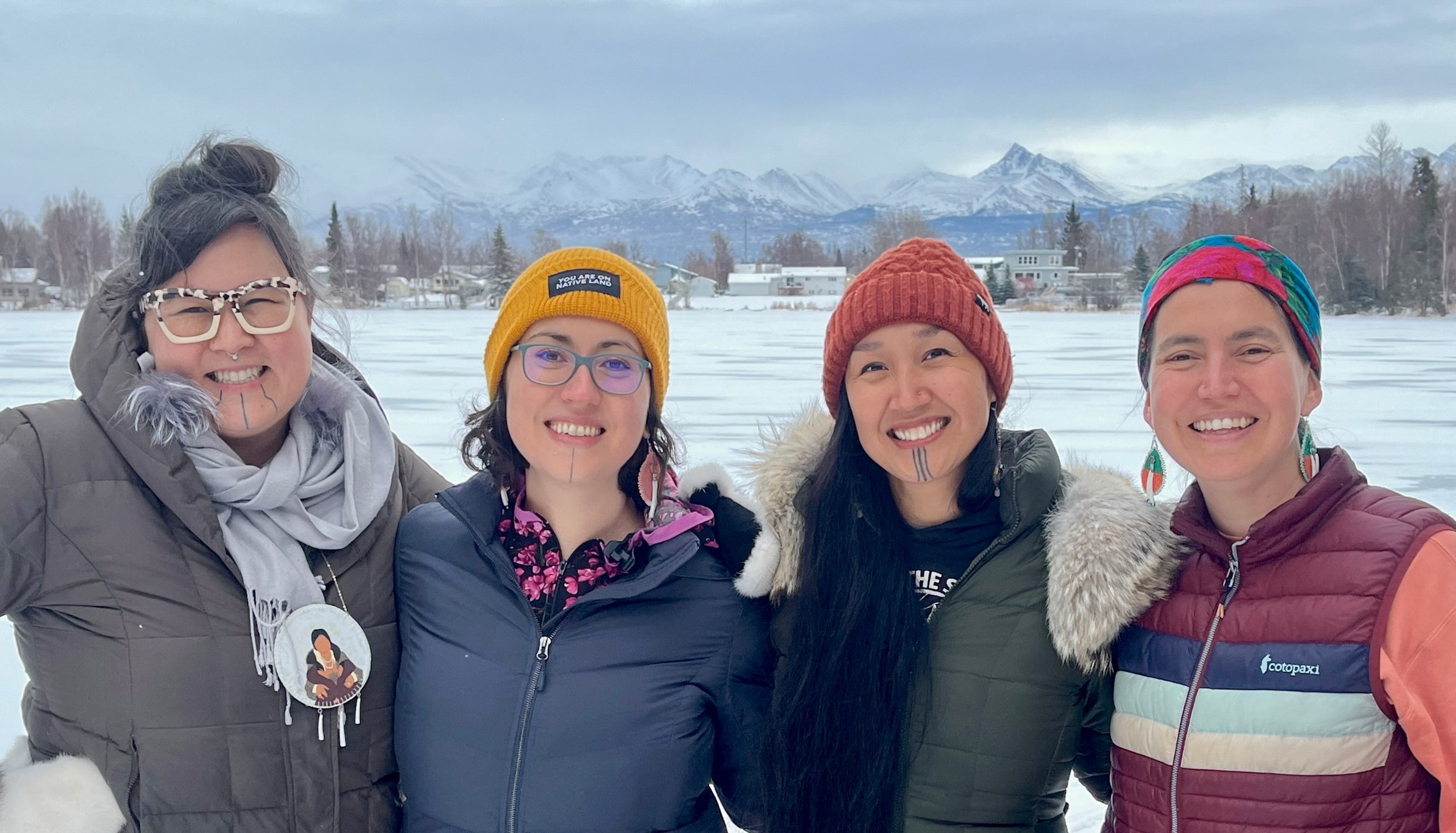
Patkotak poses with three co-creators of Alaska Native Birthworkers Community (ANBC).
In 2017, to help improve birthing outcomes and provide “culturally matched care” for Alaska Native families, Patkotak and five other Indigenous women began forming the Alaska Native Birthworkers Community (ANBC) in Anchorage. ANBC is a grassroots collective of Alaska Native birthworkers who offer, at no cost to Native birthing families, the full spectrum of reproductive health services, including preconception, prenatal, pregnancy, labor, and birth support, as well as postpartum healing.
“We envision sovereignty for our people from their very first breath, through reclamation of our ceremonies and rites of passage grounded in tradition and culture,” she tells us, emphasizing that ANBC also prioritizes increasing its network of birthworkers grounded in cultural values. Since its founding, ANBC has grown from its co-creators of four women to 15 teammates. ANBC is entirely grant-funded, and in 2021, Patkotak became the first paid birthworker.
Many of the births supported by ANBC take place at the Alaska Native Medical Center in Anchorage, where about 1,500 Alaska Native babies are born each year. “I often care for Iñupiaq families who have traveled from my hometown region,” says Patkotak. “I will encourage them to bring artwork, traditional food or plants from the tundra to help with homesickness. If they don’t bring them, I will.”
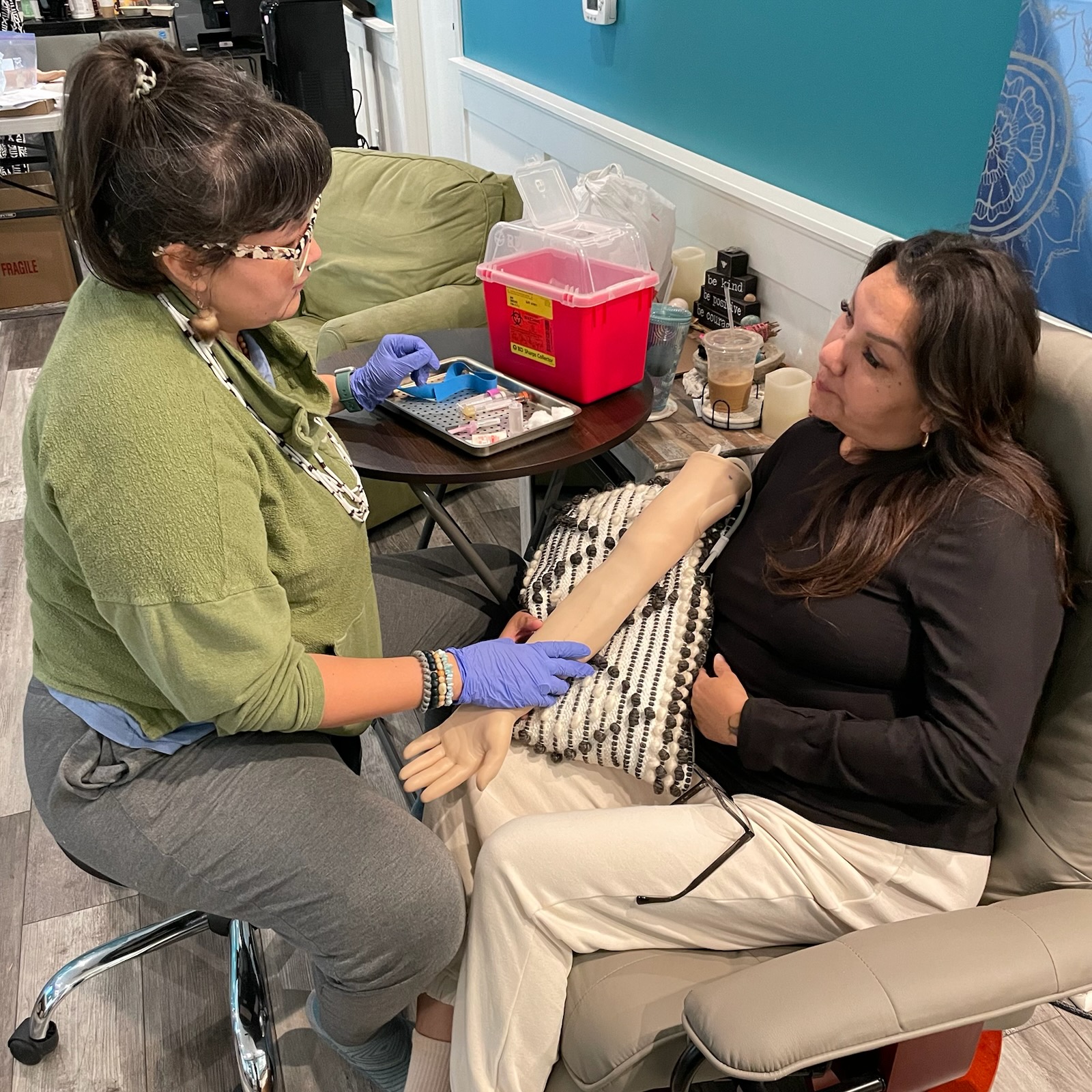
A third-year midwifery student at the Cedar Medicine School of Midwifery, Patkotak practices blood draws.
As a Luce Indigenous Knowledge Fellow, Patkotak will continue to support Indigenous birthing families as she works toward becoming a direct entry midwife who will eventually assist with at-home births in Alaska. She is in the third year of a midwifery training program through the Center for Indigenous Midwifery at the Cedar Medicine School of Midwifery. “We are an entirely BIPOC cohort of student midwives, the first such group in the nation,” and Patkotak notes that she is the only student from Alaska.
Once she becomes a midwife, the 38-year-old hopes to increase access to care for moms in Utqiaġvik and the North Slope communities, where there are currently no practicing midwives. Patkotak will be the first midwife in her home community in a very long time, since the 1990s. “Midwifery is not only my birthright, but it is also my responsibility to do all that I can to restore Iñupiaq traditional knowledge around our birthing practices.”
Her plans for the Luce Fellowship
Since becoming a 2025 Luce Indigenous Knowledge Fellow, Patkotak has not missed a beat as an Indigenous birthworker. She even welcomed her own daughter last year, her first child. Fellowship funds will allow Patkotak to travel back to her home community of Utqiaġvik more often to support birthing families there, in addition to her ANBC work in Anchorage.
As a Luce Fellow, she plans to embrace every opportunity to deepen her knowledge and understanding of Inupiaq birthing practices. “Although many of these traditional ways are sleeping, there are numerous opportunities to learn directly from Inuit birthworkers.”
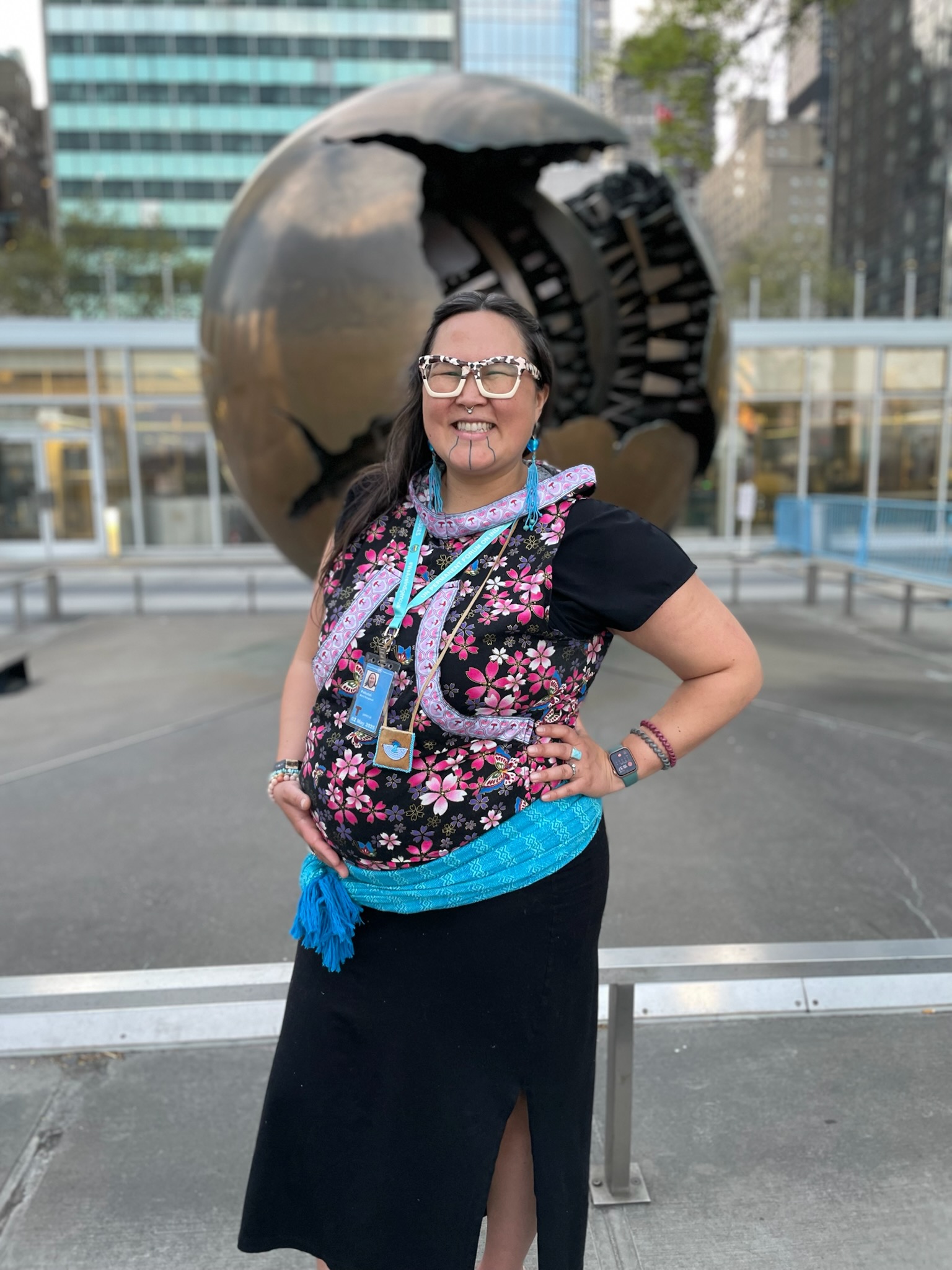
Patkotak attended the 2025 UN Permanent Forum on Indigenous Issues while pregnant with her first child.
She has been invited to Canada next summer to continue learning from Inuit birthworkers there, who have retained much of their traditional knowledge on the sacred ceremony of birth. “Their birth center has welcomed over 3,000 Inuit children over the last few decades. I plan to bring at least one of my ANBC colleagues to learn with me, and the Luce funds will help with that.”
Last April, a pregnant Patkotak attended the Global Council of Indigenous Midwives in O’ahu. In May, she went to the United Nations to meet with a group of Indigenous midwives to uplift and protect midwifery across the globe, and then to the Indigenous Birth Conference in Phoenix with her Cedar Medicine School of Midwifery cohort.
After the birth of her daughter, mom and baby flew to Sisimiut, Greenland, where Patkotak spoke on a panel about obstetrical violence against Inuit women and led a workshop at the first-ever Inuit Women’s Summit, held by the Inuit Circumpolar Council. Between all her travels, she continued to attend her in-person midwifery classes in Washington state.
Patkotak says she is honored and grateful to be a Luce Indigenous Knowledge Fellow and believes in paying it forward: “Once I am finished with my midwifery program, I plan to host a birthworker gathering in Utqiaġvik to share with the community what I have learned about traditional Iñupiaq birthwork practices.”
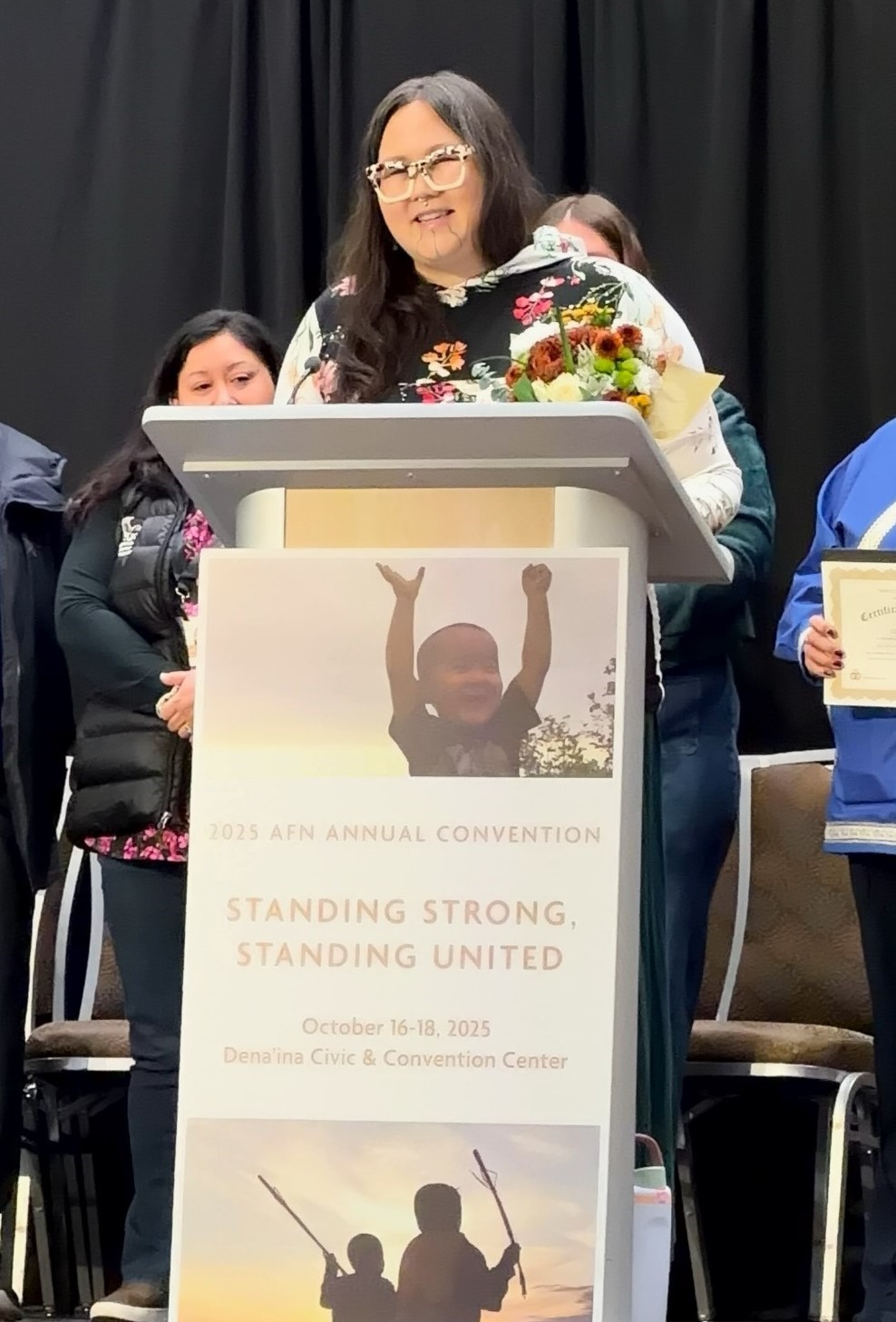
Last year, Patkotak received the 2025 Alaska Federation of Natives Presidential Della Keats Healing Hands Award.
‘Everybody needs an Abra!’
For this Luce Fellow, helping people and being around children has always been her calling card. She worked as a 9-1-1 dispatcher at one time and was an au pair (nanny) in Germany. (She speaks fluent German!) She also managed the Pre-Maternal Home in Utqiaġvik for several years. It was there that she witnessed the stress of travel for birthing families and realized that there was a huge need to increase support for them.
There were multiple times that families were sent to Anchorage already in labor, or very close to their due dates. One mom almost delivered her baby alone on the commercial flight from Utqiaġvik to Anchorage, giving birth within one hour of the plane landing. These situations are preventable with adequate local support for families, says Patkotak.
She believes that helping to bring Indigenous babies into the world is her birthright. Her ancestors delivered babies using the traditional transmission of Inupiaq knowledge and birth systems. And now, as Patkotak is working toward becoming a midwife herself, she is poised to carry on that family legacy.
She says what she loves most about being a birthworker is simply being there for families. “Community-based work is what drives me. Serving my people and all Indigenous people so they may achieve better health is the cornerstone of all I do.”
And she can include her own large, extended family in that mix. Patkotak has assisted with the births of many of her cousins — some she never even knew before. “Through this work, I have been able to meet multiple family members, and that’s been really special.”
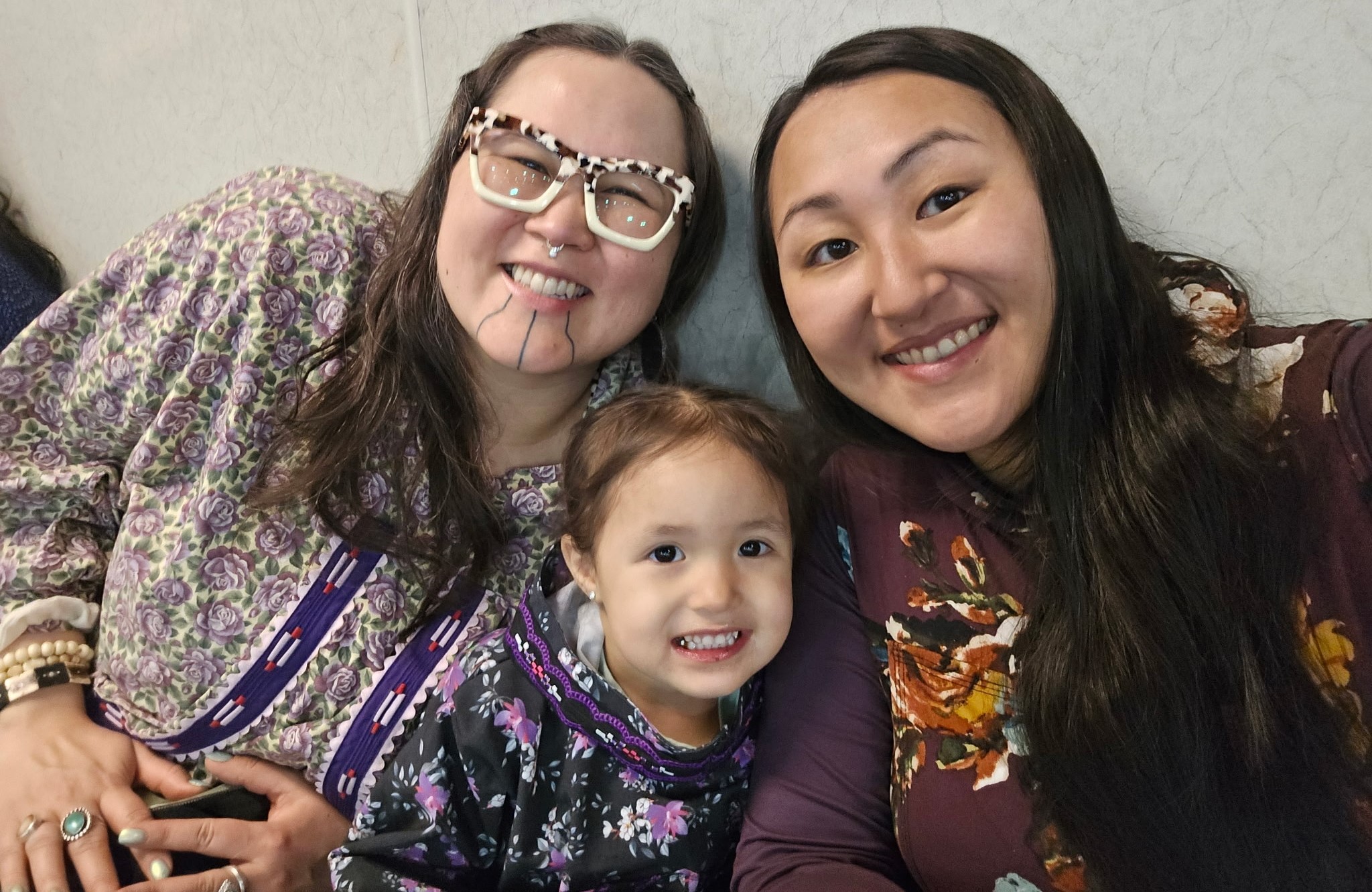
Patkotak visits a family member, who she supported through two of her pregnancies.
One such cousin, who was grateful to have Patkotak by her side when she thought she would have to deliver her baby alone in Anchorage, said, “Everybody needs an Abra!”
Her colleagues echo that sentiment. Helena Jacobs (Koyukon Athabascan), a co-creator of ANBC and an honorable mention in the 2022 cohort of Luce Indigenous Knowledge Fellows, had this to say in her glowing recommendation letter for Patkotak: “Abra’s empathy, compassion, awareness, heart of service, and way of connecting with people to make them feel safe, loved, and well supported is such a gift to all who are blessed to cross her path.”