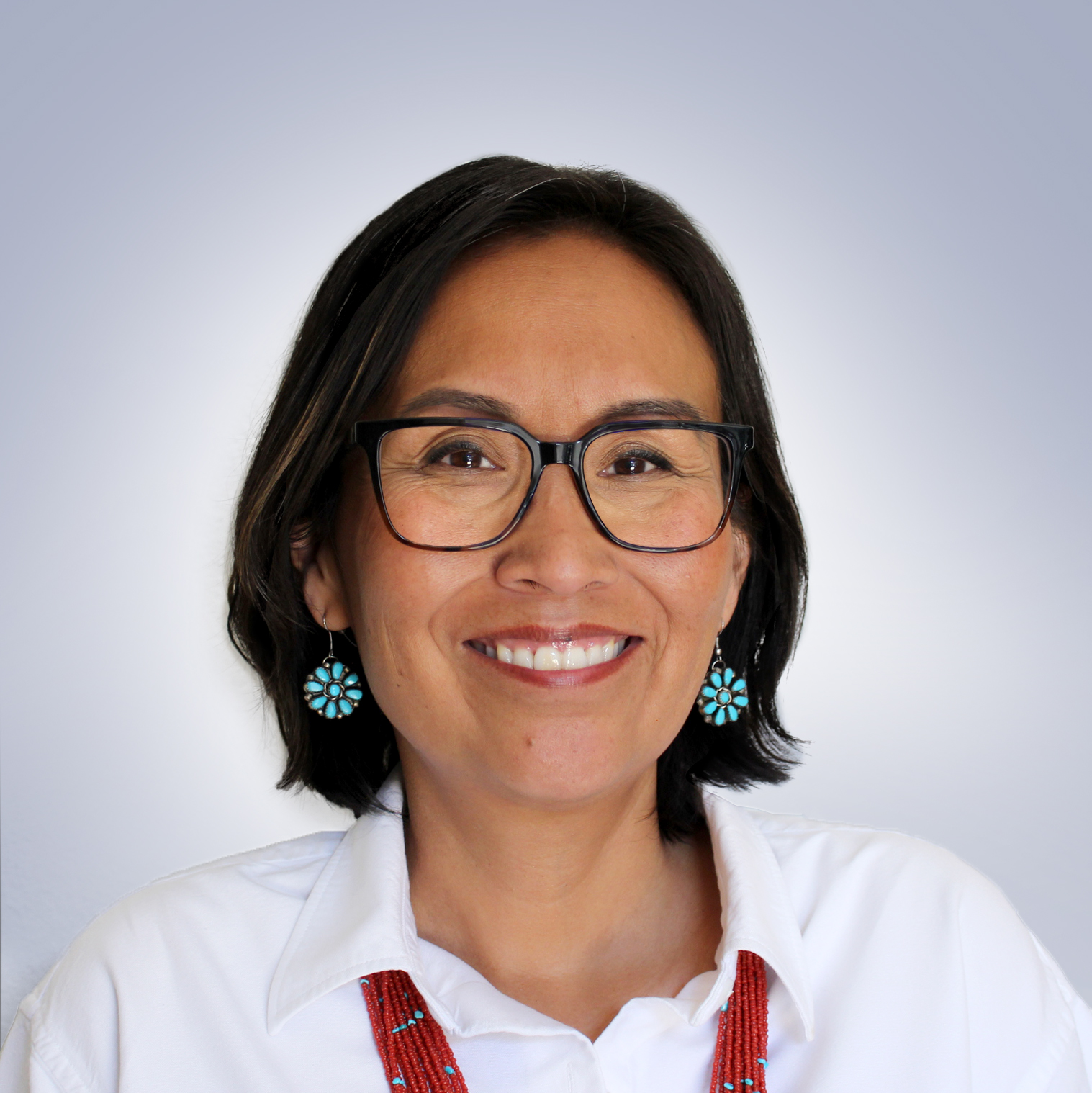
Jennifer Himmelreich
Senior Program Officer, Native Arts, Language, and Knowledge
Navajo
Through grant support, technical assistance and training, First Nations provides tribes and Native communities with the tools and resources necessary to create new community-based nonprofit organizations and to strengthen the capacity of existing nonprofits and tribal agencies or departments. For more than 43 years, First Nations has supported hundreds of model projects that help revitalize Native communities, while integrating social empowerment and economic strategies. First Nations believes that by bolstering tribal and community institutions, we are helping to build economically stronger and healthier Native communities for the long term.
Senior Program Officer, Native Arts, Language, and Knowledge
Navajo
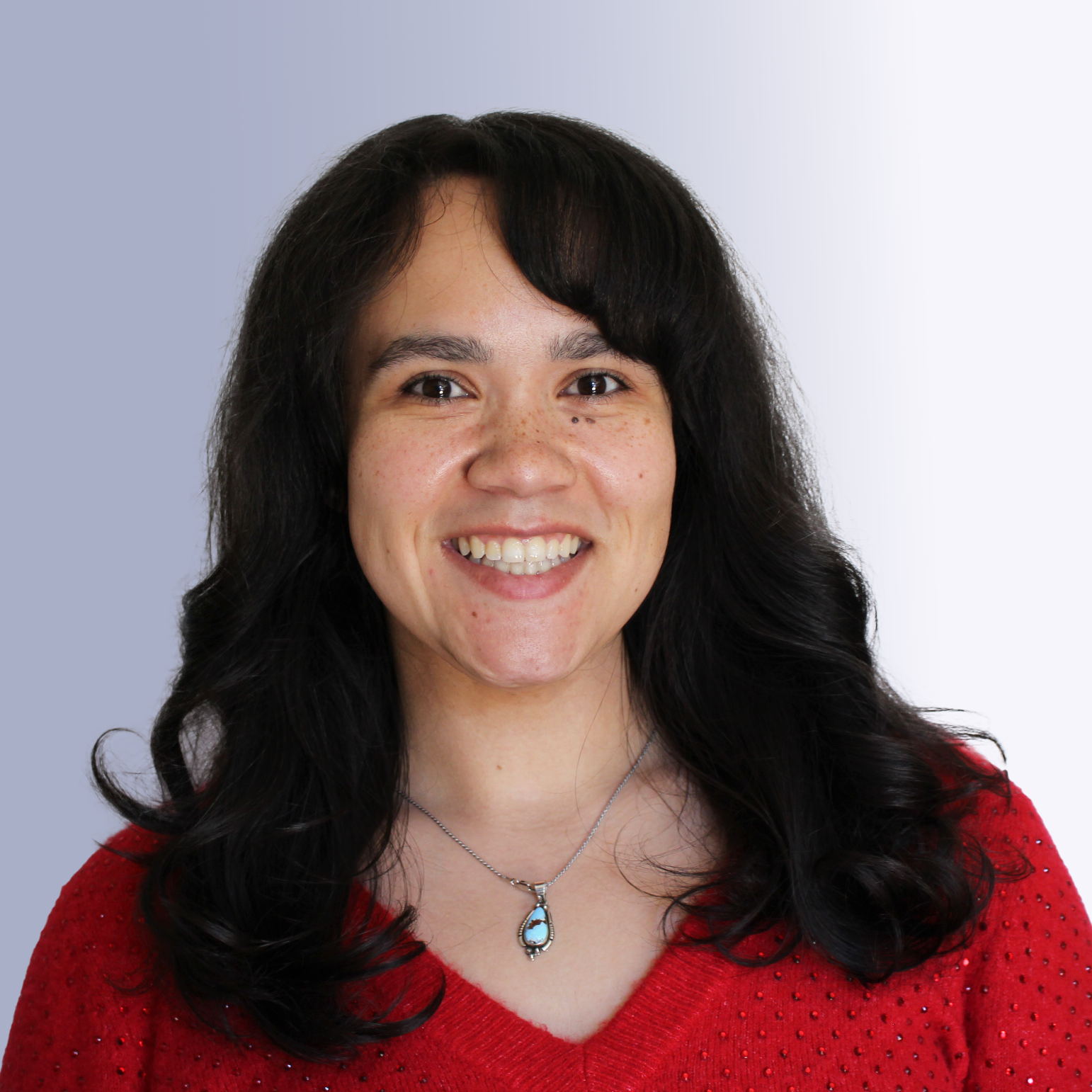
Program Associate, Native Arts, Language, and Knowledge
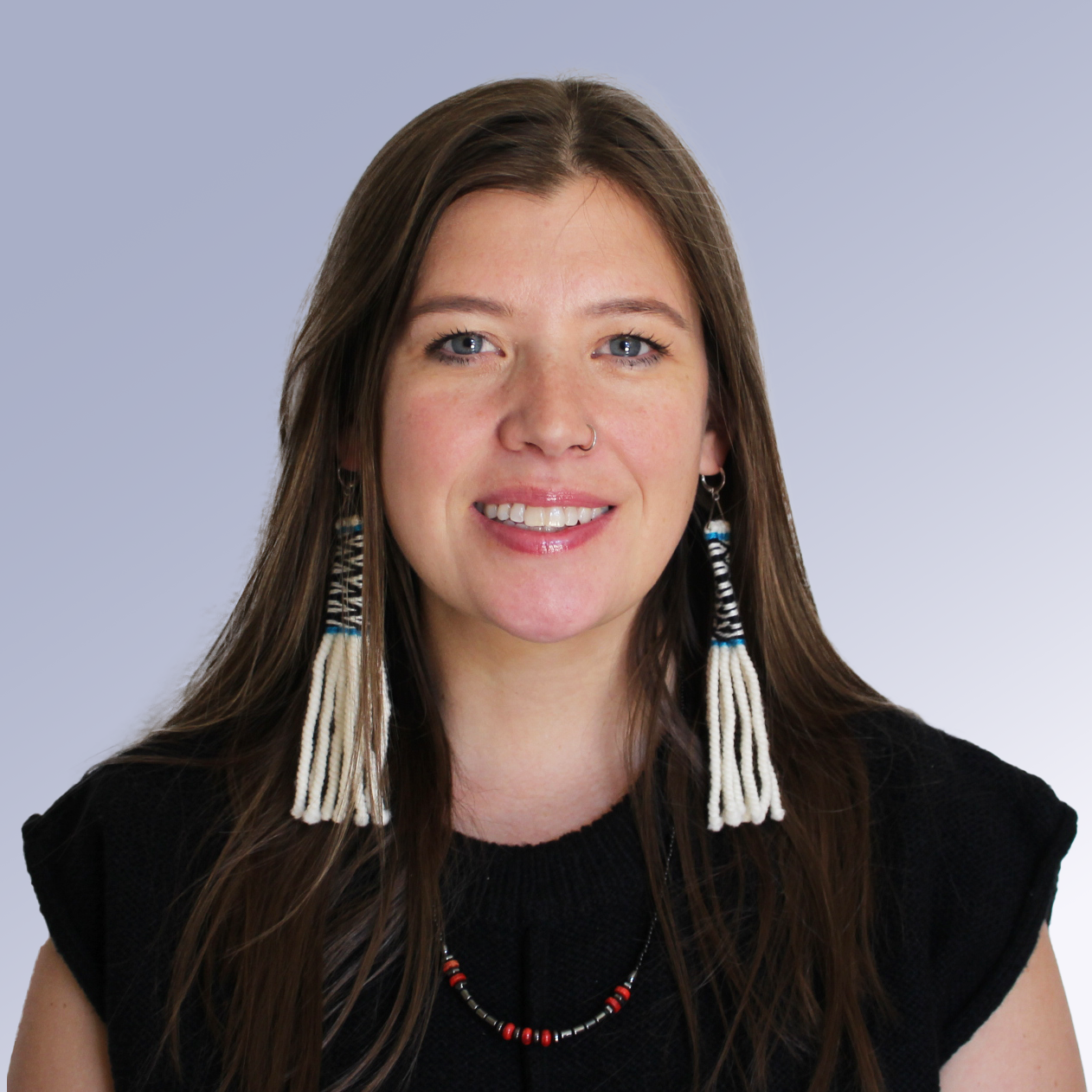
Lead Program Officer, Native Arts, Language, and Knowledge
Tlingit
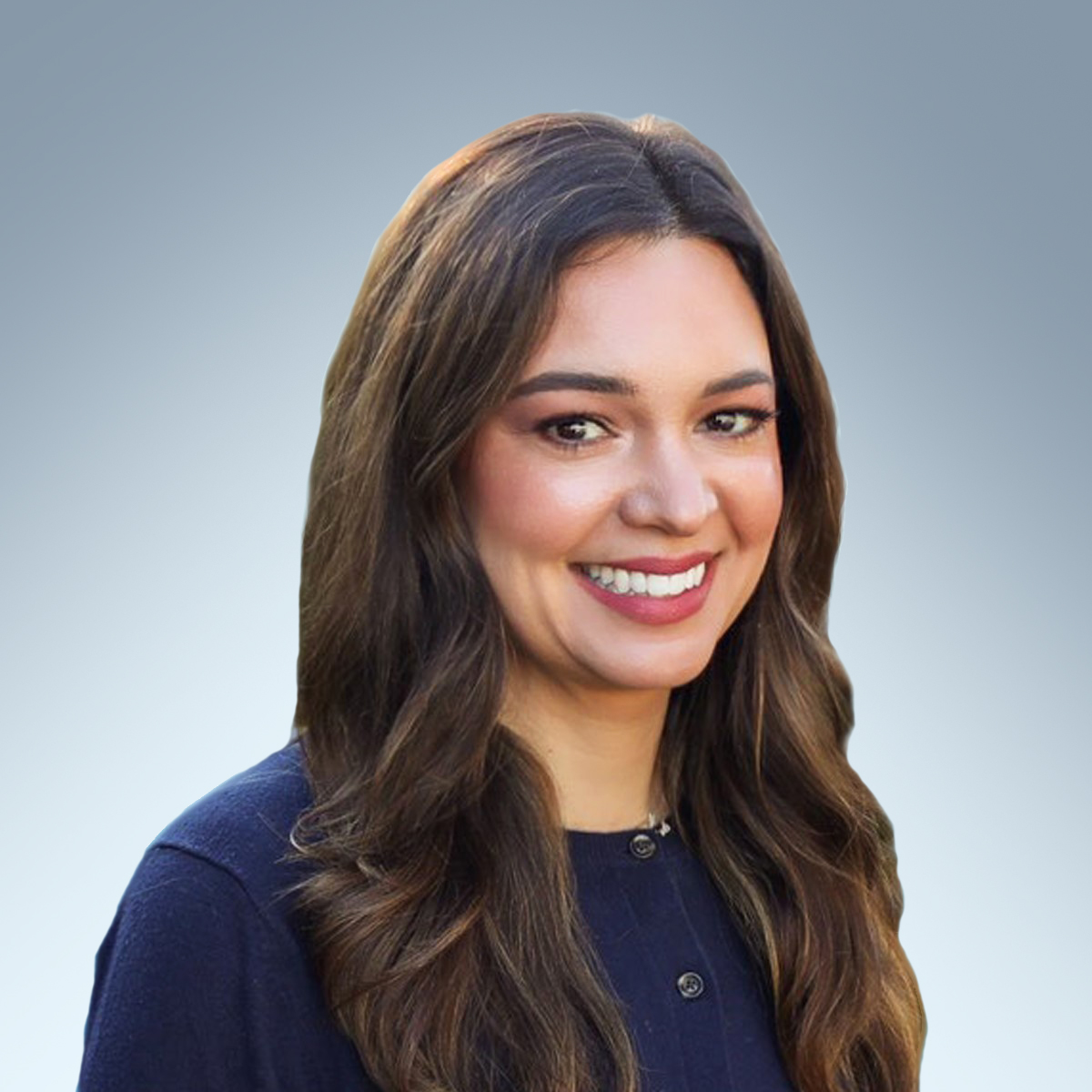
Director, Native Arts, Language, and Knowledge
Blackfeet
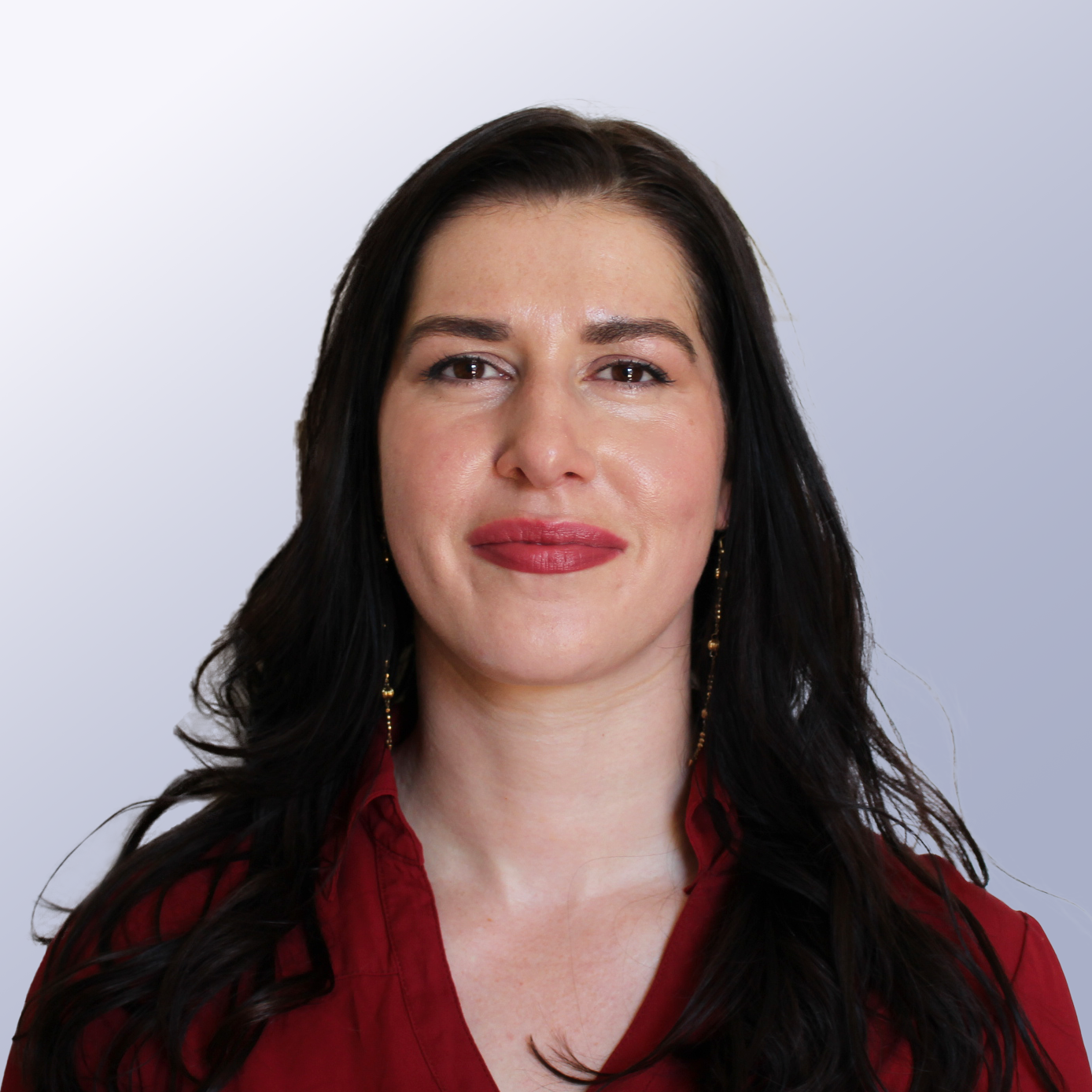
Associate Director, Native Arts, Language, and Knowledge
Mohawk
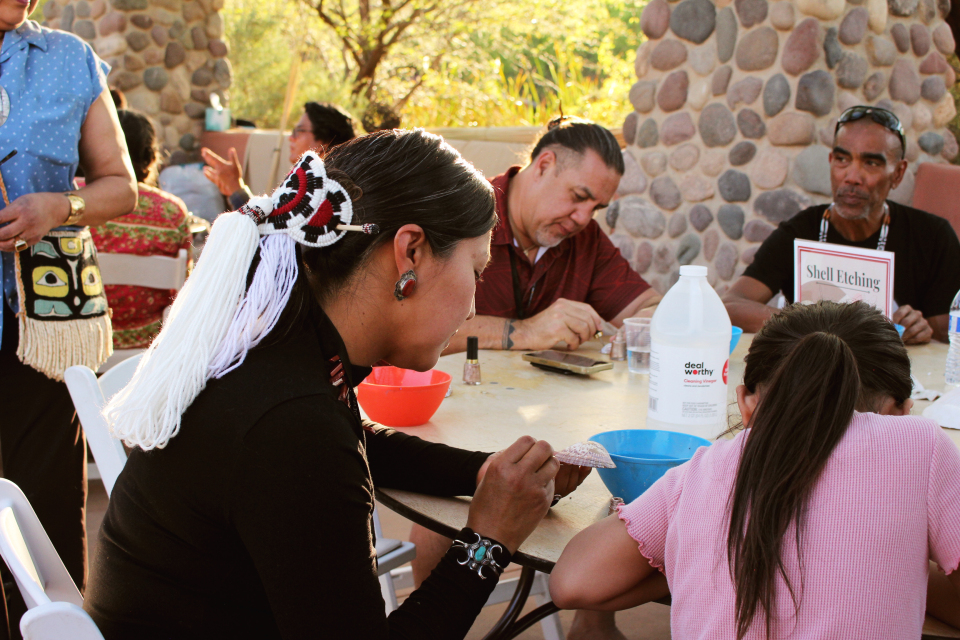
The Poeh Cultural Center is a gathering place for the respectful sustaining of Tewa traditions through being, doing and sharing. Their tour for the 2026 Luce Fellows offered First Nations and the Native Knowledge Holders that we support an opportunity to learn about Tewa cultures and lands.
The awardee will receive $4,500 to support recognition of leadership in education at the 2027 Education 2.0 Conference. Funds may support travel, registration, materials, professional development, and other needs that strengthen the awardee’s traditional practice.
Gold sponsorship for the Tulalip Foundation's 2026 Salmon Bake Fundraiser benefiting the Hibulb Cultural Center. Supports cultural preservation, education, and community programs while celebrating the center's 15th anniversary.
Support the Indian Pueblo Cultural Center's 50th Anniversary Annual Gala. Sponsorships help preserve Pueblo culture through education, community programs, and cultural preservation while providing recognition at this milestone celebration.
Central Council of Tlingit & Haida Indian Tribes
Through this project, I hope to deepen my understanding of Haida visual language, cultural knowledge, and material relationships by spending time in Haida Gwaii and Vancouver, engaging directly with collections, community, and place. This work will strengthen my skills as an artist and knowledge carrier, particularly in formline design, crest systems, and the translation of cultural knowledge into contemporary practice. The outcomes of this project will be reflected in my ongoing work as an illustrator, carver, and teacher. The knowledge gained will directly inform the development of my authored book Síigee The Open Sea, as well as future projects that center Haida ocean knowledge, navigation, and ancestral pathways. It will also strengthen the integrity and cultural grounding of all future visual work I create. During this time, my work will be part of a temporary exhibit installed in the Greeting House at the main entrance of the Haida Gwaii Museum at Kay Llnagaay, alongside the books Jigging for Halibut with Tsinni and Learning to Carve Argillite. The exhibit is being planned for late summer or early fall. This creates an important opportunity for community members and visitors to engage directly with the work in a culturally relevant space, and for me to reflect on how the work is received and held within community. I will share and transmit what I learn through multiple pathways, including books, murals, community classes, and informal gatherings. My work is often experienced by young people, and I am committed to creating imagery and learning spaces that reflect cultural strength, identity, and continuity. This includes both in person teaching and work that circulates more broadly through publications and public art. This project will reach my tribal community, regional Native arts communities, and youth who encounter this work through education and cultural programming. Participation in the We Are Who We Are book launch in Vancouver will also serve as a form of community sharing, bringing the work directly into relationship with Haida community members represented in the book. Being able to return to Haida Gwaii and be present in Vancouver during this time will support my growth as a Haida woman carrying responsibility through art. It allows me to reconnect with place, community, and cultural systems in a way that strengthens how I show up for others. This kind of learning requires presence, time, and relationship. At its core, this work contributes to Indigenous led knowledge sharing by ensuring that what is learned is not held individually, but returned to community through creative practice, teaching, and ongoing cultural engagement.
Ninilchik Village
This project lays groundwork for building a strong relationship with the Sainsbury Centre with the hope that material belongings from Alaska held at this institution will make their way home. This is long-term desired outcome for this project. I know that repatriation efforts can be slow, so I am starting slow and small by starting with a collections documentation project. The short-term desired outcome for this project is creating an opportunity to record information about materials in the collection using Alaska perspectives. I am excited to experiment with making sound recordings with community members to document collections information. The sound recordings will help the project to have a deeper impact, as they will be shared on-line on the museum's website, and hopefully used in a later exhibit project that I am planning. The sound recording aspect of the project will also allow the project to connect with a wider audience as I will interview culture bearers in Alaska to document their knowledge The exhibition "Natchiq-Onkeehq-Isuwiq: Indigenous Artists Honor the Seal" is currently on display at the Rhode Island School of Design. This project was co-curated with Erin Gingrich and Elizabeth James Perry. I am working to create an Alaska version of this exhibit, and hope that some of the sound recordings created during my proposed project can be included as exhibition materials.
Other
I seek to deepen both technical skill and cultural understanding within Ravenstail weaving. A primary outcome will be the continued development and completion of a rewoven Skatins’ Robe, informed by direct study and applied practice. Equally important is the growth of my ability to interpret and transmit this knowledge responsibly through future generations. This support will strengthen my capacity in several areas: advanced weaving techniques, analysis, material knowledge, and teaching. Studying ceremonial weavings in person will expand my understanding beyond replication, allowing me to engage with the intention, structure, and presence of these works. Knowledge sharing is central to this project. I will transmit what I learn through: • Teaching workshops and informal mentorship within my community • Presenting at 2027 Northwest Coast Textile Symposium and URECA Symposium • Continuing to develop curriculum and learning spaces grounded in Ravenstail practice • Sharing research insights through artist talks and community gatherings I will prioritize reaching Northwest Coastal Indigenous communities, particularly Tlingit, Haida, and Tsimshian artists and learners, while also contributing to broader conversations in Indigenous textile revitalization. This project contributes to Indigenous-led knowledge sharing by keeping research grounded in relationship rather than extraction. Instead of knowledge being held solely in institutions, it is carried through practice, teaching, and community exchange. Bringing an apprentice into the research process is one way this work actively resists isolation and ensures continuity. What I hope will grow is not only my own skill, but a stronger network of weavers who are connected to one another and to the teachings embedded in Ravenstail. This work helps ensure that the knowledge does not remain fragmented, but continues to be lived, practiced, and passed forward.
Samoan
By the end of this project, I will have: a completed, performance-ready contemporary Samoan siva solo choreographed to TEEKS' "Waves"; a documented video recording of the work; and significantly deepened personal skill in both jazz technique and siva vocabulary. I will also have advanced my preparation for participation at FestPAC 2028, the Pacific region's most significant cultural gathering. This work will be shared with Pacific Islander communities through my existing platforms: Pasifika First Fridays, which I founded in Salt Lake City and which has featured 46 Pacific artists; Lost Eden Gallery's online programming and the Oceania Archive; and through my network as founder of Harvard Alumni for Oceania. I intend to present the work-in-progress to Pacific community members in Las Vegas and Salt Lake City for feedback, centering community voice in the creative process. Beyond the immediate performance, this project contributes to a broader goal: building a body of contemporary Pacific performance work that proves our dance traditions can stand alongside any tradition in the world; not as novelty or spectacle, but as art of the highest order. The knowledge I gain through this mentorship will directly inform my ongoing curatorial, cultural policy, and community arts work, including my role with Creative West and my work with the Pacific Islands Humanities Network. I am committed to sharing what I learn through First Nations' public programming or communications if invited.
Other
This project will strengthen both my artistic practice and my role as a public historian by expanding my engagement with materials, history, and community. A primary outcome will be the creation of a series of archival-based woven works made from replicas of historical documents. In addition to these pieces, a key outcome will be the development of new techniques for integrating archival paper into my traditional weaving practice while remaining rooted in cultural traditions. Through this process, I will also strengthen my skills in archival research and historical interpretation. This growth is essential as I continue to develop as a public historian with a focus on my community. I will develop ways to interpret paper genocide, specifically how it impacted the Nansemond, for a broader audience. I will also ensure that the knowledge I gain through research is shared with my tribal community through our community newsletter and opportunities to view the finished pieces in person. The completed works will be exhibited in regional galleries, my community’s new cultural center, and other tribal spaces. Each of these venues will provide opportunities for me to refine my historical interpretation skills through public talks and the use of interpretive plaques. Beyond expanding my art, the foundation of this project is contributing to Indigenous-led efforts to reclaim our history. This work centers Native voices and uses community knowledge alongside historical documents to tell our story. It demonstrates how Indigenous knowledge can adapt and respond to historical challenges while continuing to carry our history forward. Through this project, I am not only developing new work and technical skills, but also strengthening my community’s ability to share our history from our own perspective. By the conclusion of the grant period, I will have established a sustainable method for using non traditional materials to address complex regional histories. This will allow my practice to continue growing as both a form of fine art and a tool for cultural education. For future generations, these baskets will serve as physical evidence of our resilience, proving that the very records intended to erase our identity can be repurposed to celebrate our continued presence
Native Hawaiian
My expected outcome of participating in this opportunity is to commit oli to memory using the correct tone, vibrato, pronunciation and overall deliverance of oli presented at this conference. Participation in this conference will also help me enhance the way I deliver other oli, by learning more about the mechanics of creating sound and accessing deeper levels of knowledge through this exchange. As we are a culture rooted in oral storytelling, the art of oli is important in carrying on these stories that still remain relevant today. There are many sessions in the conference schedule that makes learning oli accessible and welcoming for people of all experience levels. I plan to share the legacy of oli where appropriate, as there are some oli arrangements that are kapu (taboo) and the kumu teaching them are strict on the ways that learners can share these oli. I think it would be appropriate and realistic for me to plan to share with others other aspects of oli like correct pronunciation, vibrato, and tone for oli that are noa (free) for others to learn, as there are many that anyone can engage with--Native Hawaiian or not. I hope that through this I am able to continue promoting the teachings and attitudes of my Kumu, Aunty Kekuhi, in that oli is for everyone and that aloha is the conduit for us all to grow in deeper relationship to our places that we are from and where we live, as these are all extensions of family. When I become adept in my cultural practices and become elevated to a status of teacher, I will share oli with my projected students and ensure that I am perpetuating the teachings of my teacher and ancestors in a pono (righteous) way. This project contributes to indigenous-led knowledge sharing because it is a conference that is unconventional, in the way that it focuses the cultural practice of oli and brings experts across the archipelago to Hilo to participate; regardless of Western accreditations. It promotes cultural values of aloha (genuineness/love) and hoihi (respect) in valuing the genealogy of teachings and honoring that there are, many a-time, many truths/"correct" ways of doing things and that they can be allowed to exist together, too.
Turtle Mountain Band of Chippewa Indians of North Dakota
The outcomes I hope to achieve from this project are a better and more robust understanding of the designs, methods, historical context, and ceremonies associated with azhaasowin, or traditional tattooing, as well as the growth of a network of traditional tattooers and the creation of a modern tattooing bundle. I plan to share what I have learned through an instagram account dedicated to spreading information about azhaasowin according to protocol, through discussions with other tattoo practitioners, and through the continuation of an apprenticeship for Awanigiizhik Bruce. I hope our work reaches the Turtle Mountain and Little Shell communities both urban and on the reservation, and this will be done through travel, sharing and visiting, conferring with elders, and utilizing social media to reach diasporic community members online. This project contributes to Indigenous-led knowledge sharing by taking back control of the narrative around our tattooing practices from white scholars and focusing on our traditions, protocols, and meanings, by us and for us. It also contributes to the revitalization of a craft and ceremony that has been sleeping for over a hundred years, something that inherently ties us to a place and a people through visual markers on our skin.
Catawba Indian Nation (aka Catawba Tribe of South Carolina)
Through the support of the Acorn Fund, I hope to see these ancestral patterns move out of museum storage and back into the hands of our living community, broadening the possibilities for what Catawba pottery can be. By reclaiming the tools and textures used by those who came before us, I am working to ensure our tradition isn’t just a narrow set of shapes, but a vibrant practice that remembers its full history. This project is about giving our community more ways to express our identity through clay, rooted in the knowledge of our ancestors. The primary outcome will be the reintroduction of the paddle-impressed cooking pot and funerary urn into the community’s cultural repertoire. By creating these vessels and documenting the process, I am providing a roadmap for other potters to follow. I plan to share this knowledge through active transmission. Rather than just writing a report, I will: - Engage Youth: By teaching a stamping class, I show youth that they have the ability to create impressions on their pots to expand their creativity. - Empower Knowledge Holders: By teaching paddle-making to adult potters, I am providing them with new techniques to use in their own practices, diversifying the artistic output of our entire community. - Open-Access Research: I will provide the Catawba Cultural Center with digital patterns created during my time at UNC and NMAI, ensuring that any tribal member can access these ancestral designs without needing to travel to a museum. This project contributes to Indigenous-led knowledge sharing by moving the “authority” of the archives back into the hands of the community. It shifts the role of me as a Native artist from “producer of objects” to “researcher and teacher,” ensuring that the knowledge I gain is not held by me alone, but is woven back into the fabric of the Catawba Nation for generations to come.
The Muscogee (Creek) Nation
Post travel to Ocmulgee Mounds (Georgia) and Moundville (Alabama), I plan on hosting workshops within my community and surrounding communities about River Cane, its traditional uses, and the techniques I use while processing it. This will include opportunities for harvesting, shared discussions, shared meals, demonstration of freehand burning designs, story sharing, and community growth. As a result, I’m hoping to encourage others to connect with the land, find a plant they feel connected to and really get to know it. The plants have so much to teach us. I look forward to my growth as an artist so I can continue to share the Mvskoke culture through my designs, with all who are open to learning about it.
Native Hawaiian
My mission is to keep the spirit in the pahu. That means keeping the connection to the ancients, to the woods and materials, and keeping the Hawaiian people in touch with the making of the pahu. That's an important relationship that you don't get when you buy one from far away, made in factories in places like Indonesia or the Philippines. That spirit of connection to place and ancestry will strengthen as we share our experience with the ancient pahu we see in the museums. My students will learn something new, because they don't know about these ancient, hidden artifacts. When we go to the archives I can take pictures, and I can bring that information to them: photos, descriptions, and memories from the archives that even their grandparents don't know. When I show pictures of the pahu carving workshops I taught over the years, it blows peoples’ mind, seeing how many community members made drums. This will be like that but more, because they can feel the presence of the older pahu and the knowledge of the ancestors. This is our time as an ʻohana to check it out, to go do research so we can share the knowledge and the relationship with the pahu. Over the next two years, I plan to teach pahu carving workshops through the Luce Fellowship in Kohala, Miloliʻi, Hilo, and Kona (all on Hawaiʻi island), plus on Kauaʻi and Molokaʻi. I will put together an album and presentation boards on the ancient pahu that I can share personally with groups in my workshops and at cultural festivals. I reach hundreds of people this way, and also by working in public at the beach parks and talking with people who stop to see what I’m doing. Not too many cultural practitioners work in public. The good thing about doing it is that Hawaiians, locals, and newcomers see Hawaiian work in action. This is my indigenous knowledge-sharing. I touch many people by introducing them to the culture in a friendly, down-to-earth style. The outcomes of all of this are more pahu, more traditionally based or inspired designs and techniques, more kumu hula using pahu they created or found the tree for or put an ancient or recent ʻohana design on. More hula, more chants, more history brought out in public by these kumu hula. More indigenous knowledge sharing through the sounds of Hawaiian drums connecting us to our ancestors and our future generations. Touching the ancient drums will touch the spirit of me, my ʻohana, and all the people we work with.
Native Hawaiian
Through this grant period, I hope to grow as a practitioner, a scholar, and a connector of Indigenous knowledge communities across the Pacific. As a practitioner, I will deepen my competency in traditional Micronesian canoe carving and sail weaving under Palu Larry, skills that directly inform my understanding of Hawaiian material culture and pre-Western-contact voyaging technology. This embodied knowledge will enrich my PhD research in ways that no library can provide. As a scholar, I will present ongoing research and collaborative work at several international conferences and festivals, including ACHS (Wellington), ASAO (Samoa), and IMPAC6 (Dakar), contributing to Indigenous-led conversations about wayfinding heritage, maritime revitalization, and traditional ecological knowledge. These presentations will reach academics, policymakers, cultural practitioners, and community leaders across multiple disciplines and regions. As a connector, I will strengthen relationships between Indigenous wayfinding communities across Oceania and beyond (i.e., from Haida Gwaii to Fiji to PNG to Aotearoa), helping to build the inter-community network that makes knowledge sharing and mutual support possible. Through the Pacific Traditions Society, I will support ongoing revitalization efforts in Taumako, PNG, Fiji, and Micronesia (Polowat). Knowledge sharing will take multiple forms: conference presentations, community participation in cultural festivals and symposia, mentorship relationships, and the documentation of practices for community use. My PhD research itself is an act of Indigenous-led knowledge preservation — grounding pre-Western-contact Hawaiian wayfinding traditions in rigorous scholarship that can serve Hawaiian communities and future generations. Ultimately, this project contributes to a larger vision: a Pacific in which Indigenous wayfinding knowledge is not a relic of the past but a living, growing, inter-connected practice, carried forward by practitioners who know each other, support each other, and learn from each other across the blue continent of Oceania.
Other
As artistic director and program coordinator, I will work directly with the members of my tribe and other local tribes from start to completion of Nuwu Um-buh-gah #2. First, Southern Paiute elders and knowledge keepers in Nevada and Utah who speak the language will help guide me and this project. Listening is essential when collaborating with our tribal knowledge keepers, and as an artist, I am carrying that knowledge to produce visual resources to teach and educate the following generations. As a main goal, I will produce the images and give the physical language access materials to tribal educators and community members – including youth and families. They will use the coloring pages and card decks in language-acquisition classes held on their respective reservation homelands. I engage with the Las Vegas Paiute Child Development Center and Moapa Childcare Center with both coloring pages and the second language deck. Through engaging the community and cultivating relationships with our relatives, we will accomplish a language project that assists in the revitalization of the rich heritage of the Nuwu, the original people of Southern Nevada. The seeds for this project were planted years ago, as environmental activism rests at the foundation of Nuwu Um-buh-gah. These illustrations are silent, yet powerful, highlighting flora, fauna, and natural landscapes in the southern Great Basin. The images advocate for the protection of areas of critical concern and encourage stewardship of the land. It is easy for us urban Natives who live in city environments to become disconnected from the land. I hope to reach both our rural and urban communities with the art of Nuwu Um-buh-gah, helping to reconnect people with the plants and animals, along with our Southern Paiute stories. The primary audience is Nuwu people – children, families, and elders. While language fluency is not the goal, maintenance and beginning children on the path to greater language acquisition is possible among the Las Vegas Paiute Tribe and Moapa Band of Paiutes. Nuwu Um-buh-gah: Paiute Language Deck #2 will be used in schools, language symposiums, and in homes on these and other reservations. The visual flashcard decks and coloring pages teach cultural knowledge, allowing young people to gain fluency in not just words, but with establishing a connection to the environment. Artistic images are powerful tools for immersive language instruction, since they allow for communication of ideas and concepts without resorting to English. Teaching with traditional visuals also adds interest, as these tools can be used to teach about the importance of plants and animals in areas of critical concern in the Mojave Desert. This interdisciplinary project uniquely combines the visual arts, material culture, and cultural revitalization efforts. Nuwu Um-buh-gah #2 will help deliver To-veep’s message to the people by growing language speakers, and strengthening Indigenous traditions.
Native Hawaiian
With this support, I hope to grow this skill, discipline, relationship and continuity. Making a net requires thousands of repeated and intentional movements. Through this process, I am strengthening patience, consistency, and care. These are not abstract outcomes. They show up in how I make, how I fish, and how I take care of the tools that I rely on. Through mentorship with Chuck Leslie, I will deepen my understanding of technique, pacing, and long-term stewardship. Learning alongside someone who has maintained a working net for over 50 years reinforces that this practice is not about completion, but about sustaining something over time. This is the standard I am working toward. I also expect to strengthen my understanding of materials through both contemporary and natural fibers. By planting, gathering and processing fibers in small ways, I will begin to understand how material, place, and function are connected. This knowledge supports a shift away from dependency on purchased materials and toward a more grounded, place-based practice. The application of this learning will happen through continuedm everyday use. I will build and repair nets, fish with them, and refine my technique through repetition. Over time, this practice becomes something I can share in informal, hands-on ways with others in my ʻohana and community. The people this work will reach are those already close to me: family members, keiki and community members in Waimānalo who are curious about net making but have not had access to learn. I will not approach this as formal instruction, but as shared practice. Sitting together, tying knots, and learning through doing. This is how this knowledge has always moved. There is already strong interest. When I sit and make nets, it brings forward stories. People talk about family members who once made nets, fishing practices that have faded, and the desire to learn what was not passed down. This project helps create the conditions for those conversations to turn into action. In terms of Indigenous knowledge sharing, this work contributes by keeping ʻike in motion without extracting it from its context. Learning is grounded in relationship, guided by kūpuna, and carried forward through use. It is not about documenting for distribution, but about embodying and practicing knowledge in ways that are responsible and sustainable. Longer term, this project builds toward more advanced practices, including the goal of learning to make ʻōpelu nets. There are very few practitioners who carry this knowledge today. Strengthening foundational skills now is necessary to reach that level with integrity. What will grow is a practice that is lived, shared, and sustained. Not owned, but carried.
Oglala Sioux Tribe
Through this support, I hope to strengthen both my artistic practice and my confidence in claiming space as a Lakota artist working in contemporary digital mediums. One of my primary outcomes is the creation of a body of new digital artwork that reflects Lakota values, symbolism, and storytelling while demonstrating growth in technical skill through graphic design. I also aim to build consistency and discipline in my creative practice, moving from informal, occasional work into a more sustainable and intentional artistic path. Beyond the artwork itself, I hope to strengthen my understanding of art as a form of healing and Indigenous health. As a doctoral student in Indigenous Health, I see creativity as connected to mental, emotional, spiritual, and cultural wellbeing. This project will deepen that connection and allow me to apply what I learn in ways that support both personal and community healing. I plan to share what I learn through both in-person and digital platforms. I will present my work at powwows, community gatherings, and cultural spaces, where I will share not only the finished pieces but also the process of learning, growth, and returning to art later in life. I will also use digital platforms to share images, designs, and storytelling so that community members who may not have access to in-person events can still engage. This includes creating accessible visual content that reflects Lakota identity in contemporary spaces. I hope to reach Indigenous community members, especially younger people and those who may feel disconnected from traditional art forms or unsure of where to begin. By sharing my own journey of learning without formal training, I want to show that there are multiple pathways into cultural expression and that it is never too late to begin. I also hope to connect with other Native artists who are working across traditional and digital mediums, contributing to a broader network of support and collaboration. This project contributes to Indigenous-led knowledge sharing by honoring mentorship, lived experience, and community-based learning as valid and important forms of knowledge. Learning alongside my father and engaging with artists on the powwow trail reflects how knowledge has always been passed—through relationship, observation, and responsibility. By translating these teachings into digital forms and sharing them widely, I am helping to carry forward Lakota ways of knowing in a format that can reach future generations while remaining grounded in culture.
Minnesota Chippewa Tribe, Minnesota (Bois Forte Band; Fond du Lac Band; Grand Portage Band; Leech Lake Band; Mille Lacs Band; White Earth Band)
What I hope will grow most from this support is my ability to move from being a beginner to someone who can carry, practice, and eventually share quillwork in a responsible and grounded way. With time, mentorship, and resources, I want to build real skill in harvesting, processing, dyeing, and creating, not just for myself, but so I can pass that knowledge on. One of my main goals is to develop the confidence and experience to teach. I have already taught classes in beadwork and moccasin making, and I see quillwork becoming a natural extension of that. In the future, I aspire to offer workshops that not only focus on technique, but also on the full process: how to harvest porcupine, how to prepare and dye quills, and how to apply them to different forms such as moccasins, medicine pouches, and other items. This support would help me build the foundation needed to teach these skills with care and accuracy. I also hope to pursue additional grant funding down the line to expand these offerings and make them accessible to more people in my community. I hope to connect with a mentor who can guide my learning and share teachings that go beyond technique. Learning the stories, context, and values that come with this work is just as important as the physical skill. That relationship will shape how I carry this practice forward and how I share it with others. Over time, I want to step more fully into a leadership role, not by positioning myself as an expert, but by being someone who creates access, shares knowledge, and helps keep these practices present and active. I also think about how this work shows up beyond my immediate community. I am writing a book and working on a film connected to my life as a professional cyclist, and I will continue to be in spaces where Indigenous representation is limited. I want to be able to wear and speak about quillwork in those spaces in a way that is informed and embodied. Not as decoration alone, but as something that carries knowledge, effort, and connection.n Being able to represent in that way matters, especially in athletic and public-facing spaces where our presence is often reduced or misunderstood. The people I hope to reach include Native youth, other artists, and community members who may be curious about quillwork but do not yet have access to learning it. It also includes non-Native audiences who may encounter this work through my athletic career and creative projects. In both cases, the goal is the same: to increase visibility, understanding, and respect for Indigenous knowledge systems. This project contributes to Indigenous-led knowledge sharing by investing in learning that is rooted in relationship, mentorship, and community. It supports the continuation of a practice that is meant to be passed down, adapted with care, and carried forward. What I gain from this will not stay with me. It will move outward through teaching, storytelling, and the ways I show up in the world.
Passamaquoddy Tribe
With this support, I hope to achieve outcomes that will grow and strengthen Passamaquoddy cultural continuity. Cultural preservation of our basket weaving through the knowledge shared in documenting the legacy of Sylvia Gabriel and the cultural history of our weaving will enhance Passamaquoddy community resilience, identity, and survival. First, for deliverables, I will write a scholarly journal article on Passamaquoddy basket weaving, focusing on traditional practices, the significant contributions of Sylvia Gabriel, and the narrative traditions surrounding our baskets. This research will include photographs, historical documentation, and direct insights from contemporary weavers and elders. Second, I will produce additional documentation of interviews, images, and contextual historical materials for deposit on the tribal websites of the Passamaquoddy Tribe at Indian Township and Pleasant Point. This will become a lasting community-owned resource as a form of “quiet resistance” against the invisibility of cultural erasure. The journal article will increase knowledge in the broader scholarly field to be available on a public platform. I will share what I learn through Indigenous pathways such as writing the article and supporting materials freely available to our tribal communities, presenting findings in community settings if invited, and contributing to broader Native American arts dialogues while keeping primary control with our people. The knowledge I gain will be applied directly to my own weaving practice and teaching as I model respectful transmission for others. This project contributes to Indigenous-led knowledge sharing by prioritizing Native knowledge holders as experts, compensating them appropriately, and ensuring that outcomes return to the community rather than remaining separately in academic places. It elevates the voices of our elders and ancestors while supporting contemporary artists by centering on the work of one Master Artist of the Passamaquoddy tribe and her important contributions to cultural preservation. Finally, I hope this work strengthens community vitality, encourages more young people to learn basketmaking, and helps ensure that the cultural knowledge of our weaving including technical, spiritual, and historical, endures for future generations. The grant will allow me to honor the teachings I received and give back to the community with care and respect as part of my own future legacy.
Winnebago Tribe of Nebraska
Because of this support, I hope to strengthen my own basketry knowledge, my ability to teach beginning weavers, and my community’s capacity to rebuild a living basketry practice over time. I am not trying to create a full basketry program in six months. I am trying to create a responsible beginning: focused research, mentor-guided learning, and a teaching plan that can help move knowledge back toward community use. By the end of the grant period, I plan to have completed the five-day research trip to the Autry, studied Chumash and other California Indian baskets with my mentor, and organized my notes, sketches, and observations into a beginning teaching plan. This plan will include a basic workshop structure, a list of tools and materials, notes on material preparation, beginning techniques, and a suggested sequence for teaching people with little or no basketry experience. What I hope will grow is clarity. I want to better understand, how to shape, how designs are built into the form, how edges are finished, and how makers worked with tension, repair, and material variation. These are technical questions, but they are also cultural questions. I will apply what I learn by developing a teaching plan for my tribal community. Because our community currently has only two active weavers, and neither of us is fully proficient, the plan needs to be honest about where we are. It should support beginning learners without pretending that I can teach everything. I want to identify what can be shared now, what needs more practice, and where continued mentorship is needed. I hope to reach community members who want to begin learning basketry, especially those who may feel intimidated because they did not grow up with access to this knowledge. I want the teaching plan to create a place to start: how to talk about materials, how to prepare tools, how to look closely, how to practice basic structure, and how to understand basketry as a long-term commitment rather than a one-time workshop. This project contributes to Indigenous-led knowledge sharing because the research questions, learning process, and outcomes are directed by me as a California Indian artist and tribal community member, in relationship with my mentor. The purpose is not to extract information from a museum collection. The purpose is to study with care, strengthen skill, and return what I learn to community in a way that is useful, humble, and sustainable. What I hope will grow from this support is confidence, structure, and continuity. I want my community to have more than interest in basketry. I want us to have a responsible place to begin.
Rosebud Sioux Tribe of the Rosebud Indian Reservation, South Dakota
This $5,000 grant will allow me to finish editing An Oceti Sakowin Reader In September 2025, I received a $150,000 grant from the Henry Luce Foundation to edit this anthology. Inspired by The Diné Reader, An Oceti Sakowin Reader will be the first collection to center Dakota, Nakota, and Lakota voices in one volume. It will feature both new and previously published work and serve as lasting resource for classrooms, libraries, and communities. A major difference between The Diné Reader and An Oceti Sakowin Reader is that the former was primarily edited by Native and non Native scholars, while the latter will be an entirely community led project. I am leading the project with members of the Oceti Sakowin Writers Society, who are serving as the advisory committee. Together, we will narrow a list of 200 books down to 40 excerpts and develop educational materials to help teachers and students better understand our literary tradition. The committee includes tribal elders, teachers, scholars, and writers. We have been meeting every Wednesday for the past four months to narrow down our selections. It wasn’t until the advisory committee began meeting that we realized how little information was available on Nakota literature, even among our Nakota committee members living in Fort Peck and Fort Belknap. Many of our Nakota relatives either separated from the Oceti Sakowin and fled to Canada, or they live in small, scattered communities. During our meetings we realized much more research is required of Nakota literary traditions, as these resources are located in Canada and Montana and spread across tribal and family archives. It will require significant time and effort to reconstruct a genealogy of Nakota literature, which we did not factor into the Luce budget. The Acorn grant will be used solely for the purposes of researching Nakota literature. Once I complete this research, I will incorporate this info into our anthology and share it at the Oceti Sakowin Writers Society annual tribal writers retreat, which are regularly held within our tribal communities: Lower Brule, Flandreau, Cheyenne River, and Rosebud. Our goal is to host these events in all nine of our reservations. A big part of sharing this knowledge is our advisory committee, who reside in all of these reservation communities. Like with our #NativeReads project, advisory committee members will put us in touch with tribal councils, tribal education departments, local libraries, and schools in our ancestral homelands so that we can share these resources. Since its founding in 1993, the Society has supported members in their journey as writers and storytellers, reconnecting them with our languages, literatures, and homelands. Proceeds from the anthology will support the Society’s broader mission to nurture Oceti SAkowin writers. Through mentorship, publishing, and education, the Society fosters Indigenous storytelling across generations. To learn more, visit www.ocetisakowinwriterssociety.org.
Pueblo of San Ildefonso, New Mexico
Components of Two World Harmony - Butterfly Model bring to life the activity of living relationally or, relational-tivity, which embodies multiversal pathways of positive thought within courageous spaces. Community members will absorb ancestral wave frequencies, awakening inner knowingness with healing energy of strength for the wellbeing of all and Mother Earth, rippling throughout day to day lifeway practices. One outcome from this funding request is creating deeper awareness among next generations of the connection between unspoken messaging in symbolism through artistic creativity and ancestrally guided innate wisdom. This grounding wisdom is Indigenous Courageousness that is uncovered and allowed to flourish and strengthen among our communities as we recognize and address issues which oppress and deny our ways of relational living, to care for and protect our Mother Earth. Additionally, multi-media artists, youth and community involved in the project will grow in their understanding of relational Indigenous wisdom. The project will also support these media artists, contributing to the advancement of their holistic digital artistic career. The digital revamping of the imagery will be in sync with the leading-edge technology. Through this update Butterfly Model will be easier to access in a digital format. Proudly, the final product will host a celebratory premier in which members from New Mexico’s Eight Northern Pueblos and Indigenous youth leaders will be invited. Funding of this project will support a tool which conceptually has already been widely shared. Delivered in my work with Tewa Women United, as Wellness Coordinator for Communities for Clean Water, and as Elder of the Two World Harmony Institute, the Two World Harmony – Butterfly Model is an often-requested presentation. A unique opportunity for presentation of Butterfly Model to a much wider audience is on the horizon. In 2003, New Mexico passed the Indian Education Act for equitable and culturally relevant learning in public schools. Only recently has attention been brought to the fact that its provisions have not been addressed much less implemented. Butterfly Model is a perfect tool to inform those responsible for the implementation of the Act on how cultural learning for Indigenous students could be structured. Butterfly Model is also poised to become one of the instructional materials (or tools), especially for use in programs such as Summer Policy Academy at Santa Fe Indian School. The two world harmony-Butterfly Model plays a vital part in reshaping the misgivings of the imposed dichotomy of Indigeneity within a state which has been so richly blessed by our interweaving of planetary ancestors who loved us all.
Other
The primary outcome of this project is the revitalization and return of Tlingit women’s ceremonial beadwork into active community use. Through study, re-creation, and ceremonial gifting, I will create regalia including neck shields, belts, moccasins, and adornments that can be worn in ceremony, helping to restore these items to their original purpose. This project will strengthen my skills in Tlingit beading techniques, design, and cultural knowledge, while also building capacity within my family and community. As I learn, I will share knowledge through design patterns, process documentation, and photographs, making these teachings accessible to others who wish to learn and create. I plan to share this work through ceremonies, gatherings, and direct community engagement. By gifting regalia and sharing designs, I will support Tlingit women, families, and community members who are seeking cultural connection and ceremonial items. This work will reach across generations, supporting both current practitioners and those yet to come. This project contributes to Indigenous-led knowledge sharing by activating ancestral teachings held in museum collections. By studying beadwork at the Alaska State Museum and re-creating these forms, I will help move knowledge from archival spaces back into living practice. The items created will continue to be used, shared, and passed on, ensuring that these traditions remain strong. Through this process, knowledge is created, shared, and sustained within the community, guided by cultural values and practices, and carried forward into future generations.
Quechan Tribe of the Fort Yuma Indian Reservation, California and Arizona
By recording the songs, we hope to strengthen our community in a few ways. A complete archive with translation of each songs meaning will be done. The preserved and archived recordings will increase access to the songs in their complete form for current and future generations. Those who access the recordings will strengthen their knowledge on Quechan and Kumia (Kumeyaay) ways embedded in the songs. The recordings can be used to help with language and cultural revitalization. Preston can use the recordings to help supplement his in-person teaching. Learners can also have access to the songs to learn on their own at home, then to gather again and practice together what they learned. We will create select edits of the recorded audio, songs and discussion, and share to the larger tribal community through our low powered FM radio station KUAV 105.1, which transmits across the Fort Yuma Reservation. This will make it available to the larger tribal community. Small tribal cultural gatherings will also provide a way to share and perform what is learned in a holistic and traditional way. Preston has been fighting an uphill battle against the demands of modern society. If we can record the songs, this will help in preserving and revitalizing the songs for generations to come.
Sun'aq Tribe of Kodiak
Growth: By connecting with other Sugpiaq weavers I hope to strengthen relationships and expand my natural materials harvesting and tapernat processing knowledge including how to package this material for shipping. By studying cuukiit located in the Burke Museum collections and by weaving cuukiit with both raffia and tapernat I will strengthen my Sugpiaq style weaving skills. I have woven with raffia previously and I will use it to practice weaving cuukiit because it has a similar texture to tapernat. After I learn how to weave cuukiit with the less expensive and easily accessible raffia I will weave cuukiit with the processed tapernat. By developing and implementing an online weaving workshop I will provide an opportunity for community members to grow an interest in Sugpiaq weaving, to strengthen their weaving skills, and to strengthen their connections with their Sugpiaq community. Outcomes: Achieve healthy and honorable culture sharing relationships. Learn how to process tapernat into a usable weaving material. Grow my Sugpaq style weaving skill level. Weave two cuukiit sets to be used as examples for weavers in future workshops. Inspire workshop attendees to increase the number of Sugpiaq weavers. Build community connections among workshop attendees. Knowledge Sharing: The cultural knowledge shared with me, the processes I learn and practice, the weaving methods I learn, and the cuukiit I weave will be shared with my Sugpiaq community members during an online weaving workshop. Outreach for the workshop will have emphasis on those that live outside of traditional homelands without access to tapernat. The workshop will be held on Zoom or an equivalent accessible online application. Future workshops, both in-person and online, will be held to continue to share tapernat weaving information. For the scope of this grant, Indigenous-led knowledge sharing will occur during this project through meeting with Supiaq tapernat weavers to learn about processing and through sharing what I learned with other Sugpiaq community members during an online workshop.
Hoopa Valley Tribe, California
The outcome I hope to achieve is the knowledge of gathering times, process, use, etc., the basics introduction to weaving, understanding the ways materials are used and the tactile aspect of it. Would like to complete the initial item and continue on from there. Knowledge, confidence and understanding are my main goals. I would like to document this process, in written and photography form. Developing a quick guide of the steps from start to finish. I would like to have an electronic copy, that can be made available to Tribal entities such as TANF, Education, Behavioral health, etc. I will make available through social media and I will also share with community agencies such as NCIDC and any others that interface with Tribal members/communities. I think this would not only reach a lot of people of varying ages and skill level, but that it would plant the seed and be a motivator for people to want to start weaving or gathering. No one considers barriers that keep our people from engaging in such activities, but I feel providing this information will remove the barrier and encourage more people to get involved. Not everyone has someone knowledgeable or willing to share, there may be shame or stigma around weaving, intergenerational trauma, or hesitancy due to low skill level.
Navajo Nation, Arizona, New Mexico, and Utah
The outcome I hope to achieve with this project is to be able to learn everything I can about Navajo weaving, then applying what I learned to other people, who are willing to learn about Navajo weaving. I am involved with small groups that are involved in keeping Navajo traditions alive, I am also aware of magazines that like to showcase Indigenous people and their projects. I am willing to showcase myself to people, whether it's through social media, magazines, or social groups. The key is to make myself known, so people can allow me to showcase my craft with their organizations. Another good approach is to seek employment with schools that allow Navajo weaving and teach their students about the craft of Navajo weaving. This project contributes to Indigenous knowledge sharing by it already being an Indigenous craft, which needs to be retaught to a younger Indigenous audience. Overall, I want to see an increase of Navajo weavers in the near future.
To support the inaugural Northwest Coast Textile Symposium, which will bring together weavers to share knowledge and preserve Northwest Coast textile traditions."
To produce a high-quality short film and professional photography package showcasing Wakanyeja Tokeyahci
This grant will support The Hopi School's mission and efforts to preserve and promote traditional Native arts and cultural assets, knowledge systems, and lifeways in your community for the benefit of future generations as well as increase organizational sustainability.
This grant will support People Food Sovereignty Program's mission and efforts to preserve and promote traditional Native arts and cultural assets, knowledge systems, and lifeways in your community for the benefit of future generations as well as increase organizational sustainability.
This grant will support Portland All Nations Canoe Family's mission and efforts to preserve and promote traditional Native arts and cultural assets, knowledge systems, and lifeways in your community for the benefit of future generations as well as increase organizational sustainability.
This grant will support Sacred Pipe Resource Center's mission and efforts to preserve and promote traditional Native arts and cultural assets, knowledge systems, and lifeways in your community for the benefit of future generations as well as increase organizational sustainability.
This grant will support Ukwakhwa Farmsteads's mission and efforts to preserve and promote traditional Native arts and cultural assets, knowledge systems, and lifeways in your community for the benefit of future generations as well as increase organizational sustainability.
This grant will support Tananawit's mission and efforts to preserve and promote traditional Native arts and cultural assets, knowledge systems, and lifeways in your community for the benefit of future generations as well as increase organizational sustainability.
This grant will support Minneapolis American Indian Center's mission and efforts to preserve and promote traditional Native arts and cultural assets, knowledge systems, and lifeways in your community for the benefit of future generations as well as increase organizational sustainability.
This grant will support The Hopi School's mission and efforts to preserve and promote traditional Native arts and cultural assets, knowledge systems, and lifeways in your community for the benefit of future generations as well as increase organizational sustainability.
This grant will support Santa Rosa Band of Cahuilla Indian's mission and efforts to preserve and promote traditional Native arts and cultural assets, knowledge systems, and lifeways in your community for the benefit of future generations as well as increase organizational sustainability.
This grant will support Laguna Community Foundation's mission and efforts to preserve and promote traditional Native arts and cultural assets, knowledge systems, and lifeways in your community for the benefit of future generations as well as increase organizational sustainability.
This grant will support Warm Springs Community Action Team's mission and efforts to preserve and promote traditional Native arts and cultural assets, knowledge systems, and lifeways in your community for the benefit of future generations as well as increase organizational sustainability.
This grant will support The Hopi School's mission and efforts to preserve and promote traditional Native arts and cultural assets, knowledge systems, and lifeways in your community for the benefit of future generations as well as increase organizational sustainability.
These grant funds will be used to support IPCC’s mission and efforts to preserve and promote traditional Native arts and cultural assets, knowledge systems, and lifeways in your community for the benefit of future generations as well as increase organizational sustainability.
These grant funds will be used to support ZYEP’s mission and efforts to preserve and promote traditional Native arts and cultural assets, knowledge systems, and lifeways in your community for the benefit of future generations as well as increase organizational sustainability.
These grant funds will be used to support LEAF’s mission and efforts to preserve and promote traditional Native arts and cultural assets, knowledge systems, and lifeways in your community for the benefit of future generations as well as increase organizational sustainability.
These grant funds will be used to support the Makah Cultural & Research Center’s mission & efforts to preserve & promote traditional Native arts & cultural assets, knowledge systems, & lifeways in your community for the benefit of future generations as well as increase organizational sustainability.
These grant funds will be used to support Pueblo of Pojoaque Poeh Cultural Center’s mission and efforts to preserve and promote traditional Native arts and cultural assets, knowledge systems, and lifeways in your community for the benefit of future generations as well as increase organizational sustainability.
This award is intended to provide flexible support for time-sensitive opportunities and emerging needs that align with the goals of the Native Knowledge Keepers Support Fund and the sustainability of the awardees traditional practice.
Red Cliff Band of Lake Superior Chippewa Indians of Wisconsin
Nez Perce Tribe
Central Council of Tlingit & Haida Indian Tribes
Other
Eastern Band of Cherokee Indians
Sitka Tribe of Alaska
Native Hawaiian
Minnesota Chippewa Tribe, Minnesota (Bois Forte Band; Fond du Lac Band; Grand Portage Band; Leech Lake Band; Mille Lacs Band; White Earth Band)
Central Council of Tlingit & Haida Indian Tribes
Chippewa Cree Indians of the Rocky Boy's Reservation, Montana
Native Hawaiian
Yakutat Tlingit Tribe
Native Hawaiian
The Muscogee (Creek) Nation
Blackfeet Tribe of the Blackfeet Indian Reservation of Montana
Navajo Nation, Arizona, New Mexico, and Utah
Other
Three Affiliated Tribes of the Fort Berthold Reservation, North Dakota
Navajo Nation, Arizona, New Mexico, and Utah
Elem Indian Colony of Pomo Indians of the Sulphur Bank Rancheria, California
Greenville Rancheria
Saint Regis Mohawk Tribe
Karuk Tribe
Native Village of Barrow Inupiat Traditional Government
Pit River Tribe, California
Other
Navajo Nation, Arizona, New Mexico, and Utah
Other
Tonawanda Band of Seneca
Little River Band of Ottawa Indians, Michigan
Northern Cheyenne Tribe of the Northern Cheyenne Indian Reservation, Montana
Other
Pueblo of Santa Clara, New Mexico
Rosebud Sioux Tribe of the Rosebud Indian Reservation, South Dakota
Native Hawaiian
Turtle Mountain Band of Chippewa Indians of North Dakota
Blackfeet Tribe of the Blackfeet Indian Reservation of Montana
Native Hawaiian
Native Hawaiian
Blackfeet Tribe of the Blackfeet Indian Reservation of Montana
Comanche Nation, Oklahoma
Lac Courte Oreilles Band of Lake Superior Chippewa Indians of Wisconsin
Other
Native Hawaiian
Navajo Nation, Arizona, New Mexico, and Utah
Program Opportunity Statement (Recommended 300 words or less) The People’s Land Collaborative (TPLC) was created in response to the pressing need for collaborative and transformative land stewardship and leadership within the Navajo Nation, where land health has been increasingly challenged by increasing land use demands. As our communities face growing environmental and economic pressures, the need for strategic, culturally informed planning has become evident. The Social Sustainability Map is a crucial step in identifying all stakeholders involved in grazing on the Navajo Nation, providing a comprehensive understanding of the intricate relationships and resources within our community. This grant presents an opportunity to finalize the Social Sustainability Map and develop brand guidelines that will not only enhance our organization’s visibility and cohesion but also serve as the foundation for long-term strategic planning. By mapping these stakeholders and establishing a unified brand, TPLC will be better equipped to foster collaboration, advocate for sustainable practices, and effectively communicate our mission to a broader audience. The grant will empower us to solidify our role as a leader in sustainable land stewardship, ensuring that our work benefits both the Navajo Nation and other Indigenous communities.
Blackfeet Tribe of the Blackfeet Indian Reservation of Montana
Program Opportunity Statement (Recommended 300 words or less) The Blackfeet Nation has long faced significant challenges related to food insecurity, health disparities, and the loss of traditional food systems. These issues, compounded by economic instability and the impacts of climate change, have created a critical need for sustainable, culturally grounded solutions. FAST Blackfeet was founded to address these challenges by reclaiming our food sovereignty, promoting nutrition and growing education, and providing accessible, healthy food to our community. As our organization has grown, so too have the demands on our dedicated staff, who are the backbone of our programs. However, the increasing workload, coupled with limited resources, has made it challenging to retain and support our staff effectively. Any staff turnover threatens the continuity and effectiveness of our services, directly impacting our ability to meet the needs of the community. This grant presents an opportunity to strengthen our organization’s capacity by investing in staff retention and wellness. By focusing on these areas, we can ensure that our team remains motivated, supported, and equipped to continue the vital work of addressing food insecurity and promoting sustainable practices. The grant will allow us to implement wellness initiatives and provide professional development opportunities all of which are essential for maintaining a stable and effective workforce. Ultimately, this investment in our staff will translate into more robust and sustainable programs, better service delivery, and a greater overall impact on the Blackfeet Nation. By securing this grant, we aim to build a resilient team that can continue driving our mission forward, ensuring a healthier, food-secure future for our community.
Other
Program Opportunity Statement (Recommended 300 words or less) UNITY’s environmental stewardship program first started in the 1990’s and was re-established in 2015 with the support of the Shakopee Mdewakanton Sioux Community after not having adequate funding. The initial program was meant to provide travel for youth to attend National Recognitions Awards ceremonies and attend leadership trainings After re-launching the program, now known as UNITY’s Earth Ambassador program, a cohort of Native youth will have an opportunity to learn more about environmental issues and how to become effective ambassadors for the earth. Selected youth cohort members will have demonstrated leadership potential, shown an interest in protecting the environment, and been active in community service projects. Each cohort will attend training sessions and informational workshops to increase their knowledge of environmental issues affecting Native communities, learn to serve as an ambassador to increase awareness of the issues affecting the environmental quality on Native lands, and promote the efforts to address environmental concerns within Native communities.
Eastern Band of Cherokee Indians
Program Opportunity Statement (Recommended 300 words or less) To support CNH’s continued growth, the organization has made significant investments in developing a strategic plan in 2024-2025. This work, facilitated by Rowen White (Mohawk) and supported by Native Voices Rising and First Nations Development Institute, is helping to solidify and expand CNH’s capacity for sustainability. A key priority of this work is to conceptualize and implement culturally appropriate governance that reflects the organization's commitment to community-driven priorities and a vision for a thriving Cherokee community. This will be the first completed strategic plan in the organization’s history and is much overdue. To prevent organizational drift and to maximize program impact it is essential that CNH successfully engage in strategic planning development. This work includes reviewing and editing core organizational documents, developing a framework for fundraising and development, and building a succession plan. In addition, the theory of change that CNH staff and board members are developing will be vital to conceptualizing our current and future programming needs while also setting us up to assess organizational impact in the community. While funding for the main strategic planning has been covered we do not have additional funding for the development of visuals to accompany this work. Building off of Executive Director Trey Adcock PhD’s time in the FNDI Fundraising 2024 Co-hort, this proposal seeks funding to support CNH’s logic model development as a form of participatory, culturally responsive planning and evaluation. Specifically, we will use the funding to contract with a facilitator to build a cohort of Cherokee artists to engage in this process. By building the skill set of Cherokee artists to include logic modeling and visualization we are also helping build capacity within the broader EBCI community. The end products will illuminate our strategic planning for key stakeholders, future board members, community members and potential donors.
Hopi Tribe of Arizona
Program Opportunity Statement (Recommended 300 words or less) H3M began with the knowledge that a nonprofit can assist with addressing the needs of the Hopi people by doing projects/programs outside of the normal box. Our cultural ways and our language is the foundation of everything we do with our people especially the youth. Our speaking Hopi population was important to get their input into our programs and projects. Their way may be the best way to teach those who cannot speak to speak. This provides an opportunity for the Hopi speaker, for example, that is usually not called upon to provide their input, and we found they have just as much to offer and share. The creativity and knowledge of our keepers in this area such as the language was important to keep open to make an impact on what it is we believed was important for the youth and everyone to learn and live. Our unique identity is through our cultural life ways and our language. H3M hosting a planning session is another way to get stakeholders to participate in the future of their own lives as well as their extended family members. This will help with building support for the organization in all the work that is being done. We may also find future Board Members and donors to help with sustaining H3M in governance and funding. The circles of wisdom, thoughts, feelings and forward thinking is increased and not just by a handful and/or those who are always at the table. These sessions grows the amount of thinkers and supporters a lot which is an awesome opportunity for one to feel a part of something and something that is huge and very important. At the same time, H3M will have a plan to with a roadmap to follow. This plan will help with the future planning, programming, fundraising, resources, and all that is needed to keep H3M alive, vibrant and making a difference our future for all, wherever they reside.
Navajo Nation, Arizona, New Mexico, and Utah
Program Opportunity Statement (Recommended 300 words or less) Securing funding for materials, supplies, and equipment is far easier than securing funding for overhead expenses. Worrying about how we can keep our doors open and lights on is always at the back of our minds. Funding that assists in alleviating operating expenses will free up more time and resources to help us achieve objectives, complete projects, and better serve our community.
Organized Village of Kake
Program Opportunity Statement (Recommended 300 words or less) The Kake Tribal Heritage Foundation is dedicated to preserving and promoting Tlingit culture, with a strong focus on empowering the youth in our community. Through programs centered on Tlingit values and traditions, we aim to equip the next generation with the knowledge and skills needed to carry forward our cultural heritage. In a small community like Kake, with a population of around 550 and a limited number of high school students, our impact is significant. We have successfully engaged local youth through internships focused on Tlingit traditions, providing them with a unique opportunity to connect with their roots and learn what it truly means to be Tlingit. However, to sustain and expand these programs, marketing and fundraising are essential. They not only help secure the resources needed to continue our work but also empower our youth by teaching them vital skills in promoting and supporting their own cultural initiatives. These skills are crucial for the long-term preservation of Tlingit heritage, enabling our youth to become the next generation of leaders who will champion and protect our way of life. Through strategic marketing and fundraising efforts, we aim to raise awareness about our mission, attract broader community support, and secure the financial stability needed to continue our cultural programs. By investing in these areas, we ensure that the knowledge, values, and traditions of the Tlingit people are not only preserved but also actively taught and practiced by future generations, ensuring the ongoing vitality of our culture.
Other
Program Opportunity Statement (Recommended 300 words or less) The Yukon River Inter-Tribal Watershed Council is an Alaska non-profit organization whose members are 74 Alaska Tribes and Canada First Nations in the 330,000 square mile area of the entire Yukon River and tributaries. YRITWC seeks funds to operate and provide environmental services and sciencitific research to help meet its mission of protecting the Yukon River waters. The grassroots organization seeks out federal and foundation funding. 95% of the funds received are from the US federal government. The Watershed Council does not have an established indirect rate and therefore receives the deminimus rate for general and administrative expenses. Therefore, the Council utilizes a small amount of the indirect budget for governance. With an area of 330,000 square miles and two board members from seven regions in Alaska, it is difficult for the executive board to meet, plan, provide direction and set policy for the organization (Cananda covers its own expenses). Funding from this opportunity will provide financial support for the executive board to meet and set direction for organization and to plan for a Biennial Summit for all the Alaska tribes and First Nations to meet in late summer/early fall of 2025.
Zuni Tribe of the Zuni Reservation, New Mexico
Program Opportunity Statement (Recommended 300 words or less) Role models are intended to guide and mentor those who seek opportunities or wish to learn. Those kinds of individuals have and continue to exist and thrive in the Zuni Youth Enrichment Project. The team in 2009 were operating out of Tom Faber’s trunk, providing activities for camp not knowing what would become of their efforts. With hard work and many testimonials later, the program would grow to provide many initiatives and several dedicated to building the future leaders of our community. In order to pursue the mission of ZYEP by providing the youth with positive mentors, it is vital to provide training opportunities for the young leaders (16-24 year old camp counselors, after school mentors, coaches, etc.) to one, build on their skill set and two, practice their teachings through ZYEP programming. Within summer camp, camp counselors go through an extensive two week training filled with presentations necessary to prepare them for youth engagement. Trainings include: CPR/First Aid provided by Zuni Fire and EMS, suicide prevention training provided by on-site certified trainers, cultural responsiveness, risk management, reporting procedures, an overview of ZYEP policies, team building activities, an overnight camping retreat, and so much more. According to post evaluation surveys from the 2024 camp counselors, 80% felt the training prepared them for summer camp. Over 60% of counselors highlighted three training sessions they enjoyed the most. They included a review of reporting and emergency situations (scenario practice), group games and icebreakers, and the overnight camping retreat. Funding from this grant would allow ZYEP to supply camp counselor training materials, fund an overnight camping retreat for the counselors to practice group management skills and participate in team building activities, and fund counselor background checks in order to foster an important ongoing partnership with the Zuni Public School District.
Native Hawaiian
Program Opportunity Statement (Recommended 300 words or less) Loko ea Fishpond, a historically significant cultural site nestled on the North Shore of Oʻahu, was designed to raise fish; help support a natural and sustainable foodshed for the Ahupuaʻa of Kawailoa and Moku of Waialua, the traditional land area encompassing the North Shore of Oʻahu Community. Mālama Loko ea Foundation (MLEF) supports a small, underrepresented, Native Hawaiian Community— approximately 10% of the ~24,000 in the 2020 US census. Prior to the arrival of Westerners, Native Hawaiians managed a self-sufficient agricultural system distinguished by thriving loko iʻa— fishponds and abundant agriculture. Today the restoration of Loko ea represents the timely reimagination of what it means to honor Hawaiian culture and support a thriving, sustainable community in modern-day Hawaii. MLEF remains steady in addressing the needs of Native Hawaiian people as it implements a comprehensive ʻāina momona (abundant land) plan to restore traditional Hawaiian agriculture practices. MLEF partners with community organizations, farmers community members to increase cultural and food access. MLEF hosts monthly community workday lunches, kupuna (elders) lunches and community programs. Currently, approximately 80% food consumed in Hawaiʻi is imported. MLEF seeks to increase community capacity to process bountiful gardens and farms with in the organization and community organizations through a four phased ʻAi Pono Community Food Hub Project: 1. Pilot Māla O Nauahi Food Garden (Complete) 2. Food Hub 1: Food Processing Center (Donated) and Drying Room (Current Project) 3. Food Hub 2: Community Kitchen and Eating Space (Future) 4. ʻOhana Māla-Gardens with community workshops, eating and sharing space (Future) Support from the NFCoP Grant Writing Lab will provide the resources to plan and implement the phase 2 of the ʻAi Pono Community Food Hub.
Inter-Tribal
Program Opportunity Statement (Recommended 300 words or less) The opportunity lies in leveraging social media tools and strategies to increase engagement, build relationships, and raise awareness about the reawakening of our sleeping language, contributing to the preservation and promotion of our Indigenous identity. The essence of this project lies in the belief that our projects lack depth without the inclusion of our Indigenous language. Our language plays a vital role in defining our identity. Despite our numerous projects centered around traditional stewardship and achieving federal recognition as a Nation, the absence of our language diminishes a significant part of our endeavors. Our language serves as a guiding force for all our projects, and their success is interconnected. Therefore, without our language, the success of our other initiatives is at risk.
Inter-Tribal
Program Opportunity Statement (Recommended 300 words or less) ANCC was formed on the belief that people of the arctic ecosystem best understand responsibly managing polar bears as a vital subsistence resource. Through the guidance from our 15 member Tribes and close partnerships with regional Alaska Native organizations, ANCC engages with the USFWS to develop and maintain a co-management relationship. Our work is vital to bringing Tribal voices and authorities to the polar bear management process in the U.S. ANCC is primarily funded through a USFWS contract, which requires ANCC to conduct outreach and communications on its Harvest Management Plan (HMP) and Co-Management Agreement (CMA) with communities, stakeholders, and partners and requires ANCC to travel and participate in other key community outreach meetings and events. While this contract provides important day-to-day operations funding, since 2004, USFWS Alaska’s Marine Mammals Management Office (MMM), which funds polar bear co-management, has been flat funded, effectively reducing available funds to fulfill requirements on outreach, sharing harvest rules and management information, as well as advocating with our federal partners and delegation to expand ANCC’s capacity and push for the support and implementation of programs for both human and bear safety. ANCC’s communities are remote and have varying levels of technological infrastructure and reliability that makes virtual meetings exceptionally challenging. Additionally, education and advocacy work with our federal partners and congressional delegation requires periodic travel to Washington D.C. Funding from FNDI’s grant will help fill a significant gap, making it possible for subsistence users to participate in Tribally driven harvest management and ensuring Tribal voices are heard at the federal level. As ANCC expects USFWS and DOI to finalize determinations on the HMP and CMA, ANCC will need to mobilize and complete community travel to address the approval or denial of the plans with subsistence users and stakeholders throughout the remainder of 2024 and 2025.
Rosebud Sioux Tribe of the Rosebud Indian Reservation, South Dakota
Program Opportunity Statement (Recommended 300 words or less) The Sicangu Food Sovereignty Initiative (SFSI) was created to address critical food insecurity and revive traditional food practices on the Rosebud Reservation, rooted in the community's deep cultural and environmental concerns. Our project, named Yuptókakiŋ—which means "to peek under the surface" or "to delve into details" in Lakota—reflects our commitment to thoroughly understanding and transforming our food systems. The opportunity to attend the First Nations Development Institute’s (FNDI) Food Sovereignty Summit is pivotal for our entire team. This summit offers an exceptional platform for our team to engage with Indigenous leaders and experts who are advancing innovative food sovereignty and sustainable agriculture practices. Participation will provide us with critical insights and strategies essential for enhancing our program’s effectiveness. This grant will enable us to leverage this opportunity to its fullest potential. With support, our team will enhance its capacity by integrating new insights and best practices into our ongoing projects. This includes strengthening our food systems, improving our approach to land stewardship, and enhancing our overall impact on community health and self-sufficiency. The knowledge gained will also be shared within our organization and with our broader community, amplifying the benefits of this grant and fostering a more resilient and self-sufficient food system for the Siċaŋġu Lak̇ot̄a Oyate. The insights gained from the summit will be pivotal for our team by allowing us to live into the concept of Yuptókakiŋ and allow us to create a more impactful program. We will disseminate these learnings within our organization and across our community, ensuring that the benefits extend beyond our team to the broader Siċaŋġu Lak̇ot̄a Oyate. Investing in this professional development will drive meaningful, long-term change in our food sovereignty efforts, creating a sustainable and thriving food system for future generations.
Native Hawaiian
The project will create a comprehensive Hawaiian medium training program to prepare and support new language nest employees by increasing their skills and knowledge to better deliver Hawaiian language medium Pūnana Leo program.
Cherokee Nation
This project will 1) retain the current program components and participants and 2) leverage program resources to create a training handbook and provide training to program participants so they may graduate to teacher's aids.
Pueblo of Cochiti, New Mexico
The ultimate purpose of this project “Serving the Whole Child” is to provide a strong language immersion environment in which Cochiti children have the ability to honor their heritage by using a comprehensive cultural and academic curriculum that focuses on both the student’s academic success and supports their Keres fluency.
Menominee Indian Tribe of Wisconsin
The Menomini Lifeways Institute (MLI) will strategically leverage past Menomini yoU investments by utilizing the new Menomini yoU Language Campus to host a one year language immersion experience program which will increase the number of functional Menomini speakers and create new opportunities to expand community language capacity.
Tohono O'odham Nation of Arizona
Tohono O'odham is a 6b threatened language on the international "Expanded Graded Intergenerational Disruption Scale", meaning it is losing users. The purpose of NAAF’s efforts are to increase the number of Native speakers under the age of 20 in the District in order to preserve the O’odham language.
Confederated Salish & Kootenai Tribes of the Flathead Reservation
The project will increase language acquisition by providing language curriculum for the classroom; increase staff and student participation in language leadership and training; create opportunities for families to learn the language and experience language pertinent to ancestral Aboriginal territories; retain the fluency of the Salish language by recording fluent speakers.
Navajo Nation, Arizona, New Mexico, and Utah
The language nest will create a curriculum for age 4 for the new toddler classroom and utilize caretaker language apprentices to create new viable teachers who will assist in the classrooms.
Inter-Tribal
The Salish Immersion Language Nest Development Project will establish a Salish immersion language nest at Salish School of Spokane serving families with children aged 1 to 3 years with inter-generational, culture-based care, education, and support services.
Hoopa Valley Tribe, California
By leveraging resources to help fund one additional language teacher, we will increase the number of students served in our language immersion nest and create curriculum for current and future nest students and their families, as well as support our long-term efforts to create new Hupa language speakers and teachers.
Regional
The project will create and administer a Language Vitality Assessment and publish a comprehensive report on its findings in an effort to increase awareness and utilize the data on the current status of the state of endangerment of the CHamoru language in improving or creating new immersion programs.
Oglala Sioux Tribe
Our purpose is to increase exposure and daily use of the Lakota Language by Oceti Sakowin Community Academy students and their families by utilizing the cultural teachings, thought, language, and philosophy of the Oceti Sakowin people.
Nuchu Alive will create new position, Ute Language Intern, at KCA who will mentor with existing Elder language instructor and mentors to make the Ute language program more sustainable, passing to the next generation of teachers and increase student achievement in Ute language.
Other
The project will increase Yuchi Language proficiency in students, parents/caregivers, and language instructors by creating an intentional focus on the Yuchi worldview and deep cultural knowledge.
Ho-Chunk Nation of Wisconsin
The Ho-Chunk Youth and Families Language Immersion project will create a train-the-trainer language program for Youth Services employees who will participate in, then utilize the community based, game based, language immersion community language events in ten Ho-Chunk communities, increasing the Hoocąk language proficiency for K-12 students and their families.
Navajo Nation, Arizona, New Mexico, and Utah
Yurok Tribe of the Yurok Reservation, California
Other
Central Council of Tlingit & Haida Indian Tribes
Native Hawaiian
Other
Lone Pine Paiute-Shoshone Tribe
Hydaburg Cooperative Association
Navajo Nation, Arizona, New Mexico, and Utah
Seneca Nation of Indians
Blackfeet Tribe of the Blackfeet Indian Reservation of Montana
General Operating Support
General Operating Support
Pueblo of Pojoaque, New Mexico
General Operating Support
Menominee Indian Tribe of Wisconsin
General Operating Support
General Operating Support
General Operating Support
General Operating Support
General Operating Support
General Operating Support
Zuni Tribe of the Zuni Reservation, New Mexico
Program Opportunity Statement (Recommended 300 words or less) The inception of the A:shiwi A:wan Museum and Heritage Center stemmed from the imperative to bridge ancestral pedagogy with contemporary scientific knowledge, yielding an educative and indispensable experience crucial for our historical and cultural comprehension. This grant opportunity addresses the recent acquisition of buildings by the Pueblo of Zuni from the Zuni Public School District (ZPSD), wherein the Museum has been selected to relocate to the former ZPSD Central Office. This transition necessitates financial assistance to establish a welcoming and enlightening ambiance, counteracting the neglect the area has endured since the school district's departure. The locality's present state, marked by graffiti and broken windows as expressions of community frustration, coupled with neglected landscaping, precipitates impending security concerns such as break-ins and pest infestations. Our proposed initiatives include the installation of artistic metal screens on windows, designed with emergency egress considerations, alongside the implementation of an advanced surveillance system to vigilantly monitor the premises and its environs. These additions are projected not only to safeguard the Museum, its staff, visitors, and assets, but also to contribute to the overall security of the neighborhood. In our novel setting, we are acutely attuned to the significance of language preservation, fueling our intent to cultivate a conducive learning environment and re-envision our exhibitions to facilitate intergenerational dialogues.
Confederated Tribes of the Warm Springs Reservation of Oregon
Program Opportunity Statement (Recommended 300 words or less) The Warm Springs reservation consists of 3 districts. Agency area which serves the community through IHS, Shops, the museum, casino, gas stations along with the family grocery store “Macy’s Market”. Seekseequa is approximately 23 miles south of Warm Springs agency area with approximately 300 residents and has 1 fire station as a meeting area. Simnasho is approximately 27 miles north of the reservation and has a large elder population along with a longhouse and one market/gas station combo “Three Warriors Market”. Simnasho district has approximately 400 residents. Gas and reliable transportation can hinder our youth wanting to learn and participate in art classes being provided in the agency area. Not all of our people possess college degree’s but hold a plethora of knowledge that can’t be taught in a classroom. Some of these are passed through generation to generation whether it be traditional or an art learned and practiced. I believe Tananawit will bring out that inspiration to teach our youth through art fairs. Most art fairs consists of but not limited to: Bead work, weaving, raw hide work, medicine pouches, painting, drawing, moccasin making. Etc. Limitations in teaching can vary form limited supplies, transportation, venue, work space. With these rural outreach art fairs I can work with culture bearers who reside in these areas and gather at the community venues.
Fort Belknap Indian Community of the Fort Belknap Reservation of Montana
Program Opportunity Statement (Recommended 300 words or less) In our community, we were lacking speakers; we lost a lot of our elders who's first language was Aaniiih or Nakoda. In the Aaniiih Language today, there are no known first language speakers and multiple second language learners. In Nakoda, there is around 4 first language speakers and multiple second language learners. There is a need for language preservation here. If we don't learn and preserve it now our language will be lost in the future. Our unique languages are part of our identity as Native people.
Blackfeet Tribe of the Blackfeet Indian Reservation of Montana
Program Opportunity Statement (Recommended 300 words or less) Since its founding, our organization has operated out of rented storage facilities across the community. The organization has spent several years investigating its options for building a new Food Resource Center. This investigation led us to purchase six acres of land and complete initial designs for the future facility. With a recent electrical fire temporarily closing its current rented space, the need for a permanent home to sustainably support our expanding work and serve the community is greater than ever. We are undertaking a capital campaign to raise $8.5 million to build the facilities we need to deepen and sustain our work of improving food security, providing nutrition education, and reclaiming and building food sovereignty within the Blackfeet Nation.
Standing Rock Sioux Tribe of North & South Dakota
Program Opportunity Statement (Recommended 300 words or less) The Ochethi Sakowin Camp was a birthing place for our people. A (re)birth of ancient and new ideas and ways forward. I remember when the camp first closed in 2017, I felt a spectrum of emotions: I was sad, angry, hurt, embarrassed, confused, loved, joyous, and was deeply grieving. I felt like it was just over, that was it, an abrupt end to the biggest awakening in my life. Over the last six (6) and a half years there has been a processing period, as well as a grieving period. All that has been generated out of the Water is Life movement, and the dream of what could have been and could still be, has shifted the world in ways that are currently unfolding and also waiting to be shared and are continuously reverberating. We know that our future ancestors will benefit from the ways we stood up in those moments. We no longer wish to ask for permission to uplift and revitalize our lifeways. We know the health of our people depends on reclaiming and uplifting our practices around birth/postpartum/end of life and death and we're determined to share those teachings we're learning from our Elders with the rest of our community members.
Sherwood Valley Rancheria of Pomo Indians of California
Program Opportunity Statement (Recommended 300 words or less) Research was gathered from community surveys and qualitative interviews to create a Sherwood Valley Band of Pomo Indians Strategic Prevention Plan in 2020. This plan was researched and written by tribal members who have either themselves or have family members that have experienced being at-risk youth and the consequences. These individuals have drawn upon their family and community experience to contribute to the development of this Tribal data. This research guided the creation of a strategic prevention plan where strategies and programs were identified that would increase the protective factors of our youth and families. One youth shared, ‘Bringing our elders, aunties, uncles, parents, and youth together will increase our strength in family and community.’ A community member shared, ‘the bottom line is healing. Recognizing that as we become healthier, healing is still necessary. Communication and coming together is still necessary.’ This grant provides the opportunity for our local community members, elders and community adults, to be recognized as cultural knowledge experts in a society where older humans are often discounted. It provides the opportunity for an interchange of encouragement and empowerment to be shared amongst the community. This will provide strength as relationship bonds are created and strengthened.
Saint Regis Mohawk Tribe
Program Opportunity Statement (Recommended 300 words or less) The Akwesasne Cultural Center is a public meeting area for the community. Akwesasne as whole provides a few immersive language programs for children and adults. What is missing, is a more flexible and centrally located language program for children and adults, to learn Kanien’kéha. Most language learning opportunities have a time requirement that most working professionals cannot commit to. These same opportunities are during the day when most working professionals are at their full-time employment. This is where we saw the opportunity to address the need of the working professional and students that attend schools during the day, by providing language resources after work and school. In researching the best way to offer materials and other resources, we came across the Can 8 VirtuaLab. The Can 8 VirtuaLab is like the Rosetta Stone software program. The Can 8 VirtuaLab is provided by the Kanien’kéha Language and Resource Centre. Not only does the Kanien’kéha Language and Resource Centre provide the language software they also produce training booklets to go along with the software. This grant will allow us to supply the needed resources for asynchronous learning that will allow the community member to learn at their own pace. Along with these new resources, any community member can access our preexisting language resources, like our language books and varied media from our library to aid in their learning. When the Kanien’kéha Language program takes off and the program establishes itself, we will seek to expand the program by hiring teachers and tutors to assist with the learning. This grant opportunity is a steppingstone into a new possible world with Kanien’kéha becoming the first language for all Akwesasron:non.
Standing Rock Sioux Tribe of North & South Dakota
Program Opportunity Statement (Recommended 300 words or less) Since the inception of our organization, we have not had a physical location to gather or conduct our work. We relied on our community partners, friends, and family to sahre space with us. Although that has been a beautiful way for community to show up for our organization, this inconsistency in location has not allowed for the community to fully engage in our organization or the work we do. We have also added a few more staff members and having a space for them to connect, work, and store supplies was a clear need.
Zuni Tribe of the Zuni Reservation, New Mexico
Program Opportunity Statement (Recommended 300 words or less) The Zuni community is located in a rural area with limited to no access to local produce and resources. Zuni is considered a food desert despite having a rich tradition of farming that dates back from time immemorial. Zuni is located in an area that is surrounded by dormant agriculture fields that have not been utilized due to circumstances beyond our control such as climate change, lack of water/resources and lack of interest from community members. The Zuni river was a key component in maintaining a vibrant agricultural lifestyle; however, with a community upstream damming the river, Zuni lost access to our water system. The loss of the Zuni river resulted in the decline of farming which has had a detrimental effect on our people’s spiritual, mental and physical health. The opportunity that this grant will support is the expansion and renovation of existing community gardens with the potential development of a new community field that will provide locally grown vegetables for Zuni youth and community members. This program will be advised by ZYEP’s Agriculture Committee. The Agriculture Committee consists of seven individuals who are experienced individuals with a deep knowledge of Zuni agriculture. The vegetable field will consist of strictly non-GMO seeds. The creation of a larger field will also promote sustainable agriculture with the utilization of rain harvest. ZYEP has an extensive water catchment system that supports three small community gardens with the capacity to support a larger field. To further promote sustainable agriculture, drought-tolerant seeds will be planted in efforts to conserve water and resources.
Confederated Salish & Kootenai Tribes of the Flathead Reservation
Program Opportunity Statement (Recommended 300 words or less) Peoples Food Sovereignty Program was created through the need requests of traditional foods and medicines of the local tribal community living on the Flathead Reservation. There are approximately 6800 CSKT Tribal members living on the reservation, we support 1500 of those members and a grey area of 65+ other federally recognized tribal households on the reservation. We have implemented different programs to meet the needs of these community households and have expanded our capacity and improved efficiency each year. We are working to create a farm to further the capacity and resources of our program.
Inter-Tribal
Program Opportunity Statement (Recommended 300 words or less) The Cahuilla Language and Archival Collection Preservation Project aims to further the goals of the current archival project and language preservation initiatives at Malki Museum. Over the last 5 years we have aimed to focus on furthering the Cahuilla Language learning and programs that are taking place hosted at Malki Museum. This has come in the way of teachers taking various language classes to improve their knowledge of the Cahuilla Language. We have also been able to focus on hosting smaller numbers of enrollment classes over the 2022-2023 years to serve the Morongo Band of Mission Indians tribal members and their families. This funding will assist in the research and purchase of a transcription program. It will also assist in the hiring of a contracted employee to input and develop the transcription program to our needs. We would like to begin transcribing into readable text several historical recordings that we have in our collection at Malki Museum. We would also like to purchase an additional a manual projector to assist in future Cahuilla language classes. The second goal within this project is the further development of our Archive and Collection Capacity Building initiative that we have been working on during 2020-2023 as part of a 5 year plan developed with our Executive Board Members and staff. With previous funding from First Nations Development Institute (FNDI) we were able to hire two consultants to help plan for a new archive and library facility at Malki Museum. This information has been developed into a report of findings that detail: the layout, budget, professional contacts, and fundraising ideas for the project. This report was completed between July 6, 2023 and August 8, 2023. It is currently under review by our Executive Board Members and staff. The hiring of an archival professional through this round of grant funding from FNDI will assist in preparing our collection for moving into a new building when the building project is completed (projected to be completed in 2025-2026). The contracted employee will work to clean, organize, label, and rehouse the collection of artifacts, photographs, documents, and books that are housed at the museum. With these tasks completed the collection will not only be up to date in its storage systems but will also be ready for temporary housing and for movement into the new archival facility.
Navajo Nation, Arizona, New Mexico, and Utah
Program Opportunity Statement (Recommended 300 words or less) The organization’s roots are within the heart of Indian country. Approximately 40% of the population lives below the poverty line three times the US average of 13%, there are no grocery stores, mostly dirt roads, many homes still have no running water or electricity in their homes. According to the 2011 Draft Water Resource Development Strategy for the NN, "Families, which haul water for domestic purposes, spend the equivalent of $43,000 per acre-foot of water compared with $600 per acre-foot for typical suburban water users in the region. This Navajo water hauling cost is $133 per thousand gallons. This water is among the most expensive in the United States for a sector of the population that is among the poorest." Further the report states, "Per capita water use on the reservation ranges between 10 and 100 gallons per day depending upon the water system and the availability of the water supply. By comparison, the average per capita use for 80 neighboring non-Indian communities in the Western United States is 190 gallons per day." The work is in the arid southwest where water is scarce and in high demand. Billions of dollars are spent on transporting water from one watershed to another (Central Arizona Project, Navajo-Gallup Water Supply Project, and more recent the Western Navajo Pipeline Project). There is visible desertification, springs and wetlands are drying up, perennial streams are being threatened, and food production is oppressive. Climate change has magnified the need to act. The organization will bring focus back to the land and water. The organization will demonstrate that we DO NOT have to live in a food desert, that our land does not have to erode, and that our land can infiltrate the rain and our soils can be healthy enough to grow healthy vegetation for ourselves and animals. We can grow back to helping one another as we have in the past to achieve sustainability. We can heal ourselves by healing the land.
Navajo Nation, Arizona, New Mexico, and Utah
Program Opportunity Statement (Recommended 300 words or less) In January 2023, Saad K'idilyé hosted a multi-day strategic planning session to create a comprehensive plan for the organization. Completion of this plan was integral not only for clarity on how to expand programming but also provide clear direction of future funding needs. A major concern for the organization is sustainability. In addressing our funding approach, the attending group identified online giving as a great feasible revenue stream. Saad K'idilyé has laid the ground work to create an online presence through their website and multiple social media accounts but have been unable to remain consistent with online engagement. All staff time is dedicated to maintaining programming. The planning group recognized there is a missed opportunity to engage online giving through their website and social media and proposed that the organization hire a website/social media coordinator. This position would work with Saad K'idilyé to produce consistent content and inspire followers to support the organization. Funding from First Nation Development Institute would allow Saad K'idilyé to work towards sustainability and follow through on suggestions made in our strategic plan.
Native Hawaiian
Program Opportunity Statement (Recommended 300 words or less) Kahua Imua translates into two equally important meanings - fortifying a strong foundation and embracing the potential of future generations. We believe a strong foundation begins with family lifestyles, a commitment from parents and grandparents to prioritize Hawaiian culture and language in the home, and a confidence in cultural identity that extends beyond the conventions of our modern, urban lives. After generations of oppression, there needs to be a conscious and powerful shift in the way we raise and educate our children, the true wealth of all cultures. As children grow their resource base and skill, they become the powerful foundation which we need to progress our nation. Kahua Imua equips families with the knowledge, resources, and tools to re-prioritize Hawaiian culture and language in the home.
Confederated Tribes of the Warm Springs Reservation of Oregon
Program Opportunity Statement (Recommended 300 words or less) Originally our program was located in a coffee shop (Painted Pony Coffee). They had art for sale from our local artists. Painted Pony is under the umbrella of Warm Springs Community Action Team (WSCAT). It is WSCAT who help establish us as a non-profit organization. In March, 2022, Tananawit opened in our own retail shop. That did not work out too well, the shop temporarily closed for business. The Board of Directors hired a new Executive Director, Debra Stacona in July, 2022. We reopened the shop in September with much success! We are located in a plaza of retail shops along highway 26 in Warm Springs, Oregon, next to the Indian Head Casino. Highway 26 is a direct connection between Western Oregon to Central and Eastern Oregon. Thousands of vehicles pass through daily. The opportunity that this grant will address is by giving us a chance to let the travelers know we are here, before they pass us up, by having visible signage for our art shop. We plan to install a sign above our shop windows in addition to signage close to the highway. We also want to promote our art shop in local arts magazines by buying ads.
Inter-Tribal
Program Opportunity Statement (Recommended 300 words or less) Ojibwe immersion education is vastly different from monolingual English education. Ojibwe immersion educators often have to develop and create their own curriculum, resources, and assessments. Monolingual English schools have access to a plethora of resources, from classroom visuals (posters) to a wide variety of published curriculum to assessments. Therefore, Miin is working to create a network of all Ojibwe immersion schools and programs to support each other. One of the ways Miin is doing this is by providing a professional development training. Many times immersion schools are connected to a monolingual English school, and they have mandatory professional development training for the teachers. However, this professional development is geared towards Western Education of monolingual English speakers. The professional development training which Miin will provide is specifically designed for Ojibwe immersion educators, and is developed with Ojibwe-centric self-determined pedagogy grounded in Ojibwe language, worldview, and spiritual lifestyle. The training will be on Ojibwe language assessments and development. All of the immersion programs have asked for help with development and use of Ojibwe language assessments. The second part of our project is to continue to nurture the community of Ojibwe immersion educators which spans from Minnesota, Wisconsin, and Ontario. This will be done by providing the opportunity for them to meet and collaborate in-person. Miin will host a begining of the school year networking event, with a keynote speaker. Thus, allowing for educators to meet and deepen their connections across the schools and communities. These connections will help to provide a support system for the school year.
Zuni Tribe of the Zuni Reservation, New Mexico
Program Opportunity Statement (Recommended 300 words or less) The opportunity to create “Idonapshe: let’s eat,” creates a deeper understanding of the connection of healthy, rich, nourishing traditional and non-traditional food to the Zuni youth. The fast-paced lifestyle of modern times has greatly influenced families to increase consumption of processed foods which also is influenced by the cost of eating healthy. The Zuni Youth Enrichment Project is in the middle village where students walk straight to after school and arrive to play on the turf or the basketball court hungry. On one occasion, 12 middle school boys approached the Program manager, Tara Wolfe, and asked for food. Upon feeding the boys, a special bond of trust and respect with them was created, that bridged over to the middle school. This micro grant is an opportunity to provide food to those in need. One goal of the “Idonapshe’Let’s eat” program is to have a community pantry accessible to any student who needs the basic necessities of food and to increase the knowledge of our ancestors of sharing food and inviting all to partake in the consumption. The second goal of the Idopnapshe program is to have a bi-monthly gathering for 40 of the youth within our programs to join in a celebration of food with our elders. Conversations, language and knowledge will be shared as ZYEP staff will join in as a community focus group through the Zuni youth perspective.
Other
Program Opportunity Statement (Recommended 300 words or less) The PNW Canoe Journey takes place every year and some of our board members suggested we attend the festivities in July. By building a kayak, we will be able to not just attend, but participate. This grant will allow us to not only build a traditional watercraft, but bring our local Attuan’s together and learn a traditional skill.
Kalispel Indian Community of the Kalispel Reservation
The project will increase the presence of language in the community, and number of Kalispel language speakers helping to revitalize and retain the Kalispel language, creating language connections in the community and within families where language may have been lost. The curriculum and learning path will be shared with tribes.
Fort Belknap Indian Community of the Fort Belknap Reservation of Montana
Program Opportunity Statement (Recommended 300 words or less) Naedc is in the 2nd year of implementing a youth leadership initiative. Which is focused on creating more opportunities for the youth to learn, gain or acquire Aaniiih and Nakoda cultural-based knowledge, skills, and ways of being, in order to help empower them to live healthier lives. On the Ft. Belknap Indian reservation there is one cultural camp hosted on the North end. We want to in collaboration with other tribal programs serving our youth, provide and host a cultural camp on the South end of the reservation. August 2022 was the 1st annual Wasay Wakpa cultural camp in Lodgepole, MT. This year we plan to host cultural camps in LodgePole again plus in the Mission Canyon, outside of Hays, MT. The Cultural camp creates a space for all youth and their families to come together outdoors and to engage in various cultural-based activities such as making arts & crafts, native games, storytelling, ceremonies, traditional ethno botany, language building, poetry, and talking circles.
Inter-Tribal
Program Opportunity Statement (Recommended 300 words or less) Model, Create, and Teach About Decolonized Spaces In activist spaces, we often fall into replicating colonial dynamics of exploitation that continue to marginalize the expertise and knowledge of indigenous communities. Often the attempt to undo colonization within colonial frameworks is in itself an act of colonization as it ignores the inherent intent of decolonization and presents as an unwillingness or an inability to change. Thečhíȟila accepts that in LandBack, there are not easy solutions for the end-goal of dismantling colonial power paradigms and building a legacy of organizing and sacrifice to get Indigenous Lands back into Indigenous hands. We center our needs around building community care and teaching activists how not to fall into patterns of oppression and structural injustices. One example of how Thečhíȟila has done this is helping fundraise a tribal member gathering to decolonize “Independence Day” to disrupt a colonial event that celebrates genocide and instead help pass down sacred cultural traditions and heritage in that community. We would love to be involved with more events like these not only to build more direct relationships with our own communities, but to build a larger team in our collective who can help sustain those communities.
Confederated Tribes of the Warm Springs Reservation of Oregon
Program Opportunity Statement (Recommended 300 words or less) There is unreliable internet connection, poor infrastructure, poor networking systems, outdated technology, lack of IT support, few companies to contract IT services, and lack of cybersecurity. 54.8% of individuals have internet access in their homes. There are many unemployed tribal members. Warm Springs is experiencing poverty. Electricity is expensive and unreliable. There are frequent power outages. WSCAT has identified some of the basic technology and employment needs in Warm Springs and will work with low-income individuals to build the skills needed to be successful. WSCAT created a new program, the Technology Workforce Development program. The Technology Workforce Analyst is working on researching and developing the workforce program. This new program will train local tribal members in the field of technology. This program will provide training opportunities to increase technology, IT and computer skills, assist individuals in job placement, and be a technology resource. The program will create a solar installation, solar maintenance, and solar training program. This may include collaborating with other businesses in the local area to purchase equipment, provide apprenticeships, internships, or other training opportunities. Our project will help bridge the skill gap and create a skilled tribal workforce to ultimately assist in sustaining tribal sovereignty. Not all individuals have access to computers, tablets, smartphones, or the internet. The grant will assist in purchasing the technology equipment required to train individuals in the technology field. Training may include online courses and in person classes. A limited supply of technology may also be checked out on a loan basis, to complete the training from the comfort of their own home. Many homes do not have internet access or have poor internet connection. Providing mobile hotspots would give these individuals access to the internet to have the opportunity to attend these training sessions.
Saint Regis Mohawk Tribe
Program Opportunity Statement (Recommended 300 words or less) The FOAFS has been understaffed for many years, with all employees wearing multiple hats daily. While Jessica has the skills to create websites other tasks are often more pressing and so updating either the Friends or the school's website gets pushed back over and over. The AFS has not had its website updated in nearly a decade and any information on the former one is now far out of date. The parents and staff deserve an accessible website with staff and parent portals for information and knowledge sharing as well as a thought-out and easy-to-navigate public page for possible funders. The Friends site is updated once a year if possible but we have gone through so many changes recently that some of the information is now incorrect. In 2019, we attempted to rebrand and update the AFS logo in addition to creating a logo for the Friends to create a visual cohesive branding strategy between the programs. However, some parents were against changing the school's logo at that time and so the project stalled with only the Friends getting its own logo that looks nothing like the school's.
Saint Regis Mohawk Tribe
Program Opportunity Statement (Recommended 300 words or less) The current Executive Director is planning to retire in 2024 and a succession plan is needed to help ready the FOAFS for the transition and to distribute some of the responsibilities to current staff. Within the organization there is currently two new staff members and one senior staff member. The project was developed to train current staff in project facilitation to manage future projects with the community. Professional staff development is also included in the project to ensure current staff have the skill set to be organized and effective in a fast-paced work environment. The project will also include a retreat for both FOAFS and AFS staff along the Executive Director to develop a succession plan for both organizations to ensure prosperous future for the next generation of Kanien'keha speakers.
Morongo Band of Mission Indians, California
Program Opportunity Statement (Recommended 300 words or less) We are seeking to fund the ‘Malki Museum Capacity Building Project’ that will take place during the grant period of April 2023 to April 2024. The term capacity is used to define the need for larger crowd accommodations, as well as the development of research and promotional information for our upcoming capital building project. With Covid-19 restrictions easing in our area we have been able to open our in-person events and have seen a spike in attendance to all of our events during the 2021 year. It was a welcomed development that we were not prepared for. Another upcoming development will be special invitations sent to tribal family engagement groups and elders groups in order to help boost our attendance and reach within the community. We are seeking funds to help support our in-person event seating accommodations by purchasing another set of bleachers to allow for more visitors to enjoy the programming taking place during the day. Malki Museum is also seeking funds to hire two consultants. Both will be assisting to create content and research that will be used in the creation for our new capital building project Malki Museum Library and Archive. One consultant will be tasked to do research into the specific building type and company we will use to purchase a pre-fabricated building that will house an office, research room, and hold all of Malki Museum’s collection of books, artifacts, and images. They will also be tasked with getting mock ups of the building and researching the additional costs associated with the building project so that we will have an overall budget number to use for fundraising purposes. The second consultant will be hired to create a promotional video that will show Malki’s supporters of our upcoming project and give information about how they can support the project.
Hualapai Indian Tribe of the Hualapai Indian Reservation, Arizona
The project will sustain a language immersion program where fluent Hualapai language consultants will conduct language immersion programming in each of the 4 head start classrooms 5 hours a day for the regular school year not including summer, continuing with the efforts made over the last 3 years.
Cherokee Nation
The project will create one Curriculum Developer (CD) to develop Language Arts curricula and workbooks for the 7th and 8th grades and formally document the curriculum development process.
Fort Belknap Indian Community of the Fort Belknap Reservation of Montana
-This project will create new material from raw language data that has sat dormant for 50-100 years. -This project will utilize a process that will help Aaniiih and Nakoda People retain their traditional stories in our own voices. -This process will allow us to control the narrative of our stories.
Navajo Nation, Arizona, New Mexico, and Utah
Lac du Flambeau Band of Lake Superior Chippewa Indians of the Lac du Flambeau Reservation of Wisconsin
Minnesota Chippewa Tribe, Minnesota (Bois Forte Band; Fond du Lac Band; Grand Portage Band; Leech Lake Band; Mille Lacs Band; White Earth Band)
Pueblo of San Ildefonso, New Mexico
Hoopa Valley Tribe, California
Central Council of Tlingit & Haida Indian Tribes
Reno-Sparks Indian Colony, Nevada
Native Hawaiian
Rosebud Sioux Tribe of the Rosebud Indian Reservation, South Dakota
The ultimate purpose of this project is to create a deeper, richer Lakota language immersion school that will uplift and empower the next generations of Sicangu Lakota.
Yuchi Language Project and Salish School of Spokane Learning Exchange
Inter-Tribal
Our project will create a full-time position for a licensed Ojibwe-speaking teacher in Grandma's House to increase our educational success, use our space and age groups more effectively, expand the number of families and days of participation, augment development of curriculum, and obtain licensing to leverage educational and financial resources.
Central Council of Tlingit & Haida Indian Tribes
The Wooch Ée Tultóow project will increase the capacity of GHF by supporting creation of Lingít Yoo X̱'atángi curriculum and resources, who will utilize existing partners and educational settings to provide instruction to students ages preschool through fifth grade and monthly opportunities and resources for intergenerational language transmission.
Pueblo of Cochiti, New Mexico
KCLC will utilize and increase its Primary (3–6-year-olds), Elementary (6-9-year-olds), and Adolescent Erdkinder (12-18-year-olds) classroom’s capacity by developing teachers’ skills to be more consistent in their use of best language immersion and Montessori practices to better nurture and revitalize the Keres language, culture and traditions.
Inter-Tribal
This project retain and expand a program to train 30 adult speakers of n̓səl̓xčin̓ (Colville Salish) who have strong relationships with the children and families served by SSOS. These new speakers will be teachers mentors, advocates and role-models for inter-generational use and transmission of our critically endangered language, n̓səl̓xčin̓.
Santa Rosa Band of Cahuilla Indians, California
The project will utilize the already existing afterschool program to create language classes during the week to teach 5-12 year old’s the Cahuilla language. Ensuring the Cahuilla language is retained.
Absentee-Shawnee Tribe of Indians of Oklahoma
This project utilizes four interrelated objectives to create new mother-tongue speakers of Yuchi by reconnecting to the land using nature-based education.
Inter-Tribal
This project will train 13 new adult speakers of n̓səl̓xčin̓ (Colville Salish) who have strong existing relationships with the children and families served by Salish School of Spokane. These new speakers will be mentors, advocates and role-models for inter-generational use and transmission of our critically endangered language, n̓səl̓xčin̓.
Native Village of Fort Yukon
Cheesh-Na Tribe (formerly the Native Village of Chistochina)
Blackfeet Tribe of the Blackfeet Indian Reservation of Montana
Sisseton-Wahpeton Oyate of the Lake Traverse Reservation, South Dakota
The Muscogee (Creek) Nation
Assiniboine and Sioux Tribes of the Fort Peck Indian Reservation, Montana
Native Hawaiian
Navajo Nation, Arizona, New Mexico, and Utah
Kiowa Indian Tribe of Oklahoma
Tuolumne Band of Me-Wuk Indians of the Tuolumne Rancheria of California
The project will create a learning environment for language immersion for our youth using our most valuable resource, our elders. The project will also help us retain an audio/visual archive of lessons taught through the program to be used for future lessons.
Native Hawaiian
We will more effectively teach a greater number of students and alleviate personnel shortages by restructuring our existing team of teachers to empower them to focus on specific subjects while being united under a common curriculum under which they will develop lesson plans that unify the school’s learning.
Other
The project will increase secondary school students’ Tlingit language fluency through bolstering emergent language teacher’s knowledge through a master-apprentice model, utilizing innovative technology to create three seasonal curriculum units. Leveraging the skills and knowledge of Tlingit Elders, this program will help revitalize Tlingit language in Southeast Alaska.
Oglala Sioux Tribe
The project purpose will be to increase the scope of the existing Thunder Valley Montessori program to include a new cohort of students and caregivers, leverage existing resources in curriculum development and expand community awareness of the immersion program across the reservation.
Absentee-Shawnee Tribe of Indians of Oklahoma
This project will address the Yuchi community's most critical need which is to create new speakers and restore the natural transmission of the Yuchi language in our homes by focusing on family based immersion.
Pueblo of Santa Clara, New Mexico
Hopi Tribe of Arizona
The ultimate purpose of Hopi Relief is to retain the current food and hygiene box distribution program as a long term service for the residents of the Hopi reservation. We will continue to provide monthly service to ensure that we are working steadily toward the ultimate goal of creating a centrally located food pantry and resource building for future daily continuous operation. This project will also increase our outreach to the local Hopi community by expanding our service to local organizations in need of assistance due to tribal government barriers.
La Jolla Band of Luiseno Indians, California
The ultimate purpose is to add funds that will go towards the continued support of our after school program. With the center being opened and closed throughout the year, this school year is vital to getting our kids back on track. Our students and their families have demonstrated great resiliency and we know that the demand for academic assistance is critical.
Oneida Tribe of Indians of Wisconsin
The ultimate purpose is to 1) increase the number of work hours of our part-time staff to create additional programs, services and fundraising opportunities which enhance the overall mission, and 2) maintaining the Organization's current and future programs, thereby allowing us to leverage additional resources generated by their efforts to better support our Artists. Further, with increased staff time, our Organizational capacity will be enhanced with the proposed resource development plan through increased grant writing, fundraising, events and the implementation of our WIA Guild membership dues, donations and sponsorships. Generating additional resources, allows us to better leverage other resources.
Hoopa Valley Tribe, California
The Hoopa Valley was at one time an agricultural and trading community in the early 1900’s. The Hoopa community has experience less family livestock and farm raising. It was not uncommon during that time period for youth to raise and run cattle in the Hoopa valley and on the Forest Service summit. The lack of families raising livestock has caused food insecurity to a great number of residents in the community. Through this project, the KTRCD looks to help revitalize livestock to support the local food system and economy.
Inter-Tribal
Program Purpose: The ultimate purpose is to 1) increase holistic healing in indigenous communities through pre and post natal yoga practice 2) retain the tribal language and teachings for future generations and, thus, keep alive a vital aspect of our culture and identity. Further, this will help us leverage existing Ttawaxt services by providing current clientele-Tribes valuable content for their pre and post natal indigenous mothers.
Inter-Tribal
Our purpose is to create community care through Indigenous mutual aid networks in Oceti Sakowin territory to increase and retain our effort directly aiding tribal members in COVID-19 quarantine and isolation with cooked meals, traditional medicines and foods, and supplies including PPE, 2) utilize and increase this food and medicine effort for the people with community gardens of fruits, vegetables, herbs and traditional medicines of the Oceti Sakowin (14 in progress), increase food security, leverage our base of 350+ families we have assisted over the pandemic to promote traditional and contemporary wicozani (Lakota concept for welllness) in homes and systems.
Paiute-Shoshone Indians of the Bishop Community
The ultimate purpose is to 1) Increase the work of repatriation, leveraging a really old concept for cultural sovereignty. We will 2) utilize indigenous knowledge & practice, learning from people who have been doing this work a long time. To 3) increase participation in repatriation work, we will offer an online portal of educational resources supporting community work to 4) Retain the role of basket weavers and regalia holders, returning care taking responsibility to the indigenous peoples. Lastly, 4) this project will increase community resources for knowledge keeping, creating opportunity for healing for all people, including setters.
Organized Village of Kake
The ultimate purpose is to 1) create an event that celebrates the Keex’ Kwaan Tlingit Way of Life, by 2) increase youth participation and education in the harvest, processing, and preservation of their traditional foods, and 3) retain community knowledge regarding foodways by continuing the intergenerational transmission of knowledge. Further, this project will help us leverage and expand OVK’s pre-existing environmental programs by engaging summer youth workforce in the event, helping to sustain the community’s way of life and cherished resources in perpetuity.
Ketchikan Indian Community
Minnesota Chippewa Tribe, Minnesota (Bois Forte Band; Fond du Lac Band; Grand Portage Band; Leech Lake Band; Mille Lacs Band; White Earth Band)
Pueblo of Laguna, New Mexico
Navajo Nation, Arizona, New Mexico, and Utah
Native Hawaiian
Native Hawaiian
Other
Penobscot Nation
Other
Native Hawaiian
Oglala Sioux Tribe
Native Village of Venetie Tribal Government
St. Croix Chippewa Indians of Wisconsin
Native Village of Tyonek
Cheyenne River Sioux Tribe of the Cheyenne River Reservation, South Dakota
Tulalip Tribes of Washington
Pueblo of Cochiti, New Mexico
Pueblo of Cochiti, New Mexico
Navajo Nation, Arizona, New Mexico, and Utah
Native Hawaiian
Hopi Tribe of Arizona
Other
Red Cliff Band of Lake Superior Chippewa Indians of Wisconsin
Other
Catawba Indian Nation (aka Catawba Tribe of South Carolina)
San Pasqual Band of Digueno Mission Indians, California
Oglala Sioux Tribe
Oneida Tribe of Indians of Wisconsin
Zuni Tribe of the Zuni Reservation, New Mexico
Navajo Nation, Arizona, New Mexico, and Utah
Fort Belknap Indian Community of the Fort Belknap Reservation of Montana
Pueblo of Santo Domingo
Cheyenne River Sioux Tribe of the Cheyenne River Reservation, South Dakota
Keweenaw Bay Indian Community, Michigan
Implement weekly Nookomis/Mishomis teachings for Migiziinsag, KBOCC Daycare, and College courses
Pueblo of Sandia, New Mexico
This project will create language support systems for children 6-18 to retain language skills during after-school programming and utilize community members who are interested in becoming language teachers to leverage language acquisition and retention.
Arapahoe Tribe of the Wind River Reservation, Wyoming
Lower Sioux Indian Community in the State of Minnesota
Increase capacity of at least 12 Dakota language teachers so they can expand Dakota language instruction from a total of 25 to 50 hours per week for their students--54 children ages birth to 5 years--in the Cansayapi Wakanyeza Owayawa Ti, Children Are Sacred School at Lower Sioux
Oneida Tribe of Indians of Wisconsin
This project will increase the number of proficient first language speakers within the Oneida community by creating an immersion-only classroom that utilizes the current On^yote’aka Tsi Nitwaw^not^ and Head Start “As it happens” curriculum.
Native Village of Savoonga
Oglala Sioux Tribe
The purpose of the proposed project is to enhance our current effort to design and create an authentic Lakota language curriculum for our Lakota Montessori, Learners, and families.
Karuk Tribe
Native Hawaiian
This project will create a village of speakers around our children by delivering curriculum for parents, caregivers, and community members that runs laterally with what the students and learning in school; and by creating an online community to increase the acquisition, fluency, and utilization of Hawaiian language outside of school.
Native Hawaiian
The project will increase Kūlaniākeaʻs internal capacity to produce culture-based educational materials for Native Hawaiian language learners in order to indigenize and reclaim the Hawaiian way of learning for students of different ages.
Oglala Sioux Tribe
Our approach to immersion is through interactive dialog that supports the students in speaking Lakota throughout the day, in social situations, practical work contexts, and artistic activities, as well as classroom lessons.
Ohkay Owingeh, New Mexico
Minnesota Chippewa Tribe, Minnesota
Tuscarora Nation
Pueblo of Santo Domingo
Little River Band of Pomo Indians of the Redwood Valley Rancheria California (aka Redwood Valley)
Sun'aq Tribe of Kodiak
Native Hawaiian
Central Council of Tlingit & Haida Indian Tribes
Sitka Tribe of Alaska
Standing Rock Sioux Tribe of North & South Dakota
Crow Tribe of Montana
Crow Language Consortium will create more curricula to fulfill the needs of Chickadee Lodge. This project leverages CLC's existing Crow Summer Institute to provide pedagogical training. The Natural World book series and training will increase student fluency in Crow.
Other
The project will restore the vitality of the Yuchi language in our homes, ceremonies, churches, and community, by increasing the proficiency of young Yuchi learners and utilizing improved immersion teaching methods. It also seeks to train new apprentice instructors and accelerate language acquisition through the development of science-based language curriculum.
Standing Rock Sioux Tribe of North & South Dakota
The project will create a coherent Dakota/Lakota Pre-K immersion curriculum, utilizing age-appropriate language standards, and leveraging existing instructional materials to develop a complete framework and lesson script for teachers. The project will help retain the tribal language and increase access to high quality learning and teaching resources.
Confederated Salish & Kootenai Tribes of the Flathead Reservation
The project will create strong internal control by identifying and utilizing the core objectives of management and establish leadership succession that supports the success and progression of Nkwusm schools mission.
Inter-Tribal
This project will increase Ojibwe and Dakota language use and proficiency in and around our school community by building the capacity of Bdote Learning Center to deliver high quality immersion curriculum and utilize our resources to assist families in building their language skills.
Sisseton-Wahpeton Oyate of the Lake Traverse Reservation, South Dakota
The project will create new innovative immersion curriculum that will allow students to learn and retain language based knowledge as well as increase the amount of language learners who will become language speakers. This project is in line with our overall strategic plan to increase the number of fluent speakers.
Native Hawaiian
The initiative is an effort to create a public space where the academic Hawaiian language can be merged with cultural practice, increase the amount of young speakers who can perform Hawaiian roles as ceremonial leaders, orators, and storytellers, and establish consciousness of language and culture interdependency.
Confederated Tribes of the Colville Reservation
The project will create curricula in Okanagan Salish for our primary and elementary classrooms, increase the skill level of our teachers to utilize best language immersion practices, and assist our primary guide-apprentice to achieve certification as a Montessori primary guide.
Red Lake Band of Chippewa Indians, Minnesota
This project will leverage resources and increase the value of instruction at the Immersion Program classrooms by documenting “real-time” language and culture and create four seasonal lesson plan booklets in the Ojibwe language.
Cherokee Nation
The project will create two intern positions for CLMAP language immersion to further advance their language immersion proficiency skills and experience professional development necessary to pursue Cherokee Language Immersion Instruction. Additionally, interns will document their internship experience in order to formalize the internship process for future program availability.
Hoopa Valley Tribe, California
The Hupa Language Immersion Project will create a cohort of 15 Learner/Teachers to complete 60 hours of Hupa Language Classes in order to increase their fluency and immersion teaching capabilities. The project will also create 8 immersion curriculum units to implement in HTEA center-based, in-school, after-school, and summer programming.
Inter-Tribal
The Weetumuw School Expansion Project will create a new immersion classroom environment for rising first and second grade language nest students, enabling our Mukayuhsak Weekuw (Children's House) preschool and Kindergarten community to retain tribal families in our immersion programming, while simultaneously recruiting potential new teachers and students though language retreats.
Pueblo of Cochiti, New Mexico
KCLC will retain and leverage its Primary (2.5–6-year-olds) and Elementary (6-12 year olds) Keres language classrooms through best practices of language immersion and Montessori pedagogy to invigorate Cochiti Keres language/culture.
The project will utilize the newly created immersion curriculum to pilot educational best practices in the classroom, create a immersion teacher training strategy, increase access to high quality professional development, and leveraging staff and resources while transitioning from a program of SBC to a community serving school through SRCDC.
Pueblo of Cochiti, New Mexico
KCLC will utilize and increase its Primary (2.5–6-year-olds) and Elementary (6-9 year olds) classroom’s capacity by developing teachers’ skills to be more consistent in their use of best language immersion and Montessori practices to better nurture and revitalize the Keres language, culture and traditions.
Other
The project seeks to restore the vitality of the Yuchi language in our homes, ceremonies, churches, and community, by creating a new cohort of young Yuchi speakers through a year-round immersion program. It also seeks to increase language acquisition through the production of video learning materials and instructor certification.
Inter-Tribal
The project will increase the number of fluent parents in our school community, will create opportunities for parents to speak Salish with their children at school and at home, and will create new Salish math and literacy materials that will support in-school and at-home Salish numeracy and literacy.
Oglala Sioux Tribe
This program will utilize existing/new resources (school garden, hoop greenhouse, Lakota-fluent elders, Lakota-learning teachers, community outreach, organizational collaboration) to provide language immersion for 50-60 children, K-8, advancing LWS’s mission of incorporating Lakota language/culture into the daily curriculum with Waldorf experiential hands-on teaching methods, leading to ultimate goal of language fluency.
Arapahoe Tribe of the Wind River Reservation, Wyoming
Mission: Our goal is to raise the self-valuation of Arapaho individuals on the Wind River Reservation in order to increase success in education, employment and the development of community assets through collaboration with the Northern Arapaho tribal government, all local schools, communities, parents and fluent speakers of the Arapaho language.
Oneida Tribe of Indians of Wisconsin
This project will increase the number of proficient first language speakers within the Oneida community by creating an immersion-only classroom that utilizes the current On^yote’aka Tsi Nitwaw^not^ and Head Start “As it happens” curriculum.
Chickaloon Native Village
The expansion to our existing pilot project will increase the scope of our Ahtna language program. Through the development of blended curriculum and lesson plans we will expand immersion instruction in the classroom of our Ya Ne Dah Ah Tribal school.
Inter-Tribal
The Wâchônumuhucheek Wâânutam8ôk Project lays the groundwork for comprehensive state and tribal language teacher certifications for our growing preK - Grade 8 immersions school, while continually incorporating parent and family involvement into school design and students' grade level advancement in order to retain 90 percent of our current immersion cohort.
Nisqually Indian Tribe
The Nisqually project will help retain tribal traditions through the creation of a Nisqually Lushootseed specific language curriculum. Deliverables include the development and publishing of 84 Lushootseed alphabet, concept books, resources for student-created language books, training of 2-4 additional Lushootseed language teachers and creation of a Lushootseed font app.
Pascua Yaqui Tribe of Arizona
This initiative increases student centered language acquisition by utilizing an instructor professional development plan, retaining traditional cultural based pedagogical approaches for best practices/strategies of language attainment and retention. The initiative leverages itself on the current Language Enrichment Program at Frank Elementary and the Yaqui Cultural Framework incorporating Yaqui core values.
Akwesasne Mohawk
The Teacher Training program will increase the capacity of our current and new teachers to effectively impart traditional and standard curriculum while maintaining total immersion in the Kanienkeha (Mohawk) language, creating a strong learning foundation at all age levels.
Oglala Sioux Tribe
The purpose of the proposed project is to build our internal capacity and increase our knowledge base in the following areas: Lakota language fluency, teacher education, and the best practices in indigenous language revitalization.
Chickaloon Native Village
This project will preserve and increase daily use of our in peril Ahtna Athabascan language by piloting developed Ahtna language and cultural immersion curriculum and adopted testing assessment proficiency standards in the classroom of our Ya Ne Dah Ah School for a minimum of 20 hours of instruction each week.
Other
Kūkeao Native Hawaiian Science Language Resource is a Kama'aha Education Initiative (KEI). The project goal to rediscover Hawaiian scientific terminology and concepts found in ancestral texts for use by teachers in PreK-12 Hawaiian language immersion classroom. Achieving the project goal will increase the capacity of Ka ʻUmeke Kāeo Immersion School.
Nez Perce Tribe
Teacher Mentees will spend 1040 hours working with NPL staff and Elder Mentors. Language immersion methodology, curriculum study and development, and three intensive professional development trainings, will be utilized to increase the capacity of the NPL program and to create four new teachers to serve the on-reservation Nez Perce communities.
Pueblo of Cochiti, New Mexico
KCLC will utilize and increase its Primary (2.5–6-year-olds) classroom’s capacity by developing teachers’ skills to be more consistent in their use of best language immersion and Montessori practices and by refreshing the classroom materials and equipment to better nurture and revitalize the Keres language, culture and traditions.
Inter-Tribal
The project will retain Salish language and cultural traditions by passing them on to children and families, will increase the availability of Salish immersion education for children in the Spokane metro area, will increase the Salish proficiency of students, families, and teachers, and will create new Salish language curriculum materials.
Oneida Tribe of Indians of Wisconsin
This project will increase the number of proficient first language speakers within the Oneida community by creating an immersion-only classroom that utilizes the current On^yote’aka Tsi Nitwaw^not^ and Head Start “As it happens” curriculum.
Mashpee Wampanoag Tribe
The project will leverage existing language nest resources to increase grade level capacity through fourth grade, while retaining current parent volunteerism and creating monthly opportunities for citizen and tribal leadership involvement during the nest’s expansion into a language school, by incorporating surveys, focus groups, community-engaged curriculum design, and literacy materials.
Keweenaw Bay Indian Community, Michigan
This project will utilize the Migiziinsag program to help retain the Ojibwe language within the KBIC community and to increase classroom use by preparing our teachers, families, and the community with language learning opportunities.
Lac Courte Oreilles Band of Lake Superior Chippewa Indians of Wisconsin
The purpose of Agindamaadidaa! is to develop the next generation of fluent Ojibwemowin speakers and listeners who can accurately interpret written texts and express themselves in writing.
Ohkay Owingeh, New Mexico
The project will create a new avenue for community youth, ages 6-17, to increase language fluency rate by reinforcing existing language immersion programs in area schools. The project will enhance their ability to retain the language and will utilize community Tewa instructors who have obtained their Native Language Teaching License.
Navajo Nation, Arizona, New Mexico, and Utah
This project will retain Dine' language through daily 50% Dine' language immersion for 3 through 5 year old children and a 6 day Dine' language immersion camp for children in grades 1-8. It will also increase effective immersion instruction through ongoing mentorship of teachers by a Dine language immersion specialist.
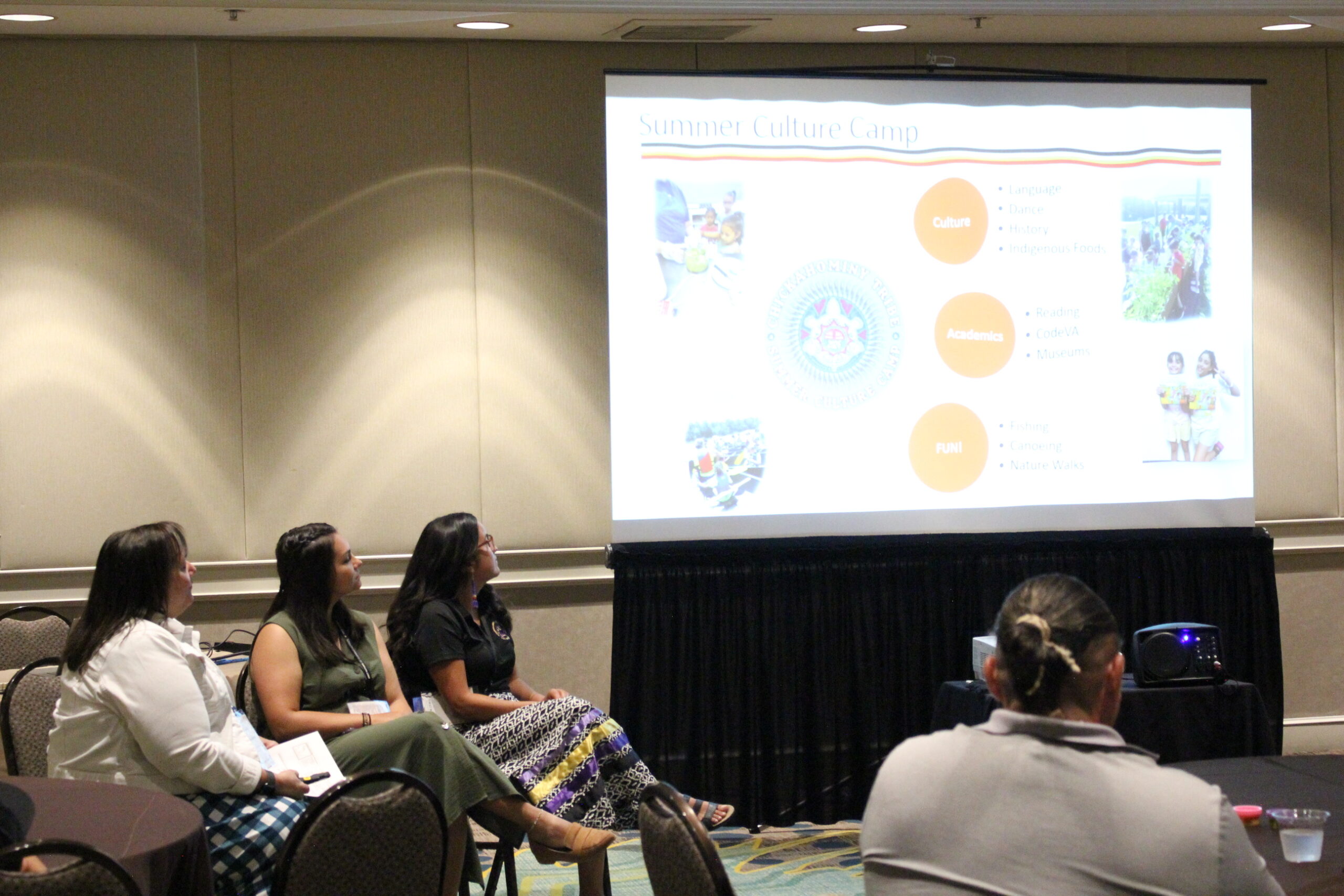
Language is a vital asset for Native people and communities. It defines who we are and where we come from, capturing value systems that cannot be translated into English. At First Nations’ Future Lead...
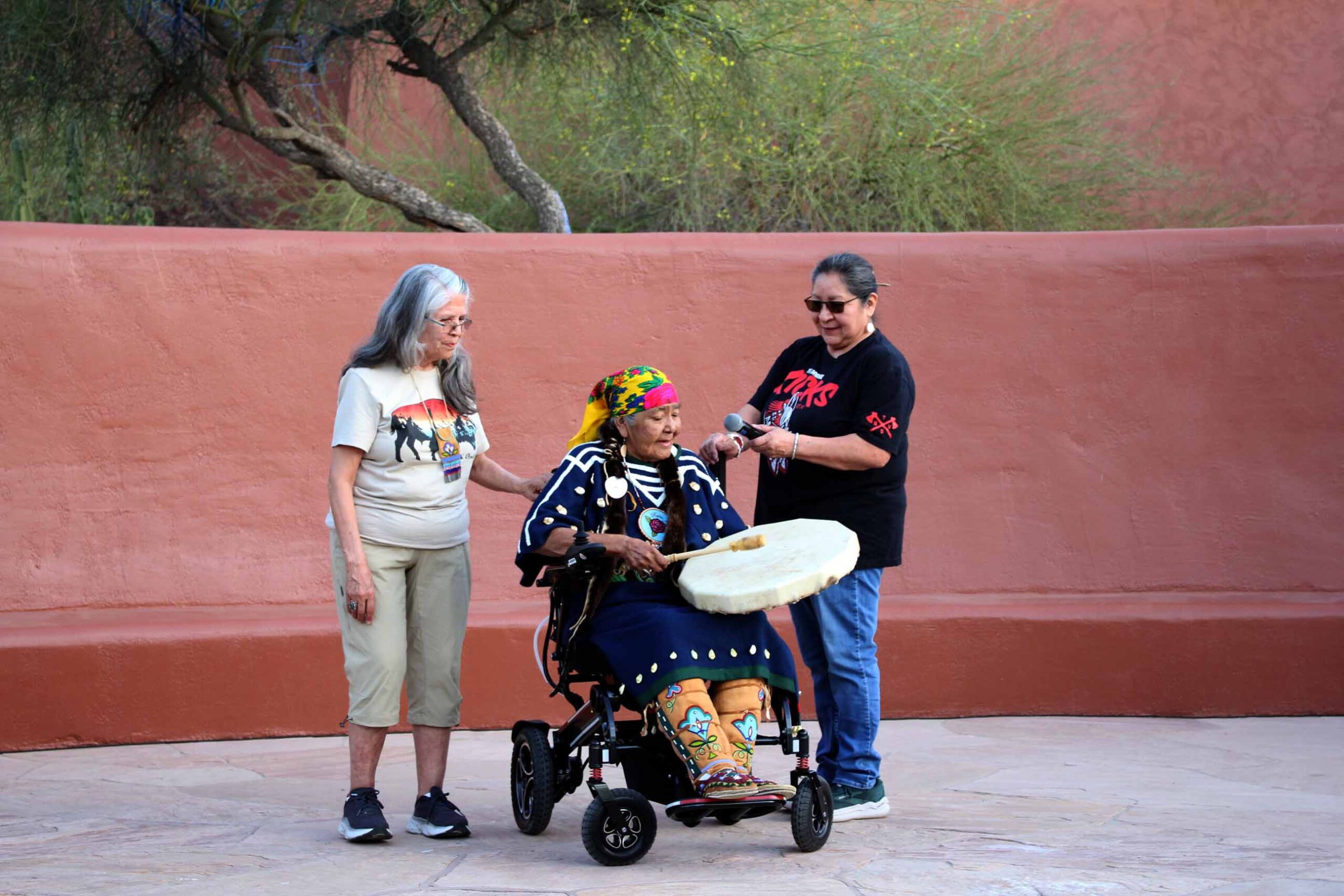
Since First Nations launched the Luce Indigenous Knowledge Fellowship in 2020, we have recognized and supported 74 exceptional Native leaders, knowledge holders, and knowledge makers doing noteworthy