Charles E ‘Aulii’ Mitchell
Native Hawaiian

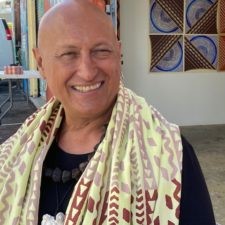
Native Hawaiian
 First Nations Development Institute (First Nations) is excited to continue to partner with the Henry Luce Foundation (Luce) for the Luce Indigenous Knowledge Fellowship, a program to advance and support the work of Indigenous knowledge holders and knowledge makers dedicated to creating positive community change.
In 2021, the fellowship was expanded to award $75,000 and 13 new fellows committed to preserving and sharing Indigenous knowledge with future generations.
Charles E. “Aulii” Mitchell is the only Kumu Hula in the world committed to creating, preserving, and perpetuating the practice of carving and dressing images for the ritual dancing of Hula Ki’i that is closest to the oldest written accounts.
As a member of the 2021 cohort of Luce Indigenous Knowledge Fellows, Aulii is focusing on revitalizing this traditional medium of communication to strengthen the sacred and secular wellbeing of Ka Lāhui Hawai’i, the Hawaiian people, through Hula Ki’i.
Of Native Hawaiian ancestry, Charles E. “Aulii” Mitchell is a Kumu Hula or traditional hula knowledge keeper and teacher of Hālau ʻo Kahiwhaiwa. As a member of the 2021 cohort of Luce Indigenous Knowledge Fellows, Aulii is focusing on revitalizing this traditional medium of communication to strengthen the sacred and secular wellbeing of Ka Lāhui Hawai’i, the Hawaiian people, through Hula Ki’i.
As one of 13 fellows selected for the second cohort, Aulii is using this fellowship to find a new workspace where he can continue to create, preserve, perpetuate, and disseminate the traditions of Hula Ki’i . Additionally, he is organizing the first-of-its-kind Hula Ki‘i exhibition, which will assist in the launching of a manuscript about the rich cultural traditions and art form he inherited from his family.
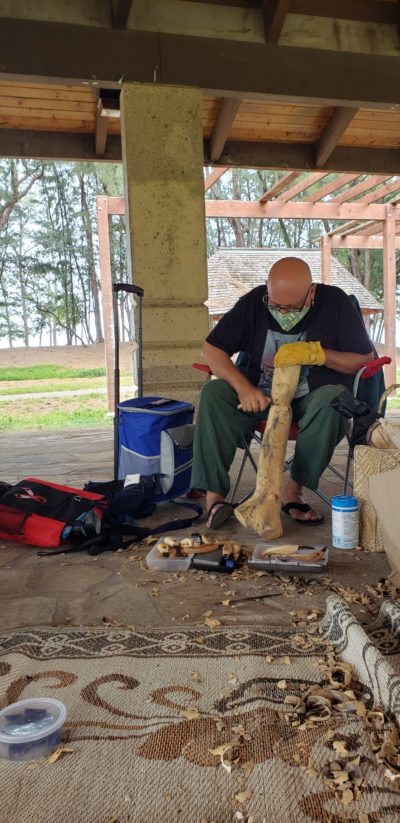
Charles “Aulli” Mitchell is a traditional practitioner of the critically endangered hula dance genre known as the Hula Ki‘i or Hawaiian puppetry.
About Aulii
Kumu Aulii is a third generation Kumu Hula of Hula Ki’i , a dance that was passed down to him through oral tradition by his grandfather Charles Cash and his mother Harriet Aana Cash Mitchell. Aulii states that the songs of the Hula Ki’i were kept in his family for two generations and that his mother shared the research of its true story over three decades ago.
By the time he was 12 years old, Aulii earned the title of a Kumu Hula and was considered a kumu level hula teacher and knowledge keeper under his mother. He has practiced and shared this rich cultural tradition and art form for nearly five decades and is determined to share this traditional practice with other kumu hula and their hālau hula or hula schools and the younger generations.
Keeping a Lost Art Alive
The need to pass down this knowledge is great. Since time immemorial, Native Hawaiians have practiced Hula Ki’i , or “the dance with images,” to honor and celebrate their culture. Hula Ki’i takes many different forms, ranging from making carved images, to dancers physically replicating the images, to dancers manipulating the images by hand. All forms are traditional to familial lines of old hula masters.
In the 1820s, Christian missionaries entered Hawaii with the goal of converting Native Hawaiians to Christianity. In addition to introducing Native Hawaiians to this new religion, missionaries also burned down the heiau or religious temples and ki’i or idol images. Ultimately, settler colonizers forced this traditional cultural practice of hula and its internal practices underground for nearly two centuries.
Over the years, Aulii’s family relied on the oral traditions to keep the Hula Ki’i dance alive. For instance, Aulii recalls his mother sharing the songs and stories with him when he was growing up. Yet, his grandfather and mother did not create the physical carved puppets with their stories and dance, as puppetry carving was banned and thus skipped two generations.
Although many of these sacred carvings were destroyed by missionaries, a handful of Native Hawaiian puppets were preserved in museums, and hula experts were able to fill in that missing piece by recreating them. “It was through the intelligence of our loea hula or hula experts that we embraced the image again by carving them in a smaller form and using them to tell the stories of ancient times in the circle of our great chiefs during the 19th and early 20th centuries.”
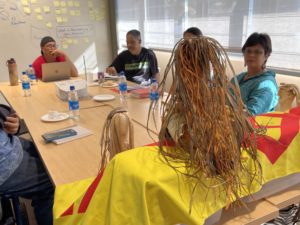
Once students learn the composing of the songs and stories unique to the Hula Ki’i, they learn how to use hand tools to carve their puppets. They then learn how to make and dress them, using the Indigenous methodology of kapa making.
As he grew older, Aulii says his mother challenged him to reclaim and revitalize this traditional practice. Toward this goal, Aulii began traveling to many of the museums to study the carved images so he could learn how to make them himself. When he returned to Hawaii, Aulii earned an associate’s and bachelor’s degree in anthropology. More recently, he earned a master’s in Indigenous knowledge from the Te Wānanga o Aotearoa in New Zealand.
Aulii now uses his lifelong cultural knowledge and newly acquired degrees to teach a new generation how to carve, preserve, and perpetuate the Hula Ki’i.
Sharing Indigenous Knowledge
Today, Aulii is one of only three family tradition holders of Hula Ki’i. He practices the carved form of Hula Ki’i in the traditional manner. Aulii has taught many students over the past 48 years. He says, “Time is short. We need to pass on this tradition to the hālau hula or hula schools where [our traditional songs and stories] will be loved, cared for, and perpetuated for the next 100 years.”
Aulii describes the teaching of Hula Ki’i as a sacred birthing process, as it also requires nine months from start to finish. During that nine-month period, Aulii teaches students all aspects of the Hula Ki’i and its songs and stories. According to Aulii, students first learn the songs, chants, and stories because they reflect the traditional cultural beliefs and values.
After students compose the songs and stories unique to the Hula Ki’i, they learn how to use hand tools to carve their puppets. They then learn how to make and dress them, using the Indigenous methodology of kapa making. Kapa making begins with cutting the wauke plant and removing its outer bark. Students then ferment, beat, and dye the bark so they can dress the Hula Ki’i in the kapa, the traditional clothing of the Hawaiian people. From there, they choreograph the dance.
Once students have completed their carvings, Aulii will organize a Hula Ki‘i exhibition, where Aulii and his students will share and discuss the cultural significance of this rich cultural practice and art for with his community.
Aulii says he is committed to reviving the Hula Ki’i because Native Hawaiians have changed so much over the years. He says, “We’re so diverse now. We’re also in the midst of a pandemic. This exhibition will bring light and positivity to so much darkness and negativity.”
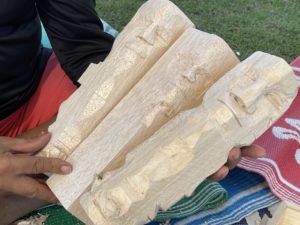
Aulii describes Hula Ki’i as a sacred birthing process as, similar to human birth, it requires nine months from start to finish.
Words of Gratitude
Aulii is grateful to First Nations and the Henry Luce Foundation for establishing this fellowship cohort, which includes two other Native Hawaiian fellows – Charles Kealoha Leslie, who focuses on traditional netting and fishing practices, and Hinaleimoana Wong-Kalu, who is making a documentary that focuses on gender diversity and healing.
Aulii says that all fellows, regardless of their tribal backgrounds and different interests, share many similarities. He says, “We’re the true nations. Our knowledge comes from our ancestors. I enjoy that we can all relate to each other spiritually.”
The Luce Indigenous Knowledge Fellowship provides Indigenous knowledge holders and knowledge makers with mutual support and understanding. Aulii says, “Words cannot express how grateful I am to the Henry Luce Foundation and First Nations for this fellowship.”