Charles Kealoha Leslie
Native Hawaiian


Native Hawaiian
 First Nations Development Institute (First Nations) is excited to partner with the Henry Luce Foundation (Luce) for a second year of the Luce Indigenous Knowledge Fellowship. In 2020, First Nations and Luce awarded 10 $50,000 fellowships to advance and support the work of Indigenous knowledge holders and knowledge makers dedicated to creating positive community change.
In 2021, the fellowship was expanded to award $75,000 to 13 new fellows committed to preserving and sharing Indigenous knowledge with future generations.
Charles Kealoha Leslie (Native Hawaiian), better known as “Uncle Chuck,” has been a lifelong fisherman. He was born in Nāpo’opo’o fishing village on the shores of Kealakekua Bay in 1941, a historic area where British explorer Captain James Cook once landed and later died.
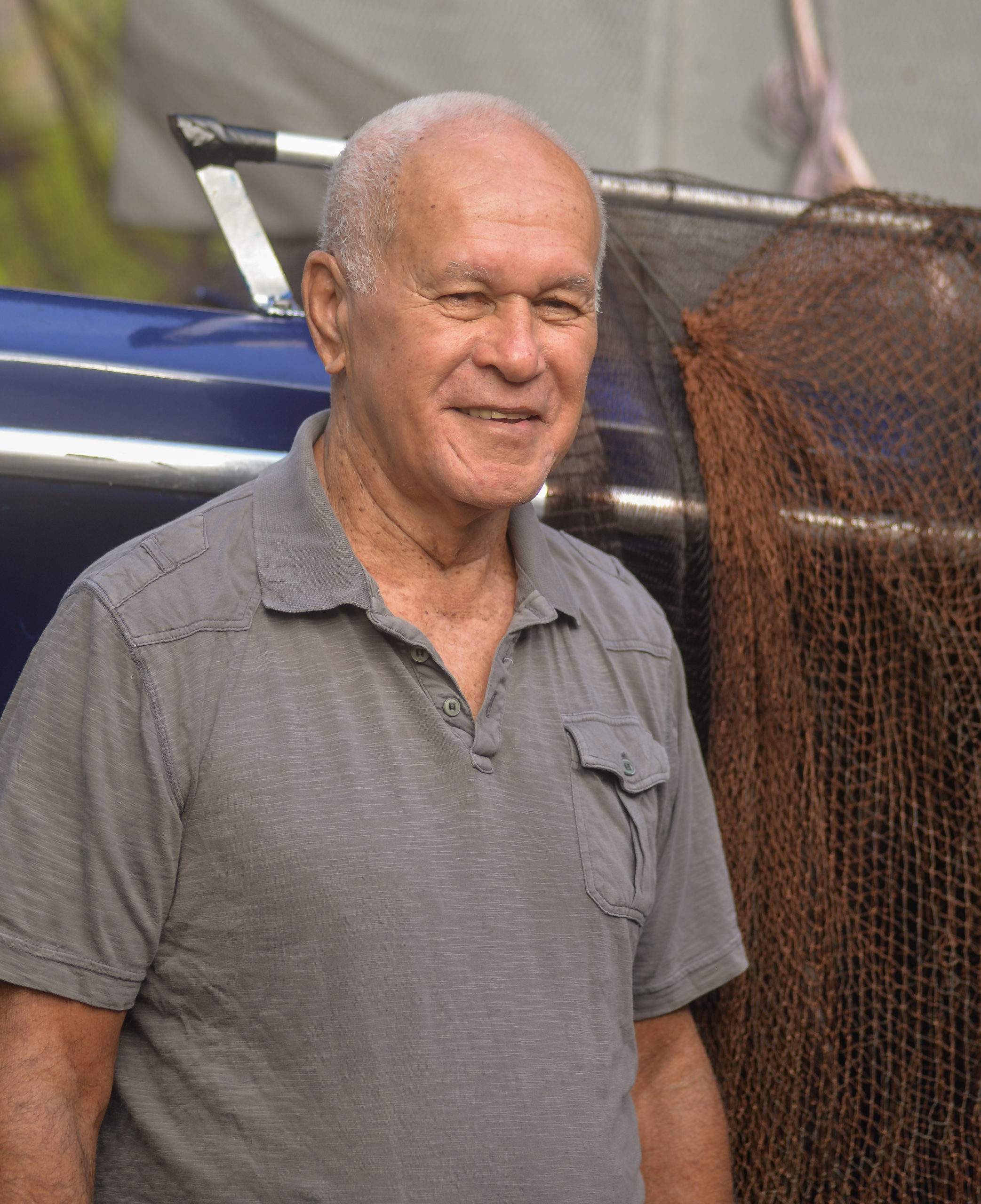
Charles Kealoha Leslie, Native Hawaiian
When Chuck was 5 years old, his parents and grandparents began training him in traditional fisherman ways, known as Hawaiian lawai’a.
Today, Chuck is one of the last living net-fishing elders (kupuna lawai’a) in Hawai’i. Through the years, he has taught thousands of community members about traditional fishing methods, including the specialized art of net-making.
“There are a lot of young fishermen here doing net-fishing, but they don’t know how to make the nets. There are four of us left who make the nets for them,” says Chuck. “They keep saying, ‘Make the net, make the net.’ I keep telling them that they must learn themselves because I’m not going to be here forever.”
His wife and business partner, Krista Johnson, nominated Chuck for FNDI’s Luce Indigenous Knowledge Fellowship to help him continue his work in reviving and passing on traditional fishing knowledge to Native Hawaiian families, children, and high-risk youth.
“These Indigenous Hawaiian practices teach a broad base of values that are much needed in today’s world,” says Krista. “They are based on mutual respect, caretaking of one’s community, and love for one’s wahi pana, or sacred place.”
Getting Youth Hooked on Fishing
Chuck has made it his life’s mission to teach younger generations how to catch ʻōpelu using traditional, homemade nets. To Native Hawaiians, ʻōpelu is a sacred fish that guided their ancestors to the Hawaiian Islands. ʻŌpelu is still a major food staple used as bait for larger fish, and to feed and nourish the entire community.
Chuck admits that it is difficult to teach youth this important cultural practice, as it requires a lot of patience. He notes that it takes him at least 100 hours to make one net. Students must sit and practice in silence. No phones, no television, no music, and no social media.
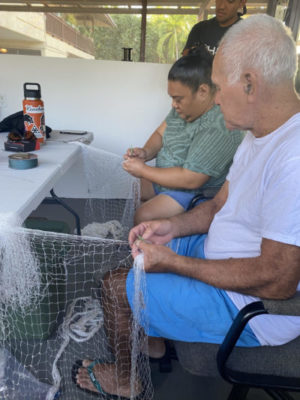
Chuck working with his apprentice, Shay, from Waimanalo Limu Hui, in the new net-making room he built with fellowship funds.
Although this required focus is challenging for many students, he observes that learning is not impossible and this slow and steady process seems to have a very positive effect ─ especially on high-risk youth.
He recalls one young man who was often reprimanded in school because he would not sit still. However, the student enjoyed sitting quietly and making nets ─ so much so that this young man still works with Chuck today.
In addition to teaching, at no charge, in Native Hawaiian immersion classrooms, Chuck also teaches smaller workshops and participates in various cultural festivals throughout the year.
How Will the Fellowship Help?
The Luce Indigenous Knowledge Fellowship provides the professional development training and funding that Chuck needs to preserve and perpetuate traditional fishing practices in his village and on other islands.
Through the Luce fellowship, the devoted fisherman plans to develop an Indigenous lawaiʻa apprenticeship program and has built an instructional room where he can conduct classes. He will also develop a statewide lawaiʻa network for the traditional ʻōpelu fishing families.
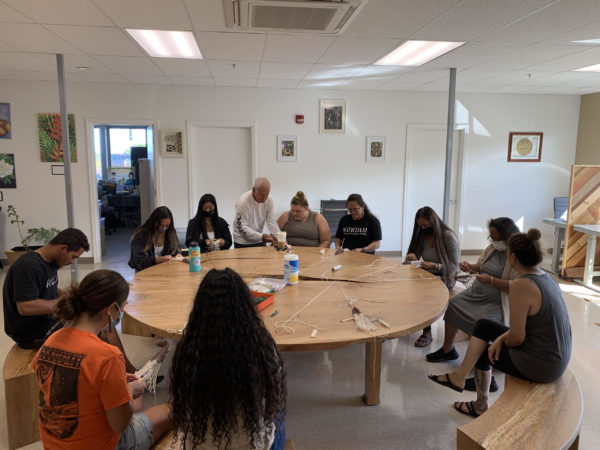
Chuck and his partner Krista Johnson teaching their assistants during their Laʻi ʻŌpua summer teaching program.
What’s more, Krista is writing a book about Chuck and his family’s fishing traditions. She is also creating a series of workbooks and short videos for the classroom. “How do you even begin to transform 80 years of traditional oral knowledge into written form and do it respectfully?” she asks. They have purchased a computer, printer, and publishing software to develop and disseminate these materials.
Chuck believes that these books are an essential component to teaching and learning. “When I was taught, there was no book. You sat and watched, and learned that way,” recalls Chuck.
Today, young people need books, he says. “They need to write everything down or they keep coming back to me to ask how to make the nets. Again, what are they going to do when I’m gone?”
The couple’s overall mission is to share Chuck’s traditional knowledge so that this important cultural fishing practice will continue for years to come.
Words of Gratitude
Chuck is extremely grateful to First Nations Development Institute and the Luce Foundation for this fellowship. Krista points out that this type of grant is typically awarded to nonprofit organizations instead of individuals. She says this funding allows them to do the work they have always done, but now they can do this work faster and reach more people.
As part of the Luce Indigenous Knowledge Fellowship, Chuck meets with the other fellows three times a year to network, share, and engage with one another’s work. At these sessions, fellows engage in rich conversations about topics relevant and helpful to Indigenous knowledge bearers and knowledge makers.
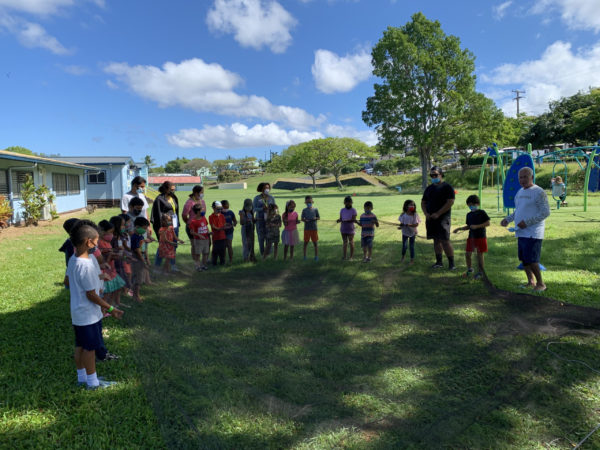
Chuck showing elementary school students the different parts of the net. He describes each piece and its function in the Hawaiian language.
According to Chuck, these cohort meetings are his favorite part of the fellowship. He says he enjoys listening and learning from other fellows. Like Chuck, many of these fellows are also the last in their communities to preserve and perpetuate important cultural knowledge.
“I learn a lot from the other fellows and their work. I watch what they are doing and how they teach, and I can incorporate that into my own work,” says Chuck. “Thanks to the support from First Nations and the Luce Foundation, what I’ve learned from my family won’t die with me, but will live on to the next generation.”
To learn more about Charles Leslie’s unique fishing methods, see the Living Ocean Production documentary about his life, “The Last Opeluman.”