Chato Gonzalez
Lac Courte Oreilles Band of Lake Superior Chippewa Indians of Wisconsin

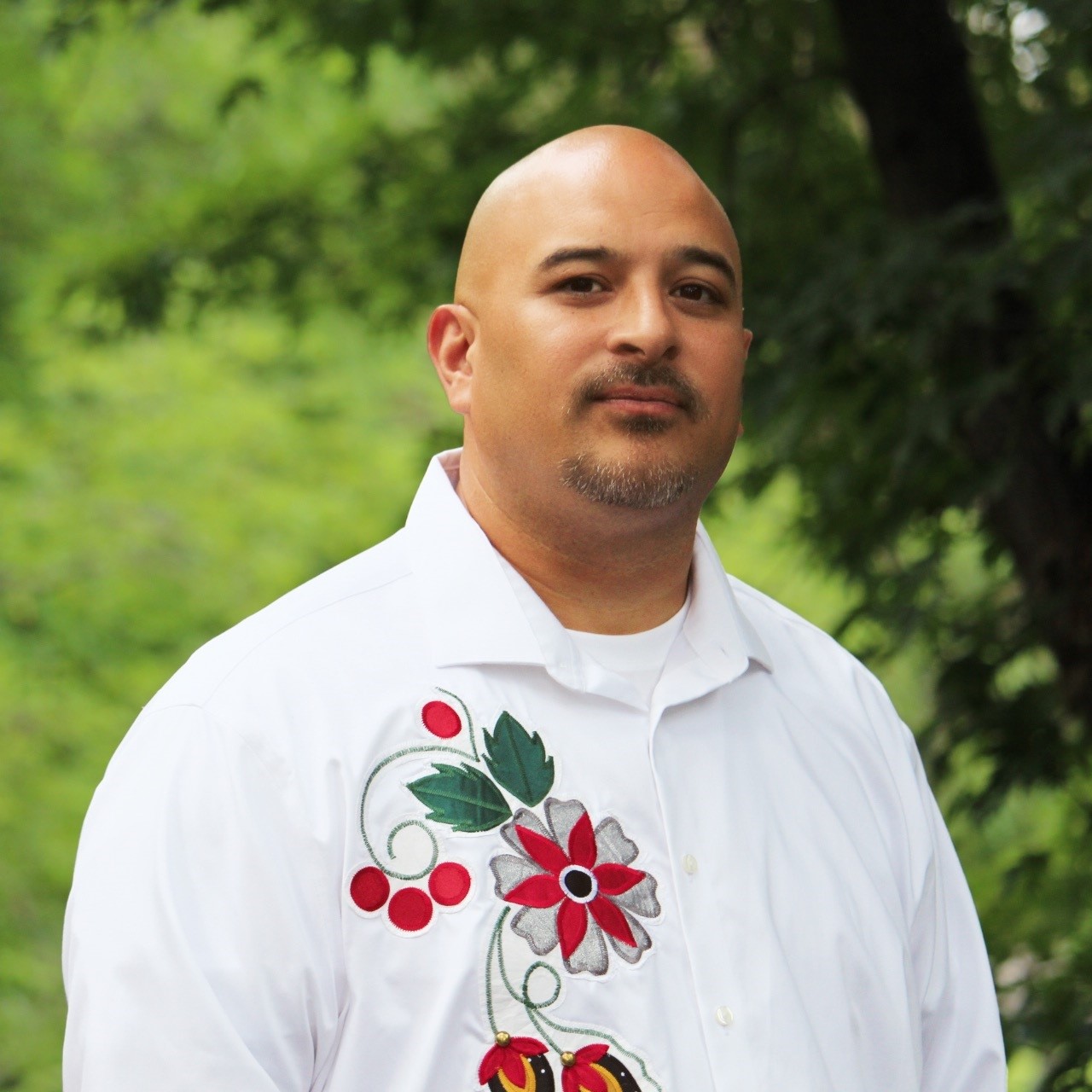
Lac Courte Oreilles Band of Lake Superior Chippewa Indians of Wisconsin
Chato Gonzalez, a 2025 Luce Indigenous Knowledge Fellow, first became interested in learning to speak his Native Ojibwe language while he was in prison in his early 20s. It was there that he met Lee “Obizaan” Staples, an Ojibwe first-language speaker and Ojibwe spiritual leader in Wisconsin and Minnesota. Obizaan was conducting sweat lodge ceremonies for inmates, and when Gonzalez heard the elder speaking Ojibwe and singing ceremonial songs, he was immediately drawn in.
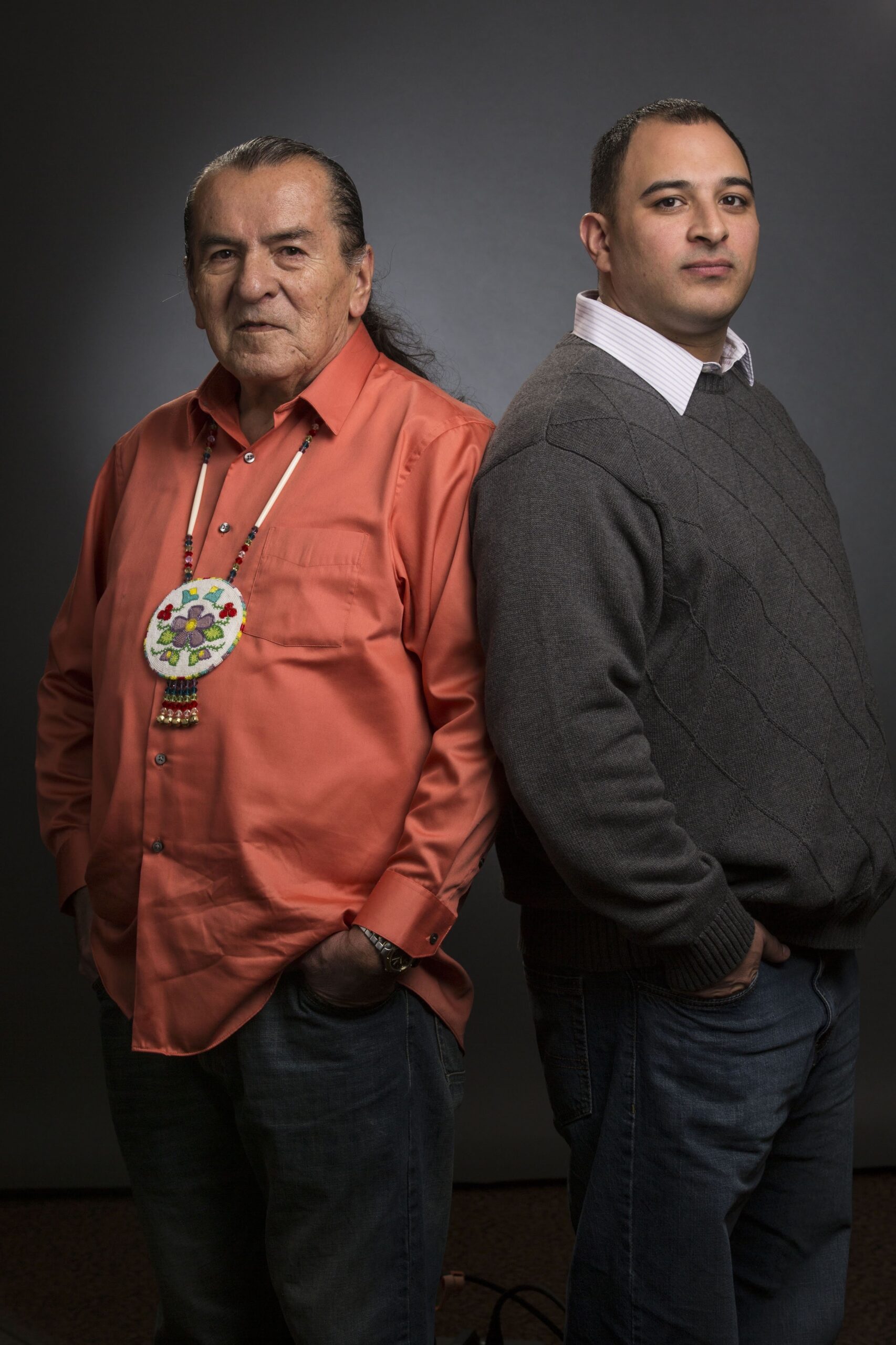
Luce Fellow Chato Gonzalez poses with his mentor, Lee “Obizaan” Staples, who taught him how to speak Ojibwe through the framework of traditional ceremonies. The elder walked on earlier this year.
“He talked just like the old people at home. It was an instant attraction,” recalls Gonzalez, a member of the Lac Courte Oreilles Band of Lake Superior Chippewa Indians of Wisconsin. He says Obizaan’s songs reminded him of a time when he was on a good path. “I used to go to drum ceremonies with my uncle until I was 13. It made me happy.”
Around the same time he met Obizaan, Gonzalez’s first daughter was born. “That changed everything,” he reflects. “I wanted to learn how to be a good father.” After serving his time, Gonzalez sought out the elder for spiritual guidance. Obizaan invited him to assist with his ceremonial duties. And through the framework of conducting traditional funeral ceremonies, Obizaan began teaching Gonzalez how to speak Ojibwe. “This took me on a journey I could never imagine,” he writes in his Luce Fellowship application.
Thus began a beautiful, decades-long relationship between Gonzalez and Obizaan, who had become the father he never had, and it changed his life. “I was a pitiful reservation kid … but as I worked with him, I began to heal from childhood and adolescent traumas.” During this period, his self-confidence grew as he learned the Ojibwe language and participated in traditional ceremonies. Gonzalez was motivated to earn a bachelor’s degree in American Indian studies, a master’s degree in teaching, and a K-8 elementary teaching license.
Over the years, Gonzalez and Obizaan worked together to help revitalize the endangered Ojibwe language. The two co-published 28 bilingual newspaper articles and three bilingual books ― one on traditional funeral ceremonies, one on ceremonial dances, and the last one on various teachings that the Ojibwe Anishinaabe people continue to follow. The Minnesota Historical Press published all three books.
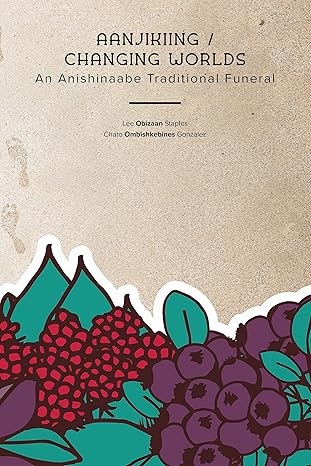
Gonzalez and Obizaan co-published three bilingual books teaching the Ojibwe language. The books were republished by the Minnesota Historical Press.
Today, Gonzalez has become a recognized language and ceremonial expert in the Ojibwe community. He currently works as the Ojibwe language Master Speaker for the Waadookodaading Ojibwe Language Institute (WOLI). However, he does not consider himself a fluent speaker of the Ojibwe language. “I describe myself as a proficient speaker because I am not a first-language speaker.”
Gonzalez says he is forever grateful to Obizaan for his guidance and mentorship. Sadly, the highly respected elder passed away this year at the age of 79, following a long illness, leaving behind a legacy of new Ojibwe speakers and ceremonial knowledge-keepers whom he had mentored over the years, whom Gonzalez now mentors.
“Obizaan always said that he had prayed for someone to pass on his knowledge to, then I came along,” he shares a special remembrance of his mentor.
Now as a 2025 Luce Indigenous Knowledge Fellow, Gonzalez will continue Obizaan’s mission to create new Ojibwe speakers to help preserve the endangered language for many generations to come.
Plans for the Luce Fellowship
With the help of First Nations’ Luce Indigenous Knowledge Fellowship, Gonzalez aims to create another bilingual book with the wealth of recordings and transcriptions he collected with Obizaan over many years, but never used for any of the three books they published.
“I was encouraged to start recording at the beginning of my language journey. I did not understand what I was recording, but I recorded what I could,” he tells First Nations. The focus of the new book will be different from the others. It will feature everyday stories and remembrances of Obizaan’s younger life, making it suitable for both classroom instruction and leisurely reading. Most interestingly, because Gonzalez will be working with original recordings, he also plans to include the audio recordings. “As our access to elder first-language speakers disappears in the coming years, access to the aural input of these recordings will be vital to create new, authentic-sounding speakers,” he explains.
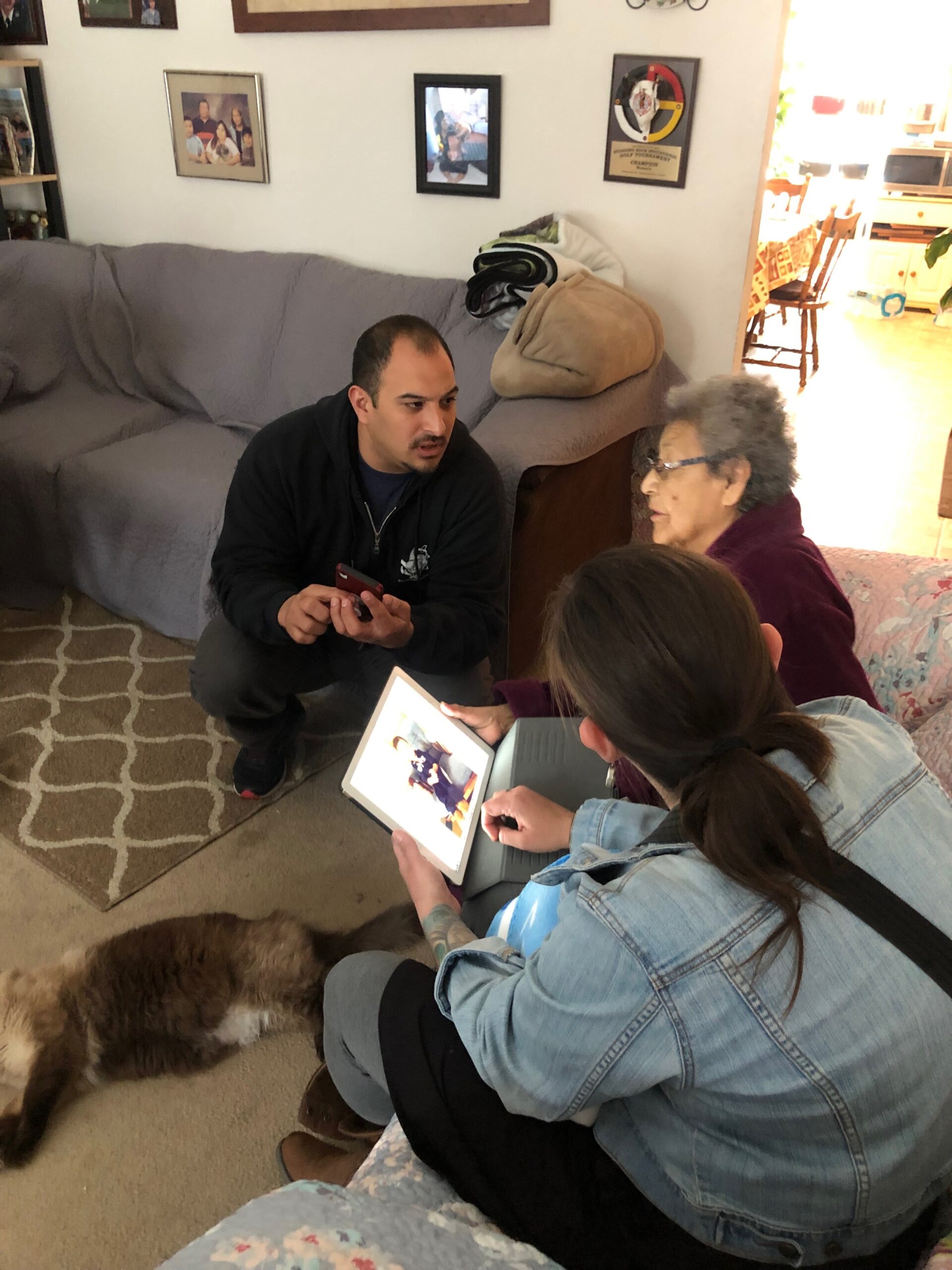
Gonzalez works often with his Native community to teach Ojibwe language skills.
In addition to his Luce Fellowship goals, Gonzalez has been involved in another language revitalization project since 2019 called the Rosetta Stone Ojibwe project which has become a vital resource for teaching the Ojibwe language nationwide. Obizaan had helped with this endeavor before he walked on.
Working with the Rosetta Stone language-learning corporation, Gonzalez and the team created the Ojibwe version of multimedia software lessons and teaching materials to support language learners from beginner to intermediate-advanced levels. Lessons can be accessed online or on a cell phone.
As the project lead, Gonzalez worked closely with elders to develop the curriculum, edit text in English and Ojibwe, and coach voice actors in pronunciation.
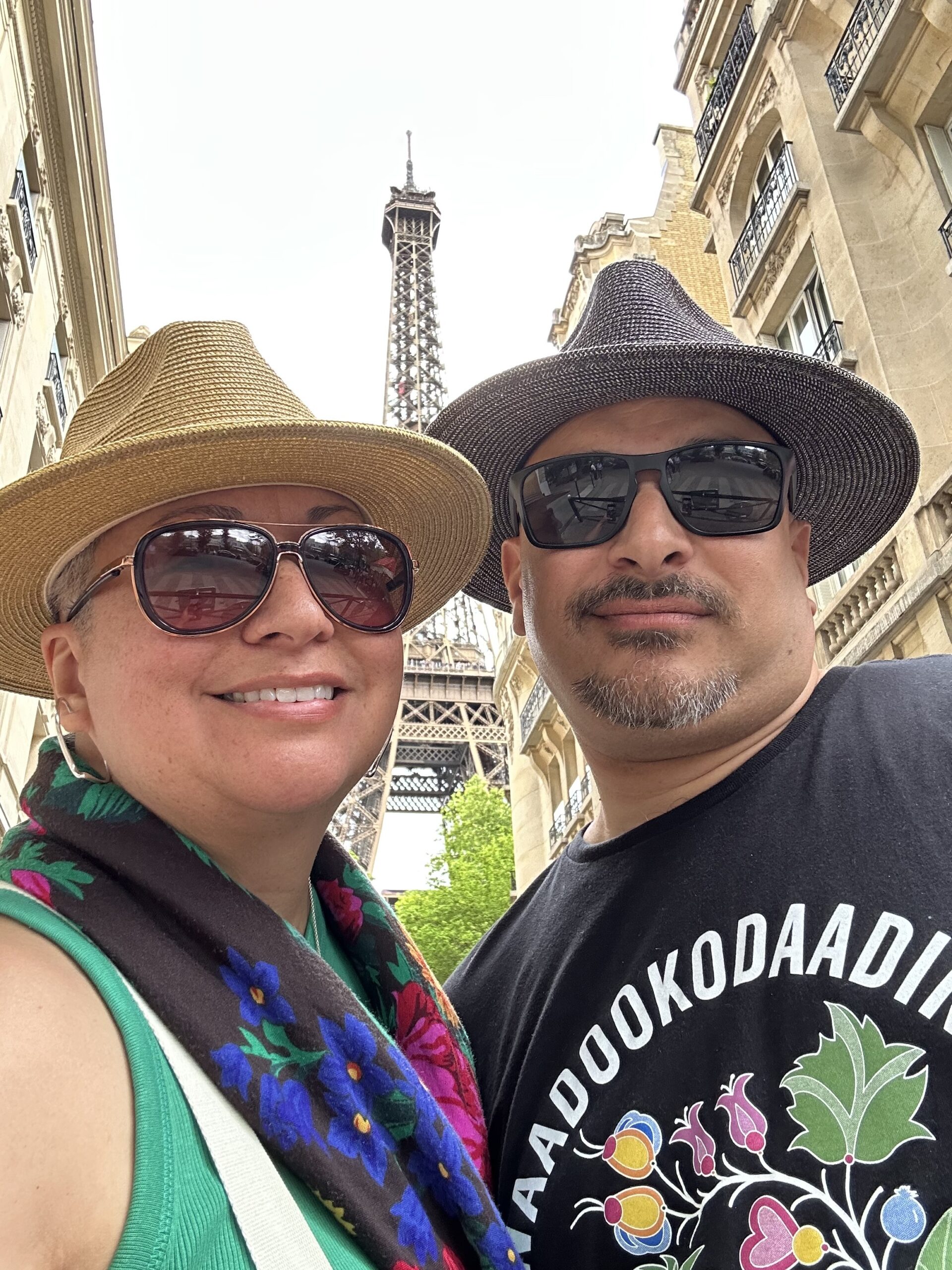
Gonzalez is married to Brooke “Niiyo” Gonzalez, a 2021 Luce Indigenous Knowledge Fellow. They plan to open an Ojibwe language college to grow new speakers.
The BIG idea to expand Ojibwe language domains with another Luce Fellow
Gonzalez is married to Brooke Niiyogaabawiikwe “Niiyo” Gonzalez, a 2021 Luce Indigenous Knowledge Fellow and former executive director of the Waadookodaading Ojibwe Language Institute (WOLI), where Gonzalez now serves as the master speaker.
He and his wife have a “big picture” idea to expand the use of the Ojibwe language. They aim to establish an adult immersion program to produce more Ojibwe speakers, inspired by the successful adult language immersion programs that have been effective for the Mohawk Nation over the last 25+ years.
“We are losing all our elders, and we need teachers. We need speakers, we need parents speaking our language to their children. And we need ceremonial leaders, too,” says Gonzalez. He explains the urgency: “Language teachers currently at our K-8 language immersion school are getting burned out and leaving in high numbers. With only a small number of first-language speakers left, who will replace them?”
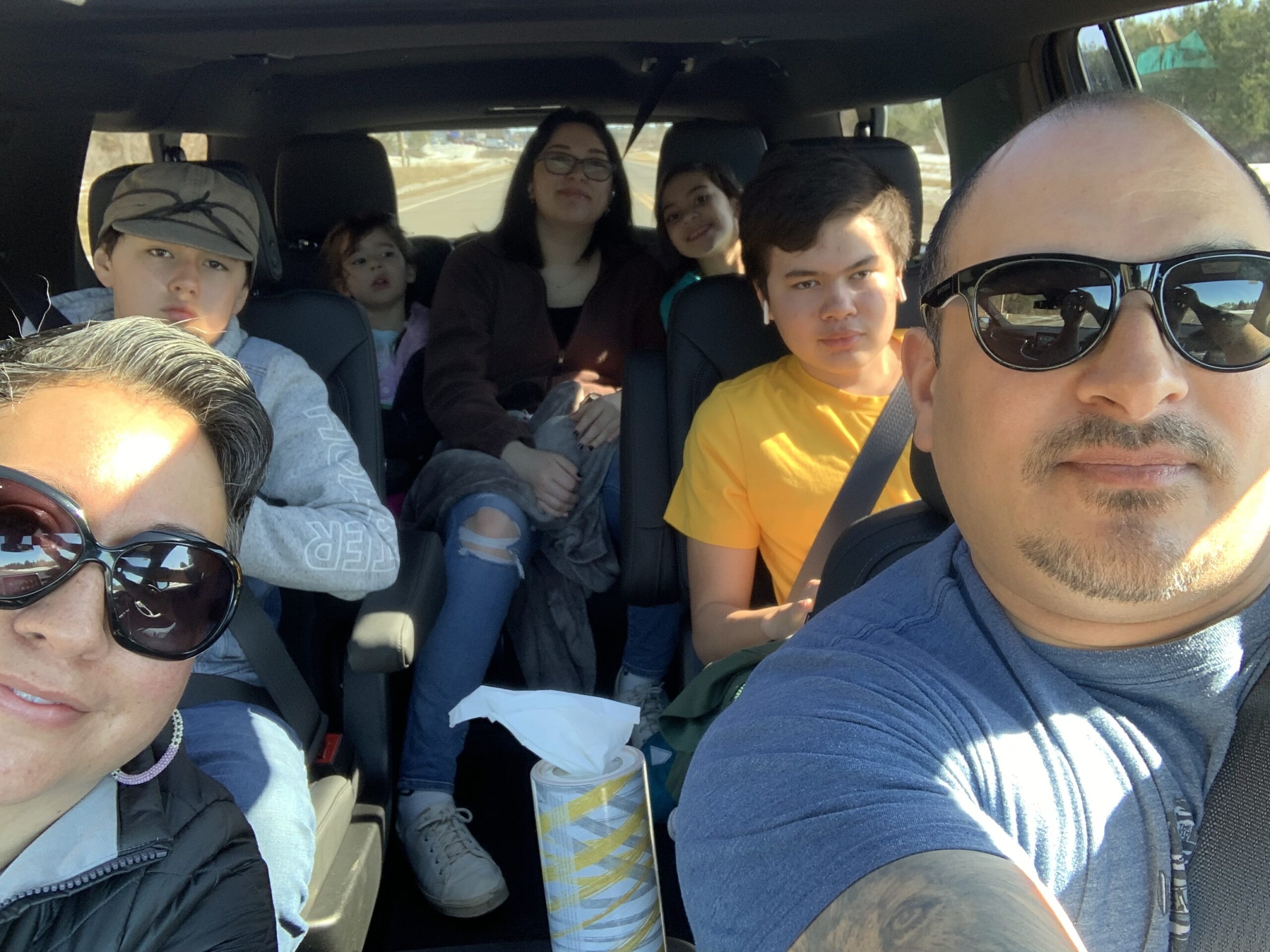
Luce Fellows Chato (2025 cohort) and Brooke (2021 cohort) Gonzalez enjoy a family day with five of their six children.
Gonzalez will also use Luce Fellowship funds to pursue his doctoral degree through a University of Hawaii program called “Hawaiian and Indigenous Language and Culture Revitalization.” Gonzalez believes that a Ph.D. will give him the academic credibility needed within the Ojibwe language revitalization movement to expand the research and implementation of Ojibwe in society.
When it comes to saving an endangered language, time is of the essence.