Coy Harwood
Blackfeet/Sisseton Wahpeton Oyate
Blackfeet/Sisseton Wahpeton Oyate
 First Nations Development Institute (First Nations) is excited to partner with the Henry Luce Foundation (Luce) for a third year of the Luce Indigenous Knowledge Fellowship. In 2020, First Nations and Luce awarded the inaugural 10 $50,000 fellowships to advance and support the work of Indigenous knowledge holders and knowledge makers dedicated to creating positive community change. Beginning in 2021, we expanded the fellowship award to $75,000 over two years to support fellows committed to preserving and sharing Indigenous knowledge with future generations. In 2022, First Nations and Luce awarded 10 $75,000 fellowships.
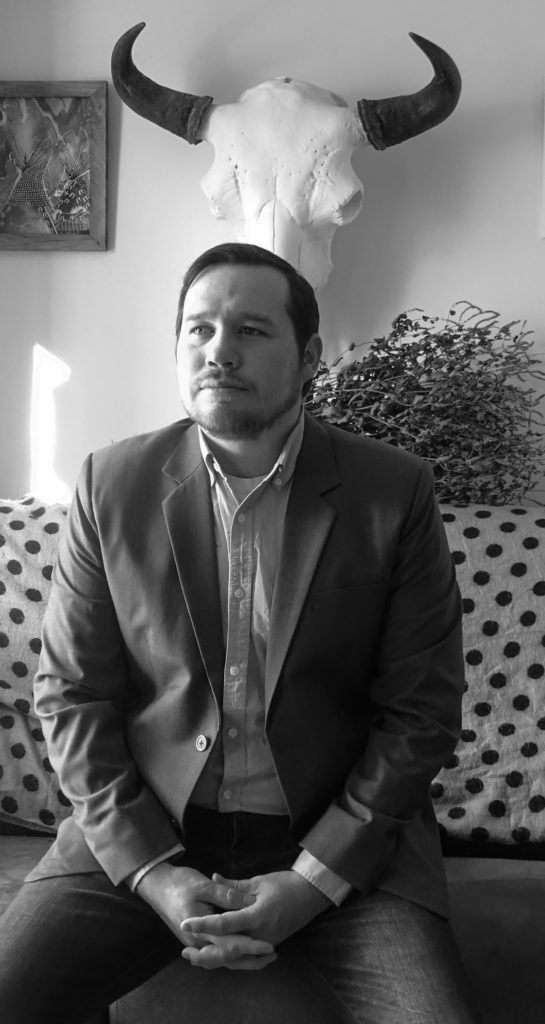
It is hard to believe that someone as young as Coy Harwood has already accomplished so much. It’s as though he has lived two lifetimes and is now working on his third.
The 35-year-old husband and father of a 2-year-old son and infant daughter is an enrolled member of both the Sisseton-Wahpeton Oyate of the Lake Traverse Reservation and Blackfeet Nation. He grew up on the Blackfeet Indian Reservation in Montana, which helped shape his vision to right the wrongs of the past and pave the way for a healthier future for his children and the Blackfeet people.
“My entire life on the rez has steeled my determination to be a change-maker, to create pathways for others, to empower our youth, and to save lives,“ he writes in his application fellowship program.
Harwood has remained true to his convictions. He has spread his endless energy in many directions, working as a scholar, a phlebotomist, an EMT, a biomedical researcher, an intern for the American Indian Physicians Association, and a college lacrosse coach. He has also traveled to Thailand to study traditional plants, and ventured over to Nepal and New Zealand to learn about different cultural practices. He dreams of visiting Mongolia one day.
Even after all those accomplishments, he once said to his wife, Rikki, “I feel like I am not doing enough.”
Last year, Harwood earned a Master of Science degree in health sciences, with an emphasis in international and cultural medicine. Currently, he is applying to medical school, with his sights set on osteopathic medicine. “An osteopath is a fully licensed physician, but has a better understanding of the body and how it works.” With his doctor of osteopathic medicine degree, Harwood plans to return to the Blackfeet Nation to open a traditional health clinic to address the numerous health issues plaguing Natives in the Northern Plains, such as cancer, substance abuse, diabetes, and suicide.
However, Harwood is conflicted ─ in the best way. While he leans toward a career in cultural medicine and improving health disparities for Montana Natives ─ who he says die 20 years younger on average than non-Natives living just a few miles away ─ he is also interested in becoming a lawyer.
“As much as we need help with healthcare on the reservation, we also need legal representation,” explains the Luce Indigenous Knowledge fellow about his dual passions and why he has also applied to law school.
 WANTED: Good lawyers in Native healthcare
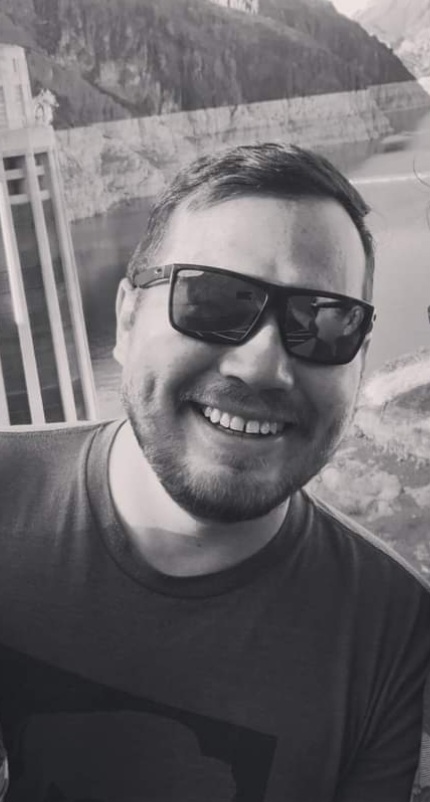
Harwood has witnessed firsthand, in his own family, how Indian Health Services (IHS) has let down the Native population time and again.
He tells the story of his grandfather who died of pancreatic cancer because an IHS doctor did not follow up with test results in a timely manner. And how he blew out his knee playing high school football and because IHS doctors never scheduled a surgery to repair it, his college wrestling career was sidelined. He says IHS is also notorious for ruining people’s credit because they never pay hospital bills.
Dentistry through IHS is no better, either. “You can get to the dentist’s office at 5:00 a.m., wait all day, and never get in for the appointment, no matter the severity of your dental issue, because the IHS dentist decided to take only two appointments that day,” states Harwood.
Throw a rock in any direction on the reservation and you will hear a hundred stories like these, he says. But the Luce fellow believes that as a lawyer, he can fight all these legal battles for Natives and win. “I might be able to make even bigger changes in healthcare through laws or settlements that would help more of my people in the long run.”
His mother, a role model
Where did Harwood get all this ambition and energy? As it turns out, the apple does not fall far from the tree.
 His mother, Kim Paul, is the founding director of the Piikani Lodge Health Institute (PLHI), a one-of-a-kind Native-led nonprofit organization “focused on promoting the health and well-being of Amskapi Piikani Blackfeet people and lands.” The institute’s motto is, “Connecting our people with research, health, and well-being.”
Paul raised four children as a single mother. “She always pushed us to do the best we could,” recalls Harwood. Once her children were in college, Paul, a high school dropout, enrolled in college in her 40s. Making up for lost time, within eight years she earned five associate degrees, two bachelor’s degrees, a master’s degree and a Ph.D. in five different fields: chemistry, biochemistry, organic chemistry, Native American studies, and education.
“My mother is amazing. She taught us to work hard for everything we have,” Harwood says with much admiration.
How he will use the Luce Indigenous Knowledge Fellowship
True to form, Harwood has big plans for the fellowship, planning to leverage the funding for as many activities as possible.
The fellowship has allowed him to finish his master’s degree in international and cultural medicine from Montana State University without interruption. He is putting that degree to work as the executive director of PLHI, where he is developing and implementing cultural-based health and wellness programs for the different communities within the Blackfeet Nation.
Using a proven PLHI camp format that has helped some Amskapi Piikani Blackfeet people overcome substance abuse, these programs will focus on mental and physical wellness by blending traditional games and activities, such as ball-and stick, with life skills.
For instance, campers will learn how to harvest every part of a buffalo ─ from cutting, drying, and smoking the meat to tanning the hide for shelter and clothing. They will also learn how to forage for traditional berries that can help lower blood glucose levels and are gathered for ceremonies and winter food storage.
Also on the horizon is a program bringing together elders and Native youth. “We will teach both generations all that we have overcome and all that we can do to increase the health and well-being of our people,” through traditional wisdom, plant foods, medicines, art, songs, and stories, Harwood explains.
He hopes the Luce Indigenous Knowledge Fellowship will go a long way to improve the lives of the Blackfeet people. “I will do as much as I can with this fellowship over the course of the next two years,” promises Harwood.
 Counting his blessings
“The Luce Fellowship has provided an amazing opportunity for me,” says Harwood, who feels very blessed. “One of the biggest blessings the Creator has given me is my wife, Rikki. We started dating when we were 19 years old.”
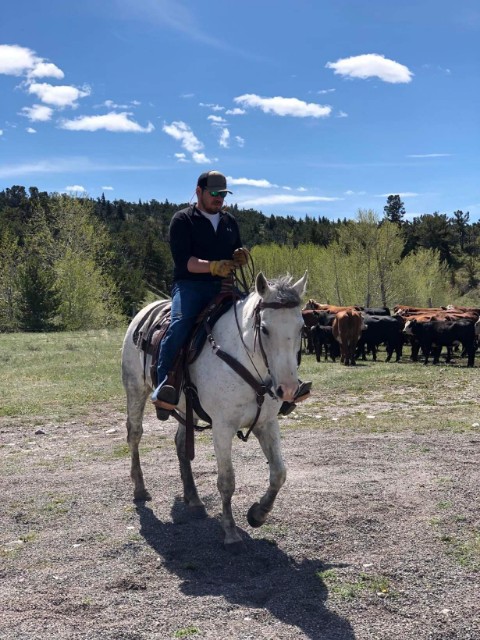
Together, they are a force of nature. Rikki (Blackfeet and Alaska Native), is pursuing a Ph.D. in Native American rural health, works at Montana State University, and started her own laser-printing business called, “Broken Down Ranch Designs.” It is named after the cattle ranch that his wife’s parents own, and where the couple live with their two children.
He and his wife share a similar purpose, especially when it comes to healthcare. “We have only one life and we better make the best of it and do what we can to help people,” says the Luce fellow. “And anything I can do to help the greater good of not just the Blackfeet Nation, but every single tribe, then I can let the sun go down and know that I did a good job.”