Damian Webster
Tonawanda Seneca Nation

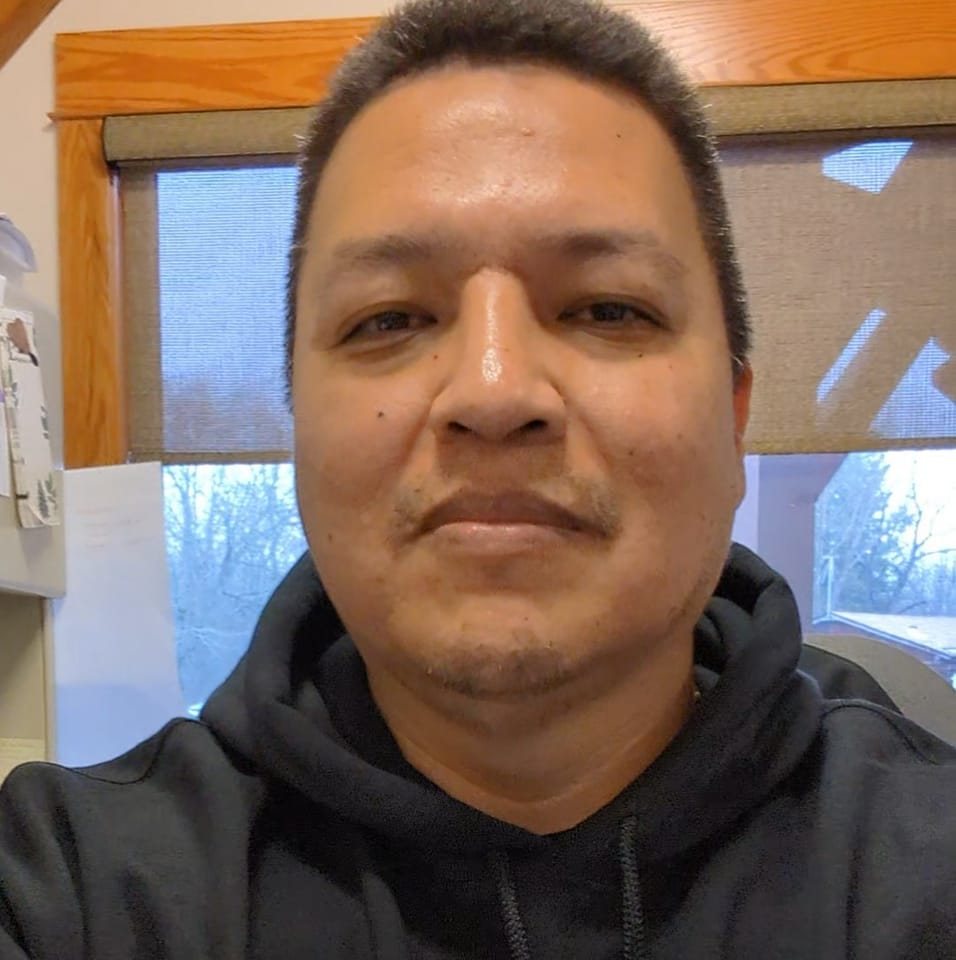
Tonawanda Seneca Nation
Damian Webster (Tonawanda Seneca Nation) gives credit to the late, great NBA star Kobe Bryant for inspiring him with a quote that he often falls back on: “Greatness isn’t about what we do or what we accomplish. Greatness is when you inspire others, who, in turn, inspire others.”
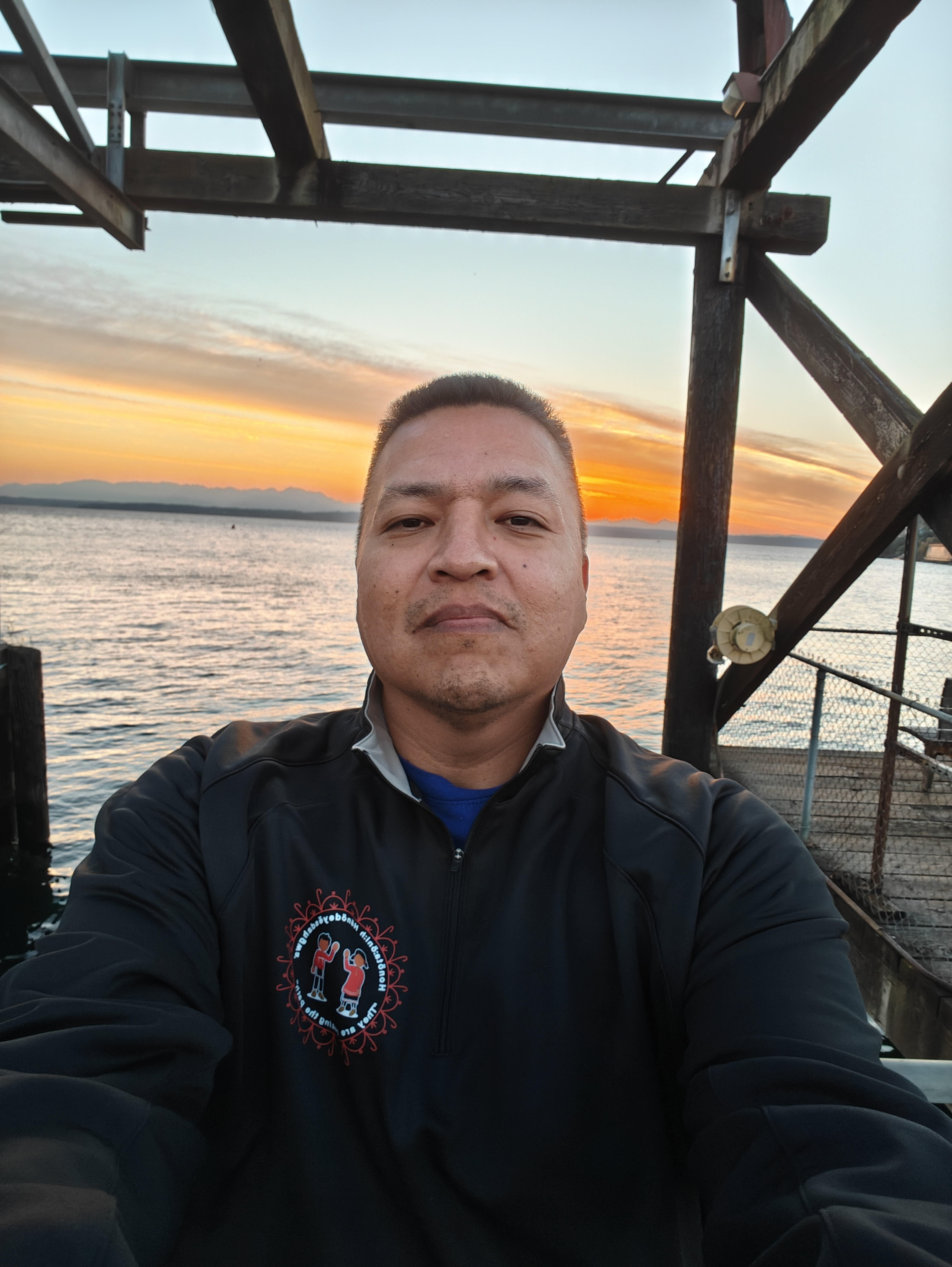
2025 Luce Indigenous Knowledge Fellow Damian Webster, pictured here in Seattle’s harbor, is dedicated to helping preserve the endangered Seneca language.
A 2025 Luce Indigenous Knowledge Fellow, Webster has dedicated the last 20 years of his life to learning, teaching, and preserving the endangered Seneca language. “For our languages to survive and thrive, we can’t just be good; we must be great,” he says.
Growing up in Buffalo, New York, Webster says he struggled with his identity as a Native American. “I was one of just a few Native kids.” When his family moved to New Mexico, he finished his senior year of high school at Santa Fe Indian School, an experience that ignited a fervent interest in his Native roots.
He went on to earn an associate’s degree in business administration from Haskell Indian Nations University and more than a decade later, a bachelor’s degree in general and Native American studies from the University of North Dakota. Between college degrees, Webster fulfilled one of his many aspirations and taught math to high-functioning special education students at Santa Fe Indian School for 8 years. “Being a teacher had always been a goal of mine,” he says, “and algebra came really easy to me.”
As for language-learning, Webster’s journey began at the age of 30, when his daughter was born. He did not grow up speaking Seneca but realized that he needed to pass it on to her in line with the Haudenosaunee Seven Generations Principle.
“The people seven generations from now should be able to enjoy the things we enjoy today,” he explains the ancient philosophy practiced by the Haudenosaunee. “Seven generations ago, our ancestors held strong to our language and culture so it would be there for us. And now we owe our ancestors for what they did for us.”
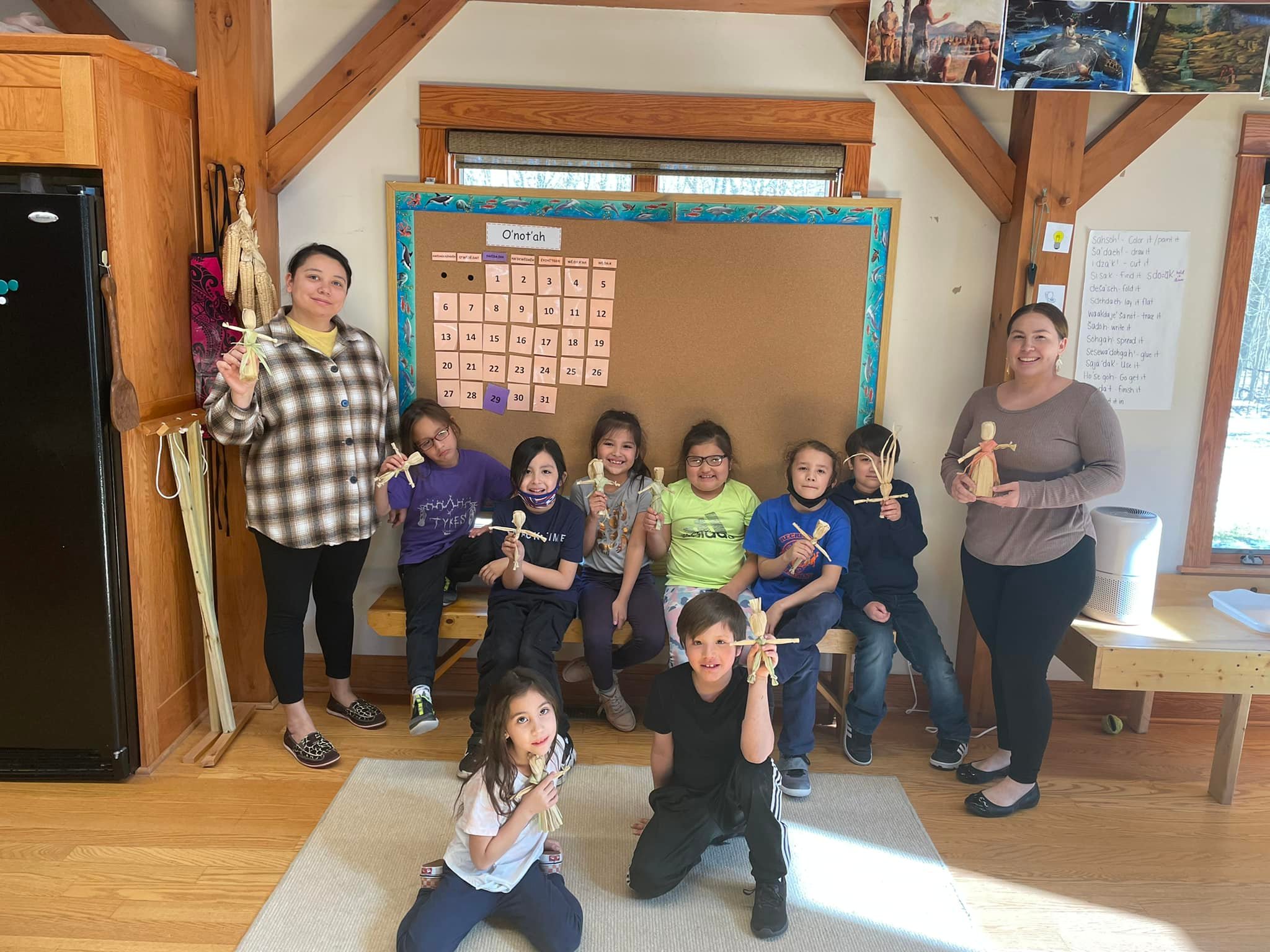
Webster serves as executive director of Lifeways, an independent school at the Tonawanda Seneca Nation, where he oversees the pre-K through third grade programs.
Most admirably, Webster taught himself how to speak, read, and write Seneca. He listened to Seneca tapes and read books in earnest; moved to Green Bay, Wisconsin, to study Oneida, a similar language; sang with drum groups; participated in traditional ceremonies; and spent four years with Seneca elders learning about their stories and language history. While he does not consider himself a fluent Seneca speaker, he says he is at “intermediate-high to advanced-low” competency. “There’s still so much to learn, but I am pretty functional in the language.”
Fast-forward to present day, and the dedicated language-learner is now the executive director of an independent school called Honöta:önih Henodeyësdahgwa’, or “Lifeways,” at the Tonawanda Seneca Nation. He oversees the pre-K through third grade programs, develops curriculum, and is the lead instructor for the adult language program. Webster also sits on several language boards, including the Indigenous Language Institute and the Language Conservancy.
“My goal is to bring the Seneca language back to the language of power within our community,” he tells First Nations of his overarching mission.
Accomplishments in language preservation
If you ask Webster why he is so passionate about learning and teaching the Seneca language, he will tell you: “I was once told that there will come a day when the elders are gone and we are going to have to know things all on our own. We have hit that day.”
Since he began working at Lifeways school in 2016, Webster has been providing professional development for child language teachers and has become the lead instructor for adult Seneca language classes. Webster developed a curriculum borrowed from the root-word method created by Brian and David Maracle in Six Nations Grand River Territory that helped build everyday speaking.
“Over the past six years, we have empowered at least 10 Seneca speakers who can speak on everyday topics, like babies, shopping, and travel, at an intermediate level.” That’s good news for the future of the Seneca language, given that the number of first-language speakers is currently in single digits. “Some speakers from our past five cohorts have moved on to teaching the Seneca language, too.”
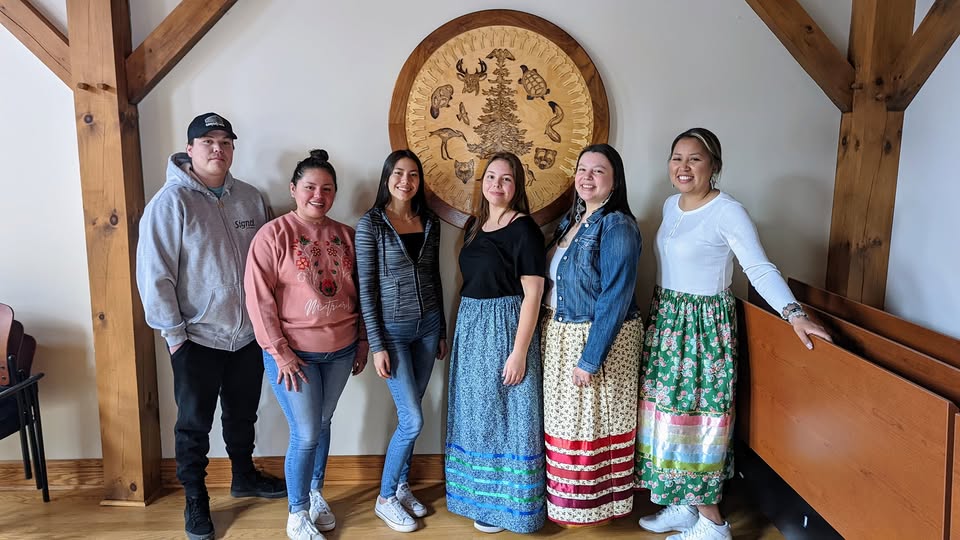
The first cohort of adult language-learners at Seneca Nation’s Lifeways School.
In 2023, Webster organized the first-ever All-Seneca Language Conference. “The idea was for language educators to come and show us what they do. Instead of talking to the audience, show us how you create curriculum. How do you teach family members? How do you make it fun and exciting?” This different approach invited much audience participation and proved to be so successful that two more language conferences followed in subsequent years.
Understanding the power of networking, Webster also created networks of language teachers and administrators, locally and nationally, that share language-learning strategies. He works with language teachers in Canada and in eight states: New Mexico, North Dakota, South Dakota, Oklahoma, Minnesota, Wisconsin, Washington, and Alaska.
“Our language needs a consistent and concerted effort each day. Every day is another opportunity to grow, help others, and inspire our future users,” he says.
His plans for the Luce Fellowship
Webster has big ideas for how to best leverage his Luce fellowship funds. First, he has hired a consultant to teach him how to use transcription software. “It will allow me to transcribe old recordings and recent visits with elders, students, and colleagues to create materials for future language cohorts, provide new dictionary entries, and offer new material, such as more YouTube and social media videos.”
Another goal that he is excited about is organizing and hosting a local Seneca Language Bowl, featuring teams of all ages, children through adults. It is the first step toward his larger vision of a Haudenosaunee Language Bowl in which all six tribes and languages of the confederacy will participate.
Language bowl winners will be rewarded with some big prizes, possibly computers, iPads, and gift cards. “We have basketball tournaments out here all the time and winners get cash prizes. So why not offer the biggest and best prizes for our language people, too? Not only will they get a cool prize, but they will also be learning the other languages within our Haudenosaunee culture,” says Webster.
The language teacher places a high value on learning from others. As such, his fellowship plans include to continue traveling to other language communities to meet other language warriors who are making a difference in their own tribal communities. He especially wants to visit the Tlingit Language Community in Alaska and the Cherokee Language Community in North Carolina.
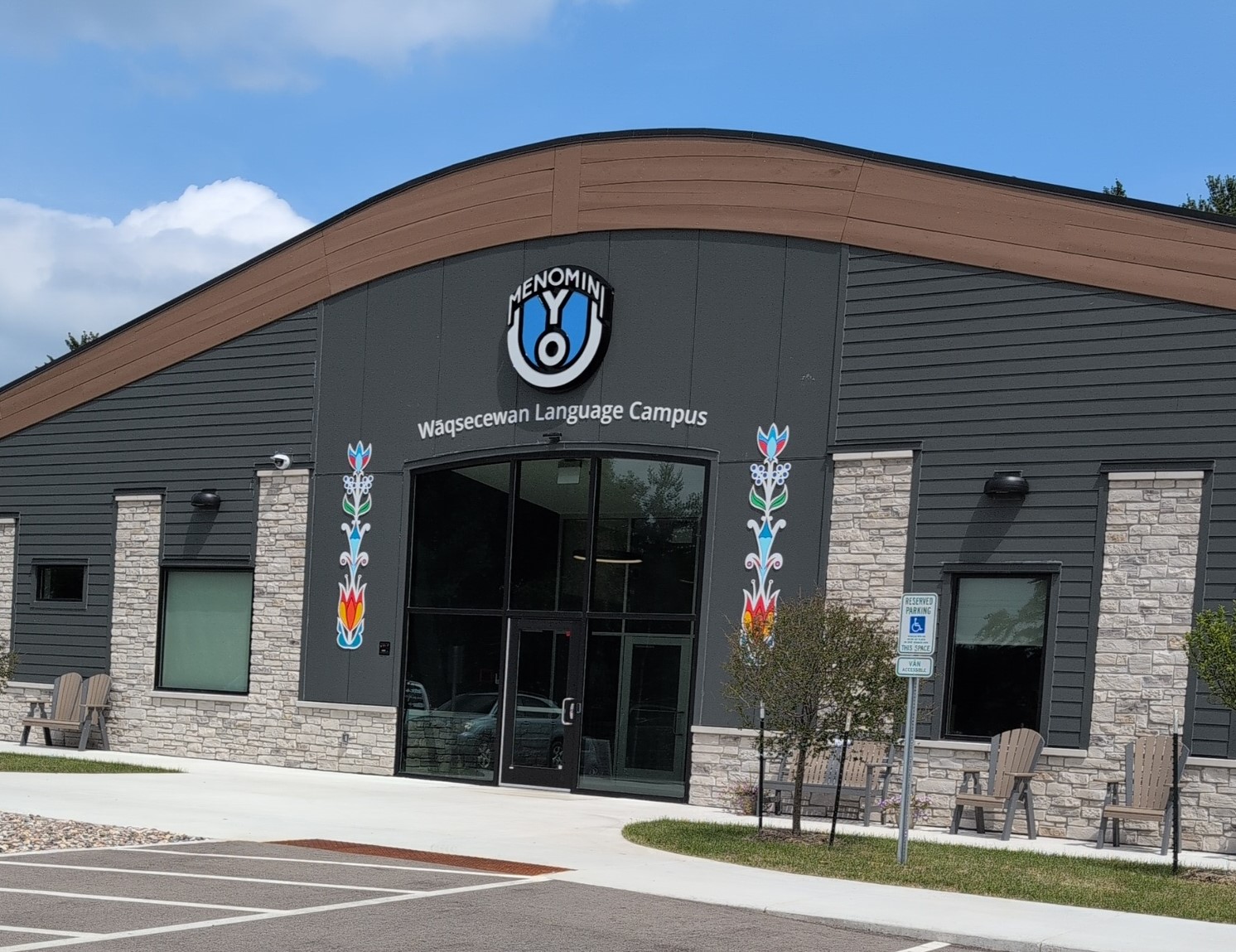
This summer, Webster toured the new MenominiYOU facility in Kashena, Wisconsin, built for language teaching and learning classes.
This summer, he took a road trip to 12 language locations in the Midwest, in South Dakota, Nebraska, Kansas, Oklahoma, Iowa, Minnesota, and Wisconsin. He says one of the highlights of this three-week language-learning journey was in Pine Ridge, South Dakota, where he stayed with a friend and his wife, who are raising their three young kids in the Lakota language.
“Even though English is spoken in the home, the kids stayed entirely in the Lakota language,” he recalls. Laughing, he adds: “I even got to see a 3-year-old have a meltdown entirely in Lakota!”
Other highlights included his visit to the Durbin Feeling Language Center in Tahlequah, Oklahoma, to tour its student and elder housing and school; as well as MenominiYOU in Kashena, Wisconsin, to see a brand-new facility built solely for language teaching and learning.
Optimism abounds for the future of the Seneca language
In his community in New York, there are no first-language speakers left, so Webster says he is doing everything he can to empower more second-language speakers of Seneca. He understands the responsibility full well and gladly accepts the challenge.
“We are trying to go against the impossible. But I believe that nothing is impossible. I do as much as I can and leave it all out on the field and just hope against hope that my efforts will rub off on other people, who will carry the mission forward. Because our language is what matters most.”