Gordon Umialīloalāhanauokalākaua King Kai
Native Hawaiian

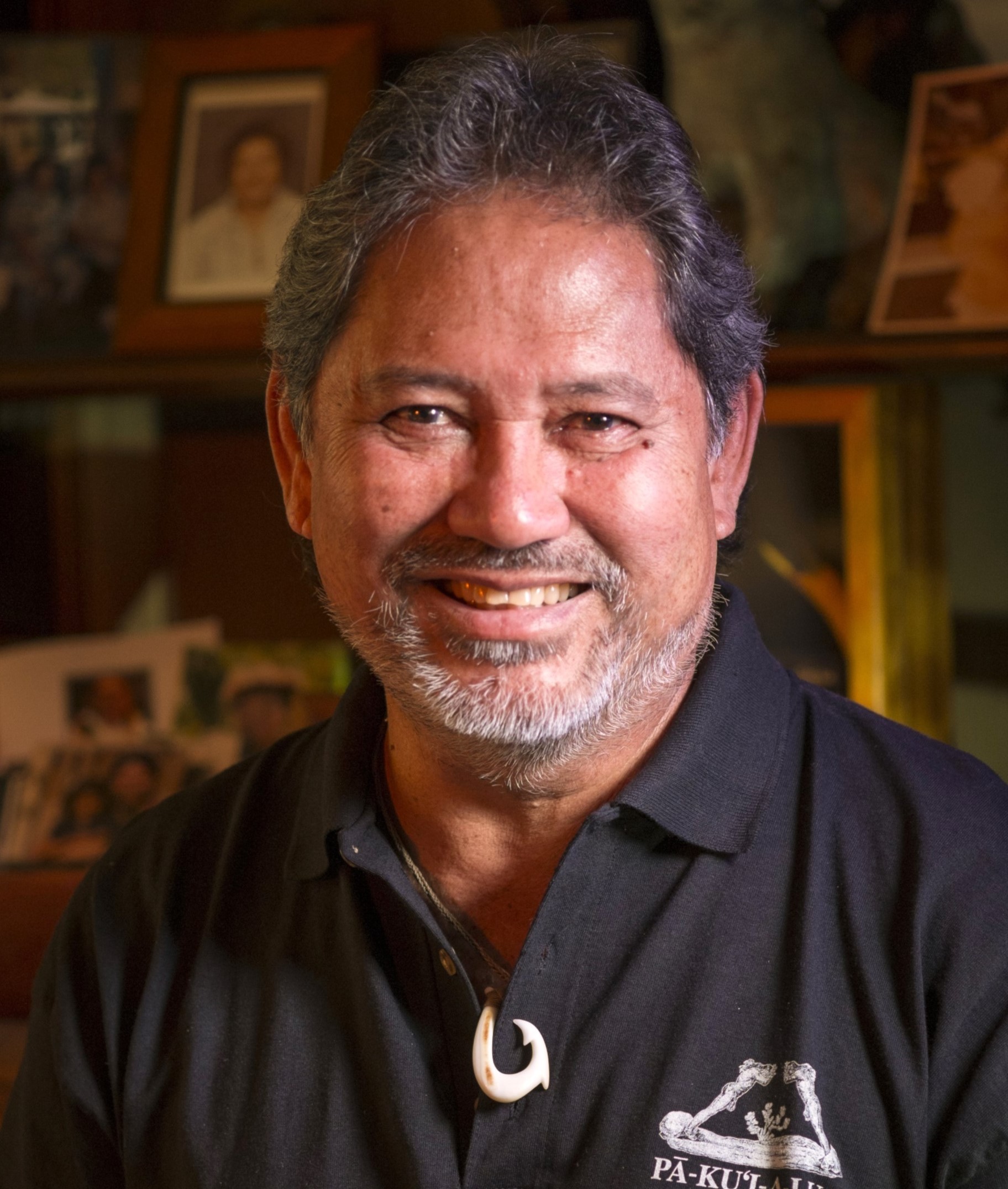
Native Hawaiian
Gordon Umialīloalāhanauokalākaua King Kai, better known as “Umi,” is adamant. “I am not an artist. I am an implement maker. Everything I make is functional.”
The Native Hawaiian, born and raised in Oʻahu, has carved a highly respected name for himself for making authentic, one-of-a-kind, traditional Hawaiian implements and weapons. What started as a hobby “out of curiosity” ― when Umi carved his first slashing tool with inlaid shark teeth that he bartered for at the age of 16 ― eventually grew into the Kai Kompany, launched in 1990.
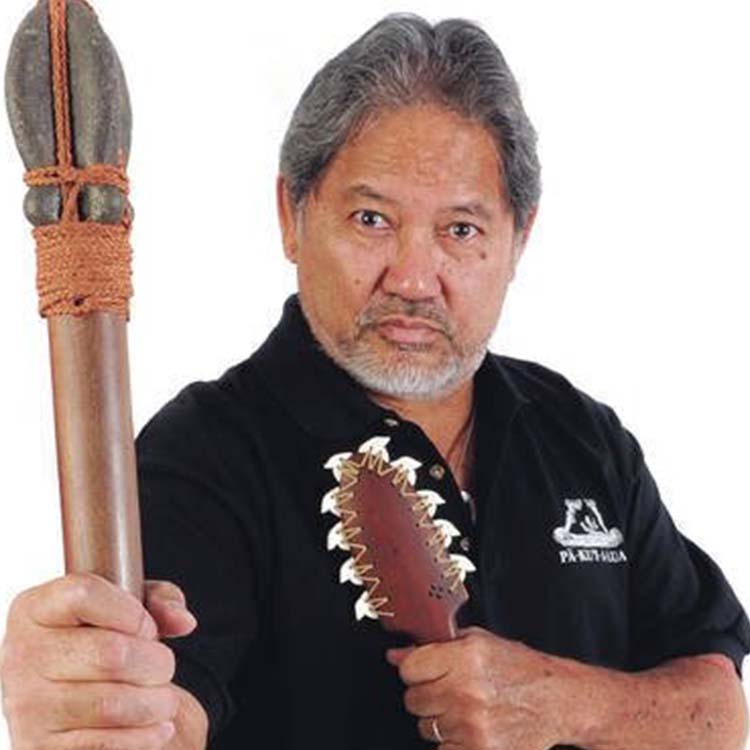
Photo credit: First Peoples Fund
Many of his customers are private collectors of Hawaiian artifacts, and practitioners of martial arts, who order his products from as far away as London, Guam, and Japan. Umi uses wood, stone, gourds, coral, bone, antler, horn, wire, cordage, and tiger shark teeth to custom-make, upon request, traditional Hawaiian tools, weapons, and adornments, such as daggers (the most requested tool), slashing tools, fishhooks, pump drills, hair sticks, and necklaces. Prices range from $90 to $2,000.
But Umi insists that profit is not the motive for this lifelong hobby. Rather, preserving and perpetuating Hawaiian cultural practices and traditions is. As the master carver and teacher of the Hawaiian fighting art of lua explains, “By nurturing a strong sense of cultural pride and identity through the invaluable resource of implement making, I strive to ensure that Indigenous communities thrive and flourish for many generations to come.”
Over the years, Umi has worked on projects for the Bishop Museum, Peabody Museum, Cook Museum, and Fukushima Hula Museum in Japan. In 2023, Umi was one of 13 notable Hawaiian artists whose toolmaking and carving work was featured in a special exhibition at the Bernice Pauahi Bishop Museum in Honolulu.
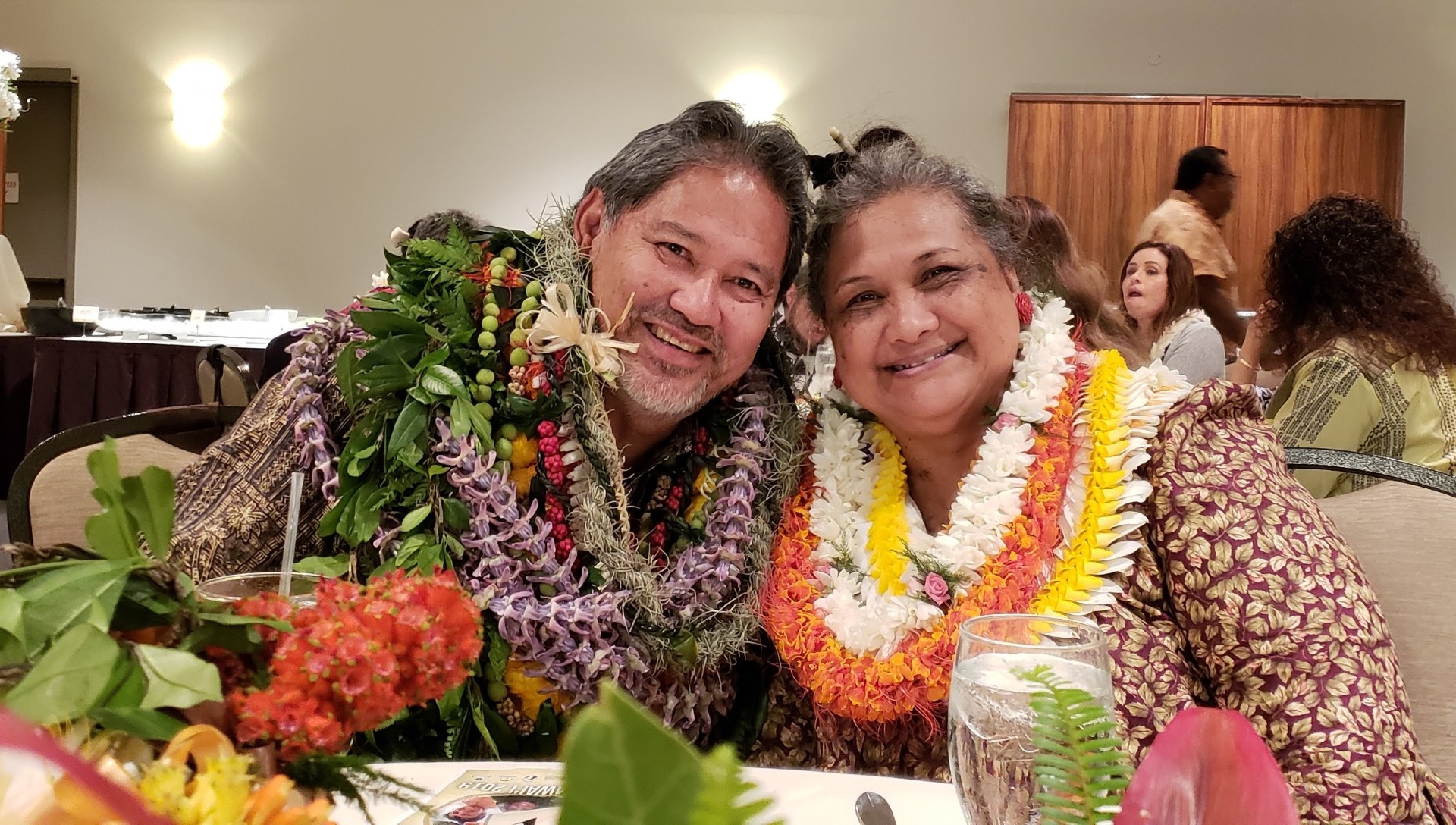
The 2025 Luce Indigenous Knowledge Fellow and his wife, Janice, at the Living Treasures awards ceremony.
Notably, he has twice been named a Living Treasure of Hawaiʻi, an annual award created in 1976 by a Buddhist temple that honors residents of Hawaii who have made significant contributions to society in their respective fields.
Now at 75, Umi has been named a 2025 Luce Indigenous Knowledge Fellow. Over the next two years, this guardian of Hawaii’s cultural heritage will work on his longtime goal of passing on the traditional Hawaiian practice of implement-making to the next generation.
 A lifelong dedication to empower Hawaiian men
A cornerstone to Umi’s cultural work is his deep commitment to building a community for Hawaiian men to gather and heal. In 2006, he co-founded ‘Aha Kāne, a nonprofit men’s organization that aims to “improve the well-being of Native Hawaiian males, their families, and communities.”
Why the focus on men? “Most ancient cultures had warriors, and when the Westerners came to Hawaii, it changed everything. Hawaiian men were lost and didn’t know their role in the community, in their family, and in life itself,” ‘Aha Kāne’s president tells First Nations about the origin of his men’s organization. “So, we brought this warrior culture back through workshops in implement-making, fishing, farming, and healing. These conferences have taught them how to be men again.”
At the first gathering, the “‘Aha Kāne Native Hawaiian Men’s Health Conference,” about 600 Hawaiian men participated. But due to financial restrictions, subsequent meetings have been much smaller, and fewer and far between. Umi hopes to schedule another one for next year.
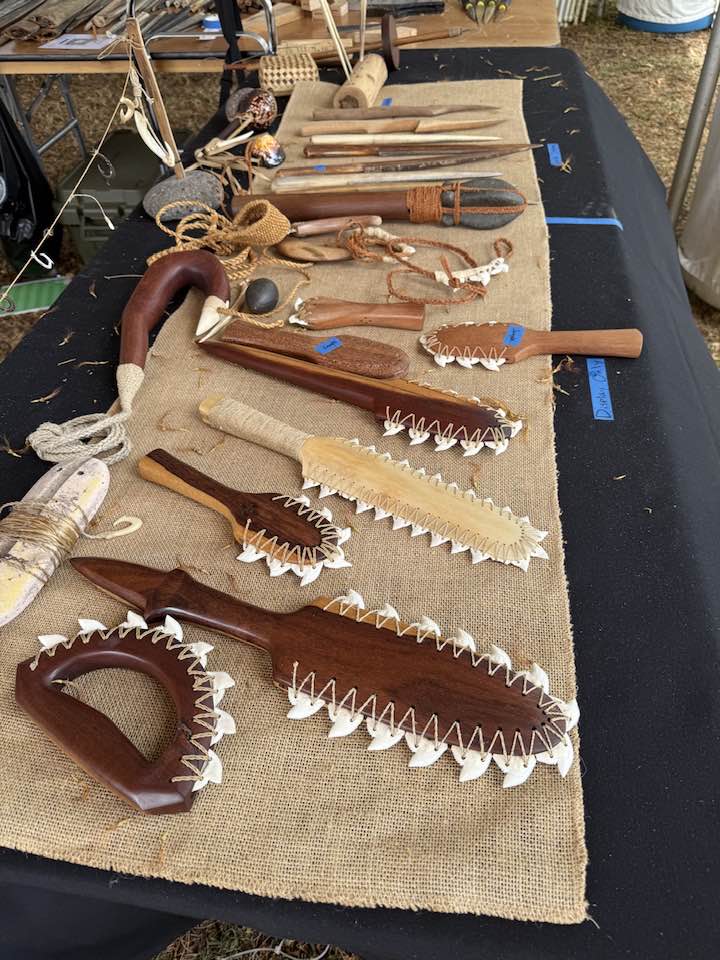
A display of traditional weapons and tools, some with real shark teeth, handmade by the Luce Fellow.
Through a partnership with ‘Aha Kāne, Umi also helped establish the Hale Mua Initiative. Hale Mua, or “men’s houses,” are places where Hawaiian men gather for religious ceremonies, discussions about politics or community issues, and engage in traditional “warrior” practices, such as carving and Hawaiian martial arts. Hale Mua’s overall mission is to help young, Hawaiian boys become leaders and “grow into productive, contributing men in society.”
To put it simply, “Men needed a place to go to talk about men things, help each other, and be men together, besides a bar,” Umi shares good-naturedly. “So, if I had a son who wanted to learn how to fish, and I was not a good fisherman, I would ask one of my Hale Mua men, who is a good fisherman, to take my son with him.”
With the help of a federal grant from the Administration for Native Americans, awarded to ‘Aha Kāne, Umi helped establish Hale Mua in three Hawaiian communities that had high rates of teen suicide among young boys.
At one of the gatherings, he taught participants how to make ropes from the inner bark of a hibiscus tree. As one participant shared, “Umi displayed his characteristic style of patiently demonstrating proper technique and gently making corrections when needed, disarming men with humor and wit.” The result? “The solidarity and growth among the men was profound, bound as they were by the cordage they created.”
His plans for the Luce Fellowship
During his two-year Luce fellowship, Umi will pass down his extensive knowledge of implement-making to the next generation through workshops and multi-generational learning environments. Currently, he is mentoring two apprentices ― boys in 8th and 10th grades ― with another 10 or 12 who are working with him, but not quite at the apprentice level.
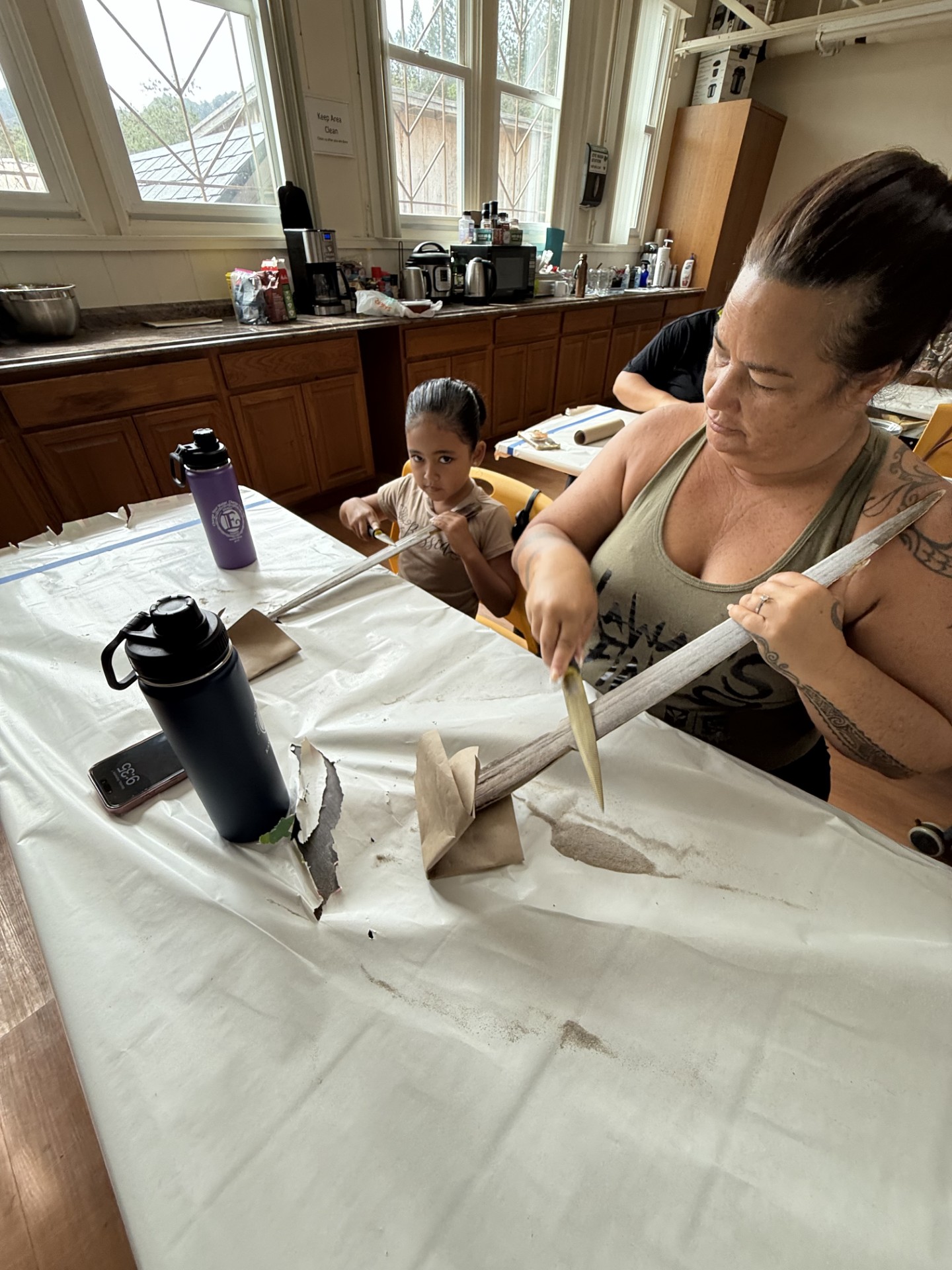
A young girl learns how to carve a traditional Hawaiian weapon at one of Umi’s intergenerational workshops.
He holds four-hour workshops regularly to find these diamonds in the rough. “Out of 20 people at a workshop, I might find one or two that come back and ask me to teach them more.” And then he digs deeper to find out what their motives are. “Do they just want to make money or are they truly committed to learning a traditional Hawaiian practice?”
Umi says he wants to ensure that his apprentices become masters in the art of Hawaiian implements and weaponry so that they can carry forward the legacy of their ancestors. He also passes on life lessons to his students. “I tell them that the worst weapon is the weapon of words. Be careful what you say and write because it hurts a lot longer and deeper than a punch to the face.”
To help preserve his knowledge of implement-making, Umi will document and record his teachings through oral history media. “Collaborating with young kanaka, I will ensure that future generations have access to this invaluable traditional resource. By preserving our arts in this manner, we honor our ancestors and provide a foundation for the cultural continuity of our people,” he writes in his Luce Fellowship application.
Family is everything
By all accounts, Umi has secured his legacy in Native Hawaiian culture. When asked by First Nations how he wants to be remembered someday, he replies without hesitation, “I want to be remembered as someone who took care of his wife and family.”
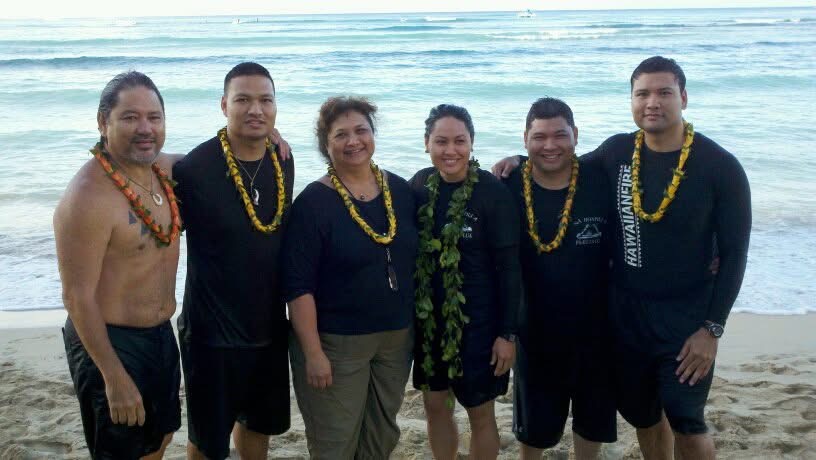
Umi poses with his wife, three sons, and daughter.
Umi has been married to Janice, a skilled basket weaver, for 52 years. In recent years, Umi has become the primary caregiver for his wife, who has dementia. Together, they raised three sons and one daughter and have 15 grandchildren and three great-grandchildren.
Umi earned a Bachelor of Science degree in marketing from Chaminade University in Honolulu and worked in the visitor industry for 43 years. At one point in his long, successful career in hospitality, he was the first-ever Native Hawaiian to serve as the vice president of the Hawaii Visitors Bureau. In 2016, he retired from Budget Rent A Car as the national sales and marketing manager
Throughout Umi’s lifetime, Hawaiian cultural preservation and community empowerment have been a priority ― especially now, in the wake of the Lahaina fires in Maui. “The loss of historical artifacts and artwork underscores the urgency of preserving our cultural practices and traditions. Lahaina, once the capital of the Hawaiian Kingdom, held significant historical value, much of which was lost in the fire,” he writes. “Now, more than ever, it is imperative to continue to expand upon the work of preserving our heritage for future generations.”
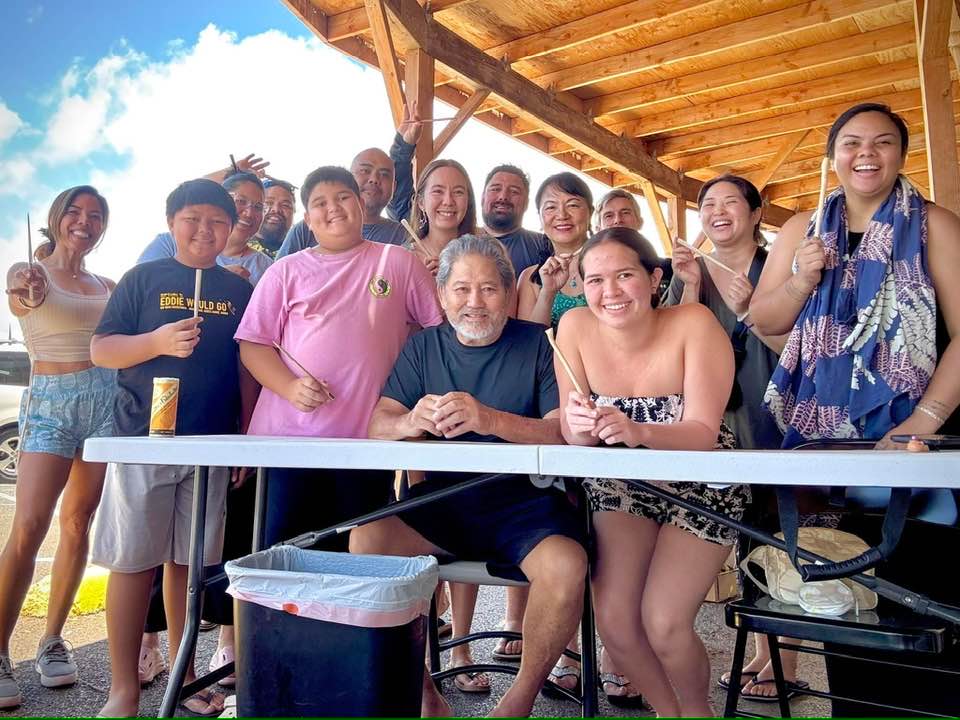
In Umi’s own words: “By nurturing a strong sense of cultural pride and identity through the invaluable resource of implement making, I strive to ensure that Indigenous communities thrive and flourish for many generations to come.”