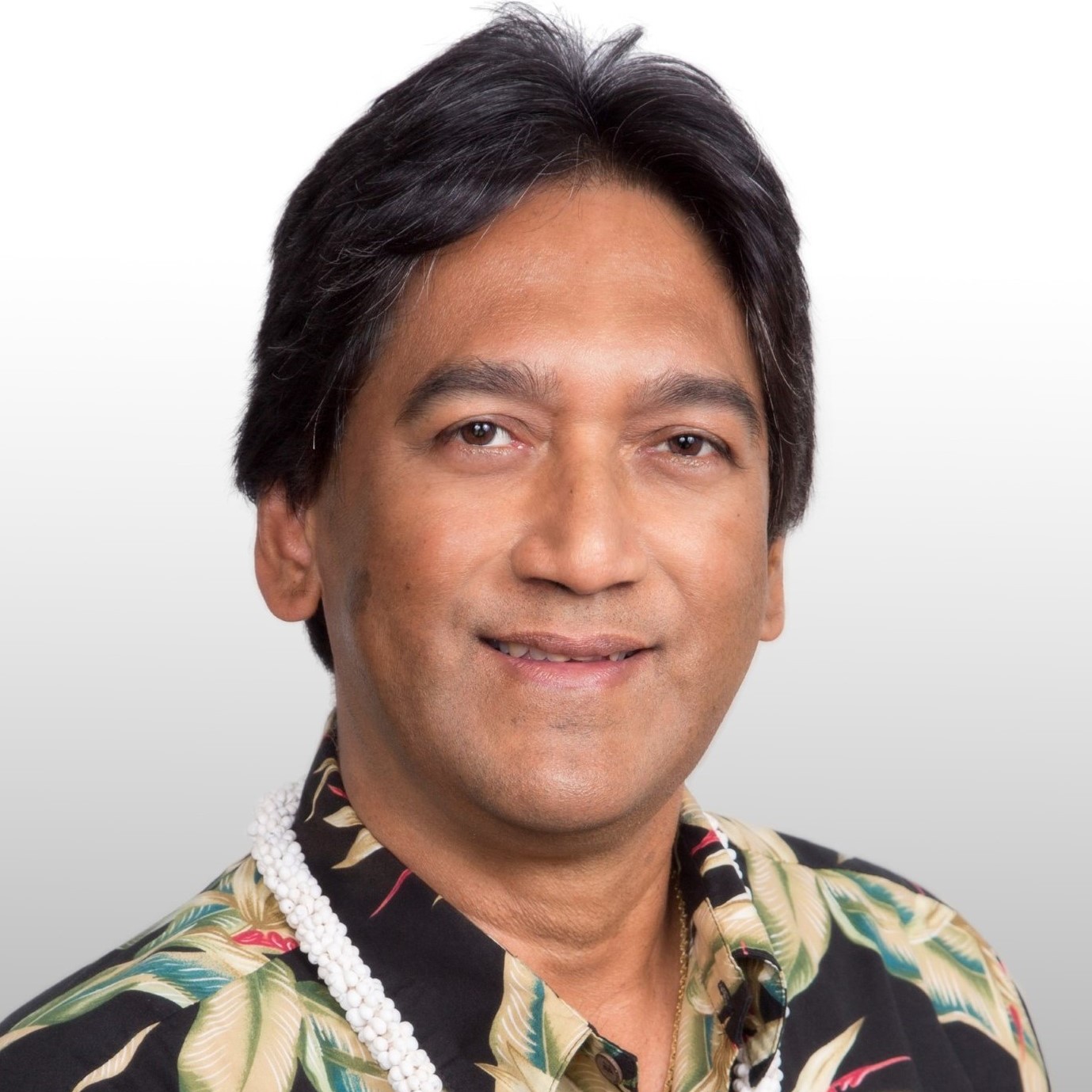
Herb Lee, Jr.
Native Hawaiian
Native Hawaiian
Hawaii has a long, storied history with fishponds, once an important food source fed by the ocean, with more than 500 ponds built on the islands over 800 years. Sadly, less than 10% remains now.
Enter Herb Lee, Jr., a Native Hawaiian, cultural preservationist, musician, and 2025 Luce Indigenous Knowledge Fellow. For more than 30 years—nearly half his life—Lee has been at the forefront of restoring ancient fishponds in the Hawaiian Islands.
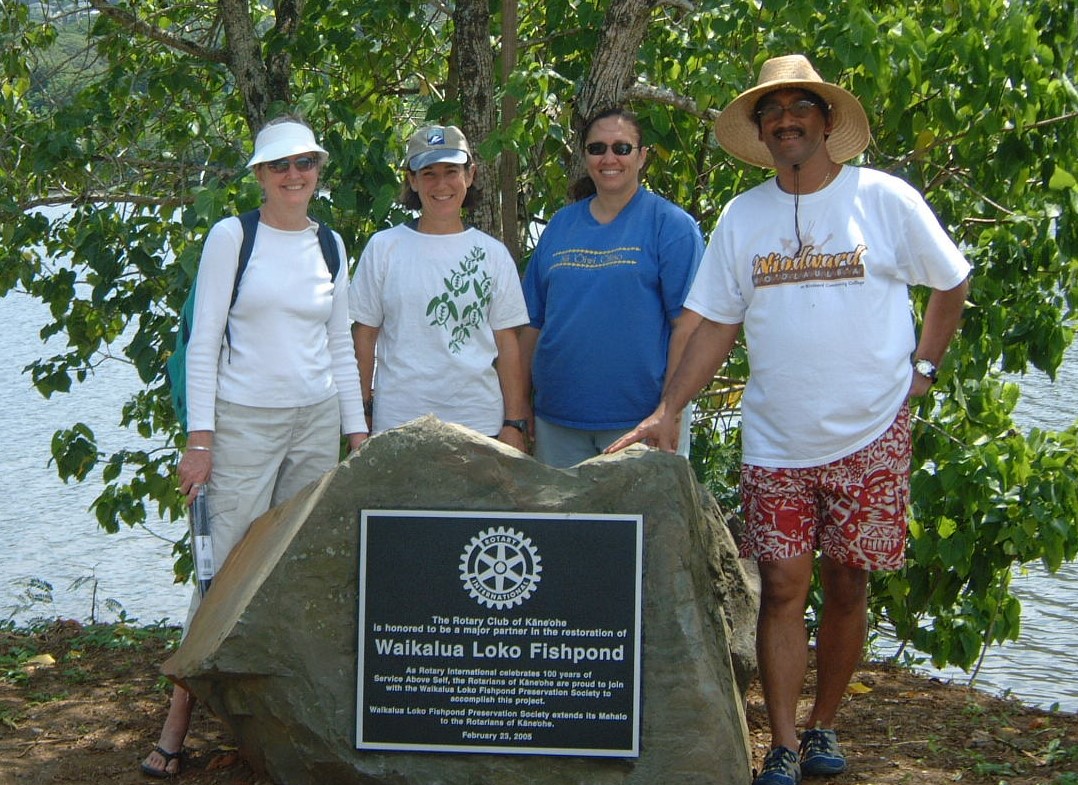
Herb Lee, Jr. (right), a 2025 Luce Indigenous Knowledge Fellow, has dedicated his life and career to restoring ancient Hawaiian fishponds.
“Living on the most isolated land mass on the planet, Native Hawaiians are proud land managers. Prior to Western contact, over 1,300 years, we found a unique balance with nature to produce food from both the land and sea,” through fishponds, he says. “But over the last 200 years, Hawaii went from being totally independent to 80% to 90% dependent on imports for food and energy.”
In 1995, Lee co-founded the Waikalua Fishpond Preservation Society to save a 400-year-old fishpond called “Waikalua Loko I‘a” that he says most people in his community didn’t even know existed. “The 11-acre pond was in really bad shape. Almost like a dump, with a lot of invasive species,” he recalls.
Then he explains how everything changed.
One day, a science teacher from the local high school responded to an ad he placed for volunteers and asked him to mentor a handful of students who needed the science credit to graduate. The fishpond Lee was working hard to restore had suddenly become an ‘āina (land)-based community classroom.
“Nine months later, we saw this amazing transformation in these kids. Not only did they graduate, but they became inspired learners. They learned how science can help these ponds heal themselves and ultimately feed people again,” he says proudly. “They understood that we were restoring both the pond and our community’s connection to the land and sea.”
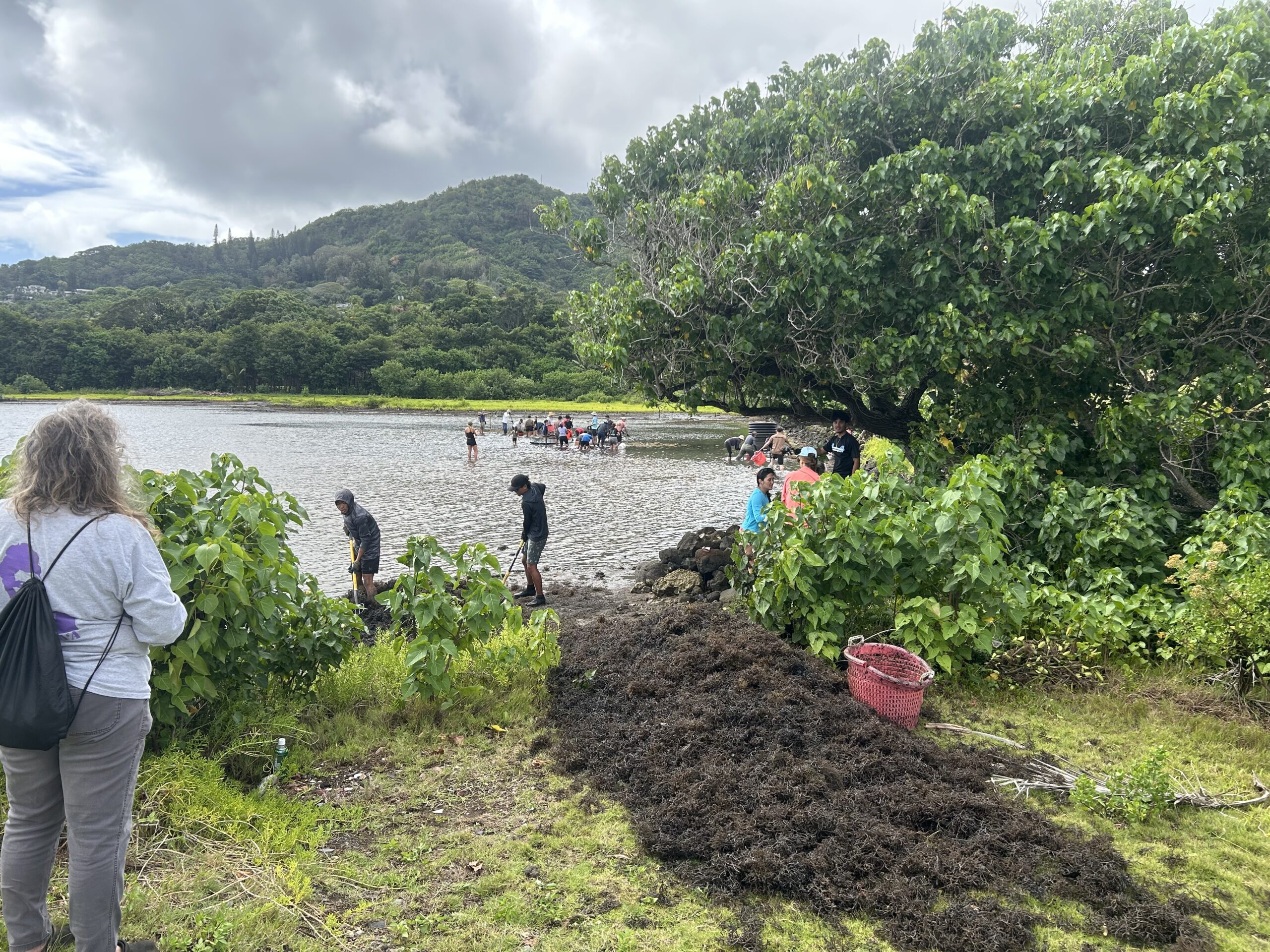
Lee works with University of Hawaii Ethnic Studies students to remove invasive seaweed from the pond. The final mound of seaweed was about 2,000 pounds amassed in about four hours.
Soon after, Lee partnered with the Pacific American Foundation (PAF), a nonprofit organization whose mission is to reconnect people to ‘āina (land), culture, and community. Lee became PAF’s executive director, then later, the president and CEO, and under his leadership, he leveraged the Waikalua restoration project to create hands-on, culture-based education for 150 schools, train more than 7,000 teachers statewide, and recruit over 130,000 people to help “build new bridges between Indigenous wisdom and contemporary knowledge to solve the problems of the day,” he writes in his Luce application.
Lee, now 71, has retired from PAF, but the fishpond restoration continues under the stewardship of the nonprofit. “I retired from my position, but not from the mission,” He continues to be active in the day-to-day operations of the foundation. “The Waikalua fishpond has served as a catalyst to inspire a new generation of learners that are hungry to learn the ancient ways of land management, food production, and caring for one another,” he says, reflecting: “The last 30 years have changed my life.”
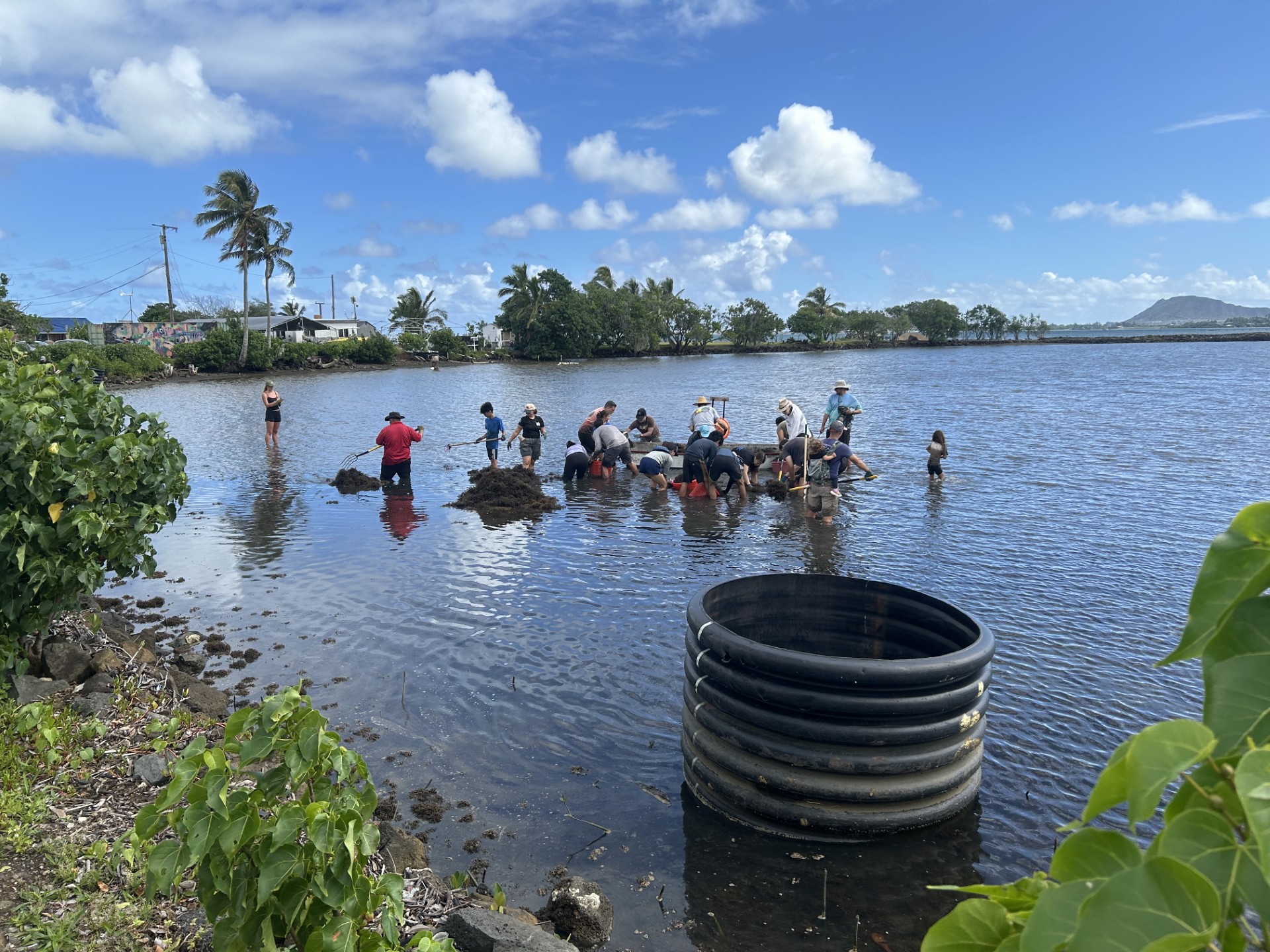
After the seaweed is removed from the fishpond, it gets recycled to area farmers for nitrogen.
Lee believes that Hawaiian fishponds are the key to understanding how Native Hawaiians can become more self-sustaining. The long-term vision is to get the fishponds healthy and improve the water quality so that they can become a reliable food source for the Hawaiian people once again.
“We are kind of in a precarious position here in Hawaii. We have about 1.4 million people on all the islands combined, and less than a two-weeks’ supply of food,” he shares, with much concern. “We cannot continue to have this consumer mentality, where we just consume, consume, consume. We have to become producers and teach the next generation how to become more in tune with nature so that nature can help to nourish them.”
His plans for the Luce Fellowship
Lee has accumulated much knowledge on fishpond restoration and forged many relationships in the last three decades, and although he is retired, he is not letting his foot off the gas pedal one bit. “During my Luce fellowship, I will continue achieving, and more importantly, help the next generation chart a course for the next 30 years … to solve challenges such as food sovereignty, water quality, and global climate change.”
Much of the heavy lifting has already been done in the restoration of the Waikalua Fishpond. “It took 26 years to remove tens of thousands of mangroves in the pond. We couldn’t use any heavy machinery due to the impact on water quality, so we removed it all by hand,” says Lee. While the fishpond looks completely restored, Lee says the project will always be ongoing. “It will never be done because it requires constant maintenance.”
Lee and PAF are currently working on the restoration of a second, much smaller pond, measuring about 2 acres, and like Waikalua, also covered with invasive mangrove. When he first started on his pond restoration journey, he was one of three people doing this labor-intensive work. Today, many more people and organizations have stepped up to help.
“For instance, we have partnered with the University of Hawaii to develop a cadre of students coming in from high school who are on a direct track toward post-secondary education in aquaculture. We have learned that these ponds are career opportunities in a myriad of areas we never thought possible,” which Lee adds will hopefully reduce Hawaii’s dependence on imports one day.
Over the last 25 years, Lee and the foundation have worked with more than 200 scientists, cultural specialists, public schools, and other community partners to develop online educational curricula that include oral histories, videos, photos, and more. “We have a memorandum of understanding with the University of Hawaii to archive this knowledge for generations to come,” he says.
What’s more, Lee helped develop Nā Hopena A‘o, adopted by the Hawai‘i Board of Education in 2015.
The Luce Fellowship will allow Lee to continue working with these partners to create a new ‘āina-based education model that embraces other cultural resources, such as taro patches, wetlands, streams, bays, and near-shore areas.
The cultural preservationist claims, with optimism: “The education institution in Hawaii is headed toward a new age of discovery.”
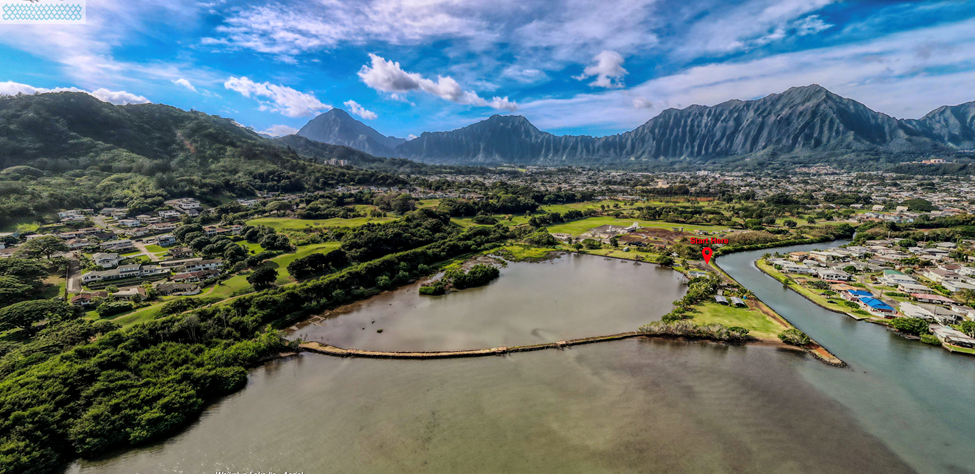
The Luce Fellow has been working to restore the Waikalua Loko fishpond for more than 30 years, and the work continues.
Honored for his service to Hawaii
The 2025 Luce Indigenous Knowledge Fellow lives on Oahu, in Kailua, where he was born and raised. He has been married for 37 years to Wendy and they have one daughter. Lee is also a recording artist who sings, plays the ukelele and guitar, and composes Hawaiian music.
Over the years, Lee’s work restoring Hawaii’s ancient fishponds has garnered him well-deserved praise and accolades. In 2014, he was one of 10 people honored by the White House with the Cesar Chavez “Champions of Change” award — recognizing community leaders committed to improving the lives of people in their communities and across the country.
“When they reached out to me about this award, I thought it was a hoax,” he laughs. To this day, he does not know who nominated him.
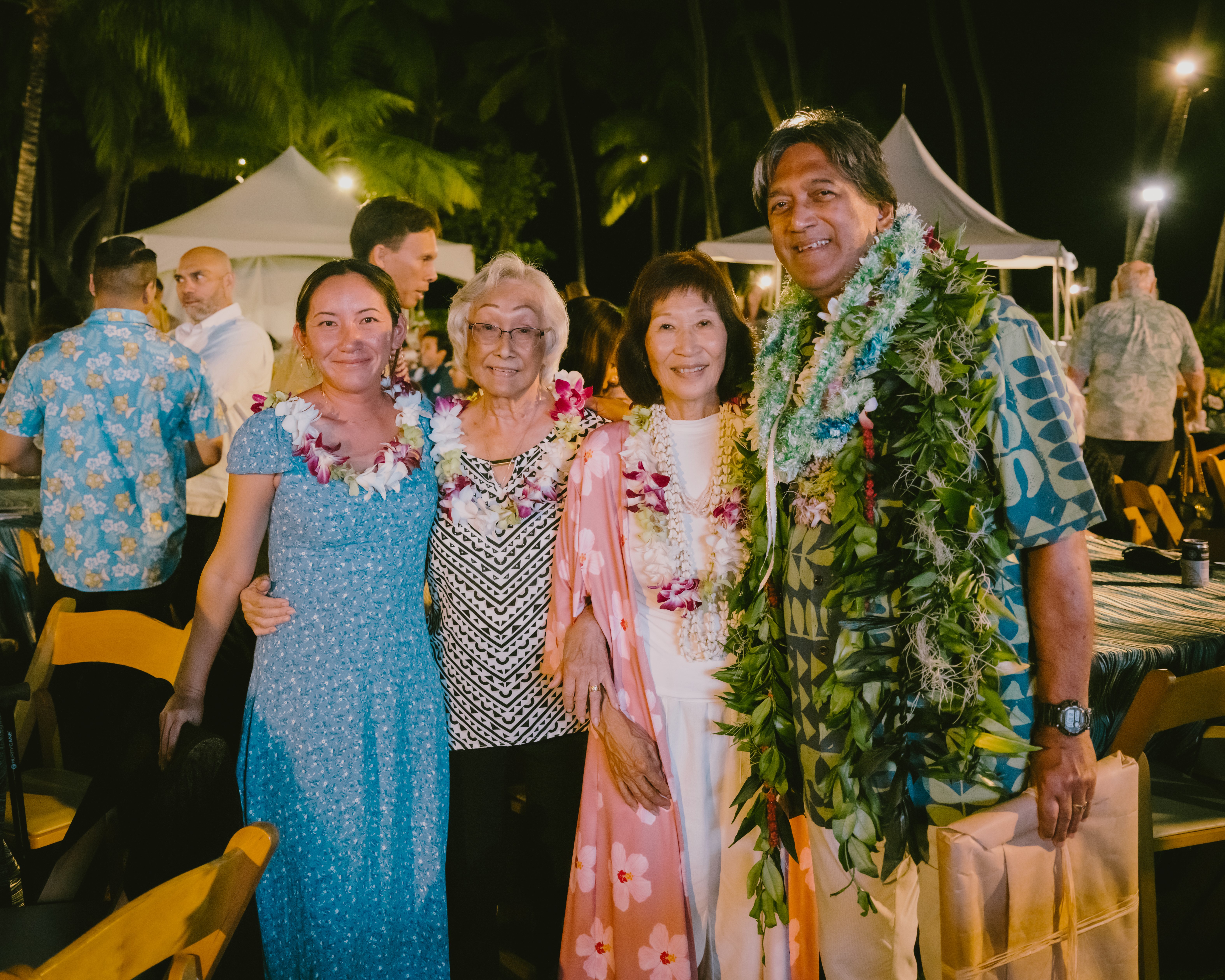
Lee celebrates with friends after receiving the “Guardian of the Land” award in 2025 from Hawai‘i Land Trust.
Other notable recognition includes the Historic Hawai‘i Foundation’s Preservation Honor Award; the ʻŌʻō Award from the Native Hawaiian Chamber of Commerce; the Heart of Gold Award from the Wholistic Peace Institute; and most recently, in 2025, he was given the Hawai‘i Land Trust’s “Guardian of the Land” award for decades of work dedicated to ‘āina-based education and land stewardship.
Given all that he has accomplished in his lifetime, the Luce Fellow was asked by First Nations how he wants to be remembered:
“I want to be remembered as a person who lives the truest and deepest forms of aloha as I have been taught by the Akua and the elders.” He also serves on numerous boards and committees. “I think my purpose in life is to share and spread aloha as much as possible through all the work that I have been able to participate in.”