Ivan MacDonald
Blackfeet Tribe
Blackfeet Tribe
Little did 10-year-old Ivan MacDonald know that when he would tiptoe downstairs in the middle of the night, while his family slept soundly, to watch movies on satellite TV― such as “Pulp Fiction” and “Blue Velvet” ― that this sneaky indulgence would profoundly impact his life one day.
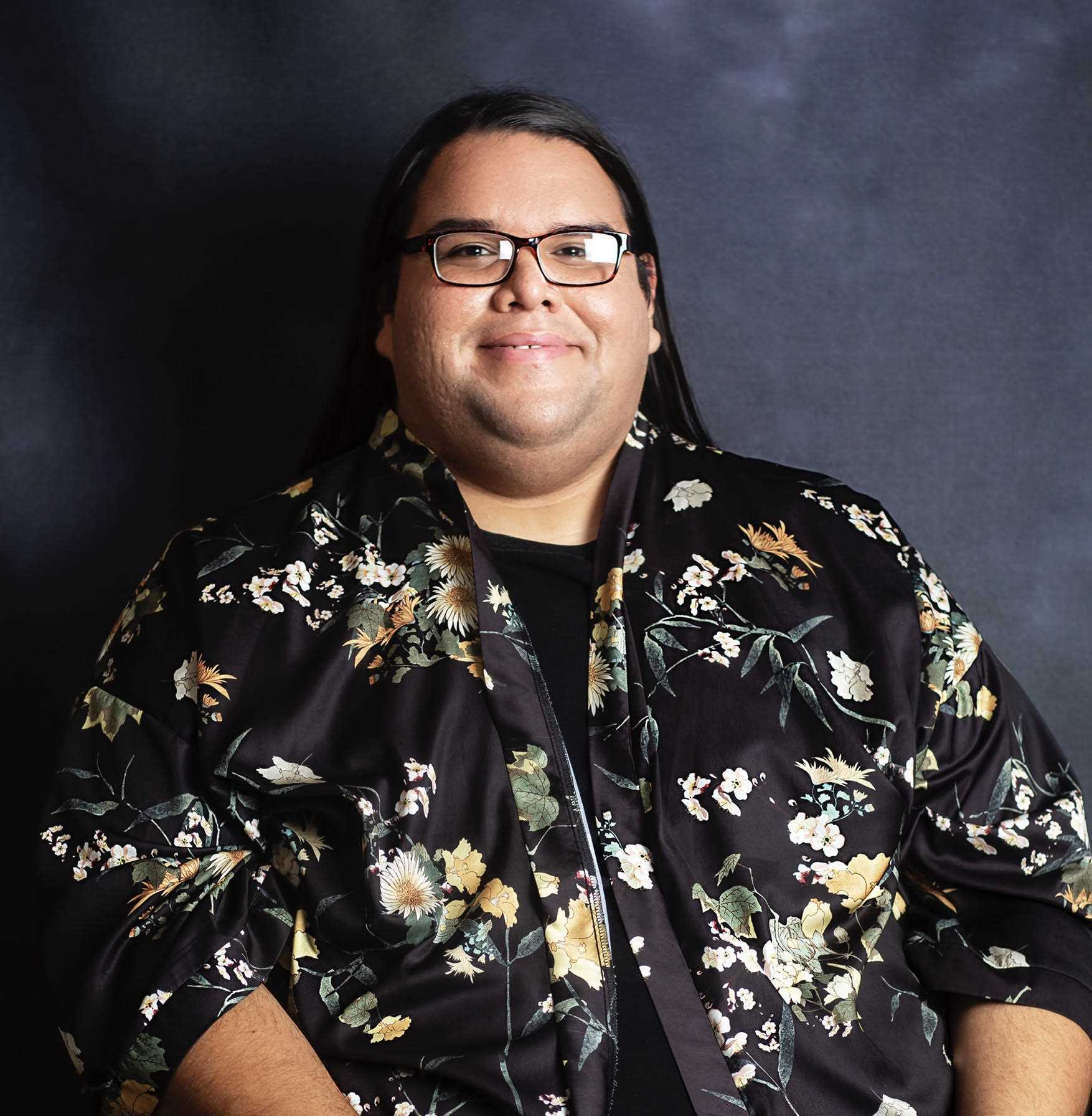
Now at 35, MacDonald (Blackfeet Tribe) has become a masterful documentary filmmaker and Indigenous storyteller, alongside his sister Ivy, and they have several film awards, including an Emmy, to prove it. “Ivy is the one who actually has a background in film and went to film school,” says her older brother, whose own path to the documentary film industry was not as linear. “I never knew it was my calling. But it is right now.”
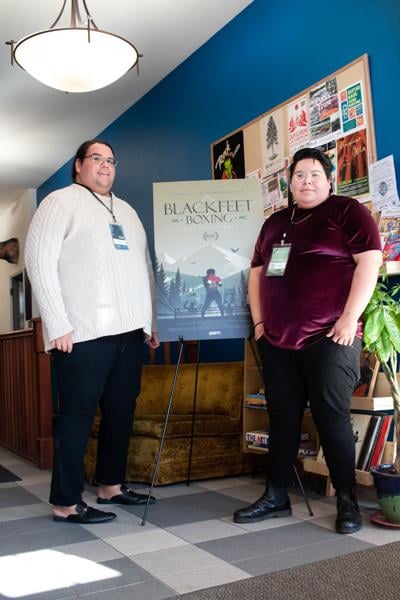
The 2024 Luce Indigenous Knowledge Fellow (left) poses with his sister, Ivy, to promote his Emmy Award-winning documentary, “Blackfeet Boxing: Not Invisible.”
MacDonald started his journey into filmmaking while attending the University of Montana, where he earned a master’s degree in social work. He collaborated on a film with Ivy, who was working toward a bachelor’s degree in fine arts at the same university, around missing and murdered Indigenous women (MMIW), “When They Were Here.” This short film inspired a feature-length documentary of the same name that is currently in production, scheduled for completion this year.
Sadly, the MMIW crisis hits close to home for the MacDonalds. Their 8-year-old cousin, Monica Still Smoking, was kidnapped and murdered in the winter of 1979. MacDonald continues to advocate for the cause and helps run the Snowbird Fund, which provides financial assistance to families searching for their missing loved ones from Montana. In 2020, MacDonald was awarded the Jeanette Rankin Peace Award by the ACLU for shedding light on the MMIW crisis through storytelling.
After the success of the MacDonald’s first film project, more opportunities to create Indigenous documentaries began pouring in, as did collaborations with power players like ESPN, Showtime, Sundance, and his friend Lily Gladstone, the first Native American actress to win a Golden Globe Award and Academy Award nomination for her work in the Martin Scorsese film, “Killers of the Flower Moon.” Like MacDonald, Gladstone also grew up on the Blackfeet Reservation. “Ivy and I knew Lily while we were at the University of Montana. My sister met her at an organic grocery store where Ivy was working.”

Golden Globe winner Lily Gladstone (Blackfeet) has worked with the MacDonalds on several documentaries. They met the Native actress while Ivan and Ivy were at the University of Montana.
Now the director, producer, screenplay writer, and impassioned advocate for Indigenous causes can add one more title to his impressive list of accomplishments. Last year, MacDonald was named a 2024 Luce Indigenous Knowledge Fellow by First Nations.
“The Luce Fellowship has been an incredible opportunity for me. I’m really honored to be part of it. I think all the fellows do amazing work,” says MacDonald.
The Luce Fellows are encouraged to work together and learn from one another as knowledge-holders and knowledge-keepers. It is in that spirit of collaboration that MacDonald recently co-authored an article on Indigenous filmmaking with another 2024 Luce Fellow, Cara Flores Mays, currently under review by the publisher.
An impressive body of work in such a short time
In just eight years since MacDonald launched his first filmmaking project, he has been working at a feverish pitch, completing three documentaries, with another three films currently in production.
“I tell people that I like to stretch myself pretty thin,” he jokes with First Nations while outlining his film projects.
From 2018-2020, he produced “Blackfeet Boxing: Not Invisible,” which premiered on ESPN and won “Best Documentary Short” at the 2021 Sports Emmys. Set on the Blackfeet Reservation, it follows the efforts of the Blackfeet Boxing Club to empower young women and girls, while also telling the story of 20-year-old Ashley Loring Heavyrunner, who went missing in 2017 after a party.
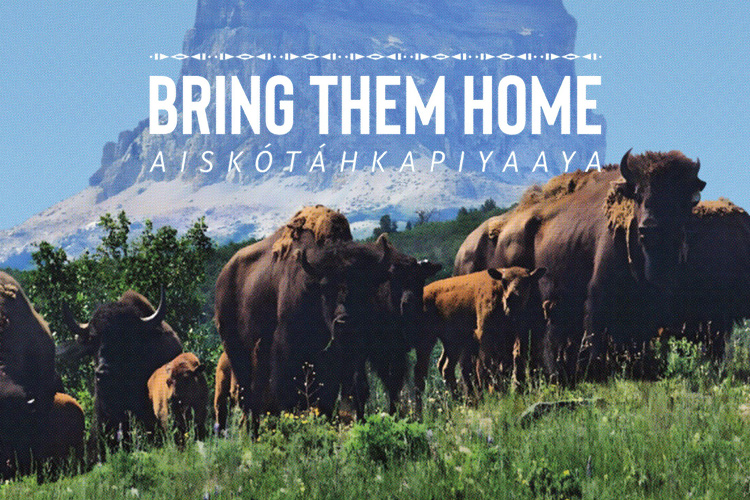
“Bring Them Home” is MacDonald’s full-length documentary released last spring about Blackfeet efforts to bring bison back to tribal homelands.
“Murder in Bighorn,” another critically acclaimed documentary on the MMIW crisis ― this time on the Crow and Northern Cheyenne Indian Reservations ― premiered at the 2023 Sundance Film Festival and aired nationally as a three-part series on Showtime. The MacDonalds served as producers for this film.
His most recent documentary, “Bring Them Home,” came out last spring and is making its rounds on the festival circuit. This full-length documentary is a personal one for MacDonald, who served as director and producer alongside his sister and Gladstone, an executive producer. It details how their own tribe, the Blackfeet, is bringing back bison, known as “iinnii,” to the tribe’s ancestral homelands.
Last October, at First Nations’ Food Sovereignty Summit in Suquamish, Washington, the MacDonald siblings treated attendees to a sneak peek of “Bring Them Home.” It is expected to be released to the public sometime this year.
More films in the works
According to the 2024 Luce Fellow, making Indigenous films isn’t easy. “It’s hard to get these projects funded. In fact, 90% of making a film is writing grants or looking for funding,” he says. “There’s usually only one or two, at the most, of Native-focused documentaries in the ether.”
Why is that? “Investors don’t think there’s a huge audience for these films.” He further explains that only a smattering of successful Indigenous documentaries has bubbled to the surface over the years, like “Rez Dogs.”
Even so, MacDonald presses on with his current projects in development.
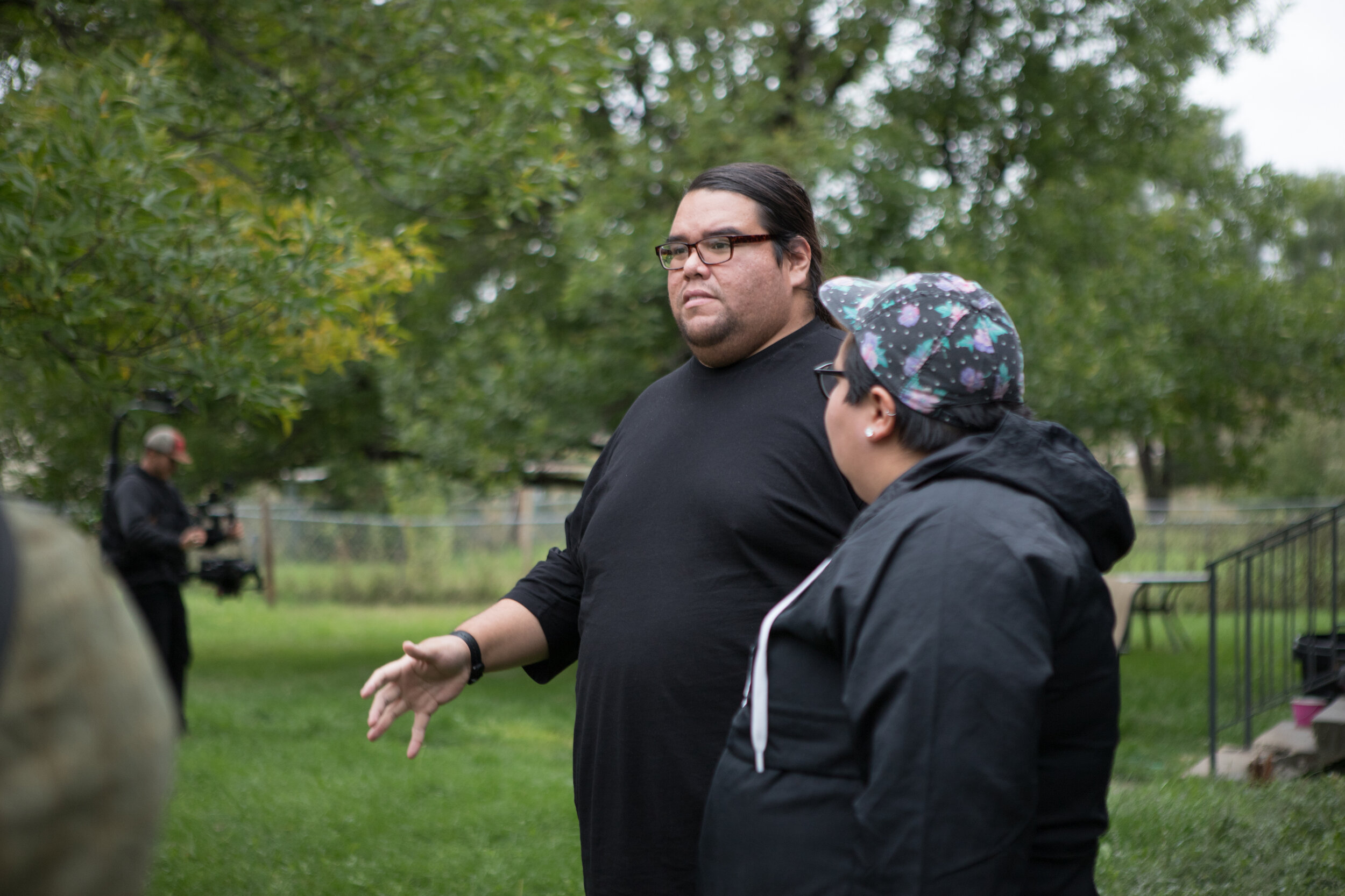
Over a short span of eight years, MacDonald has completed three documentaries, with another three films currently in production.
“Iniskim: Buffalo Stone” is the first narrative film that MacDonald has ever produced. And even more exciting, it is the directorial debut for his sister, Ivy. They are in talks with Gladstone to star in the film, and it has already been pitched to Netflix.
Another documentary that he has been working on for more than a year that is close to his heart, “Breaking the Silence,” marks his solo debut as a director. “This one is really exciting because I get to tell the story from my own point of view.” The film follows two women ― one a geophysicist from the Northern Cheyenne Tribe ― who are working to bring the buried history of Indigenous residential schools to light through the lens of technology. MacDonald shares that his own grandmother was forced to attend the Carlisle Boarding School. “That’s what jumpstarted the idea for this project,” he shares with First Nations.
And, as mentioned earlier, he and his sister continue to work on a feature-length version of their first collaboration about the MMIW crisis, “When They Were Here,” which should be wrapped up sometime this year. This film is backed by multiple highly respected organizations that support independent filmmakers, such as ITVS, Chicken and Egg Pictures, and the Sundance Film Institute.
His ambitious plans for the Luce Fellowship
With the help of the Luce Fellowship, MacDonald will work on films already in development, and turn the lens on new projects, as well.
“I always have ideas for Indigenous films in my head. There is no shortage of cool ideas out there.” MacDonald emphasizes that it’s important for Indigenous people to tell their own stories, pointing to research showing that most people learn about Indigenous communities through media or Indigenous people.
That’s why he and Ivy are focused on creating what they call “non-extractive” films. He explains: “Historically, filmmaking has been a very exploitative process for Indigenous communities. Outside film crews will come in, take our stories, or ‘extract’ them, and then leave, never interacting with our communities again. Instead, my sister and I want to focus on investing in Native communities; becoming part of the community; and collaborating with them on our stories.”
Photo courtesy of the Montana Community Foundation
Some non-extractive film ideas he is exploring include working with Native families who have lost family members in officer-involved shootings. “Native Americans have the highest preponderance of death by police,” a grim statistic that comes as a surprise to most people, he says. “We also have some spinoff projects in the works from the bison film. When the tribe established the wild bison herd, they created Blackfeet guardians tasked with protecting the herd. And I am fascinated by that!”
To honor and thank Native communities for rolling out a collaborative red carpet for them, the brother and sister documentary duo often redirect resources back into the community to support various initiatives. For “Bring Them Home,” they parlayed part of the investment in this project to the Blackfeet Tribe’s bison program. “And we’ve redistributed about $90,000 to the Snowbird Fund to support Native Montana families searching for their missing loved ones.”
In fact, whenever the documentarians start a new film, MacDonald says they always look for ways to partner with Native communities. “We want them to feel like we’re invested in them. That’s a priority.”
How he measures success
So, how does one determine if a documentary is successful or not? MacDonald points to many factors by which the film industry measures success: “One way is viewership. Box office sales. Were we able to get this movie in front of as many eyes as possible? Another is awards. Also, did this film elicit any change?”
“I make films to tell stories that are unseen and unheard,” says MacDonald.
But for this young filmmaker, it’s not about winning awards and recognition. Those are just cherries on top. “I look at my greatest success as how much buy-in I got from the communities I worked with. Were they super invested in the project? I make films to tell stories that are unseen and unheard. Something that will impact Native communities I collaborate with.”
Again, historical accuracy is important to MacDonald. “The people who have been telling our stories in large part have not been Indigenous people.” As an example, he brings up Taylor Sheridan, the creator of the popular TV series “Yellowstone,” who is coming out with another TV project based on a book about a Comanche chief. “The Comanche people have said that the book is not an accurate depiction of this chief.”
In direct contrast, for his documentary on boarding schools, MacDonald is working closely with the Blackfeet Tribal Historical Preservation Officer (THPO) and other knowledge-holders to ensure accuracy. “They are huge partners in this project. Because what’s important to me is to present information that is accurate through the lens of the community I am capturing.”