Keola Chan
Native Hawaiian
Native Hawaiian
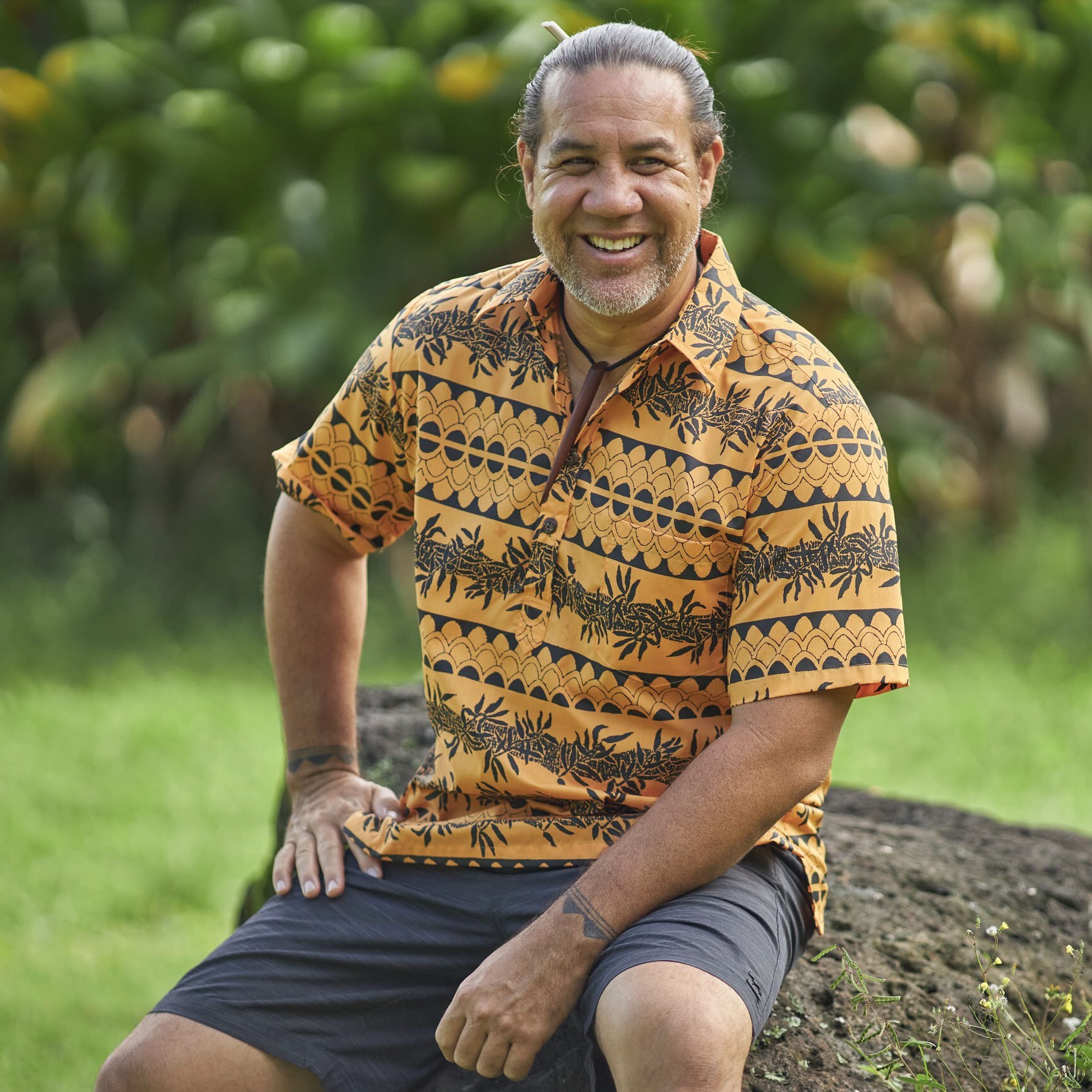
Keola Chan has been in the profession of healing for most of his adult life. For 20 years, he was a working musician who played traditional Hawaiian instruments, like the ukelele, guitar, and upright bass. “Music, itself, is very healing,” says the 48-year-old Native Hawaiian, who feels fortunate to have traveled around the world to share his musical gifts, performing in numerous countries such as Australia, Canada, China, Tahiti, Taiwan, and his all-time favorite, Japan.
Native Hawaiian Keola Chan has dedicated his life to helping Hawaiians become healthier by healing themselves, their families, and their connection to the land.
But the lifestyle of a musician―playing into the wee hours of the morning and being around smoke and alcohol much of the time―wasn’t the kind of scene he could continue to promote. “I needed to commit to a totally different lifestyle of healing.”
From that moment of clarity, Chan began on a path that he says he was destined to take―a journey into the traditional medical healing arts of Hawaii that include massage therapy, conflict resolution, herbal medicine, spiritual healing, Hawaiian dance, chanting, and clean eating.
Throughout his wellness journey, Chan has touched the lives of many Native Hawaiians, starting up several nonprofit healing organizations and working with the Hawaii Health & Harm Reduction Center to help fight the stigma of HIV, hepatitis, homelessness, substance abuse, mental illness, and poverty.
He writes in his Luce Fellowship application that his long-term career goal is to conduct traditional integrated healing programs that impact more than 80,000 Native Hawaiians.
The Native healer believes that the biggest health problem for Hawaiians is being disconnected from their spirituality. “Health begins in the spiritual realm. It is why we always begin gatherings and meetings with prayers,” he explains. “When you are disconnected in the spiritual realm, it manifests into the physical realm.”

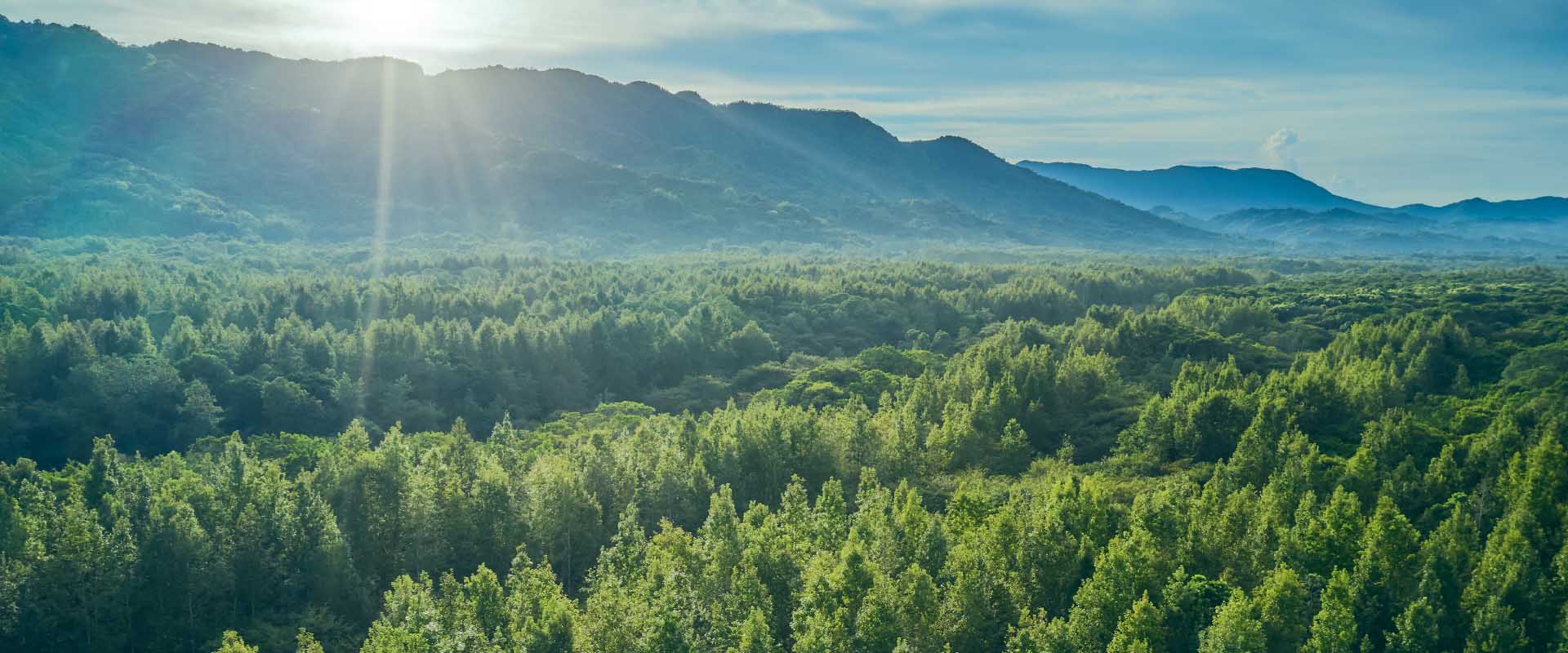
Photo credit of Hawaiian landscape: Department of Land and Natural Resources
The second health priority, Chan believes, is for Hawaiians to heal their relationships to the land. “We have a responsibility to this land that eventually produces our food, water, and sustenance. If your land is toxic, then the food that is being produced will be toxic, too.” He teaches that Hawaiian food is connected to the gods. “Our traditional foods are structured around our elemental gods. So, every meal is a sacrament.”
Last year, Chan left his position as executive director of the Aha Kāne Foundation for the Advancement of Native Hawaiian Males, where he had spent more than a decade improving the well-being of Native Hawaiian men, their families, and communities.
In 2022, he felt a different calling, and formally established “Ka Pā o Lonopūhā,” an academy dedicated to training the next generation of traditional Hawaiian healers.
“There is a tremendous need for Hawaiian healers because we have lost a significant number of elders in the healing traditions,” says Chan, who was mentored by 11 different elders in the healing arts, many who have since passed away. “I was fortunate that my teachers gave me their blessings to continue the knowledge they shared with me before they passed on.”
Home is where the healing is
At Ka Pā o Lonopūhā, named after the Hawaiian god of agriculture, fertility and peace, Chan teaches his students that there are three stages of healing.

Chan performs Lomi ʻAʻe, or “treading upon oneʻs back, to relieve the strains of life.”
In their first year, Chan’s students learn that the first step is to heal the healer. “To be able to heal others, you must make time to heal yourself. You don’t want to project onto the next person your own damage and trauma.” The healing teacher believes that before you can start acquiring new knowledge, you must first understand who you are, where you come from, and what knowledge you bring into the classroom.
The second stage of healing―and the one that differentiates Chan’s methodology from so many other programs―is to become the healer in your own home. “People often overlook their own homes, the places where we come from. But your values, beliefs, practices all start in the home,” says Chan. “We have been programmed to be reliant on governmental or social systems. But our homes are the only place that we hold our sovereignty the moment we close our front doors, where we reclaim our education, language, and traditional practices.”
The father of six children and one grandchild says what he is most proud of is what he has accomplished in his own home. “My ability to implement what I teach is seen in my own children, who are a reflection of me.” His oldest son, who just gave birth to Chan’s first grandchild, is a participant in his newest cohort.
What’s more, says the Luce Fellow, another reason it is so important to heal your home is because the Western model of healing is centered around healing the individual and the individual may be returning to a sick environment. “If you heal the family, that family has generational impact and they start to produce individuals who give to the community, rather than become a burden on the community.”
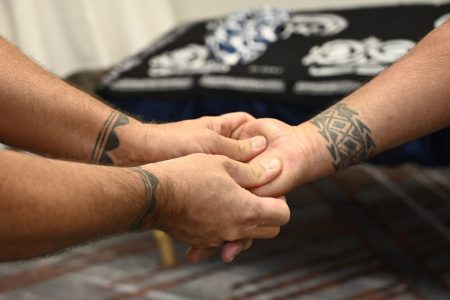
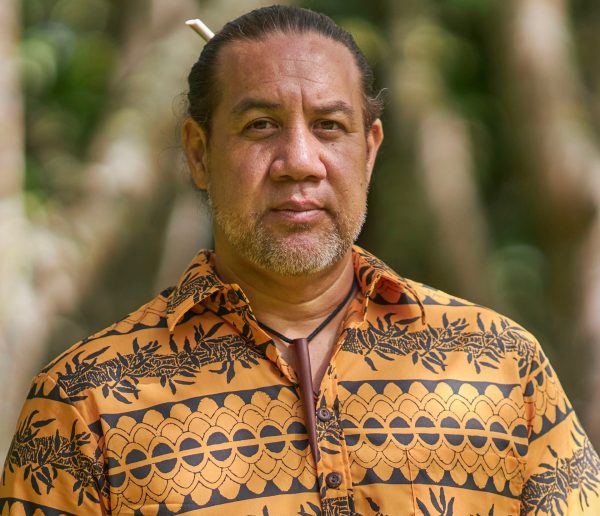
Chan teaches a student the basics of how to “lomi” the hands while using “tools” properly.
Which leads to the final stage of healing at Ka Pā o Lonopūhā: Become a healer in your own community. Chan believes that after you have healed yourself and your home, you have the foundational skill sets to become a practitioner and go out into the community to help your neighbors heal―just as Chan, himself has demonstrated repeatedly as a frequent guest lecturer and presenter at numerous community workshops, conventions and universities.
How the Hawaiian healer will use the Luce Fellowship
The mission of Chan’s healing academy, Ka Pā o Lonopūhā, is to grow the number of traditional Hawaiian healers because Hawaii has lost so many of its elders skilled in the healing arts over the years. Also, Chan wants to provide more healthcare options for Native Hawaiians. “Right now, for most of our communities, we have only one option: the medical model.”
To date, his academy has graduated 56 practitioners from eight cohorts now serving in their various communities across the Hawaiian Islands; and he currently has 53 more students enrolled in his academy, from ages 18 to 68. Some of his students are medical doctors, social workers, and public health professionals who are looking to complement their formal Western education with knowledge of traditional Hawaiian healing.
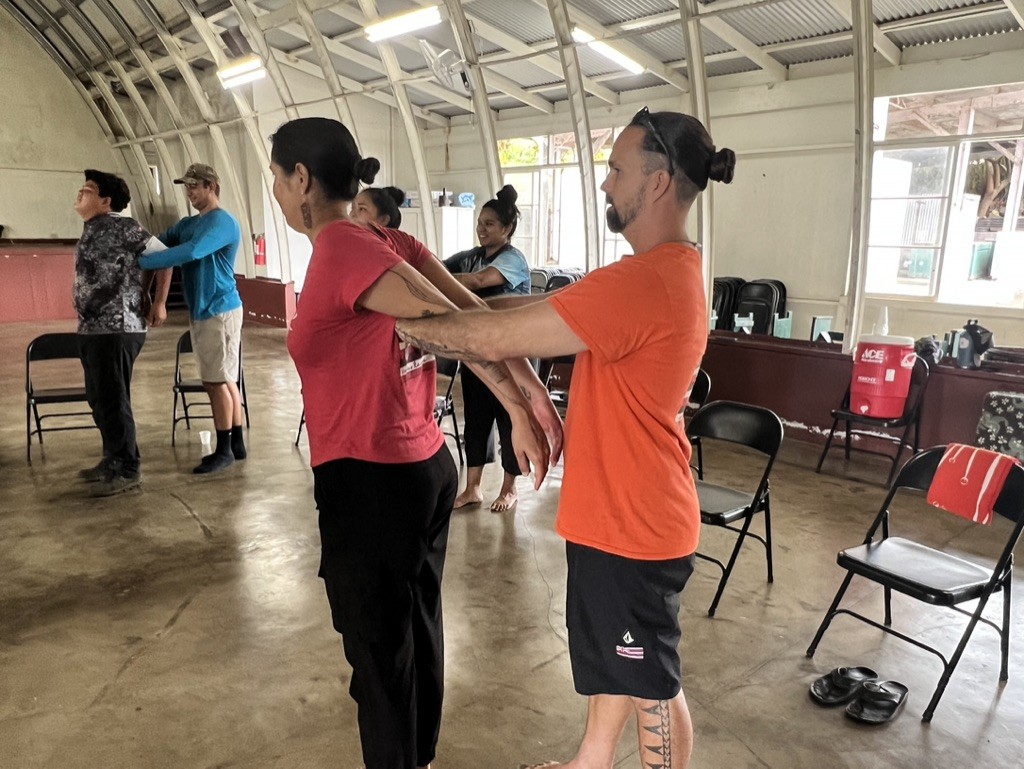
Community partners learning to “malama” their co-workers to create a healthy work environment.
Due to increasing enrollment, Chan has earmarked his Luce Fellowship to add three cultural experts to his team to help with curriculum development. These experts bring deep knowledge of both Western and Hawaiian healing modalities to Ka Pā o Lonopūhā.
“I am a traditional healer who believes in integration. We need to partner with Western medicine, look to each other’s strengths, for the sake of providing the very best healthcare for people.” He acknowledges that sometimes pharmaceutical drugs are necessary, like antibiotics to kill super bugs.
The fellowship will also allow Chan and his assistant to travel to the Big Island, Maui, Oahu, and Kauai for in-person trainings, community events, meetings with other Indigenous practitioners, and cultural exchanges. He will also offer honorariums to guest speakers to enrich the school curriculum.
And for those students unable to attend classes in person, Chan will buy state-of-the-art equipment with digital capability to livestream classes and events, and help create a database of best practices to educate future generations.
The healer continues to heal himself
While Chan has helped many Native Hawaiians on their healing journey over the last few decades, he admits that he is not entirely healed himself. “I don’t think anybody is completely healed, and that’s the beauty of being human. The only difference between a healer and anybody else is that the healer has recognized his flaw. He has identified what the sickness is and is on the path to healing.” Chan adds that being a “healer” isn’t about projecting onto others what he does, but rather, about the path he is personally on in his own journey, inspiring those around him.
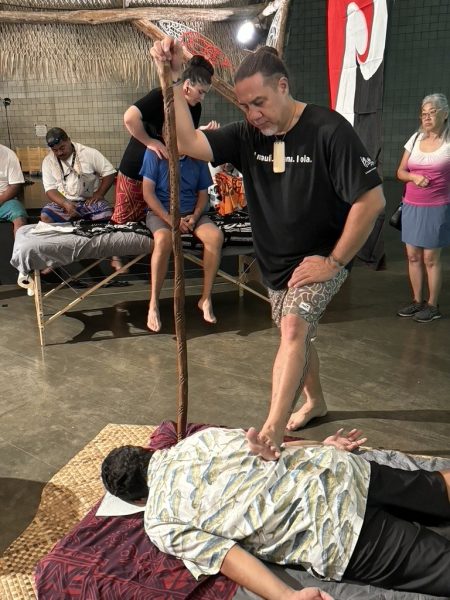
Chan helps someone relax his lower back and realigns his floating rib.
The Luce Fellow says that it is important for a good healing practitioner to be critical of himself and his practice because it allows him to continue to grow.
Chan, whose first name “Keola” means “life,” says he is manifesting the path that was selected for him at birth. “My mother was told that she wouldn’t survive childbirth, but she did. And she always reminded me that I brought life to her.”
It is a fitting statement for a Hawaiian healer who teaches his students that to be able to heal, you must first understand where you came from. “Nothing is ever lost. You just need to know how to tap back into that source and bring life to it again.”
As Chan once shared on the Hawaiʻi Rising podcast, what will get the Hawaiian people through hard times is the “collective,” not the individual. “What never left is our Aloha for our people, for each other. That is the foundation of healing. Aloha is love, and love heals all.”