Martha A. Austin
Diné

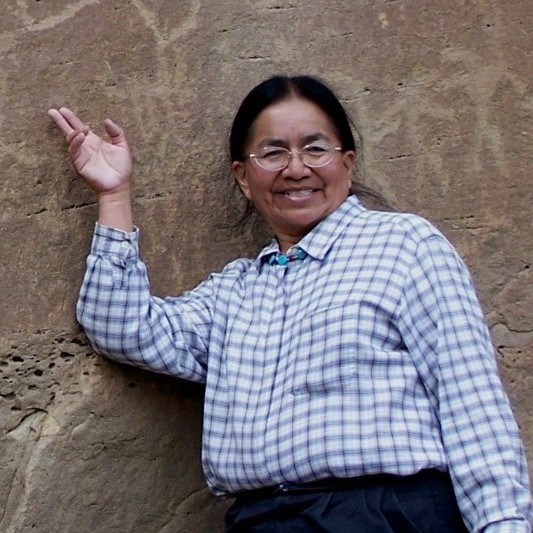
Diné
 First Nations Development Institute (First Nations) is excited to partner with the Henry Luce Foundation (Luce) for a fourth year of the Luce Indigenous Knowledge Fellowship. In 2020, First Nations and Luce awarded the inaugural 10 $50,000 fellowships to advance and support the work of Indigenous knowledge holders and knowledge makers dedicated to creating positive community change. Beginning in 2021, we expanded the fellowship award to $75,000 over two years to support fellows committed to preserving and sharing Indigenous knowledge with future generations. In 2022 and 2023, First Nations and Luce awarded 10 $75,000 fellowships each year.
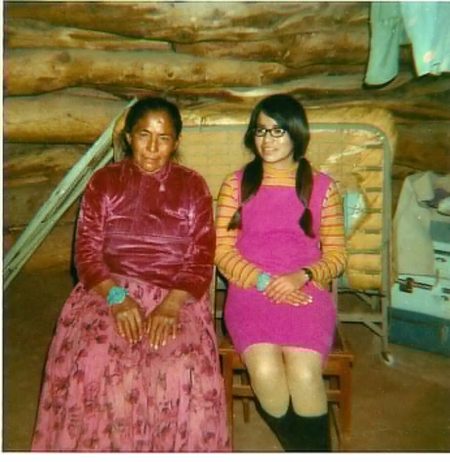
Austin (right) was just 17 years old when she started working with Dr. Oswald Werner, who she calls “Ossy.” Her mother, Martha Austin, a traditional midwife and herbalist, is sitting next to her.
In the 1960s, a research group led by Dr. Oswald Werner, a linguistic anthropologist from Northwestern University, began an ambitious federally funded project to develop a Navajo medical dictionary, which later grew into the Navajo Ethno-Medical Encyclopedia (NEME). Martha A. Austin (Diné), a fluent Navajo speaker, was just 17 years old and fresh out of high school when Werner hired her to work as a secretary and later as a research assistant on the project.
As Austin recalls, “The medical doctors at Indian Health Services said they didn’t have any resource materials on Navajo cultural and health knowledge,” so Werner’s research team set out to create that resource. They consulted with Navajo medicine men and women to determine the structure of the NEME, designed around traditional Navajo healing knowledge and terminology.
Young Navajo men and women helped Dr. Werner interview the medicine men and women about ceremonial knowledge, illnesses, medicinal plants, and tribal creation stories related to health, illness, and other cultural beliefs, and assisted in documenting the information.
By the 1980s, Austin had been promoted to project co-director and nearly three of the projected 10 volumes of the encyclopedia had been completed in draft copy when funding from the National Institute of Mental Health ran out and was not renewed because federal priorities had changed, putting the entire NEME project in a state of limbo.
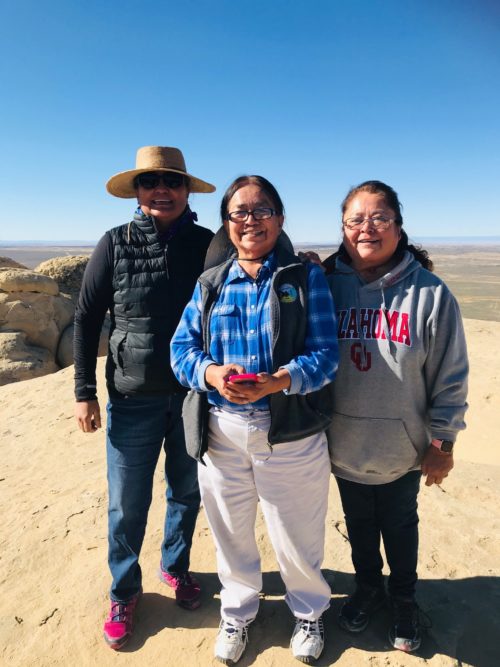
Martha A. Austin (Diné), center, is a fluent Navajo speaker who is determined to complete all 10 volumes of the Navajo Ethno-Medical Encyclopedia (NEME) started more than 50 years ago.
Now at 74, the Luce Indigenous Knowledge Fellow aims to pick up where Werner’s team left off in the 1980s. “My goal under this fellowship is to complete Volume III ― on conception, pregnancy, and childbirth with a few more interviews to update it ― and make it ready for publication.” Sometimes Western medicine does not work for us or is not compatible with Navajo (Diné) culture, she says. “That’s why this encyclopedia is so important to the Navajo people.”
Through the fellowship, Austin also plans to organize existing materials and conduct new interviews for three other volumes on diseases, sores, and injuries. She intends to hire advanced Navajo language college students to transcribe taped interviews.
The Luce fellow says she is “on a mission” to complete the entire project, so once the fellowship ends, Austin’s work on completing all 10 volumes of the NEME will continue. Her long-term goal is to get the NEME published locally with partial English translations. “As a fluent and literate Navajo language speaker, I am determined to develop the Navajo Ethno-Medical Encyclopedia into the written Navajo language.”
She hopes to share this knowledge with healthcare providers, as well as Navajo language and culture teachers and professors, to further the knowledge of Navajo health and culture.
A lifetime dedicated to Navajo language and culture preservation
While working with Werner’s research team, Austin left to earn a bachelor’s degree in education, and came back after her graduation to become the co-director of the NEME project. When it was put on hold, she was hired by Diné College in Shiprock, New Mexico, to teach courses in speaking, reading, and writing in the Navajo language. She also taught a course in Navajo medical terminology and was intensely involved in developing and implementing curriculum for advanced Navajo language courses.
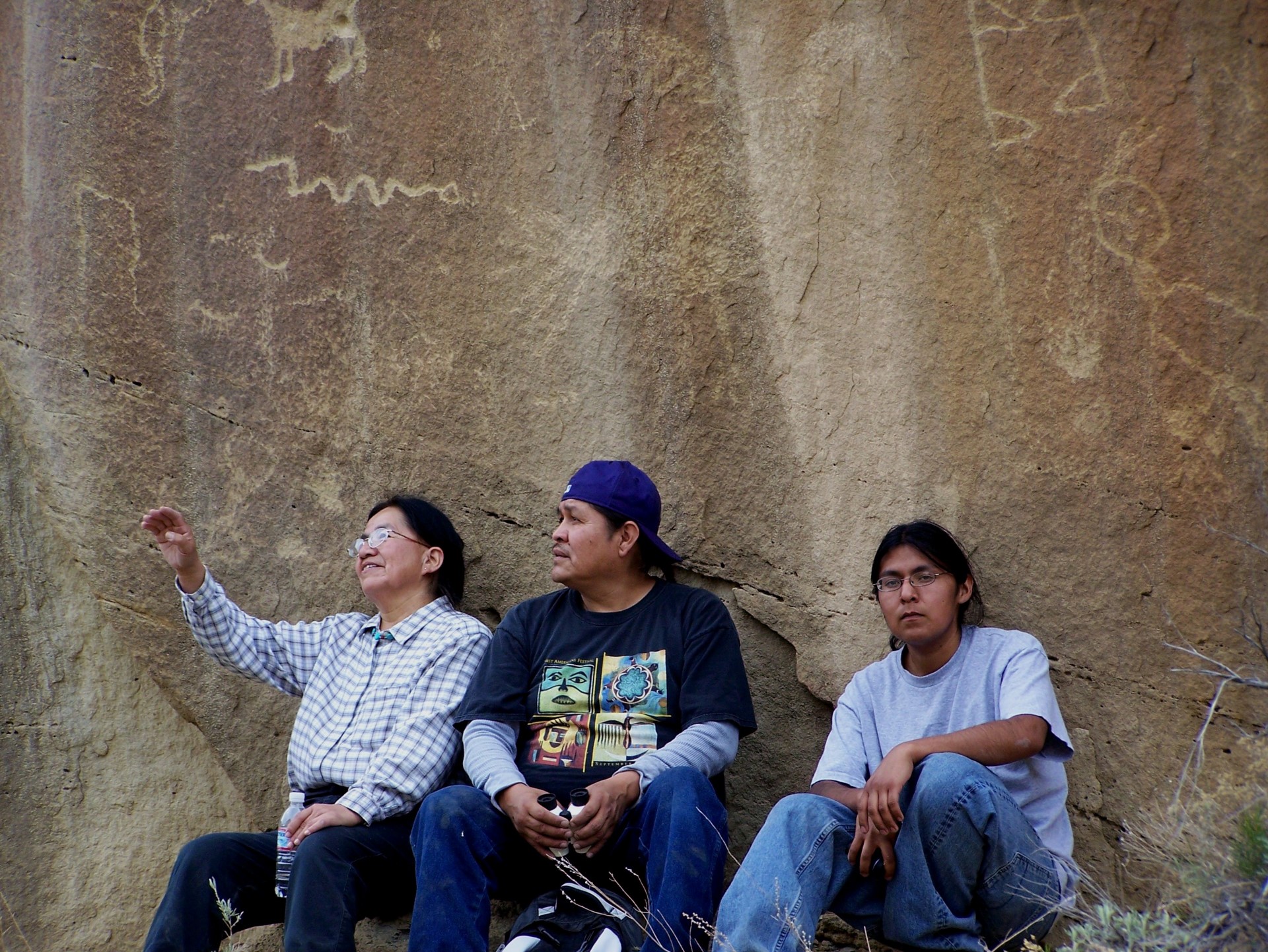
Austin (left). who retired in 2020 from her position as chairperson of the Center for Diné Studies at Diné College, led students on a field trip to Dinétah, the traditional homeland of the Navajo Nation.
Austin eventually became chairperson of the Center for Diné Studies (CDS) for all the Diné College campuses and retired in 2020. During her leadership, the CDS faculty developed two bachelor’s degree curriculums for Diné studies and Diné language.
Helping to preserve and teach the Navajo language is a priority for Austin. “It is very sad to watch monolingual Navajo speakers die each day, leaving behind the English-speaking children. One generation ago, almost all the Navajo people spoke their native language at social gatherings, ceremonies, trading posts, community meetings and work. Children spoke Navajo while herding sheep, in the school hallways, on the playground, and with their families.” She adds that today, fewer children are speaking Navajo, and, quite telling, half the tribal population speaks Navajo-English.
Some of Austin’s many accomplishments in language and translation work include her four-year collaboration with the Mayo Clinic, under a grant from the National Cancer Institute, as the lead translator to develop a Navajo Cancer Glossary that includes 260 entries with English definitions accompanied by Navajo translations. And most notably, she helped translate the Navajo text embossed on the Congressional Medal of Honor awarded to Navajo code talkers from WWII.
The respected Navajo elder shows no signs of slowing down, either. Recently, Austin worked as a paid consultant to the State of Arizona for providing Navajo translations of Ballot Propositions. And she is working with the University of Colorado and University of California at Los Angeles on a federally funded genetics research project, developing a written genetics glossary with recordings in both Navajo and English that will be published soon. This project involves many Navajos working with the Navajo Nation government to lift their moratorium on genetics research among the Navajo people. Austin says that they need this information in Navajo to have “informed consent” when deliberating legislation to lift the 20-year moratorium.
A family legacy in medicine
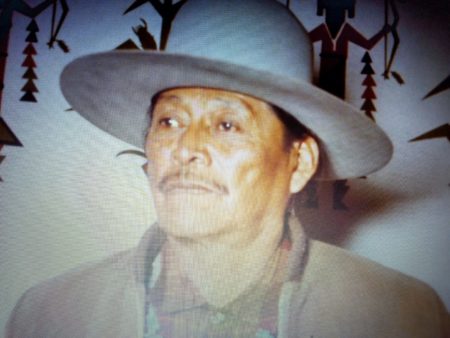
Austin’s father, Buck Austin, was a Navajo medicine man.
No surprise that being an advocate for Navajo healthcare is in Austin’s blood. Her father was a Navajo medicine man, and her mother was a traditional midwife and herbalist. Her oldest daughter is a tenured associate professor of genetics at UCLA and her youngest daughter, a graduate of Harvard Medical School, works as a general surgeon in Sitka, Alaska.
“My family and Diné College have had a lot of influence on me,” says Austin, who is also quick to give credit to her husband, Edward R. Garrison, Ph.D., MPH, and a fervent supporter of her language work. Garrison, also now retired from Diné College, taught biology and led the development of the public health degree program at the college.
In 2009, the National Library of Medicine funded a conference at the University of Texas at El Paso and invited Austin and her mentor, Werner, to speak about their work on the NEME. According to Garrison, Werner said at the conference about his Navajo medical encyclopedia project, “As far as we know, there is no comparable effort anywhere in the world to document an entire range of knowledge of an Indigenous healing and medical system.”
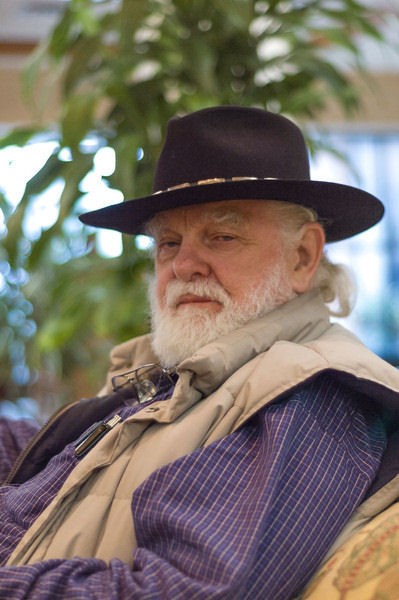
Dr. Oswald Werner, a linguistic anthropologist from Northwestern University, hired Austin when she was just 17 years old, to help with the Navajo medical dictionary, which later grew into the Navajo Ethno-Medical Encyclopedia (NEME).
Sadly, Werner never saw the completion of the project, as he died at the age of 95 in early 2023. However, before his death, he was able to write a letter to support Austin’s application for the Luce Indigenous Knowledge Fellowship. Austin shares that her mentor was happy knowing that the work he had envisioned and initiated in the 1960s had been resurrected with funding from the Henry Luce Foundation.
Now the Navajo language expert is more energized than ever to complete the NEME project. “We are losing our language, our culture, and people are telling me to continue my work, to keep moving forward with what I do.”
Garrison says an effort is underway to renew a more than 50-year-old initiative to establish an American Indian School of Medicine. The success of the project will depend on funding. If the school gets up and running, the exciting development for this Luce fellow is that the NEME will likely become part of the curriculum, Austin predicts. “It would be a national medical school, not just for the Navajo people. Resources from other Native tribes would also be incorporated into the curriculum.”