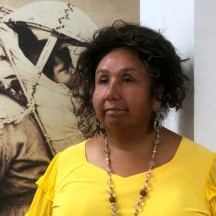
Michon Eben
Reno-Sparks Indian Colony, Nevada
Reno-Sparks Indian Colony, Nevada
 First Nations Development Institute (First Nations) is excited to partner with the Henry Luce Foundation (Luce) for a fourth year of the Luce Indigenous Knowledge Fellowship. In 2020, First Nations and Luce awarded the inaugural 10 $50,000 fellowships to advance and support the work of Indigenous knowledge holders and knowledge makers dedicated to creating positive community change. Beginning in 2021, we expanded the fellowship award to $75,000 over two years to support fellows committed to preserving and sharing Indigenous knowledge with future generations. In 2022 and 2023, First Nations and Luce awarded 10 $75,000 fellowships each year.
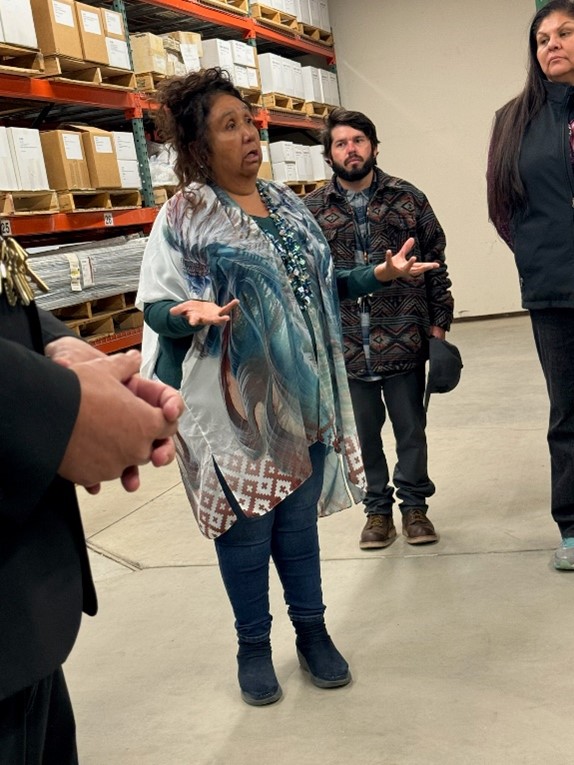
Eben conducts a tour of the Indian Hills Curatorial Center, where Native cultural items have been stored in compliance with a federal regulations code.
In the Sparks, Nevada, office of Michon Eben is a small mining exhibit called, “Wounded Souls: Extracting from Our Lands and Spirits.” A collaboration with the W.M. Keck Earth Science and Mineral Engineering Museum at the University of Nevada, Reno, this art exhibit is emblematic of Eben’s lifelong work to educate and empower the Reno-Sparks Indian Colony (RSIC) about its precious cultural assets and the critical need to protect them―especially from the destructive mining industry.
For nearly two decades, Eben has worn two hats as RSIC’s cultural resource manager and designated representative of the Tribal Historic Preservation Office (THPO, or “TIPPO”) for the Paiute, Shoshone, and Washoe people―the three tribes which comprise RSIC’s membership. She understands better than most people how difficult it is to stop the powerful political forces behind the extractive industry, or even try to change rock-solid federal mining laws in place since 1872.
“However, we can make a difference if we rise together with one, strong voice. We can make sure these mining stakeholders hear our demands and know we are educated in reviewing and responding to permitting documents,” Eben tells First Nations.
As an RSIC tribal member, Eben first became involved in the fight against mining interests when she graduated from Humboldt State University and returned to her home in the Reno area. “Our tribe was just beginning to fight a mining company trying to put an open-pit mine next to our community to extract clay for kitty litter.”
Her people quickly united with their non-Native neighbors, environmental organizations, and the tribe’s cultural committee to fight back against the environmental impact statements slated to be approved without any consultation from surrounding tribes that would be negatively impacted by the mining. “We fought hard, and we won!” Eben recalls that triumphant first battle.
As a Luce Indigenous Knowledge Fellow, Eben will commit her fellowship to growing the number of established THPOs among the 28 Indigenous tribes, bands, and colonies of Nevada, who Eben says are all related through ancestry, languages, and homelands. “All I want to do is provide my people with information about what’s coming to destroy our culture.”
Why every tribe needs a THPO
What is coming to Nevada is a mining rush. “We have 40 lithium mines coming into the Great Basin, into our homelands. And 20,000 lithium claims,” Eben foreshadows the fight ahead. “When 40 mines are mixing minerals with sulfuric acid, it is annihilating ecosystems around it. That’s not green energy! That’s a lie.”
According to the Luce Fellow, one of the most effective ways for a tribe to protect its historic properties and cultural assets is to apply to the National Park Service for a THPO (again, a Tribal Historic Preservation Office) designation and name someone, like herself, to oversee it.
THPOs are one avenue to give federally recognized tribes a voice at the table when matters of archaeology, mining, and cultural resource management are being discussed and negotiated. Another advantage of having a THPO in place is that tribes will get earmarked funding from the National Park Service to help run their cultural resource programs.

The RSIC Native leads a meeting of the Cultural Resource Management Working Group alongside an environmental attorney and member of the advocacy group Protect Thacker Pass.
Of the 20 federally recognized tribes in Nevada, only nine have established a THPO―many under Eben’s leadership and direction―so there is plenty of work to be done during her Luce Fellowship. “I am trying to empower these tribes to get involved and understand all the federal and state laws that pertain to Native American cultural resources. We’re talking 1,000+ pages of resource inventories created by non-Native archaeologists!”
Which raises another concern. In addition to mining, archaeology has been a big business in the United States for more than 200 years without Native participation, approval, and knowledge of the digs. As Eben explains, “They have colonized our culture, and we need to decolonize cultural resource management as a business. These non-Natives are not the experts of our culture!”
According to a federal regulations code (36 CFR Part 79), many Native artifacts taken out of the ground during archaeological digs go into a federal repository and tribes don’t get them back. “They are making money off us, telling our stories, and sometimes it is the wrong story.”
It is imperative, she adds, that Nevada tribes also become knowledgeable about the business of archaeology.
Her plans for the Luce Fellowship
In addition to helping other tribes create THPO programs, Eben will create a Cultural Resource Management Working Group that will meet quarterly to hear the concerns of “renewable” energy, climate change, energy transition (solar, wind, geothermal), and the extraction of critical minerals, all of which involves mining.
This working group will learn about federal and state laws and how to respond to environmental impact statements, review cultural resource inventories, create policies, and discuss next steps in dealing with the overwhelming mining rush and archeological excavations blitzing through Nevada that have not invited Native participation at the beginning stages. “If we’re not at the table, there is something wrong with that picture,” she explains.
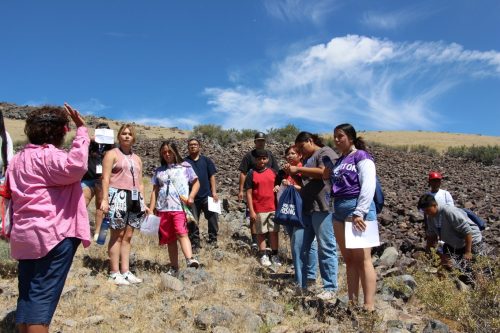
Eben (in pink) teaching the next generation about cultural resource management during an archaeological site visit.
What’s more, developing the next generation of cultural protectors is essential, as well, Eben writes in her Luce application. Because Native youth are tomorrow’s protectors, she currently collaborates with RSIC’s Unity National Indian Tribal Youth Council on trainings and educational trips for the youth to Indigenous cultural sites throughout Nevada.
The fellowship will also allow her to continue her important work to inspire tribal youth to learn how to safeguard their communities’ cultural assets. A series of summer camps and college lectures (in conjunction with the University of Nevada, Reno, Indigenous Relations Office) for Native youth has been planned. One such event has already taken place last summer at the university; another one will be conducted in July 2024.
Wins, ongoing battles, and Thacker Pass
Over the years, Eben and the Reno-Sparks Indian Colony have scored many wins in protecting Native American cultural resources in Nevada, working closely with governors and state legislators. One of the most intense, ongoing cultural battles Eben has been a part of is the fight over Thacker Pass, the proposed site for the largest open-pit lithium mine in the U.S.
Several Nevada tribes, including RSIC, have been embroiled for years in litigation with Lithium Nevada Corporation, a subsidiary of a Canadian mining company trying to build the $1.3 billion mine to extract the element necessary to create batteries for electric cars―a pillar of the Biden Administration’s green-energy agenda. This past March (2024), the Department of Energy agreed to loan more than $2 billion to Lithium Nevada for mine construction.
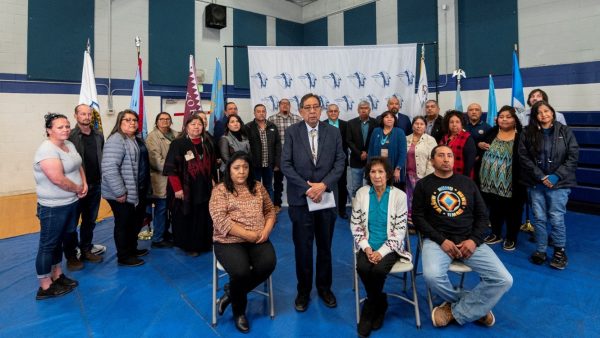
Reno-Sparks Indian Colony (RSIC) tribal chairman and council members attend a Cultural Resource Management Working Group. (Eben in red on the right.)
Thacker Pass is considered sacred land by the Paiute and Shoshone people and used as a ceremonial ground, as it is the final resting place of 30+ Paiute elders, women, and children who were massacred by the U.S. Cavalry in 1865. It is also home to 923 Native cultural sites, of which 56 are eligible for the National Register of Historical Places. In 2022, these Native American sites were excavated and now Paiute and Shoshone’s ancestral past lifeways sit in boxes, labs, and warehouses being “studied” and “theorized” by non-Native archeologists, declares Eben.
Nevertheless, the Bureau of Land Management (BLM) approved the lithium mine in 2021 without attempting any good faith consultations with tribes or noting tribal opposition in the environmental impact statements. “None of the permitting documents (record of decision, cultural resource inventory, historic properties treatment plan) ever mention the 1865 massacre,” a clear violation of the National Historic Preservation Act, says Eben.
In fact, the RSIC did not even know that BLM had officially approved the building of the mine until two months after the agency issued its official decision. RSIC found out about BLM green-lighting the lithium project through a spiritual leader from the Fort McDermitt Paiute and Shoshone Tribe.
If ever there was a good reason to have a THPO in place, this was it, states Eben. “He approached our tribe’s THPO for help in understanding what legal rights Native Americans possess to protect their historic and traditional cultural properties at Thacker Pass.”
For this Luce Fellow, fighting for cultural preservation and a voice at the table is never-ending work. And she has an important message for mining stakeholders: “You’re coming to Indian Country, you’re coming to destroy our homelands, and you are going to meet with 28 tribes and bands because you are affecting all of us, we are ALL interrelated!”
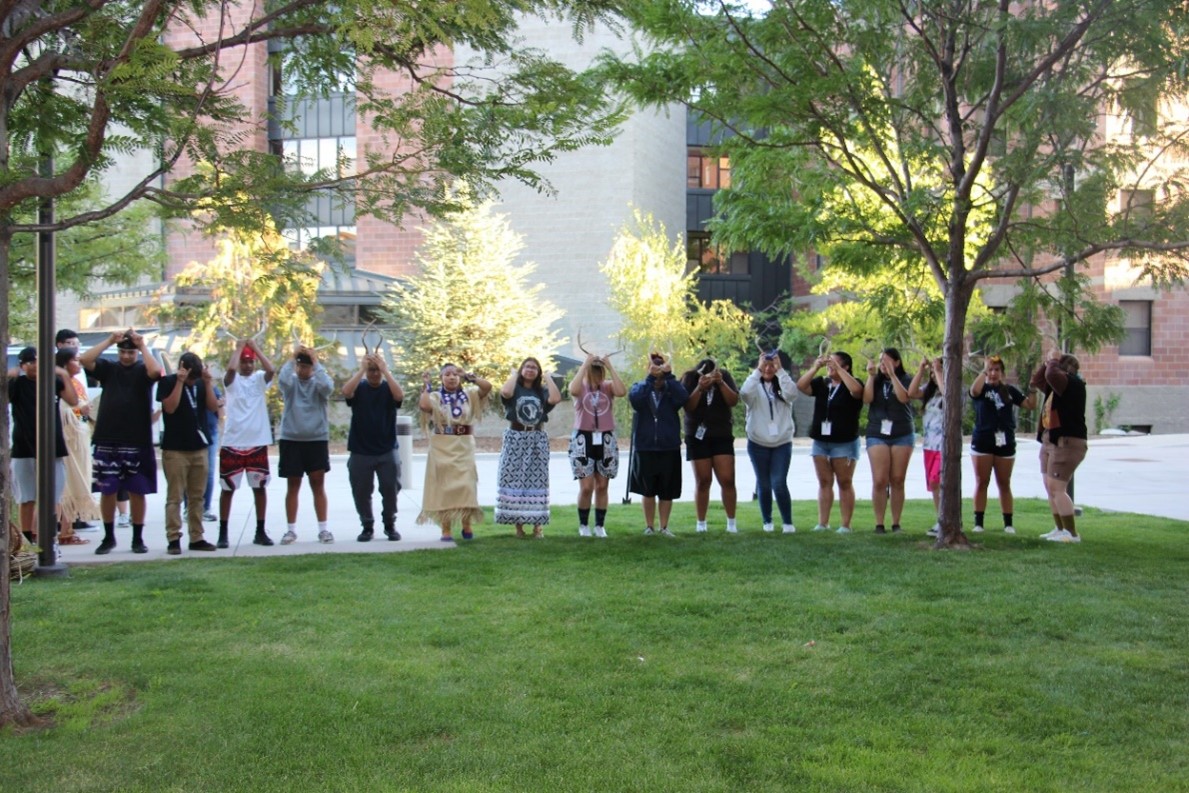
Students perform the Deer Dance, a Great Basin Native American honor dance and cultural treasure.