Natasha Smoke Santiago
Saint Regis Mohawk Tribe
Saint Regis Mohawk Tribe
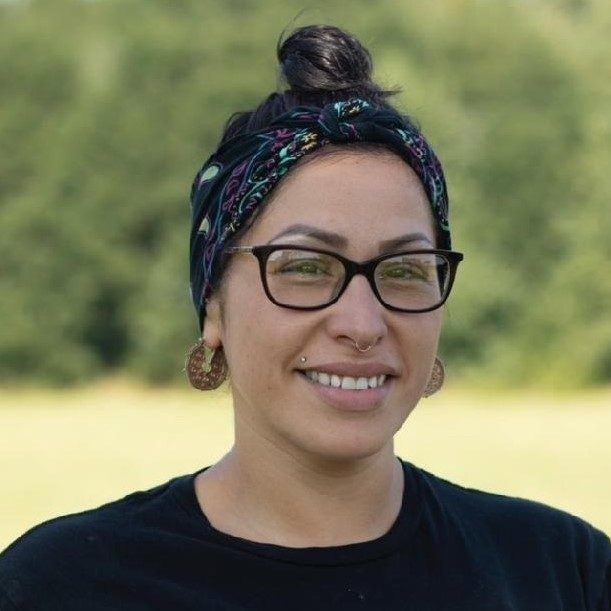
Natasha Smoke Santiago (Akwesasne) is part of an exclusive group of Native artists. She is one of only 15 working Haudenosaunee potters across the U.S. and Canada. “When part of your culture, like pottery, goes away, you usually don’t get it back. But my colleagues and I are proud to be bringing the practice out of retirement, proud to be piecing together the knowledge that was once very common in our communities,” says Smoke Santiago.
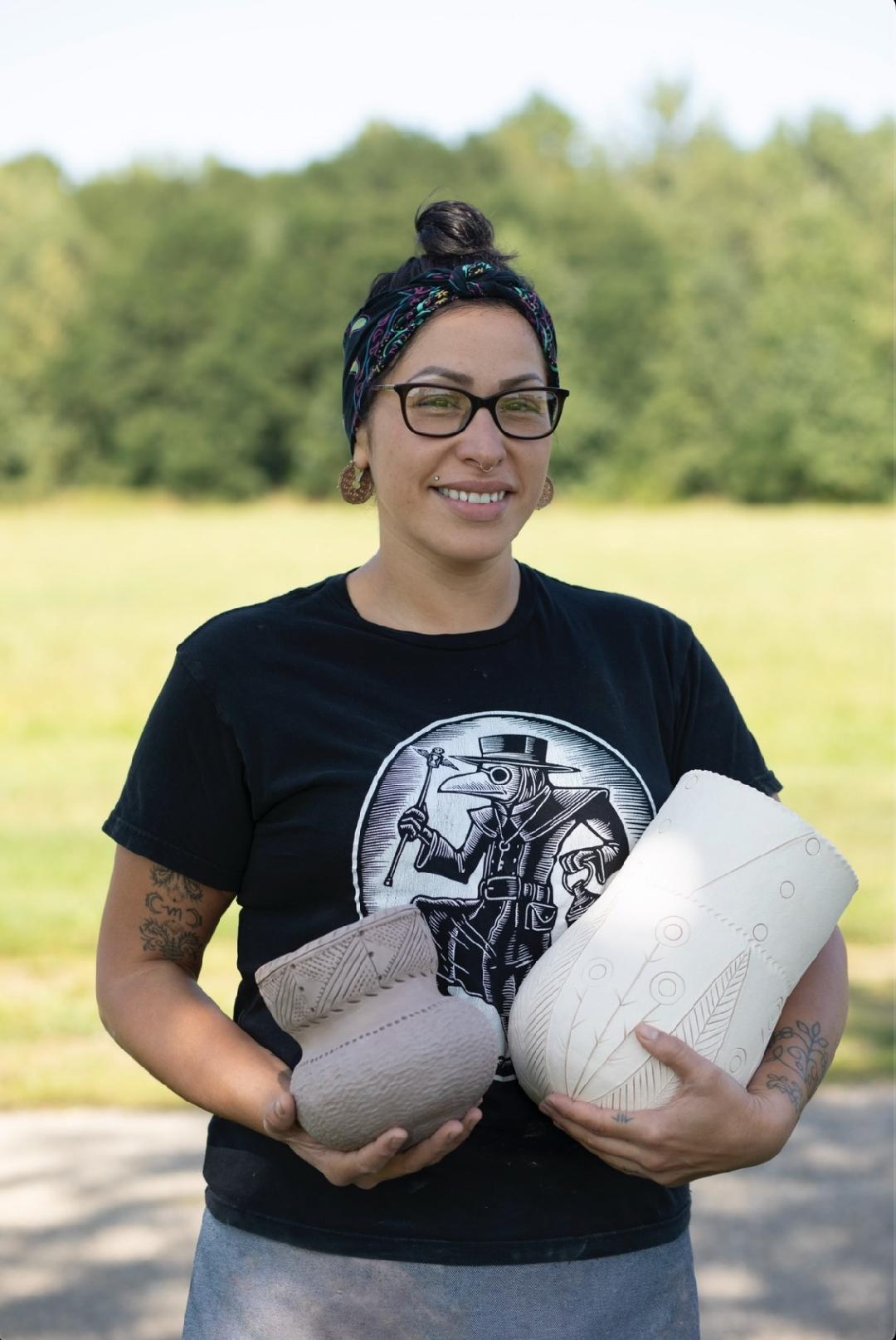
2025 Luce Indigenous Knowledge Fellow Natasha Smoke Santiago is a highly respected and accomplished traditional Mohawk potter, visual artist, painter, illustrator, and sculptor.
The 2025 Luce Indigenous Knowledge Fellow began her journey as an artist when she was a mere 2 years old, drawing a picture of her mother on a Post-it note that stunned her parents. Encouraged by her mother, a bead worker, she started doing paint-by-number sets at 3. And it paid off. She exhibited her first original painting at the Iroquois Museum in New York when she was only 8 years old.
Now at 42, Smoke Santiago has evolved into a highly respected and accomplished traditional Mohawk potter, visual artist, painter, illustrator, and sculptor. Funny thing, becoming a potter was not part of her original plan. “I didn’t plan on becoming a potter. I was pulled into it and fell in love with it. And I still have so much more to learn,” she says humbly during an interview with First Nations.
While she never attended an art school, she was blessed to have talented mentors along the way. She learned fancy basketmaking from Mae Bigtree and Irene McDonald, Akwesasne basketmakers; and Henry Arquette taught her the art of ash-splint basketmaking.
She credits Onondaga ceramicist Peter B. Jones, well known for his traditional Haudenosaunee pottery, for helping to shape her into the potter she is today. “He is really a great friend of mine. He gave me my very first kiln. He told me it was his backup kiln, and he didn’t need it.” Smoke Santiago discovered years later just how generous his gift was. “I found out that he used that kiln all the time but chose to give it to me to support my work. Pete helped grow my independence as a potter, and I will never forget that.”
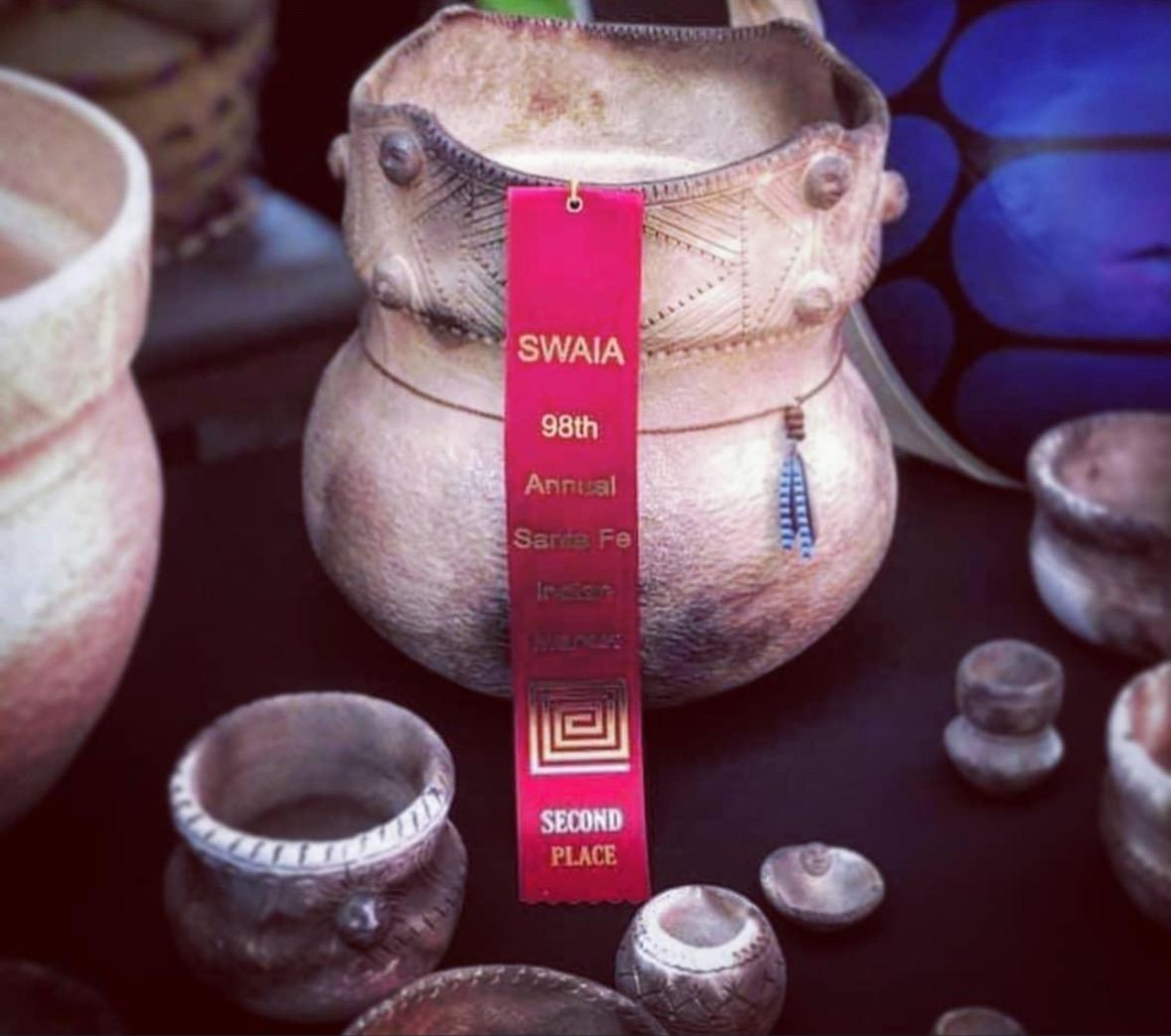
This original pot created by Smoke Santiago won second place at the annual Institute of American Indian Arts Awards in Santa Fe. It was purchased by the National Museum of the American Indian in Washington, D.C.
Over nearly two decades, Smoke Santiago has won numerous awards for her pottery, painting, and sculpting; and her traditional art has been featured in countless exhibits and museums, including the Smithsonian’s National Museum of the American Indian. The renowned museum purchased one of her pots titled “Intergenerational Resilience” that won second place at the prestigious annual Institute of American Indian Arts Awards in Santa Fe.
“Haudenosaunee pottery is really different from Southwestern pottery, so it was a huge accomplishment to win in Santa Fe. I felt like I was representing the whole Northern Woodlands,” she recalls with pride.
The Luce Fellow says she certainly has a signature contemporary style when it comes to pottery. “I put a lot of faces on my pottery, based off old effigies you see on pots. I do animal faces, too.”
The piece of pottery that she favors most is called “Matrilineal.” The handmade pot features the faces of women of all ages – a grandma, mother, adolescent, and baby, representing the Haudenosaunee lineage and bloodline. It is also the largest pot Santiago has ever made at 17 inches high and 17 inches across the top and features real wampum earrings that she designed.
“It was a real challenge to make. Very risky. But it came out beautifully.” Smoke Santiago adds that “Matrilineal” is currently on an exhibit tour across the country.
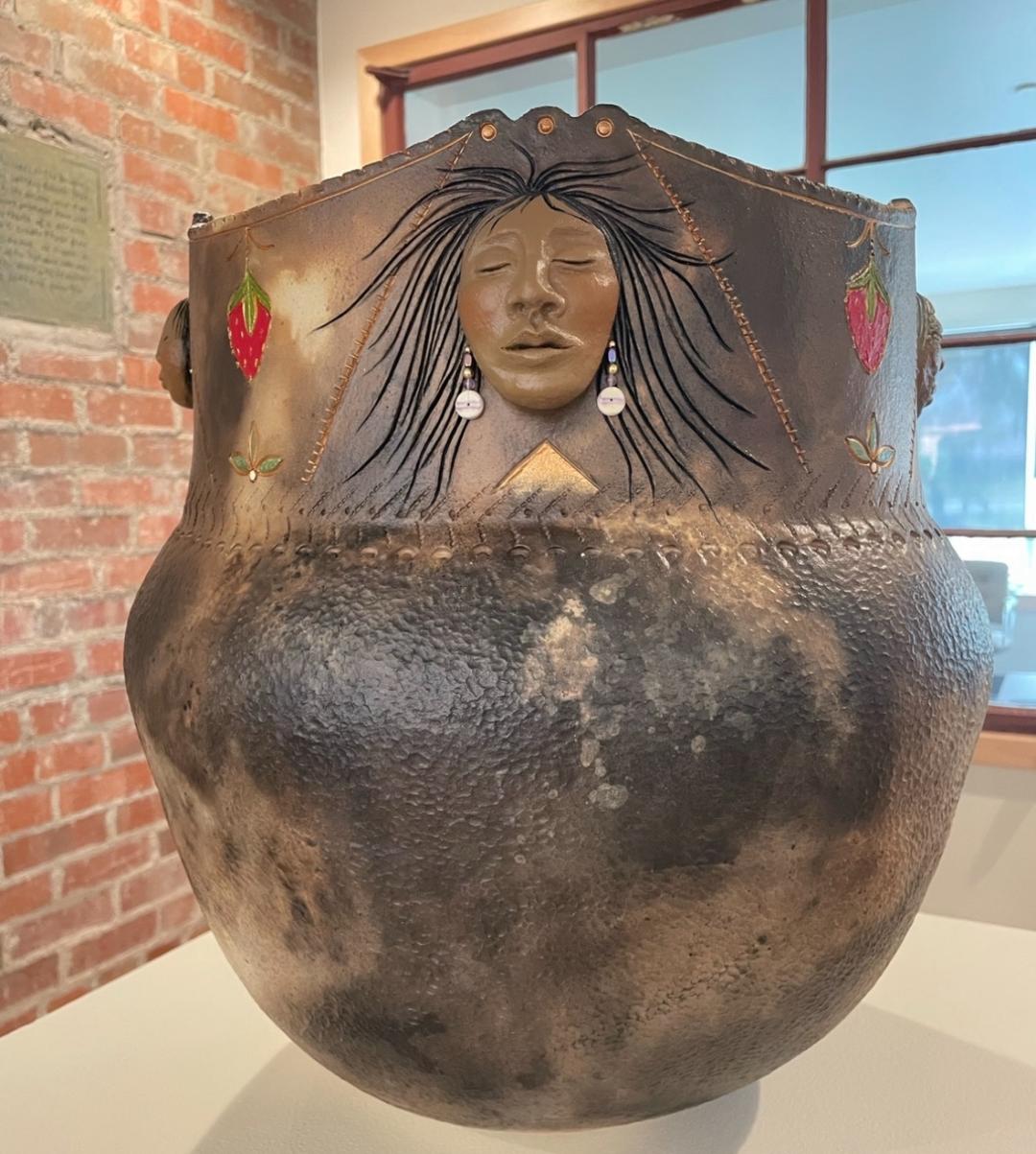
This piece, called “Matrilineal,” is among Smoke Santiago’s favorites. It is the largest pot she has ever made at 17 inches high and 17 inches across the top.
Keeping seeds, sowing education
The Akwesasne potter has also been a passionate seed keeper for more than 20 years. She believes the two Indigenous knowledges are intertwined. At a recent food summit, she worked with Haudenosaunee chefs to demonstrate to Onondaga schoolchildren how pottery links to good health and food sovereignty.
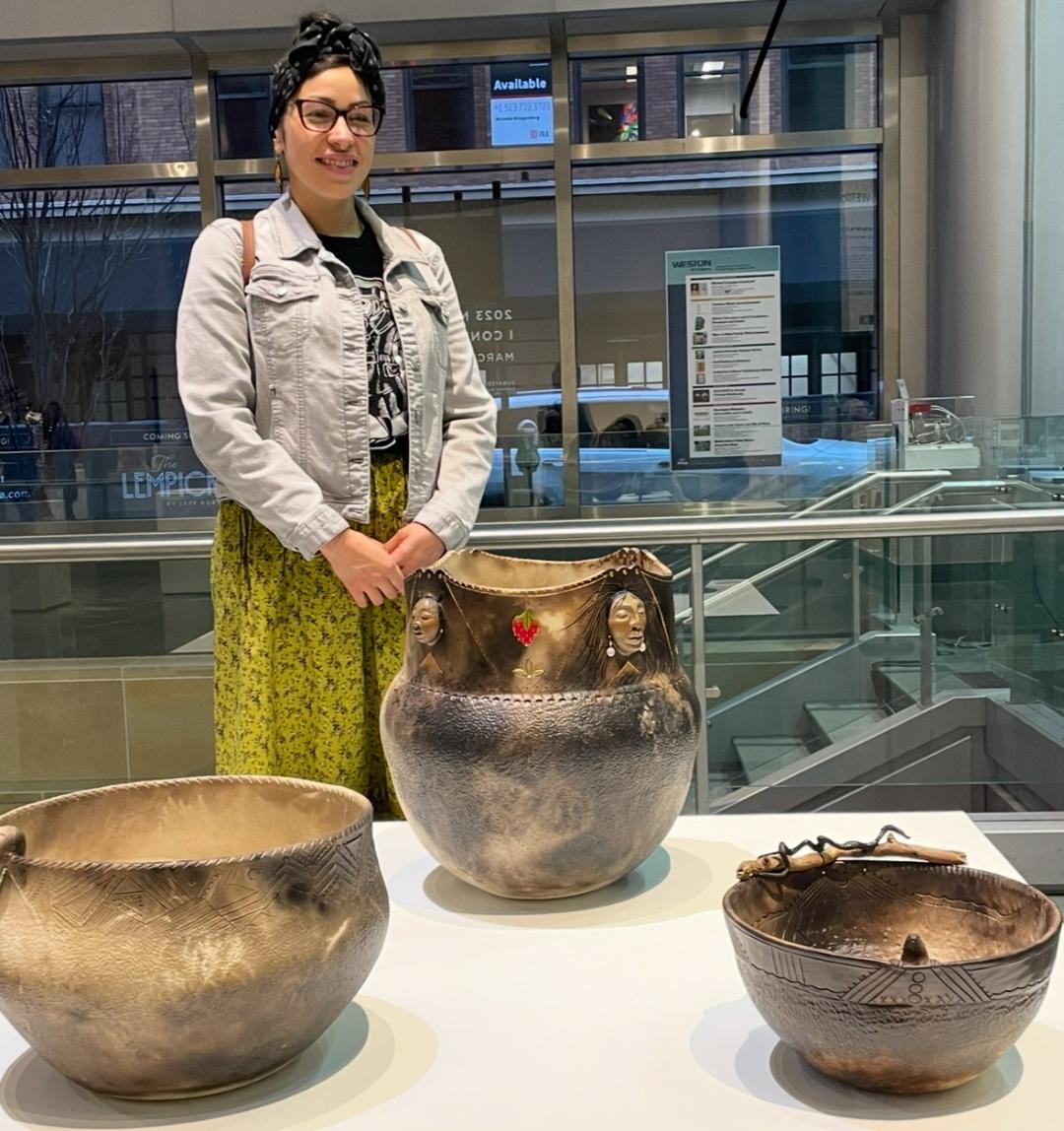
In addition to sculpting beautiful, one-of-a-kind Mohawk pots, the Luce Fellow is also a passionate seed keeper.
“I shared various clays with the children, including some flecked with mica, which, in Southwest cultures, is believed to sweeten beans in stews, and breaks down the hulls of beans, making soup richer and easier to digest,” she explains.
In her own seed collection, Smoke Santiago has corn, beans, squash, and tobacco seeds. “I even have really special squash seeds that were gifted to me from another seed keeper. They originated from an archaeological find in Mohawk territory in Canada. Community members grew this seed, shared among fellow heirloom seed keepers, in an old pot that nobody noticed. This heirloom squash is unlike any other squash I have ever tasted.”
She is currently working on teaching younger generations how to store seeds underground. She is conducting experiments with a colleague from Syracuse University to investigate seed-caching technology — the practice of burying stores of seeds until they are needed for planting.
“The development of this essential method has historically insured generations of Haudenosaunee people against food insecurity,” she writes in her Luce Fellowship application. She is studying how moisture, mold, and insects underground affect seed viability. “We are trying to figure it out.”
Her plans for the Luce Fellowship
The goal for her two-year Luce Indigenous Knowledge Fellowship is to host adult workshops and artist retreats where she will teach how Indigenous pottery techniques are linked to seed-keeping and Indigenous cuisine.
To achieve this goal, the Luce Fellow will supplement her own funding with fellowship funds to finish her pottery studio that she has already started building on the Akwesasne reservation in Hogansburg, New York. “It will be the very first Haudenosaunee traditional pottery studio here in Akwesasne,” she says, adding, “It will also be a space for artists, gardeners, scientists, cooks, and chefs, as well as community members, to gather, learn, heal, laugh, think together, and feel connected.”
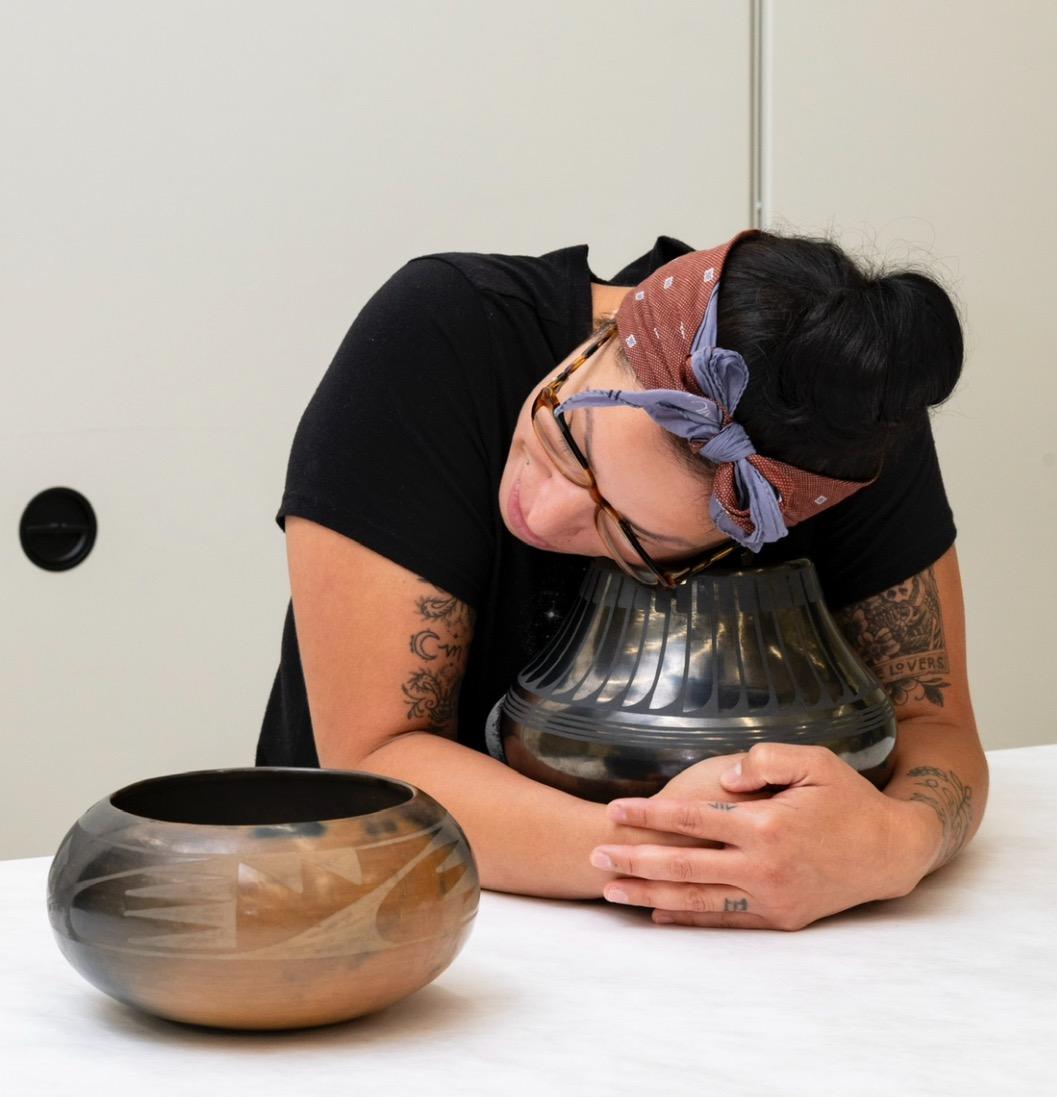
One of Smoke Santiago’s favorite types of pottery is blackware pottery, like those pieces created by the late Maria Martinez, a Pueblo potter she greatly admires.
Her current art studio is simply a four-bay garage with a dirt floor. Renovations to the studio will include insulating walls, creating more natural light with windows, adding heat and electricity for the kilns, and developing classroom space.
“Outside, I want to surround the studio with raised garden beds where the community can work on seed-keeping and gardening without worrying about contaminated soil from local industries.” Smoke Santiago shares her vision: “With the right resources in this new art studio, the possibilities are encouraging. We can make Haudenosaunee knowledges the backbone of an Indigenous future that has yet to be decided.”
Her first apprentice could be closer than she thinks
For this celebrated potter, passing on the art of Haudenosaunee pottery is a top priority, given that such a small number of potters remain dedicated to this traditional art form. “There are 15 working Haudenosaunee potters overall. But where I’m from, in Hogansburg, there are only two of us here,” she says.
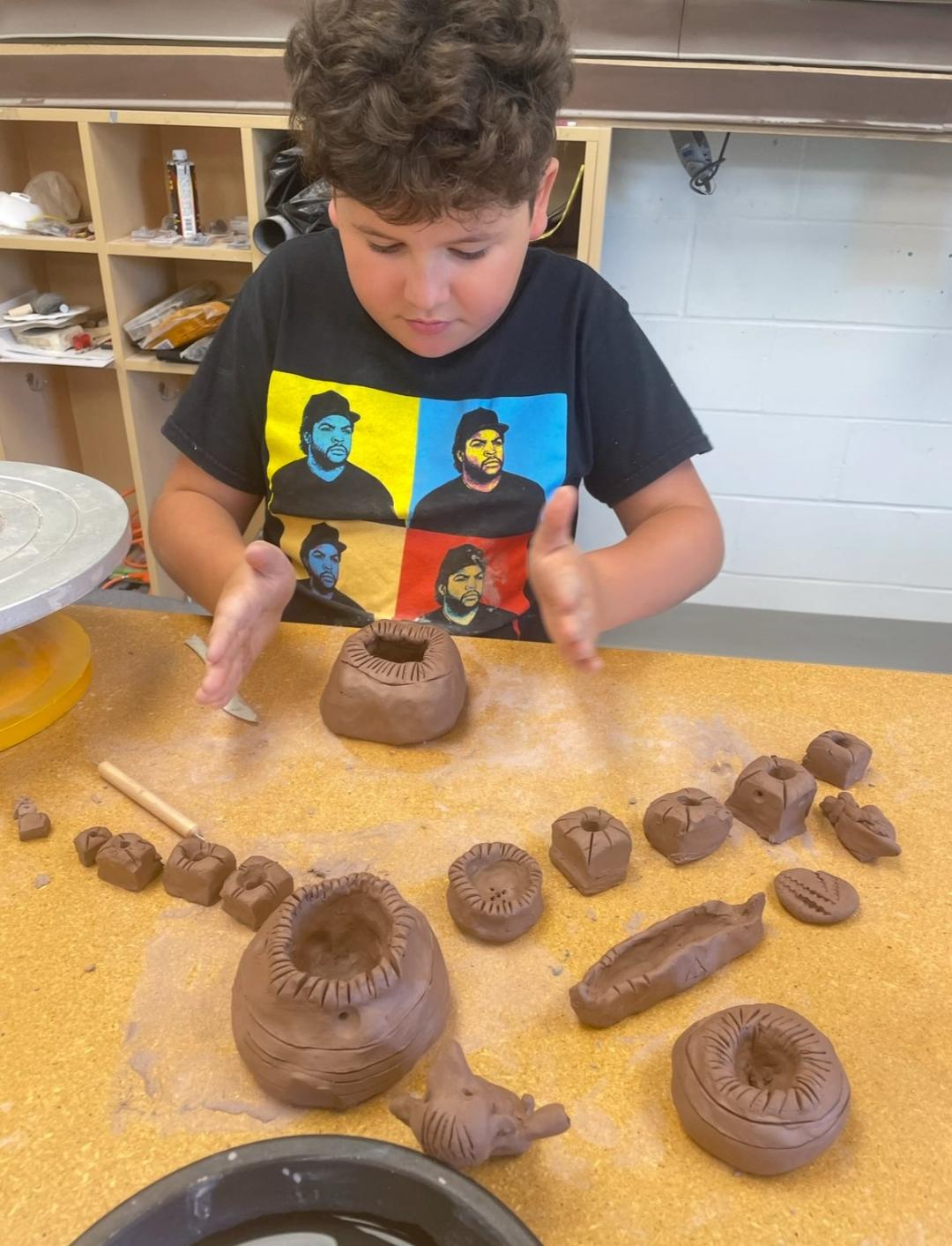
Smoke Santiago’s son (now a teenager) has a keen interest in working with clay. She hopes he will be part of the next generation of Haudenosaunee potters someday.
As a mother of three children (two adults and a teenager), and a grandmother, Smoke Santiago is hopeful that her next pottery apprentice could come from her own family. “My daughter is a graphic designer, and she is also being mentored in ceramics by Pete, my mentor. She has expressed an interest in me teaching her what I have learned, so she will probably be my first apprentice.”
Her 13-year-old son also shows promise as a potter. “He has always been interested in clay and has worked with it since he was a baby.” Not long ago, her son suddenly started teaching at one of her workshops, showing a participant how to use all the traditional tools. “It caught me off guard, but I was so proud of him.”
It reminds her of the traditional potter she most admires, the late Maria Martinez, a famous Pueblo potter renowned for her blackware pottery. Martinez and her son worked together to create innovative pottery designs that helped preserve the cultural legacy of the Pueblo community.
“I am hoping my son and I can work together, too, someday. And that he will be part of that future generation of Haudenosaunee potters.”