Rose Bear Don’t Walk
Bitterroot Salish and Crow
Bitterroot Salish and Crow
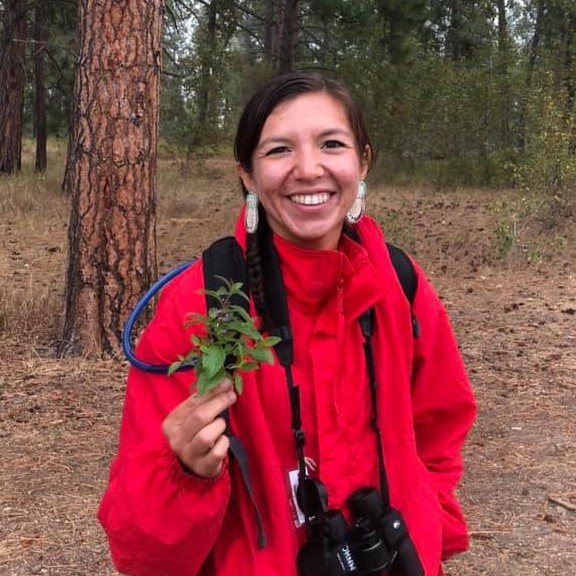
Rose Bear Don’t Walk (Bitterroot Salish and Crow) grew up on the Flathead Indian Reservation in Montana, where she became deeply connected to her rich culture, ancestry, and the bountiful land.
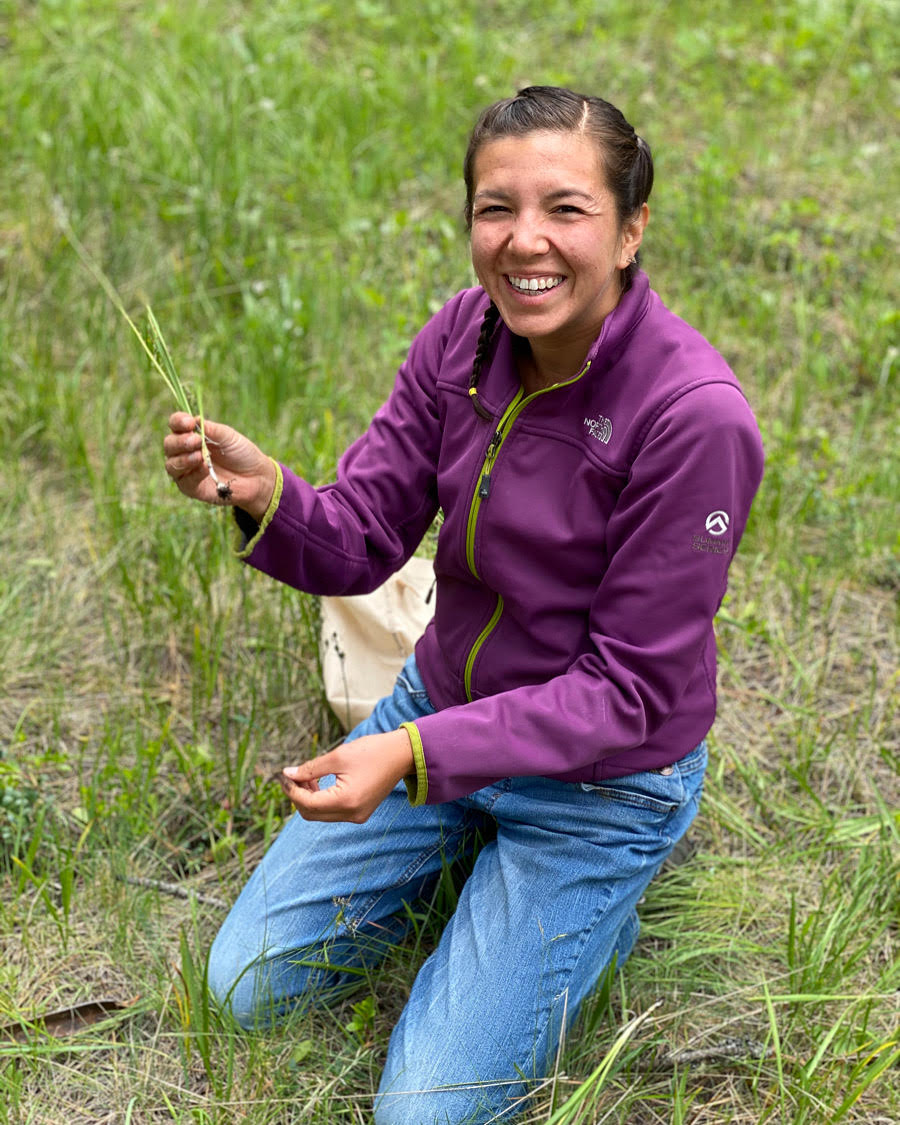
Rose Bear Don’t Walk, a 2024 Luce Indigenous Knowledge Fellow and ethnobotanist, is using her research and knowledge to empower Salish people to engage with plants and participate in healthy habits.
While attending Yale University as an undergraduate, she studied with intense interest how colonization created detrimental barriers to healthy foods in Indigenous populations that eventually led to a health decline and chronic illness in Native people, such as diabetes, obesity, hypertension, and heart disease.
“I wanted to understand how a society that historically lived off the land hunting, foraging, and moving could become so far removed from their healthy roots,” she says of how she began her enthusiastic journey into reconnecting the Salish community with its traditional food plants. “Today, the food systems for Indigenous people are cheap and heavily processed. We have limited access to traditional, healthy foods and the cost of that has been our health.”
Her thesis in graduate school at the University of Montana was titled, “Recovering Our Roots: The Importance of Salish Ethnobotanical Knowledge and Traditional Food Systems to Community Well-Being on the Flathead Indian Reservation.” Published in 2019 and downloaded nearly 4,000 times, it delved deeper into the common thread weaving together Indigenous plants, Salish culture, and community health.
Soon after, she founded the Salish Plant Society (SPS), an online educational resource that connects her community ― the Confederated Salish and Kootenai Tribes ― to the knowledge of plants as both food and medicine. “The more people understand the depth and breadth of human/plant relationships, the more we have stake in their preservation and conservation,” she explains. Another goal of the society is to help non-Natives develop a healthier respect for our plant relatives, as well.
Now a doctoral student in Indigenous and Rural Health at Montana State University, the ethnobotanist and 2024 Luce Indigenous Knowledge Fellow is building on the research she did in graduate school. She has her sights set on working with her community to bolster ethnobotany education and materials. “Hopefully, with this collaboration, more Salish people will be empowered to engage with plants and participate in healthy habits that promote wellness and cultural longevity on the Flathead Indian Reservation.”
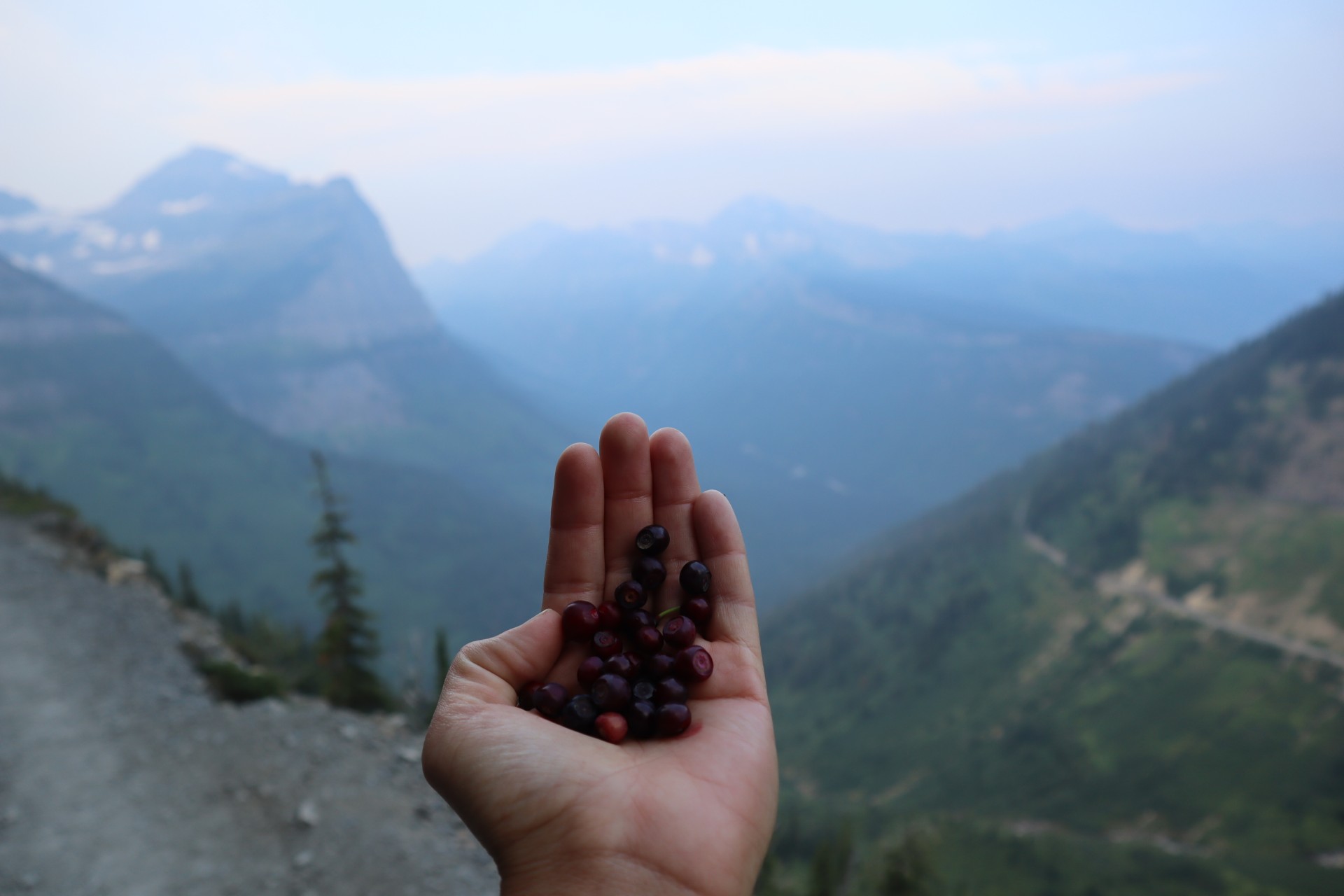
Bear Don’t Walk shares the “fruits” of one of her foraging hikes.
Bear Don’t Walk says that most ethnobotany books, papers, and educational materials are written by non-Native scholars with no personal stake in the communities in which they do research. As a result, most written knowledge about Salish plants is from “an outsider perspective” that doesn’t offer the respectful cultural guidance needed to engage with them.
“I’m hoping that by working with my community, we can find ways to bolster positive engagement and education of traditional food plants that are respectful to our traditions and to the land.” She wants to share the love of food plants with others who want to learn and discover new ways to spread this love in the Salish community. She shares that her favorite traditional plant is Spring Beauties, also known as Indian Potatoes.
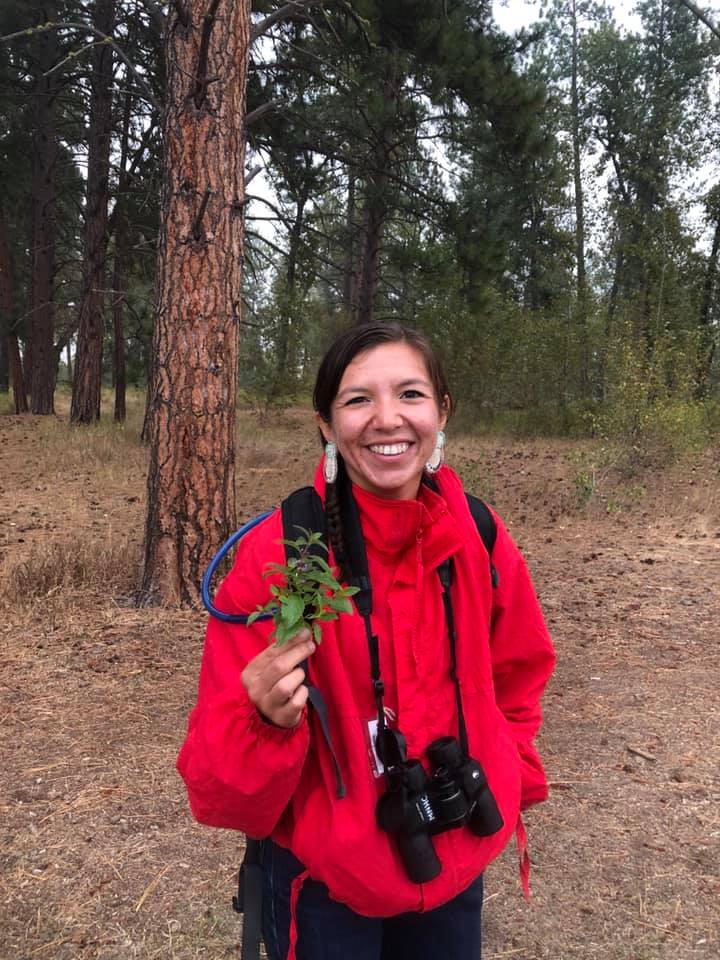
The Luce Fellow often goes on hikes to gather data and learn as much as she can about the traditional food plants of her tribe.
Her plans for the Luce Fellowship
With the help of the Luce Indigenous Knowledge Fellowship, Bear Don’t Walk will have the financial means to meaningfully engage with the Salish community as she works on the development of engagement activities and conducts her research for her Ph.D.
“The Luce Fellowship has changed my life in terms of what I can accomplish within my own community,” she says.
In her fellowship work, she will be guided by a cultural advisory board, organize talking circles and knowledge-sharing/gathering with Salish stakeholders, conduct a community survey and health assessment, and engage in fieldwork.
Her focus within her academic research is on what it means to be “healthy and well” in the Salish perspective and what role traditional food plants play in that.
“Part of the gift that the Luce Fellowship provides is an ability for me to stay rooted in my community by providing monetary support for my travel to visit my community to attend important events, visit with friends and family, build my research, and nurture that emotional and spiritual side of wellness.”
The 2024 fellow will also use Luce Fellowship funds to pay honorariums and gifts to knowledge-keepers, stakeholders, focus group participants, and cultural advisors for their time and contributions to her work and research. What’s more, the funds will help pay for the community activities she hopes to develop and execute come spring and summer foraging times.
But before she can move forward with any of these plans, Bear Don’t Walk must first get approval from the Salish Qlipse Culture Committee, as well as the Salish Kootenai College Institutional Review Board (IRB).
There are still many steps involved in making her research and community engagement activities a reality, and while she continues to gather data and learn as much as she can about the traditional food plants of her tribe, the 2024 Luce Indigenous Knowledge Fellow waits patiently, with determination. “Regardless of how long it takes, or any of the obstacles I may face, I will make it happen.”
Building on the work of her ancestors
For this Luce Fellow, her ancestors, family, and lineage are the driving force behind her goals and accomplishments. Bear Don’t Walk, whose first name is “Mitchell Rose,” comes from a highly educated family of lawyers. “My grandpa was one of the first American Indian lawyers in the country,” she shares proudly.
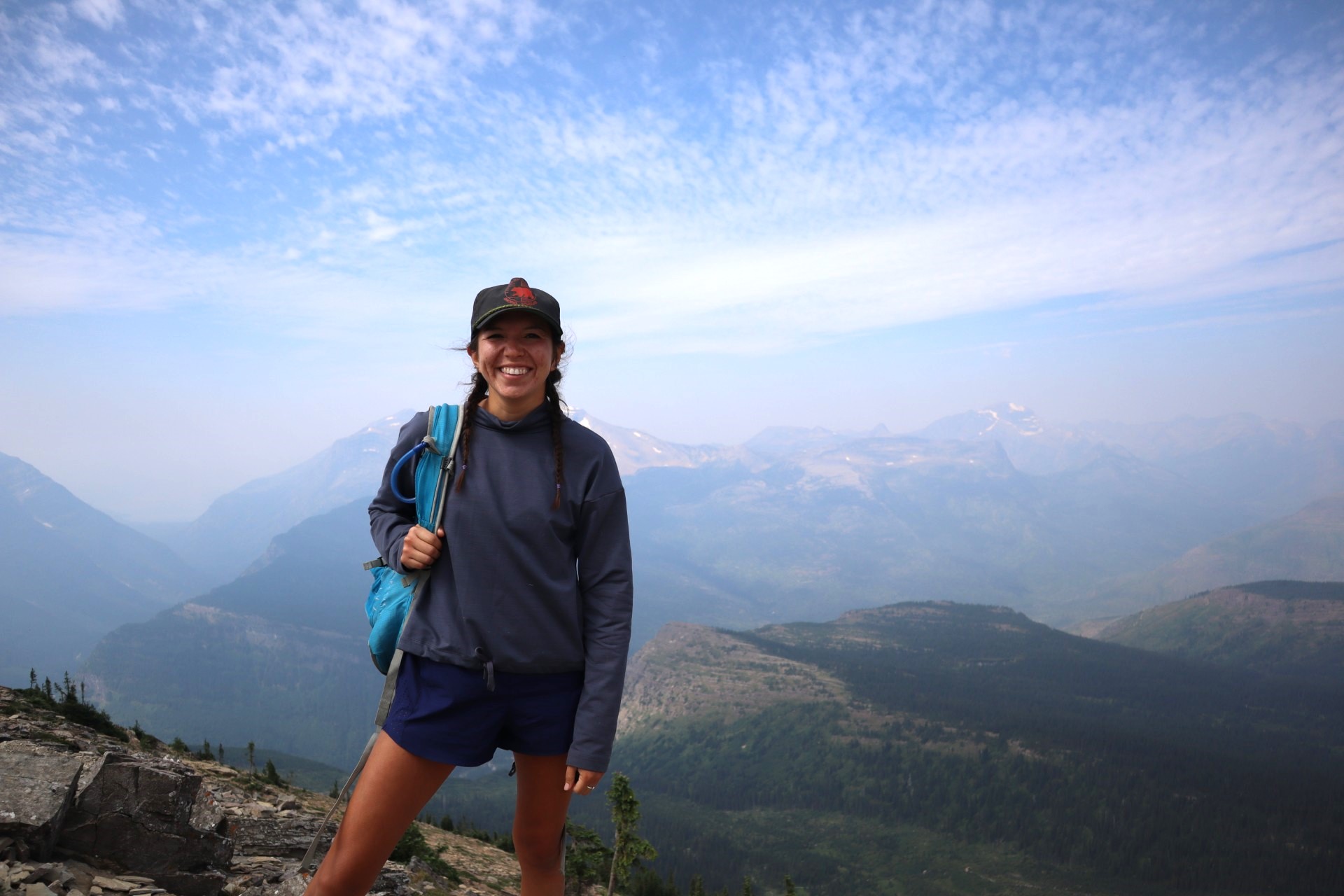
The Bitterroot Salish and Crow Native “walks the walk,” or rather, “hikes the hike,” with health and wellness, spending time outdoors and engaging in martial arts and Crossfit training.
She credits her family for instilling in her the pursuit of higher education. With an Ivy-league undergraduate education and a master’s degree under her belt, Bear Don’t Walk hopes to also earn her doctorate degree in a few years.
Jill Falcon Ramaker, her doctoral director, writes in a recommendation letter for the Luce Fellowship, “Rose is an astute scholar … who works hard to honor the Indigenous knowledge that she carries. She has put forth a progressive research program working on behalf of her community to develop plant education and restore lifegiving connection to plants as food and medicine.”
Through it all, Bear Don’t Walk says she is most proud of her lineage. “I come from incredible people who have paved the way for me. My upbringing has prepared me to build on the continual work my ancestors started. I want to honor them with what I do and do it with good intentions.”