Sara Merrick
Hoopa Valley Tribe

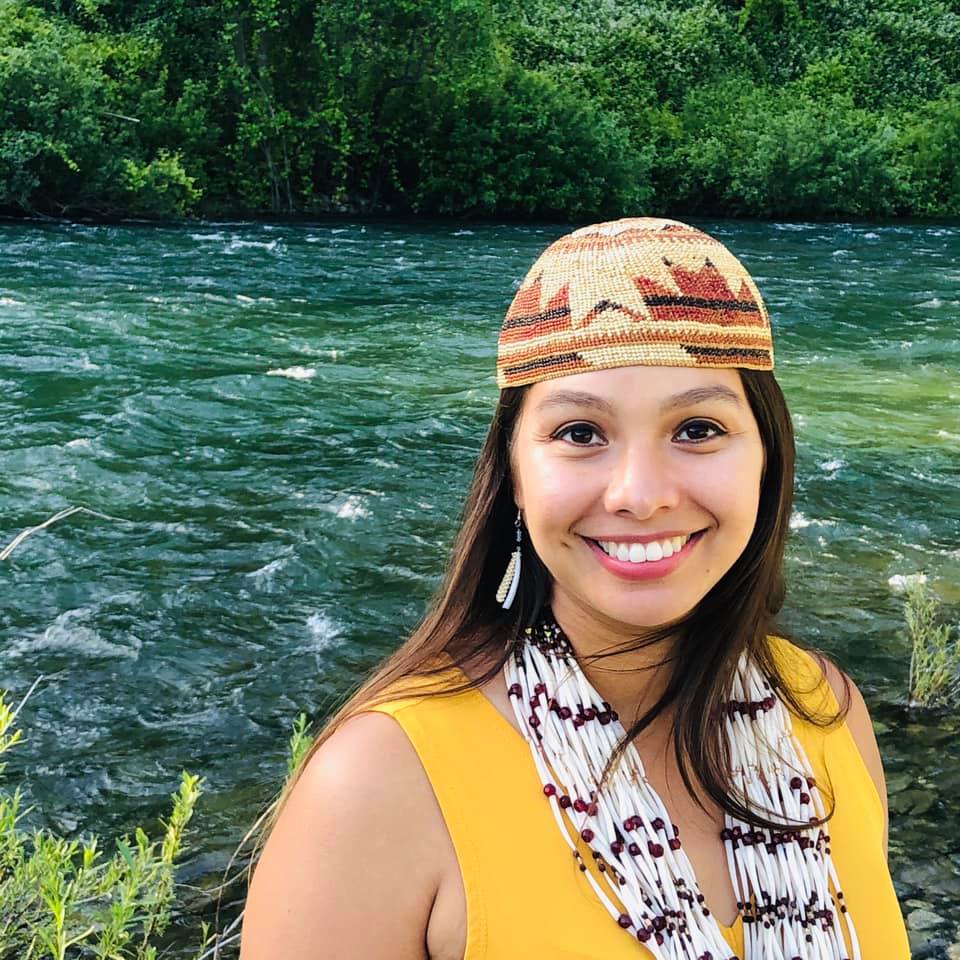
Hoopa Valley Tribe
 First Nations Development Institute (First Nations) is excited to partner with the Henry Luce Foundation (Luce) for a fourth year of the Luce Indigenous Knowledge Fellowship. In 2020, First Nations and Luce awarded the inaugural 10 $50,000 fellowships to advance and support the work of Indigenous knowledge holders and knowledge makers dedicated to creating positive community change. Beginning in 2021, we expanded the fellowship award to $75,000 over two years to support fellows committed to preserving and sharing Indigenous knowledge with future generations. In 2022 and 2023, First Nations and Luce awarded 10 $75,000 fellowships each year.
Sara Merrick has had an affinity for the Hupa language since she was a young girl. She understood very early on how important it was to learn the language of her people, the Hoopa Valley Tribe, because her language teachers told her that one day, she would be called upon to pass it on to the next generation.
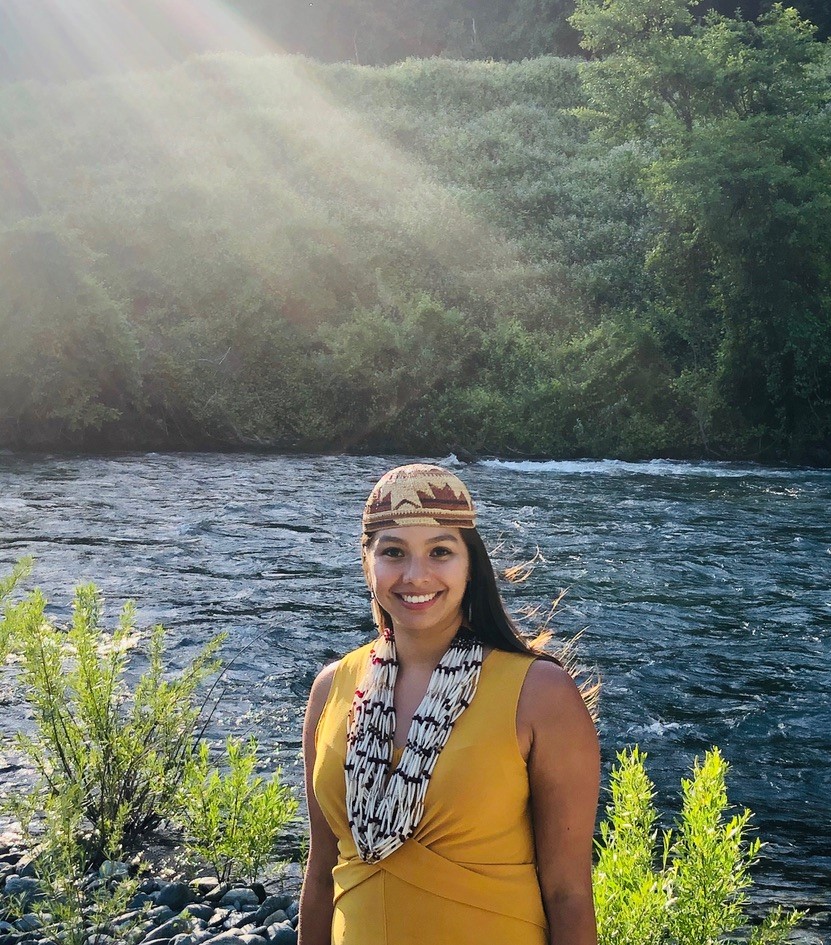
Sara Merrick of the Hoopa Valley Tribe has created a language immersion “nest” to grow new, young speakers of the Hupa language.
“I took this advice very seriously, and since that moment, I have embraced all the language-learning and teaching opportunities that I could,” says Merrick, who took language classes from kindergarten through high school, and while in high school, she taught a Hupa language class for preschool students. “I loved seeing how exciting and easy that learning the language was for these young ones and knew this was something that I wanted to continue.”
Fast-forward to the present day, and Merrick has remained true to her conviction. As a 2023 Luce Indigenous Knowledge fellow, Merrick is creating an immersion school, or “nest,” to help grow the Hupa language among children. The idea for this immersion school grew out of her undergraduate thesis on the current state of the Hupa language and continued to materialize through her doctoral dissertation. She first partnered with the Hoopa Tribal Education Association (HTEA) to run a week-long pilot immersion program with youth and has since established this program as an annual event in the community.
“Since my work as an undergraduate, it became clear that starting a Hupa Language Immersion School and supporting language use in the home had to be the plan to create new fluent speakers of the language,” she says. According to Merrick, there are less than 10 first-language speakers of Hupa left in the tribe, and about 10-15 emerging speakers. “Rather than calling it an endangered language, I prefer to say it is dormant, because the Hupa language is definitely still living.”
Merrick is currently an assistant professor at Cal Poly Humboldt in Child Development and American Indian Education. With support from the Luce Fellowship, she plans to take a year off from her professorship to dedicate herself to building her own language fluency and pilot the first cohort of a Hupa language immersion nest.
She is also working hard in her own nest to keep Native languages growing. Merrick speaks to her 2-year-old son in Hupa, and her husband, who is Dakota and Northern Cheyenne, is teaching their son some Dakota, alongside Hupa. Merrick also uses some Shinnecock language (her other ancestral language) with her son, as well. As for her own fluency in Hupa, she says jokingly, “I tell people I speak fluently enough to be able to speak to an almost 2-year-old.”
It is a very hard language to learn, says Merrick, who recently started dreaming a little in Hupa, a promising step in her own bilingual journey. “I am determined to work through the difficulty of Hupa so that it is not hard for the babies to learn.”
A language journey grounded in family
Family is the cornerstone of Merrick’s passion to grow the Hupa language. She shares with First Nations that her quest to revitalize the language has been greatly influenced by her grandparents ― who were punished for speaking the Hupa language at the boarding schools they attended ― and her aunt, Verdena Parker, one of the remaining first-language speakers in the Hoopa Valley Tribe.
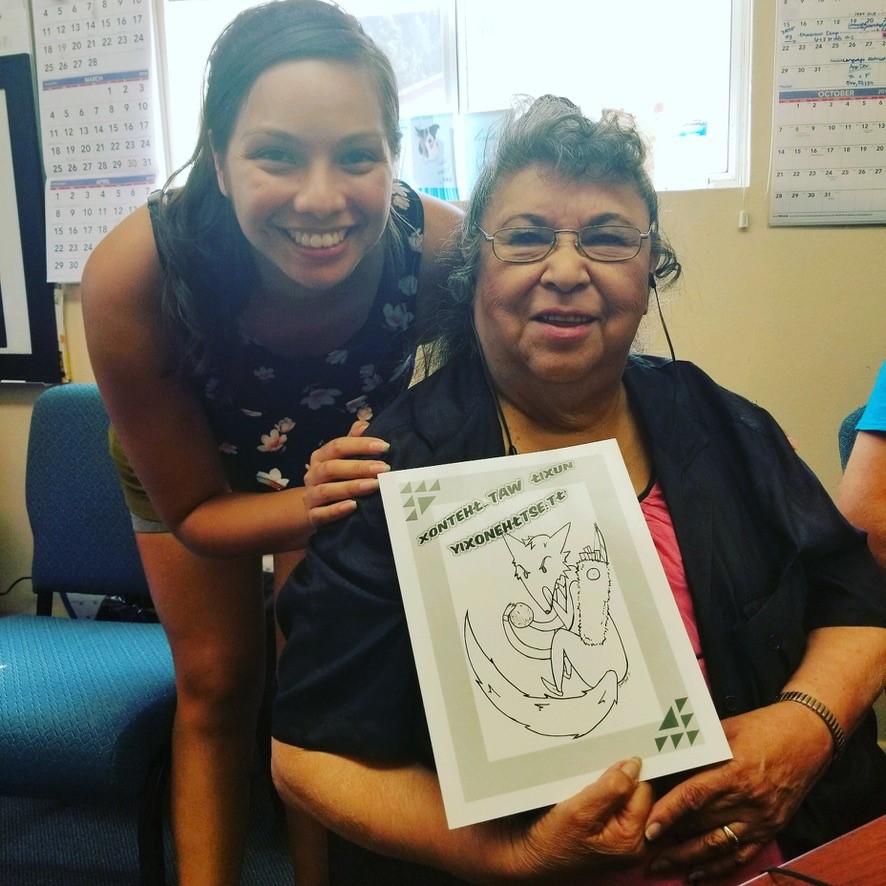
Merrick has developed her Hupa language fluency with the help of her mentor and aunt, Verdena Parker, a first-language speaker who is a key player in curriculum development and teacher training for the language immersion nest.
“I see my life’s work dedicated to them and their sacrifices and building from the legacy they left for us,” shares Merrick.
Her Aunt Verdena, an expert in Hupa, has been Merrick’s primary language mentor since 2016. She has also helped Merrick run language immersion camps and create curriculum. Recently, Merrick worked with her aunt as an Emerging Speaker-Teacher fellow through HTEA to expand her expertise in Hupa and train other teachers. And time is of the essence.
“My aunt is 86 years old, so this work is incredibly urgent. The Luce Fellowship will allow me to spend as much time with her as possible, learning and improving my fluency in Hupa,” Merrick says. “We share the same vision for children in our tribe to speak Hupa fluently again someday soon.”
Merrick’s personal, professional, and academic lives have all been interconnected through her foremost desire to grow the Hupa language for her people. She tells First Nations that she opted to attend the University of California, Berkeley, for her master’s and doctorate degrees to reclaim research for her tribal language. “Berkeley has a long history dating back to the 1800s of linguists working on the Hupa language, but not with our tribe. I knew I needed to go there to reconnect this work with our people.”
While at UC Berkeley, Merrick helped create the Indigenous Language Revitalization Designated Emphasis and was one of the first graduates to earn this degree.
Her big plans for the Luce Fellowship
As stated earlier, Merrick is using the Luce Fellowship to pilot the first cohort of a Hupa Language Immersion Nest, or school. “The word ‘nest’ invokes the image of protection and bringing the family together,” she explains. She further notes that this model comes from the Maori in New Zealand and Native Hawaiians and the great successes they’ve had in revitalizing their languages.
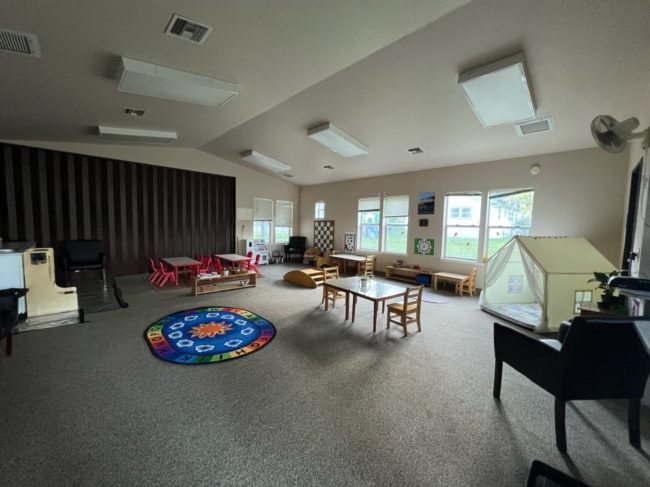
While Merrick waits for construction on the yurt to be completed by the end of November, the nest opened its doors on Oct. 30 inside a temporary space at the local community college.
The Luce Fellowship will allow the language warrior the necessary time, space, and resources to plan, research, create, and operate a full-time language immersion school. In her own words, “Being able to dedicate myself to this work has been the largest barrier to taking the next-step transition from short-term summer programs to a long-term, year-round immersion nest.”
With funds from the Dreamstarter GOLD 2020 grant from Running Strong for American Indian Youth, Merrick has purchased a state-of-the-art yurt where immersion classes will be taught by four full-time teachers: herself, Jenna Hailey, Melissa Sanchez, and Muriel Ammon. Her sister, Erika Tracy, and their mentor Danny Ammon are key players on this team, too.
Six families with young children, ages 18 to 35 months, are participating in the first cohort of the immersion school. “It’s best to start young with a small group and grow from there. We hope to follow this first cohort to 8th grade, and continue to add new cohorts as we go,” says Merrick.
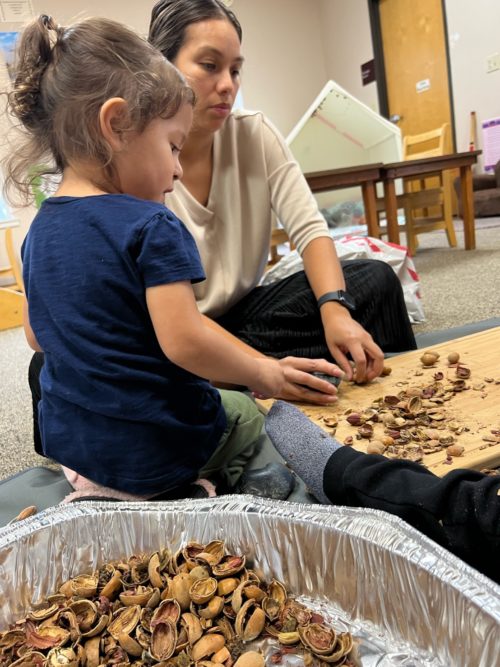
Merrick teaches a young student how to shell acorns. Her tribe is known as the “Acorn People.”
The curriculum, which was developed with the help of her aunt, a respected elder and fluent Hupa speaker, includes gathering acorns and drying them by a wood stove inside the yurt, and processing them because “we are the Acorn People,” says Merrick. Teachers will also use recordings of her Aunt Verdena telling stories in Hupa so that children can hear directly from a first-language speaker.
Merrick believes that language-learning within tribal communities goes a long way in helping Native people thrive. “Every Native community has lots of issues around substance abuse and mental health, and I think language offers a different way of thinking and being that we need to have in our communities again, to remember who we are.”
As a Luce fellow, Merrick embraces the challenge to share her knowledge of language immersion with others in “similar language endangerment situations,” as she says. “I look forward to the connections this fellowship will provide because I know there are others who are doing this work that I/we could benefit from greatly.”