Warlance Chee
Navajo Nation
Navajo Nation
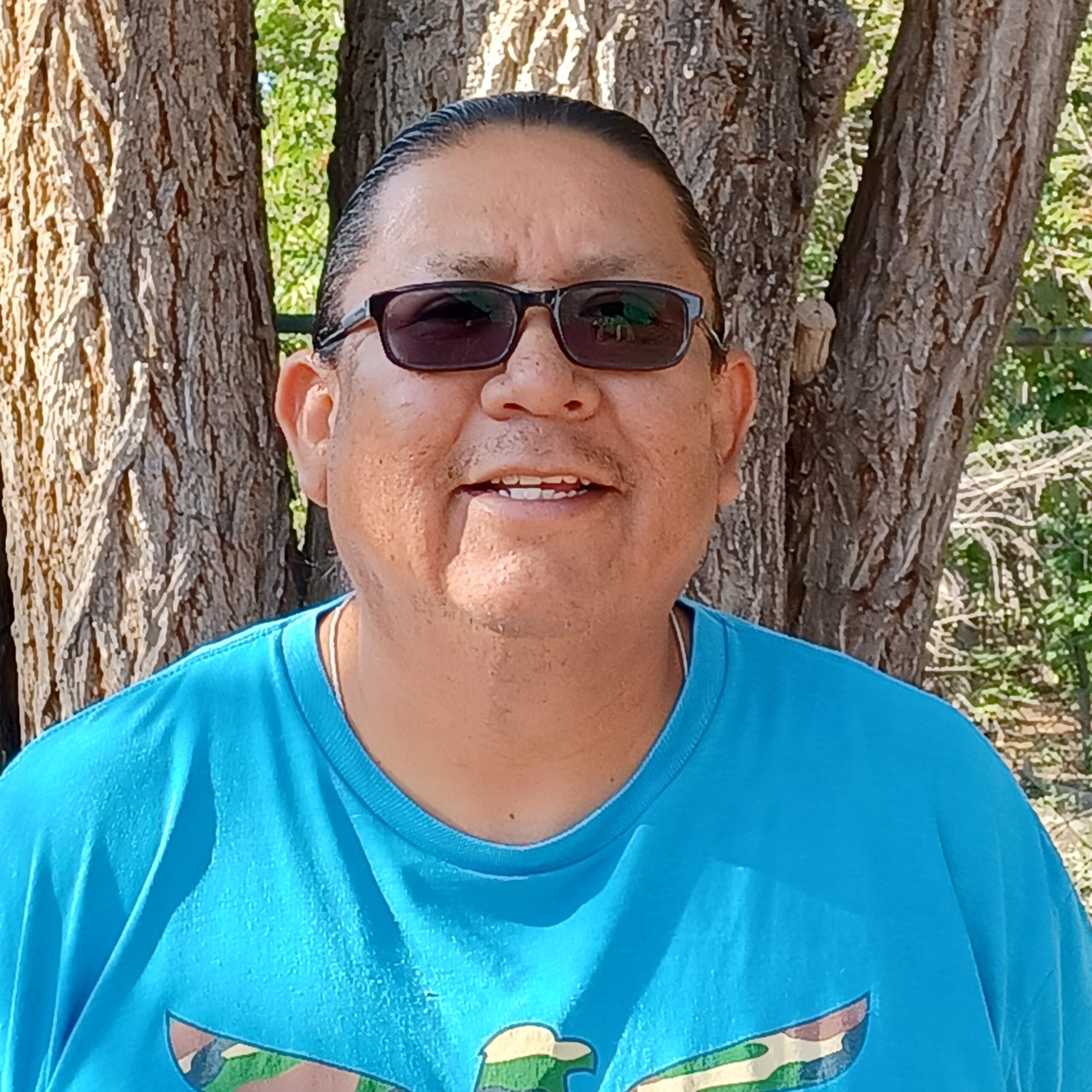
When it comes to producing a first-language speaker, Warlance Chee (Diné) believes there is no time to waste. Chee ― a 2024 Luce Indigenous Knowledge Fellow ― is a founder and director of Saad K’idilyé (SK), a Diné language nest serving the Diné community in Albuquerque, New Mexico.

The 2024 Luce Indigenous Knowledge Fellow teaches Diné words and phrases to participants at String Game Night.
Opened in August 2022, “Saad K’idilyé,” which translates to “the planting of language,” has the distinction of being the only Navajo language nest on or off the Navajo Nation, according to Chee.
SK works with prenatal, infant, and toddler families by fully immersing them in the Diné language and culture. “Currently, we enroll families who are between the prenatal stages up to infants who are 3 months old. If a child is 6 or 8 months old, that’s already a lot of time spent around English and by 2 years old, those babies are speaking a lot of English,” says Chee about the importance of exposing Navajo children to the Diné language and culture very early on.
Even before they are born.
“Our overall goal is to produce first-language speakers,” he says. One way SK accomplishes that objective is by teaching Diné language and culture to parents who are expecting a child so that the language is already being spoken, and Diné lifeways grounded, before the baby arrives.
“These expecting parents are really doing it for themselves, not their child.” Chee explains that once his staff starts working with babies, they understand the language quickly and their comprehension becomes very high. If parents cannot speak Navajo by the time their baby starts communicating, they will have some difficulty communicating with their young ones. “The baby work is the easy part. But language acquisition for parents is difficult and generally a very slow process.”

Opened in August 2022, “Saad K’idilyé,” which translates to “the planting of language,” is the only Navajo language nest on or off the Navajo Nation.
Chee, who is a first-language speaker himself, estimates that there are currently more than 100,000 speakers of Diné bizaad. However, there are not many fluent speakers who have the ability to teach the language, fewer certified language teachers, and a limited number of children who speak the language fluently.
In fact, he believes the intergenerational transmission of the Diné language and culture ― from grandparents, to parents, to children ― should be a key focus for the Navajo Nation, but it is not. “In some cases, we are seeing two generations of families without the language being spoken. Repairing that severed language and cultural tie is very hard and difficult, and it is probably where the majority of our work needs to take place. How do we efficiently and successfully get parents and grandparents to become highly proficient in the Diné language in five to six years?”
To further highlight the challenge they are up against, Chee shares some concerning statistics from the Navajo Nation’s Office of the President and Vice-President: Contemporary Navajo language proficiency in the home is only about 2%; homes where both Navajo and English are spoken is at 28%; and English-only Navajo homes is around 72%.

A look inside one of SK’s classrooms where caretakers engage 2- to 4-year-old Navajos in over 1,500 hours of Diné bizaad immersion per year.
How the language nest works
Now in its third year of operation, SK offers Diné language classes, cultural workshops, and community gardening/farming for parents and their babies. Language classes, the horse program, cornfield, food workshops, cultural activities, and sweat lodge are spread out all over the city. In the fall of 2024, SK began charging tuition, but at a discounted rate for those families needing support.
SK provides families with a language kit, which includes books, flashcards, games, posters, and more. “We do everything we can and provide as many language and cultural resources as possible, to immerse Navajo families in the Diné language and get it back into the home where it belongs,” says Chee.
Currently, 11 families are participating in Saad K’idilyé, with a few more prenatal families coming on board soon. Parents drop off their children between 8:00 a.m. and 8:30 a.m., Monday through Thursday, leaving them with SK’s caretakers who engage the Diné babies by immersing them in natural conversations throughout the day until parents pick them up between 4:00 p.m. and 5:00 p.m.
“We take care of most things,” says Chee, “including preparing breakfast, lunch, and snacks that parents have provided, diaper changes, tracking developmental milestones (Western and traditional), assessments, family meetings, etc. But we are not a daycare. SK is an immersive, language-acquisition environment, and we hold parents accountable, as well, to learn the language alongside their babies.”
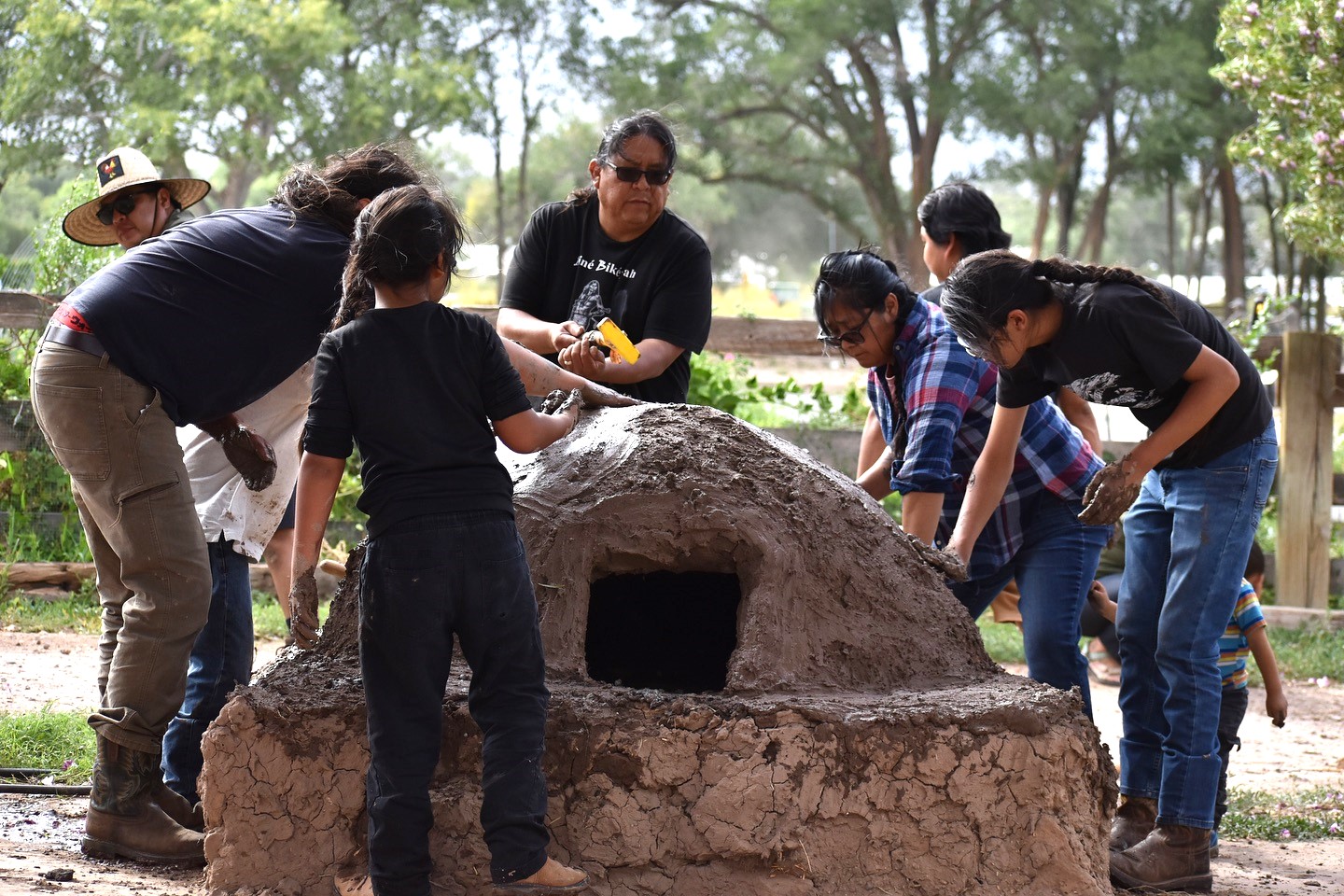
Chee leads a group in re-mudding an oven where they will cook corn and bread.
Indeed, parents are required to show their commitment to learning Diné bizaad by committing to 80 to 100 hours of language instruction per year, attending monthly meetings, and participating in hands-on workshops, seasonal activities, games, child development trainings, and parenting and cultural workshops, such as cradleboard-building, moccasin-making, working with horses, making food, and the planting, growing, harvesting, and grinding of corn, which plays a central role in Diné cultural teachings.
As one participating father suggests in an online video, taking part in SK’s language-learning program is more heart work than homework. “To be able to make my son’s cradleboard was really impactful for me. I take a lot of pride in knowing that he sleeps on something I made with my own hands and is culturally significant to a lot of people,” says Michael Sam.
His plans for the Luce fellowship
The Luce Fellow’s goals for the fellowship are simple: to continue building on the success of the language nest and executing its strategic plan.
Since the launch of the “only Diné language nest in the world” in 2022, SK has expanded to include classrooms for 2- to 4-year-olds, who receive over 1,500 hours of Diné bizaad immersion per year. Curriculum for 3- to 4-year-olds, the pre-K program, is in the planning and development stages, as is the kindergarten class, which is scheduled to open in August of 2027.
Simultaneously, SK is also training caretakers to become highly proficient second-language learners and speakers. In addition, SK is piloting a program where SK will pay parents to attend the language nest with their children.
Lastly, as Chee writes in his Luce application, “This fellowship will also allow me to explore and research the possibility of building a traditional practitioner (medicine man/woman) mentor-apprentice program to address the intergenerational transmission of our ceremonies in an urban setting.”
As a traditional practitioner and knowledge holder, Chee will continue to learn traditional Diné ceremonies and pass on this cultural knowledge to Diné relatives in Albuquerque who are interested in learning Navajo stories, teachings, songs, prayers, and ceremonies.
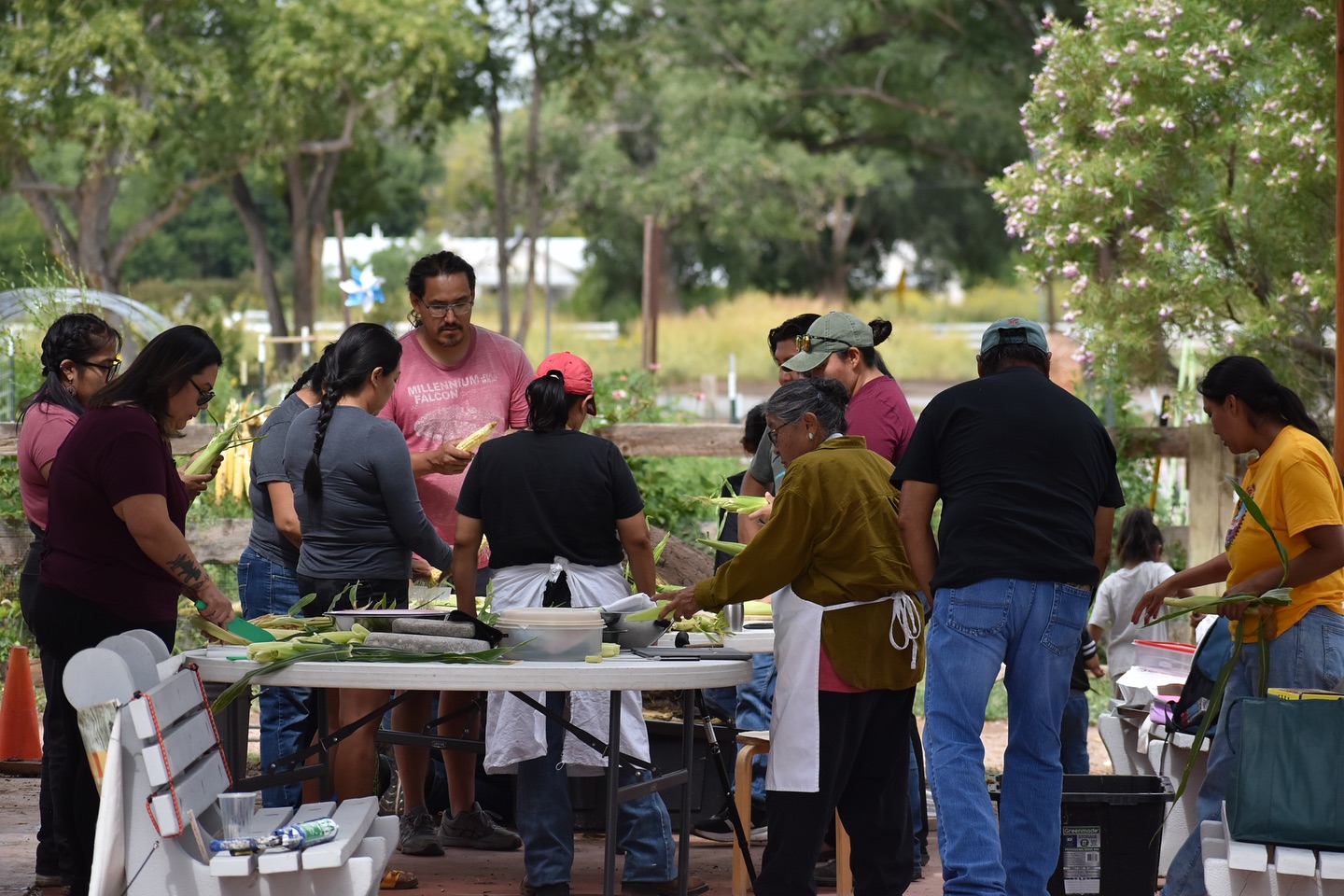
Navajo community members gather to prepare and eat newly harvested corn, which plays a central role in Diné cultural teachings.
Planting language has reaped success
Chee, a father of four children from ages 12 to 30 ― with his first grandchild on the way ― is proud of what they have accomplished at SK since the language nest launched more than two years ago.
“I think just opening a language nest is a success. Running this program in an urban area away from our people is a success. Starting our third year of operations is a success. Having the families that we do have is a success,” he says.
As for the progress SK is making with its babies, he and his staff use a different set of milestones compared to the Western way of measuring development. “When they crawl into the cradleboard for the first time, or sprinkle corn meal for an offering, or pick up corn with their pinchers ― that demonstrates culturally relevant developmental milestones and skills,” says Chee.
Bigger milestones identified through Navajo culture include the first “butt prints,” when babies learn to sit on earth; the first handprints when they start to crawl. “And when they go from crawling to standing, we see that as putting their first footprints on Mother Earth.”
While the Luce Fellow acknowledges that revitalizing the Navajo language and culture, and ensuring intergenerational transfer of this knowledge, is not easy work, it is necessary work. “It is important that our kids and grandkids learn our language and culture, so they understand who they are and where they come from. And most important, where they are going.”