This Week at First Nations: April 5, 2024
 More Native Farmers and Ranchers Gain Skills in Conservation Planning
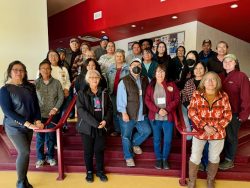
Last week, First Nations hosted the final Conservation Planning Workshop of our Advancing Agribusiness and Ecological Stewardship in the Southwest project, made possible with support from the USDA’s Office of Partnerships and Public Engagement. Held in collaboration with Tsaile/Wheatfields Dineh Water Users, the workshop guided 25 Native land stewards in creating a vision and roadmap for making their land as healthy and productive as possible.
In total through this project, First Nations has provided 10 workshops to over 216 attendees in the Southwest, on the Navajo Nation in Arizona, and in surrounding tribes in New Mexico.
 Join Us to Learn About Indigenous Stewardship on National Forest Lands in the Great Lakes Region
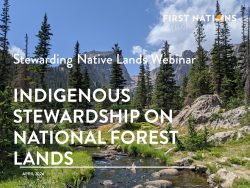
In this first webinar of a new First Nations’ series, Tribal representatives will discuss efforts to support Indigenous stewardship of forests in partnership with the U.S. Forest Service in the Great Lakes region. The webinar will feature Eric Clarke, Lead Wildlife Biologist for the Sault Ste. Marie Tribe of Chippewa Indians Natural Resources Department, and Keith Karnes, acting Co-Director of the Department of Resource Management for the Leech Lake Band of Ojibwe. Together, they will present on their collaborative work to steward ancestral lands by restoring traditional values and practices with staff from the U.S. Forest Service. The webinar is Friday, April 19, 2024, at 12 pm MT. Register here.
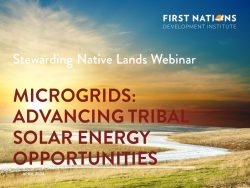 Microgrids Webinar: Join Us to Learn About Solar Energy Opportunities
Microgrids are a viable climate solution to increase community energy access. In this new Stewarding Native Lands webinar, “Microgrids: Advancing Tribal Solar Energy Opportunities,” a representative from Rocky Mountain Institute will present general information about solar and storage microgrids, and Tribal representatives from Blackfeet Community College, Blue Lake Rancheria, and Hualapai Tribal Utility Authority will present an overview of their completed tribally led microgrid projects, highlighting project inspiration and benefits, financing, challenges, and recommendations. The webinar is Tuesday, April 9, 2024, at 1 pm MT. Learn more and register here.
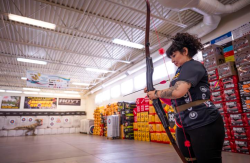 What We’re Reading: New Mexico Archer Aims for Championship
The archery skills of Monique Fragua, chief operating officer of the Indian Pueblo Cultural Center, were featured last week in the Albuquerque Journal. The article highlights how a New Year’s resolution led Monique to picking up a bow and arrow and ultimately winning an impressive collection of medals and buckles, including the New Mexico State Outdoor Championship.
Indian Pueblo Cultural Center is a long-time community partner of First Nations and a generous host of many of First Nations’ meetings and events. Congratulations, Monique!
Photo credit Chancey Bush/Albuquerque Journal
 Apply Now for Next Cohort of Luce Indigenous Knowledge Fellowship
First Nations will award 10 fellowships of $75,000 each to outstanding Native knowledge holders and knowledge makers engaged in meaningful work that benefits Indigenous people and communities in either reservation or urban settings. These fellowships support the work of Native knowledge holders and knowledge makers as they significantly advance their work and spark transformative change in their communities. Learn more and apply by May 7, 2024.
Questions about applying? Register here for the grant application Q&A webinar, Monday, April 8, 2024, at 3 pm MT.
 Grant Opportunity for Native Farm to School Programs
First Nations recognizes that Farm to School programs in Native communities increase access to healthy foods and education for Native youth. Providing nutritious and healthy foods in school meals, along with nutrition education, can help start Native children on a path toward good health for life. Through this grant, First Nations will provide funding support and technical assistance and training to 12 Consulting Project Partners to expand farm to school programming, enhance education curriculum, and engage new supply chain partners. Learn more and apply by Tuesday, April 30, 2024.
Questions about applying? Look for a recorded grant application Q&A webinar here after April 9, 2024.
 Grant Support for Advancing Tribal Nature-Based Solutions
First Nations will distribute six Advancing Tribal Nature-Based Solutions grants of up to $200,000 each to support approaches to climate action that are based on community, culture, and nature. Learn more and apply by May 22, 2024.
Miss the Q&A application webinar? Access the recording and presentation materials here.
 Grant Support for Tribal Co-Management and Co-Stewardship
First Nations’ Tribal Co-Management and Co-Stewardship: 101 webinar provided an overview of tribal co-management and co-stewardship opportunities, along with considerations for capacity-building and pathways for effective implementation. To further this work, First Nations will be awarding five grants of $75,000 each to tribes looking to establish co-management or co-stewardship structures with federal agencies. Learn more and apply by April 18, 2024.
Miss the Q&A application webinar? Access the recording and presentation materials here.
 Join a National Day of Prayer for Native Children
In recognition of April’s National Child Abuse Prevention Month, the National Indian Child Welfare Association (NICWA) is inviting individuals and communities to join in a National Day of Prayer for Native Children. Coinciding with NICWA’s 42nd Annual Protecting Our Children Conference, the special day is an invitation for advocates to demonstrate support for all Native children. Throughout April, NICWA will also share resources to promote child safety as a collective community responsibility. Learn more here.
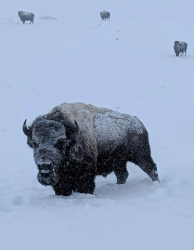 In Defense of Integrity – Considerations for a True and Just Buffalo Restoration Movement
In this commentary at The Daily Yonder, Elsie DuBray (Oohenunpa Lakota, Nueta, and Hidatsa), who is featured in our film GATHER, explores the need to honor our relationships when it comes to reviving buffalo populations.
She writes, “Integrity is the fulcrum of any meaningful buffalo restoration effort: the integrity of our shared and unique cultural values that define our kinship to the buffalo and, inextricably, our responsibility as their kin to protect, honor, and uphold the integrity of the buffalo themselves.”
Elsie poses: “What exactly are we restoring if we fail to answer this question of integrity?”
Photo credit Elsie DuBray