This Week at First Nations: February 7, 2025
 Native Youth Nationwide to Benefit from Programs for Strengthening Identity and Intergenerational Connections
First Nations this week announced the awarding of $1.925 million in technical assistance and grant support to Native-led nonprofits and tribes to develop and enhance projects that empower and inspire Native youth. Through the 33 community partners, First Nations expects to reach hundreds of Native youth, giving them a sense of place and connection that cultivates a future of bright and capable leaders.
The two-year grants were made possible with support from the Bezos Family Foundation, Margaret A. Cargill Philanthropies, Weingart Foundation, Conrad N. Hilton Foundation, the California Endowment, and the 11th Hour Project.
 Tohono O’odham Nation Signs Agreement to Co-Steward Baboquivari and Coyote Mountains
Late last year, Tohono O’odham Nation entered into a co-stewardship agreement with the U.S. Bureau of Land Management (BLM) to co-steward culturally significant areas of the Baboquivari and Coyote Mountains that border the tribe’s reservation. The agreement comes after years of advocacy by the tribe, reports Indian Country Today. The co-stewardship agreement will allow the Tohono O’odham to work directly with BLM to ensure the tribe’s traditional knowledge and interests are prioritized in the management of the mountains.
First Nations provides technical and financial assistance for tribes interested in these types of co-stewardship agreements. Learn more about First Nations opportunities and ways other tribes are advancing co-stewardship and co-management.
 Congratulations to Luce Fellow Theresa Secord
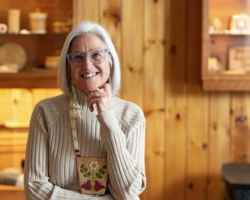
First Nations extends congratulations to 2021 Luce Indigenous Knowledge Fellow Theresa Secord for being named by the Ruth Foundation for the Arts as one of five recipients of the prestigious Ruth Awards for 2025. These awards recognize “extraordinary, critically engaged artists who approach their practices with continuous inquiry, imagination, and rigor,” as stated in the official press release. Secord, who is the founding director of the Maine Indian Basketmakers Alliance, has been awarded $100,000 over two years for her artistic work as a traditional Penobscot basketmaker and her efforts to “preserve and innovate Wabanaki traditions.”
 Developed in partnership with the Journal of Agriculture, Food Systems, and Community Development (JAFSCD), First Nations’ Tribal Food Systems Research Fellowship is amplifying the voices of tribal food sovereignty scholars by supporting their research and publication efforts. Through the fellowship, many of the Native scholars are sharing their insights in JAFSCD’s new column, “Revitalizing Indigenous food systems through research and knowledge-sharing.”
Over the next several weeks, First Nations highlights these fellows’ essential voices in fully understanding our relationships with food systems and how food is interwoven into all aspects of culture, environment, economies, and health.
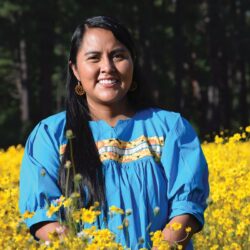 Food Access Interventions in American Indian and Alaska Native Communities: A Scoping Review
In this article, Tribal Food Systems Research Fellow Dayna Carroll (pictured here) joins Lynn Mad Plume and Dr. Nicole Redvers in highlighting the importance of leveraging strengths in American Indian and Alaska Native communities to enhance food access, including through culturally aligned programs and traditional foods. Researchers share how further collaboration between AI/AN communities and researchers may lead to the development of more informed multilevel interventions that further integrate Indigenous methodological and culturally based approaches.
 What We’re Reading and Watching: ‘Imagining the Indian’
The Community Renewal Society, a faith-based organization that addresses racism and poverty, praises the new documentary, “Imagining the Indian: The Fight Against Native American Mascoting.” The film details the growing movement against the use of Native American names, logos, and mascots in sports and beyond. It also explores the impact that stereotyping has had on Native people. The blogger writes that the documentary “delves into the intricate realities of Natives living in the United States, exploring both historical and contemporary aspects of their people, beautifully oscillating between the past and present.”
Watch the trailer for the documentary here.
 USDA Requests Public Comments on Pilot Projects for Tribes to Administer Child Nutrition Programs
USDA is seeking public comments over the Child Nutrition Programs Tribal Pilot Projects. The public is invited to submit comments through March 24, 2025.
The Consolidated Appropriations Act, 2024 (P.L. 118-42) provided $2 million for pilot projects that will allow tribes to administer Child Nutrition Programs. The Act authorized a maximum of 10 pilot projects, to operate for up to two years, in Bureau of Indian Education-funded schools, schools on or near Indian reservations, or in early child care and education facilities.
Tribal input is critical to ensure that the Tribal Pilot Projects reflect the needs of grantees and the communities they serve. Learn more and share your feedback here.