Impact Story
Protecting the Climate, Healing the Environment
The Natural Resources Department of the Mooretown Rancheria of Maidu Indians of California is ideally positioned to ensure that climate resiliency efforts incorporate the cultural and traditional ecological knowledge that has sustained the Maidu Indians since before recorded time. Now, through a new land acquisition and grassroots support, the tribe is building on its expertise to create even greater impact for the climate and the environment.
Tribal Historic Preservation Officer Matthew Hatcher explains that the momentum of the tribe is fueled by traditional ecological knowledge ― both the know-how and the approach that is built into everything undertaken by Mooretown Rancheria. “It’s not just what we do, it’s how we do it,” he says. “It’s knowing what plants and animals belong here, and how we live in relationship with those plants and animals.”
It is a framework for land stewardship and management efforts that have stood the test of time, and it is a critical element to achieving climate resilience.
Sparking an opportunity
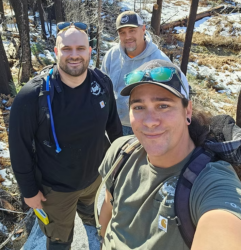
Mooretown field crew, Matthew Hatcher, Nick Graham and Kai La Pena, during a reconnaissance visit of meadows in the North Complex Fire footprint (December 2024). Photo and caption credit: Kayla Trotter, Mooretown Rancheria
Mooretown Rancheria is a federally recognized rancheria in Oroville in Butte County, California. The rancheria resides on 700 acres and owns, co-stewards, and co-manages a total of 4,000 acres in partnership with the U.S. Forest Service and Bureau of Land Management. The tribe comprises multiple departments, services, and enterprises. The Tribal Historic Preservation Office (THPO) informs all aspects of the tribe and provides general guidance to tribal council.
In 2020, much of Butte County was devastated by the North Complex Fire that ravaged Northern California. The fire left behind acres of privately held land no longer considered valuable by owners. “The cleanup was too much money, and the owners couldn’t afford it,” Hatcher says. “Landowners saw an opportunity to work with tribes and recoup losses. And we saw an opportunity to get these culturally significant lands back and manage them in our own way.”
The tribe purchased 1,500 acres, and the transaction snowballed, leading other landowners to want to sell back acres to surrounding tribes. For landowners, federal and state agencies overseeing the land, and the tribes, it was a win-win situation.
Carrie Monohan, Ph.D., the tribe’s director of natural resources, says the fire compelled people to show up, led to partnerships with local agencies, and increased awareness of the tribe’s expertise. “The fires changed everything, for the land and for the people.”
The fire catalyzed a series of events and shed light on the many assets and capabilities of the tribe, including land surveyance and protection strategies for cultural resources, and services for fuel reduction, climate mitigation, catastrophic wildfire management and suppression, and geospatial mapping. It also resulted in further co-stewardship agreements between the Bureau of Land Management and the Mooretown Rancheria of Maidu Indians.
Investing in tribal expertise
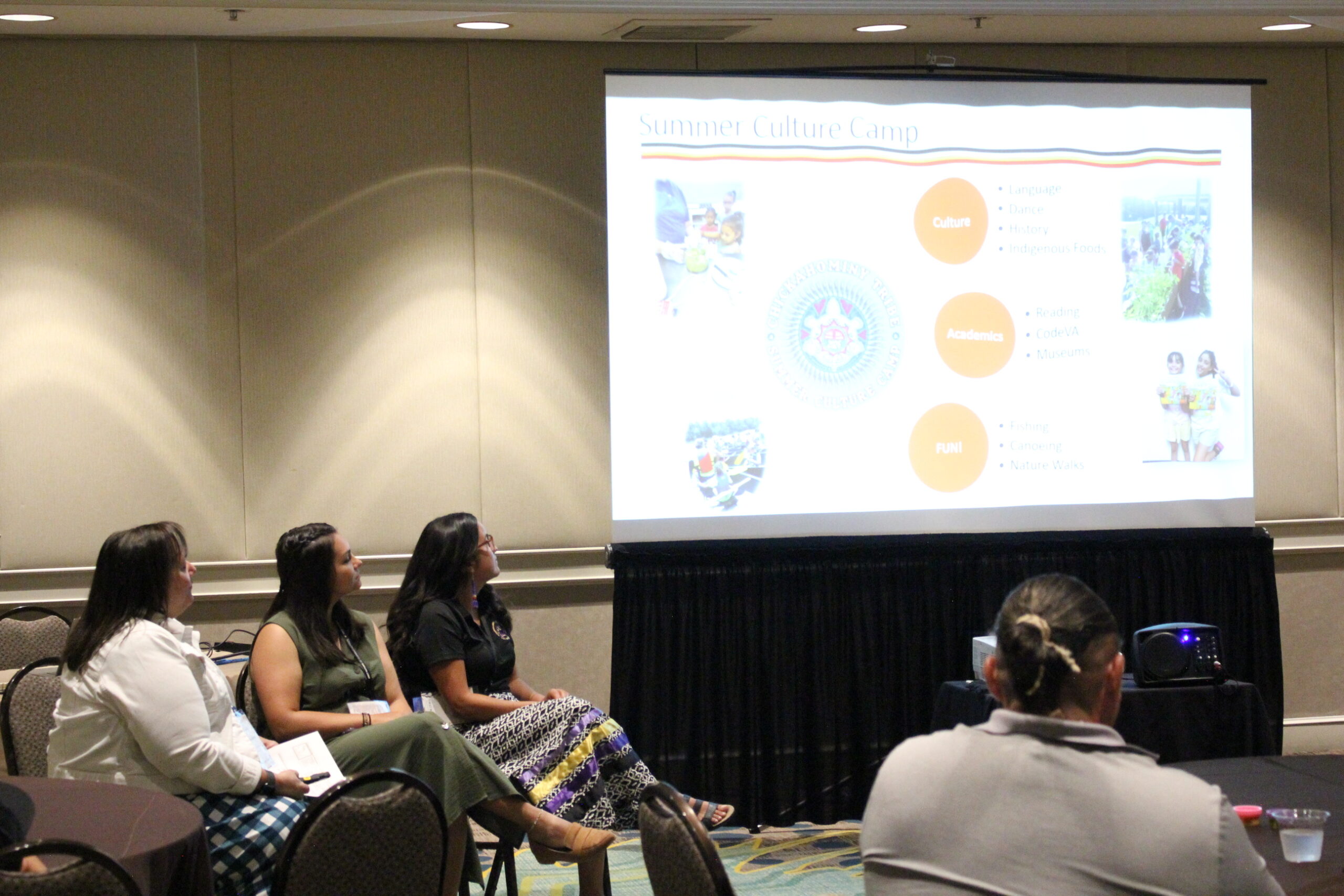
Hatcher and Dr. Monohan led a presentation on the tribe’s experience with co-stewardship agreements in February 2024 at the “Indigenous Co-Stewardship of Public Lands: Lessons for the Future” conference in Rohnert Park, California. There, they met First Nations’ California Tribal Fund Director Rebecca Tortes, who saw the importance and potential of the tribe’s work and the need for flexible, grassroots support.
Tortes describes First Nations’ recognition that real stories happen in real spaces. “Growing up, I was taught how to give, which was by jumping in the back of a pickup truck, visiting your neighbors, and finding ways to help,” Tortes says. “In the same way, this is why we at First Nations attend national events and convenings. We save a place for storytelling, so we’re able to hear from tribes directly and lend a hand where we can.”
First Nations offered the tribe a responsive general operating support grant of $75,000, providing a revenue stream for Mooretown Rancheria to advance their stewardship work.
Dr. Monohan describes how the tribe had silos of expertise that were housed in various departments and often implemented in partnership with local nonprofits. With the First Nations grant, it was able to create an infrastructure and system to pull the silos together and give the tribe a larger seat at the table where climate mitigation and resilience strategies are being discussed.
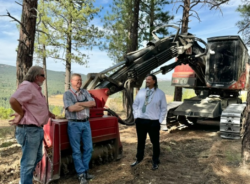
Mooretown Rancheria representatives discuss Mooretown forest fuels reduction work in the Humboldt Toiyabe National Forest with Northstate Congressman Doug LaMalfa and Nevada Congressman Mark Amodei. Photo and caption credit: Kayla Trotter, Mooretown Rancheria
“We are right smack in the middle of so many agencies, and we want to be seen as a tribe that’s proactive at managing this land,” says Hatcher.
The grant from First Nations helped the tribe form its Natural Resource Department and build traction on its overall services and capabilities. Importantly, Hatcher and Dr. Monohan say the funding was flexible and nonprescriptive, recognizing that unexpected expenses come up and not all costs can be anticipated as systems are developed. “First Nations understood the world we’re working in is not the same as a nonprofit. We’re a sovereign nation,” says Hatcher.
Funding is supporting overall goals to bring GIS mapping and database development inhouse, including creating maps for proposals and field work, digitizing ancestral records, and storing planning information and culturally sensitive data. This process builds the foundation for tribal data sovereignty, which is imperative when we are at the table with federal and state agencies, says Hatcher.
Funding is also supporting the development of a burn plan for the Feather Falls region to restore the land and ensure the brush that has begun to cover the land since the 2020 fires is properly stewarded. Without a proper plan and a trained “burn boss” who can organize and execute prescribed fires, the area will be in the same place it started, Dr. Monohan explains.
The unrestricted grant has helped generate more funding opportunities. With the department and structure in place, Mooretown Rancheria was able to apply for, and receive, two larger federal and state grants: a $250,000 grant from the U.S. Fish and Wildlife Service Tribal Wildlife Grant Program and $1M from the Natural Community Conservation Planning grant through the California Department of Fish and Wildlife.
Investing in the future
With this momentum, the Mooretown Rancheria is solidly at the table of climate conversations. And they are ready to move ahead with other projects that will build further capacity and advance traditional ecological knowledge. First Nations is committed to providing another round of support for this work in 2025. One project is the creation of a grants management system, along with procedures and policies for managing federal grants.
Another project is the “Growing Natural Resource Professionals” mentorship, which will help familiarize tribal youth and young adults with traditional ecological knowledge and provide hands-on experience and learning. The goal is to spark curiosity and engagement, which will nurture economic and workforce growth in the community.
The opportunities are great, and so is the expertise the tribe calls on. Hatcher remarks that partnering agencies often underestimate the depth and scope of the tribe’s capacity. “We can do GIS mapping, we can do fuel reduction. We know the land and we know the models that lead to long-term stewardship benefits,” he says.
An investment in Mooretown Rancheria is an investment in that knowledge and stewardship. It’s a recognition that tribally led solutions are what is needed to protect the climate and heal the environment, not just for the Maidu community, but communities everywhere. And it’s a faith in the tribe’s process, whether it’s managing a prescribed burn or restoring a hydraulic mine. Hatcher concludes, “We did this 250 years ago, and we’re doing it again now. You have to believe it’s going to happen.”