Impact Story
A Look Back at How it Began

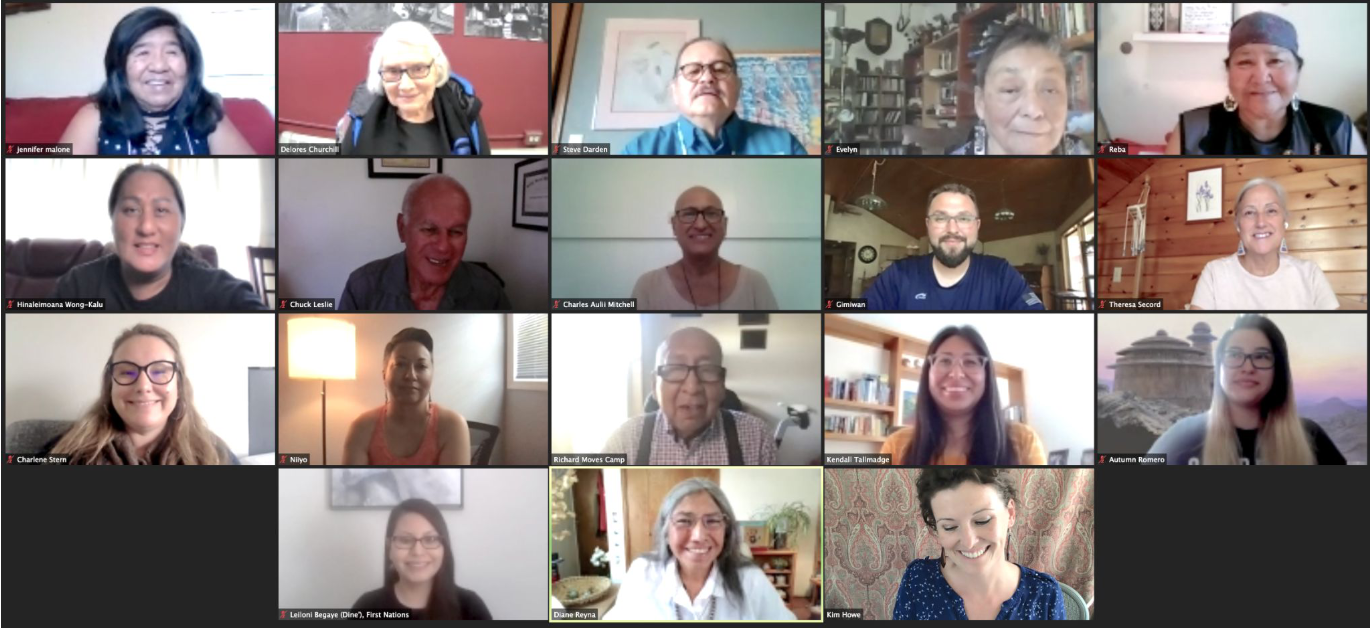
“First Nations and the Henry Luce Foundation have done a phenomenal job of bringing us together to share knowledge and disrupt that idea of who holds knowledge. What’s comforting about the fellowship is that now we’re a cohort – a group that can help each other, learn from each other, and support each other.” — Trisha Moquino, 2020 Fellow
In summer 2021, the application window for the 2022 Luce Indigenous Knowledge Fellowship opened, and within weeks, 300 Native scholars, educators, artists, and community leaders applied, each with cultural knowledge and insights and many being among the last knowledge holders in their areas of expertise.
Since 2019, the Luce Indigenous Knowledge Fellowship has nurtured and celebrated Native leaders like these — those applying for the 2022 cohort, as well as the inaugural fellows of the 2020 cohort, and the fellows currently active in the 2021 cohort. Here we look back at how this important program began and at the instrumental role the Henry Luce Foundation has played in investing in it.
A Broader, Inclusive Vision of Knowledge
Based in New York, the Henry Luce Foundation seeks to enrich public discourse by fostering understanding, cultivating breakout leaders, and promoting innovative scholarship.

Sean Buffington, Henry Luce Foundation Vice President
Sean Buffington, Henry Luce Foundation Vice President, says that before launching the Luce Indigenous Knowledge Fellowship, most of the foundation’s work had been in the higher education sector. In 2018, the Foundation’s Board invited staff to develop a new initiative. “In early discussions that year, we started to ask whether we should think a little bit differently about knowledge,” Sean says. “We support academic scholarship and publishing, but there are other ways that knowledge is produced and shared.”
Sean and his colleagues began to consider other modes of knowledge production, including those outside Western traditions. “We began to focus on community-based knowledge makers — people who are grounded in their communities, making knowledge available for community benefit,” Sean explains.
From these discussions emerged a broader and more inclusive approach to knowledge and scholarship. The Henry Luce Foundation developed a concept focused on Indigenous knowledge makers and keepers, and then consulted widely with Native leaders and organizations to flesh it out into a more formal program. But the Foundation knew it could not – and should not – launch and run such a program itself; It needed an Indigenous-led partner that had the capacity and understanding to do so.
Knowing First Nations’ history of investing in the ingenuity and capacity of Indian people that is rooted in culture and tradition, Sean reached out to First Nations President and CEO, Michael Roberts. After several meetings with Mike and Vice President Raymond Foxworth, a partnership developed that, over time, produced the Luce Indigenous Knowledge Fellowship.
“For us, the Luce Indigenous Knowledge Fellowship is integral to our philosophy practiced at First Nations,” says Mike. “We know that when Indian people take control of their assets and manage them in a way that they are accustomed to, we get better results.”
A Success from the Beginning
The program was then designed and implemented, including the formation of an Advisory Committee of professors, leaders of Native American nonprofits and schools, writers, and authors. The program mission, vision, and goals were identified, along with application processes, selection criteria, and funding guidelines.
According to Sean and Ray, the applications represented an extraordinary cross-section of Indigenous leaders working across a wide range of fields from restorative justice and traditional ceremonies, to language revitalization, traditional arts, and public health, including trauma recovery.

“This fellowship holds us to high standards – the same high standards our ancestors set for us. I believe it will help sustain our cultures and languages, and help us better understand who we are as Native people.” — Clarence Cruz, 2020 Fellow
Applicants in that first year went through one round of consideration (additional rounds have since been added) and an extensive in-person interview process with the Advisory Committee. Ray says narrowing down more than 500 applications to 10 fellows was a hefty challenge, but believes they selected a good representation of the full range of applicants.
The 2020 application process resulted in the naming of 10 Luce Indigenous Knowledge Fellows who embody exceptional creativity and progressive and critical thinking, and who have the potential to significantly move forward their fields in ways that will ultimately lead to broad, transformative impacts for Native communities and beyond.
Since that initial launch, Sean has observed the work of two more Advisory Committees, each one meeting to review multiple applications for two more Fellowship cohorts in 2021 and 2022. He says with each new round of applicants he is struck again at the knowledge, creativity and commitment exemplified by these leaders. He says he has seen firsthand the fantastic work being done, and each review session leaves everyone involved inspired.
“I think there’s a remarkable group of leaders, thinkers, artists, elders, and others in Indian Country, working for sovereignty, justice, and continued progress,” says Sean.
High Hopes for the Future
First Nations’ Senior Program Officer Kendall Tallmadge says the Luce Indigenous Fellowship is a key component of First Nations’ Strengthening Tribal and Community Institutions program, as the Fellowship is designed to support and invest in the Indigenous knowledge leaders whose work contributes to healthy, thriving Native communities. The goals of the Fellowship align with those of other First Nations focus areas as well, including Investing in Native Youth, Nourishing Native Foods & Health, and the Native Arts Initiative.
“If we don’t actively invest in our Native youth, culture programs, or a Luce Indigenous Knowledge Fellowship program, there is a real opportunity for these cultures and traditions to disappear,” says Mike. “This is our way of reinforcing and reinvigorating cultural traditions at the community level and actually helping those folks who are cultural bearers in their communities continue their work.”

“This fellowship has allowed me to make more art and more weavers than ever before. More people have made Pomo baskets this year than in the past 30 years!” — Corine Pearce, 2020 Fellow
For the Henry Luce Foundation, Sean says the program fosters the kind of leadership and knowledge that has been a focus of the Foundation’s work since its founding. By investing in the Fellows, the Luce Foundation hopes to not only support their individual aspirations, vision and growth, but also those of their communities—and of Native America as a whole.
“We hope to continue this initiative, to build a network of dozens—even hundreds—of Indigenous leaders across Indian Country dedicated to community vitality and sovereignty,” he says.
Going forward, Mike advises to all current and future Luce Indigenous Fellows: “You are part of this remarkable change generation of creativity, genius, and talent that Indian Country deserves and needs. This remarkable generation is going to do amazing things regardless of Luce’s support.”
Find more information about the Luce Indigenous Fellowship and the Fellows from each cohort, along a Messages of Hope video by the 2020 Fellows that highlights Native resilience and strength, here. And stay tuned next spring when the application window for Cohort 4 will open.