SOUTHWEST SOJOURN HIGHLIGHTS
WELCOME DINNER AND INDIAN 101
We will get acquainted at a special Welcome Dinner as well as go over the week’s agenda. We will also have the opportunity to visit with First Nations Development Institute’s Board Chairman and New Mexico State Senator Benny Shendo in what we call “Indian 101: Ask Me Anything.”
SAAD K’IDILYÉ
The Saad K’idilyé Diné Language Nest aims to provide traditional teachings and services to the urban Diné communities within and around the Albuquerque area.
Saad K’idilyé is a grassroots organization working to address the need for urban access to the Diné language and culture. The Foundations of Saad K’idilye (FOSK) family program welcomes prenatal families to participate in a long-term five-part program developed to support holistic wellness practices rooted in Diné cultural teachings.
Diné families in the program are supported throughout the journey into parenthood: from preparing to conceive, pregnancy, birth, postpartum, infancy, and early childhood development. Families can expect culturally guided support for their baby’s journey from pre-conception into grade school provided by Saad K’idilyé Caretakers at the Diné Language Nest. Saad K’idilyé has plans to expand this program to continue to support children into high school and on.
The Family program focuses on five essential pillars to support a new family’s development: Diné language development and support; traditional child development and rearing training (TCDR); monthly family meetings; ceremonial guidance, support and professional development; and traditional birthing program in collaboration with the Changing Woman Initiative (CWI).
INDIGENOUS WOMEN RISING
Indigenous Women Rising is committed to honoring Native and Indigenous People’s inherent right to equitable and culturally safe health options through accessible health education, resources and advocacy.
Indigenous Women Rising is an Indigenous-led full-spectrum reproductive justice organization.
INDIAN PUEBLO CULTURAL CENTER
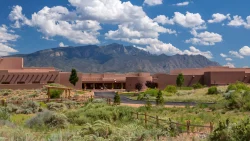
Indian Pueblo Cultural Center (IPCC) is the gateway to the 19 pueblos of New Mexico. Learn about Pueblo culture from ancient times to the present in the museum and exhibition galleries, tour the collection of murals by Pueblo artists for an inspiring and personal experience.
IPCC also houses the Indian Pueblo Kitchen, an innovative teaching kitchen and restaurant centered around Indigenous foodways, education and exploration, and the Indian Pueblo Store for traditional and contemporary jewelry, pottery, rugs, and more from award‐winning, internationally renowned artists as well as emerging talents. Visitors can also shop for authentic Native American art directly from many talented artists in the IPCC courtyard.
DINNER AT THE HOME OF FIRST NATIONS’ MARISA PAGE
Indian Tacos, variety of drinks, dessert
PUEBLO BREAD MAKING CLASS
Work side by side with a Santa Ana Pueblo tribal member, and learn the recipes and techniques used in making traditional oven bread. Pueblo bakers dressed in their traditional attire lead the class. You will have fun kneading, rolling and shaping the traditional oven bead dough. The loaves are then baked in the resort’s Huruna (oven). The hot, fresh bread is pulled from the oven for you to enjoy and take with you, along with a variety of butters and preserves. You will also receive a recipe for making pueblo oven bread in a conventional oven.
KERES CHILDREN’S LEARNING CENTER
Keres Children’s Learning Center (KCLC) is a preschool using Montessori pedagogy in a Keres-language-immersion setting. It serves Cochiti children between the ages of 2.5 and 6, providing a high-quality education while supporting them in learning their Native language while they are in the period best suited to language acquisition. A component of KCLC is to also serve the children’s parents and extended families, supporting families and extended families with weekly seminars, materials and techniques to assist in the intergenerational transmission of Cochiti Keres. On a broader stage, this seminar is also used as a tool to explore the notion of what it means to reclaim the education of their children. The larger community of Pueblo de Cochiti is also served because the health of the Cochiti Keres language has been a concern among tribal members for more than 20 years. Young parents who are the future leaders of the community will not be able to perpetuate Cochiti traditions and beliefs without the language. Therefore, in helping to sustain Cochiti Keres, the whole tribe is being served.
THE PUEBLO de COCHITI
(“Coh-chee-tee”)
The Pueblo de Cochiti is located 55 miles north of Albuquerque, New Mexico, and is contained within 53,779 acres of reservation land that sustains 1,175 Pueblo members, according to the 1990 BIA census. Cochiti, the northernmost Keresan Pueblo in New Mexico, is located in Sandoval and Santa Fe Counties, approximately 13 miles northwest of Interstate 25 and 35 miles southwest of Santa Fe.
The topographic elevation varies from 5,300 to 6,800 feet above sea level and is characterized by the Rio Grande, which flows through reservation lands. The principal land use includes farming, livestock, recreational, economic development, and agricultural and Pueblo home/residential construction purposes.
The demographic breakdown includes 880 acres for agricultural; 4,443 acres of lake areas and wild river Bosque/wetlands; 7,042 acres dedicated to economic development consisting of residential and commercial lease properties and a golf course; and 41,424 acres of rangeland, piñon/juniper woodlands and Pueblo and residential use lands.
Historically, Cochiti has had no private employers or economic enterprises. This was changed with the Pueblo’s acquisition of the Town of Cochiti Lake and the creation of Cochiti Community Development Corporation (CCDC) in 1995. The Town of Cochiti Lake was established under a 99-year lease agreement with private investors to establish residential housing units under a strict building code and relative covenants.
The property has been under the direct management of Cochiti since the early 1980s and has been a primary revenue source for the community.
Of primary importance to the Pueblo de Cochiti are the land, air and water on and adjacent to the reservation, which is the lifeline of Pueblo traditions and culture. The Pueblo is located in the heart of the traditional homeland and it would be impossible to retain people and culture if the environment is impacted to the point where the Cochiti decide the land is dangerous to utilize for habitat, farming, fishing, hunting, and maintaining cultural tradition.
The people of Cochiti continue to retain their Native language of Keres. They maintain their culture practices and have instituted programs dedicated to teaching and educating they younger generation. Pueblo traditions and cultural practices emphasizing the Native language.
JEMEZ PUEBLO FEAST DAY
When the Spanish came to New Mexico in the 1500s, they brought with them their Roman Catholic religion. Missionaries traveled to this new territory to bring their faith to the Native American peoples living there, converting many. However, Native beliefs and customs persevered and became intertwined with those brought by the Spanish colonists.
Today, feast days are as much celebrations of ancient Native American traditions and heritage as they are commemorations of Catholic saints. Feast days include traditional dances, cultural activities, food, and arts and crafts vendors. Each dance tells a different story and serves a different purpose. Every dance is considered a prayer, not a performance. And as such, outsiders are privileged to observe them. Drums beat with an insistent cadence and the air is filled with the fragrance of piñon smoke.
ATTENDING A FEAST DAY
Native American feast days allow tribal members to come together in a renewal of their language, culture, and religion. On these days, the communities celebrating are open to the public, and members of the tribe will prepare a variety of bountiful meals to share with their visiting guests.
Visitors are often fascinated to see that Pueblo life is a window to another world. Not relegated to history books or museums, this is a living culture that carries on the centuries-old traditions of their ancestors.
PUYE CLIFF DWELLINGS
Puye Cliff Dwellings were home to 1,500 Pueblo Indians who lived, farmed and hunted game there from the 900s to 1580 A.D.
Inhabitants of Puye Cliff Dwellings then moved into the Rio Grande River Valley. They became ancestors of today’s Santa Clara people, who now live at Santa Clara Pueblo, 10 miles east of Puye Cliff Dwellings.
Puye Cliffs comprise two levels of cliff and cave dwellings cut into the cliff face, as well as dwellings on the mesa top. Over one mile long, the first level runs the length of the base of the mesa. The second level is about 2,100 feet long. Paths and stairways were cut into the face of the rock to connect the two levels and allow people to climb to the top of the mesa.
Representing early Pueblo architecture, cave dwellings on the mesa top were part of a single, multi-storied complex built around a large, central plaza. While the total number of rooms is unknown, the south part of the complex had 173 on the ground floor and multiple stories in various places, similar to modern-day Taos Pueblo.
The largest of all settlements in the Pajarito Plateau, Puye Cliffs was excavated in summer 1907 by Edgar Hewitt in cooperation with the Southwest Society of the Archeological Institute of America. Puye Cliff Dwellings were the first of the ancient pueblos of the Rio Grande Valley to be systematically excavated. They were named a National Historic Landmark in 1966.
SANTA FE INDIAN SCHOOL- LEADERSHIP INSTITUTE
As part of the Santa Fe Indian School Leadership Institute, the Summer Policy Academy (SPA) is designed for New Mexico high school juniors and rising seniors. SPA convenes students for intensive sessions that focus on leadership, public policy and community issues. The training that SPA students receive equips youth to become advisors of policy within their respective communities. There are four sections to the SPA program and students are encouraged to participate in all four years. They include:
- SPA I: Four-week program that focuses on Indigenous issues at the tribal, state, national and international levels. Two weeks are spent on the Santa Fe Indian School campus and two weeks are spent implementing community service projects in their respective communities.
- SPA II: Second-year students spend up to two weeks at the Woodrow Wilson School of Public and International Affairs at Princeton University, studying policy issues related to education, language, environment and health. Students then travel to Washington, D.C. to deliver their position papers to their congressional delegation.
- SPA III: Staff of the Summer Policy Academy assist students who have completed year II by placing them in internships in our local communities and with our program partners.
- SPA IV: This program is currently under development. It will be set up to work with a select group of SPA graduates and expose them to international communities through community-based learning experiences, cultural exchanges, conferences, and community service initiatives.
The short- and long-term outcomes of SPA include the following:
- Increased knowledge of tribal community issues
- Increased knowledge of public policy (federal and state)
- Knowledge of the structure of tribal, state, federal and local governments
- Student/peer group networking
- Intergenerational networking
- Exposure to role models/professional mentors
- Increased youth participation in school governments
- Increased participation in tribal/community leadership and/or community service organizations
- Increased youth participation in off-reservation leadership organizations
- Increased skill-based competencies (writing, reading, critical thinking, public speaking).
IAIA MUSEUM OF CONTEMPORARY NATIVE ARTS
The IAIA (Institute of American Indian Arts) Museum of Contemporary Native Arts (MoCNA) is dedicated to increasing public understanding and appreciation of contemporary Native art, history and culture through presentation, collection and acquisition, preservation, and interpretation. MoCNA is recognized as the preeminent organizer of exhibitions devoted exclusively to the display of dynamic and diverse arts practices representative of Native North America.
MoCNA encourages creative expression across the fields of arts and culture as an opportunity to engage, establish, foster, and cultivate in cross-cultural dialogue with communities at the local, national, and global level.
MoCNA’s exhibitions, programs and its collection of contemporary Native arts are integral to nurturing and growth of the Institute of American Indian Arts legacy, college community, and curriculum across academic and artistic disciplines.
POEH CULTURAL CENTER
Founded in 1988 by tribal council resolution, the Poeh Cultural Center is a unique hub of Pueblo culture that serves Native and non-Native peoples alike. The Poeh Cultural Center strives to promote cultural preservation through curation, exhibition and interaction with all Pueblos. As a key resource for the promotion and preservation of Native American Pueblo art and culture, the Poeh Cultural Center is a unique treasure in American history. With a primary focus on the artists of the six Tewa-speaking Pueblos of northern New Mexico, its programs focus on the preservation of traditional and contemporary Pueblo art and culture. Its rapidly growing collections include contemporary, historical and archaeological works, which are invaluable resources to artists and researchers from both within and outside the Pueblo community.
Like all Tewa Pueblos of northern New Mexico, the Pueblo of Pojoaque was systematically stripped of its heritage, culture and traditions by European contact in the 16th century. The Pueblo of Pojoaque is revitalizing its traditions in part through the efforts of the Poeh Center’s mission to teach Native language, traditional song and dance, and material culture.
Tewa is the traditional language and the culture of six of New Mexico’s eight northern Pueblos. In Tewa, “Poeh” means pathway. The Poeh Cultural Center is a living pathway where tradition travels between the past and the present and leads into the future, ensuring further creativity. In this role, the Poeh Cultural Center embodies the essence of what it means to be Tewa — to be Pueblo — in a context of cultural continuity.
The Poeh Arts Program is in its 17th year of providing art education to Native Americans and especially Tewa, Tiwa and other Pueblo Indians. The art education comprises both traditional and vocational arts and complements the overall goals of the Poeh Cultural Center, which are, among others, to be a resource for Pueblo tradition and teaching the arts.
Traditional art classes are offered on a seasonal basis and include basketry, embroidery, hide tanning and moccasin making, among other media. Vocational art classes include computer (autoCAD, ARCView, Photoshop), jewelry, pottery, stone sculpture, and woodworking. Since its inception, the center’s mission has been to support the future of Pueblo people by teaching the arts, collecting great works of art, and promoting public understanding of and respect for Pueblo history and culture. After 12 years, the center, its educational initiative, Poeh Arts, and its museum have taken that mission to heart and evolved into successful vehicles for artistic expression, both Native American and public education, and successful economic development strategies.
PUEBLO OF POJOAQUE (“Po-wock-ee”)
Pojoaque Pueblo is one of the six Northern Tewa-speaking Rio Grande Pueblos. Archeological studies of the area have dated inhabitation of the historic Pojoaque Pueblo area as early as 500 A.D. with a large prehistoric population in the late 15th and early 16th centuries. Pojoaque has always maintained a strong cultural identity and was known by its Tewa-speaking neighbors as “Po-suwae-geh” – the water drinking or gathering place.
In the early 1600s the first Spanish mission, San Francisco de Pojoaque, was founded. During the Pueblo Revolt of 1680 and pre-Reconquest period, the Pueblo of Pojoaque was ravaged by external pressures and scattered to neighboring tribes. At the time of the Reconquest of New Mexico by Don Diego de Vargas, the Pueblo of Pojoaque was completely deserted.
In 1706 Pojoaque Pueblo was resettled by five families, and by 1712 the population reached 79. By the 1800s the land base was being encroached upon by non-Indians and an official land grant was patented by Abraham Lincoln with the presentation of a silver cane of authority to the governor of Pojoaque. The Pueblo was further devastated by a smallpox epidemic, lack of water, and a lack of arable land base for agriculture. Circa 1900, the last Cacique died and Governor Jose Antonio Tapia left the reservation for outside employment. The Pueblo of Pojoaque was once again abandoned, its people migrating to other villages in the region.
In 1934, the commissioner of Indian affairs issued a call for all tribal members to return to the area. Under the Indian Reorganization Act, 14 members of the Tapia, Villarial, Romero, and later the Gutierez/Montoya families were awarded land grants in the Pueblo land base. The Pueblo of Pojoaque became a federally recognized tribal reservation in 1936. Currently, tribal enrollment is at 263 members.
Pojoaque is currently undergoing an economic renaissance due to tribal economic development efforts in the Pojoaque basin area. These projects include the Pueblo’s Cities of Gold Casino, tribal and non-tribal businesses, the Poeh Cultural Center and Museum, and The Downs Racetrack in Santa Fe.
LUCE INDIGENOUS KNOWLEDGE FELLOW: CLARENCE CRUZ

“This fellowship holds us to high standards – the same high standards our ancestors set for us. I believe it will help sustain our cultures and languages, and help us better understand who we are as Native people.” — Clarence Cruz, 2020 Fellow
Clarence Cruz (Ohkay Owingeh and Tewa) is among the first cohort of Luce Indigenous Knowledge fellows. He is an elder, former elected tribal war chief, and traditional potter and educator from Ohkay Owingeh Pueblo in New Mexico. Cruz is also an award-winning artist and tenure-track professor at the University of New Mexico (UNM). Read more about Clarence here.
FAREWELL DINNER
We will dine at the Gabriel’s Restaurant for our final evening together. Benny Shendo, New Mexico State Senator and Chairman of the First Nations Board, will be joining us as we reflect on the week’s adventures and newfound knowledge.
 We are thrilled to offer this unique opportunity (to only a select few!) to visit several of the American Indian Pueblos of the Southwest as part of First Nations Development Institute’s Southwest Sojourn Tour. This trip is a chance for you to see first-hand the amazing work happening at the grassroots level, which is contributing to the preservation and advancement of American Indian tribes and their cultures.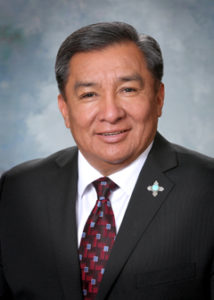


 Old Santa Fe Inn