Jaynie Parrish
Navajo
Navajo
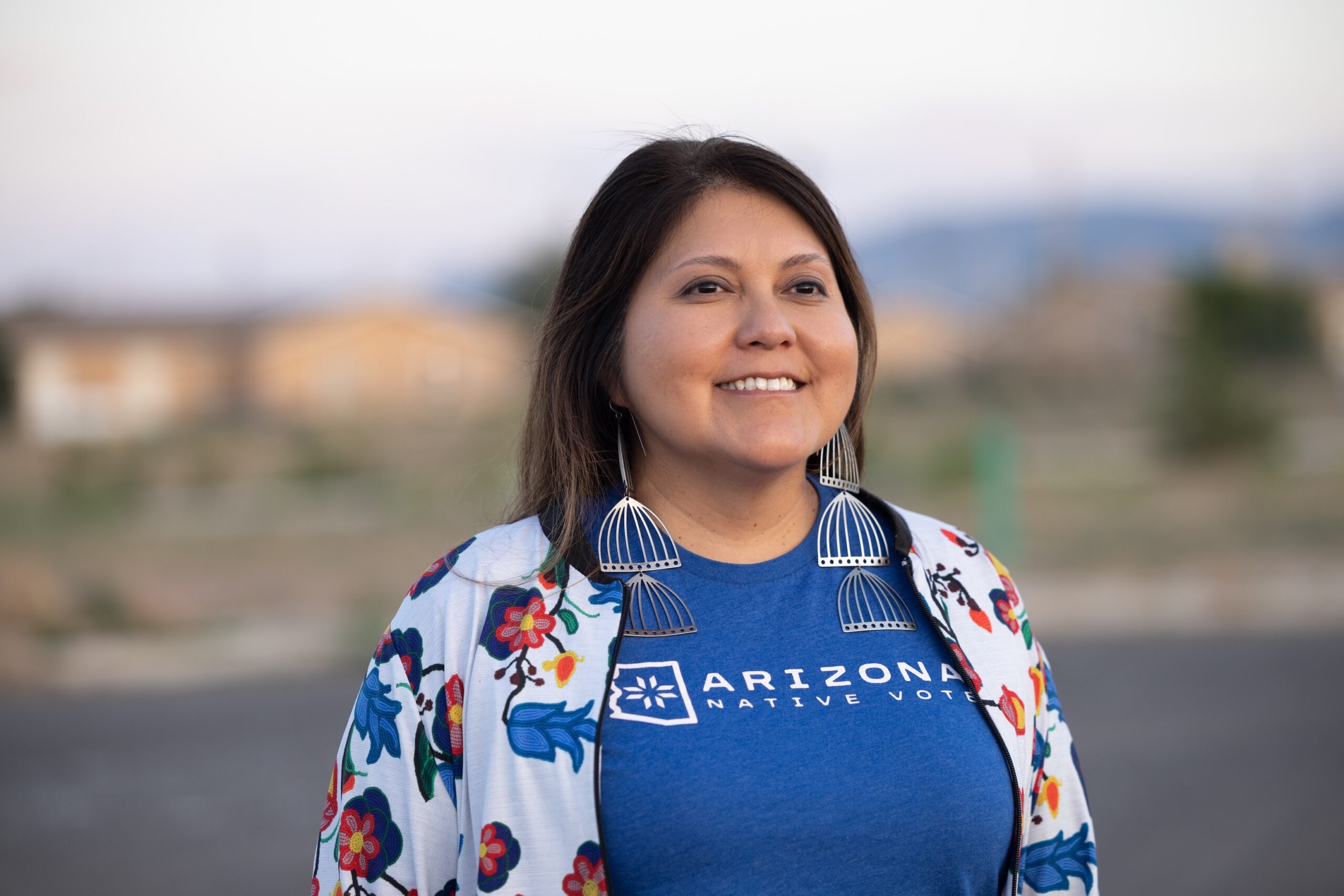
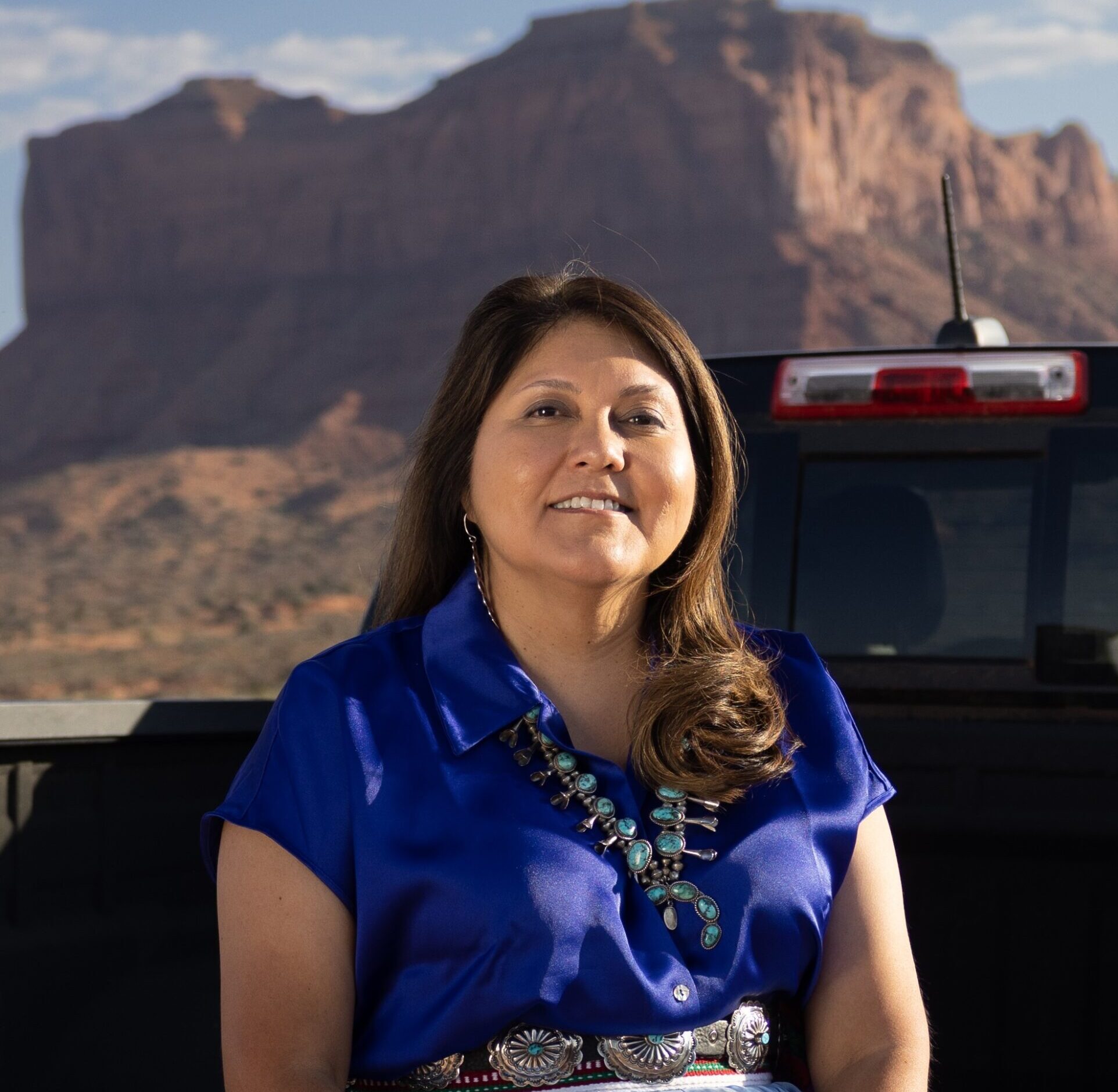
Jaynie Parrish poses near hear childhood home in Kayenta, Ariz. on the Navajo Nation. Parrish is the founder and president of Arizona Native Vote, an organization that aims to get out the vote across Indian country in the American Southwest. In Kayenta, Ariz. (Josh Biggs/AP Content Services for Harvard Kennedy School)
Jaynie Parrish (Navajo), founder and executive director of Arizona Native Vote, is up for a good fight. Since launching her nonprofit organization in 2023, Parrish has been laser-focused on educating and inspiring members of the Navajo Nation, one of the largest voting blocks in Arizona, and the Hopi and White Mountain Apache Tribes to “move the needle” of political power in favor of tribal and rural communities through voting and civic engagement.
“Policy is connected to everything our people fight for — land, water, food, housing, culture and language rights — and we have to fight for what we are entitled to through elections and voting,” says Parrish about the important mission of her nonpartisan organization, which is neither Republican nor Democratic, allowing Arizona Native Vote to reach voters well beyond party frameworks and structure.
As a 2026 Luce Indigenous Knowledge Fellow, Parrish understands the long game and is looking toward the next generation to drive long-term political power. “These are generational fights, and the foundation of what we do is bringing our elders and youth together to help shape the future and political infrastructure we hope to see one day in Arizona.”
Parrish adds that the “superpower” of Arizona Native Vote is its access to “a lot of grandmas and grandpas — our matriarchs, firekeepers, and culture keepers — who can help us match our goals with traditional values.” These elders work with the nonpartisan organization year-round to help transfer traditional knowledge to young voters.
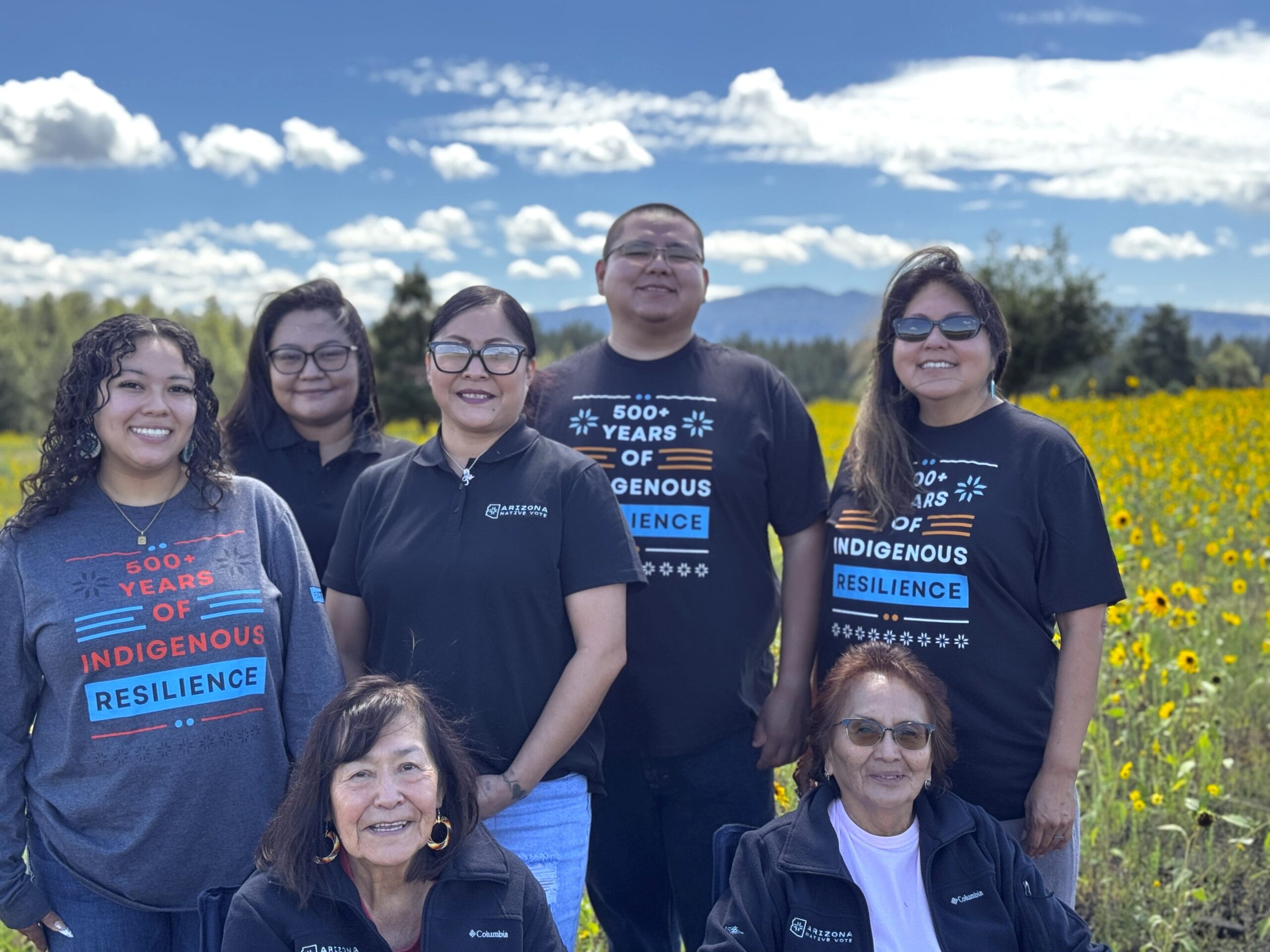
Organizers from the Navajo Nation and Hopi and White Mountain Apache Tribes pose for a team photo with Parrish in McNary, Arizona, in Navajo County.
To date, Arizona Native Vote has reached more than 600 Navajo, Hopi, and White Mountain Apache students in 22 Native high schools through its Indigenous Democracy Classes, which offer curriculum tailored to each region. And it’s not just a one-and-done visit to each school, either. “We come back three or four times during a semester to establish relationships with our young folks,” explains Parrish. “Hopefully, we inspire them to do a fellowship or work with us at various events that they get paid for.” At last count, Arizona Native Vote had 30-plus fellows in its program, and more than half a dozen students have helped with get-out-the-vote efforts during election years.
“There’s nobody doing this kind of in-depth civics education work year-round, like we are,” says Parrish. “We need to continue our work with the youth to ensure they get involved and turn out to vote.”
The pathway to politics, and the mentor who called her home
Parrish, the first person in her family to go to college, earned a bachelor’s degree in psychology and family studies from Arizona State University (ASU). “I knew I wanted to be of service to my community, which suffers from a lot of trauma and addiction issues.” She also took courses in American Indian justice. Her interest in politics and policy was sparked after attending her first political rally to fight against English-only laws in Arizona.
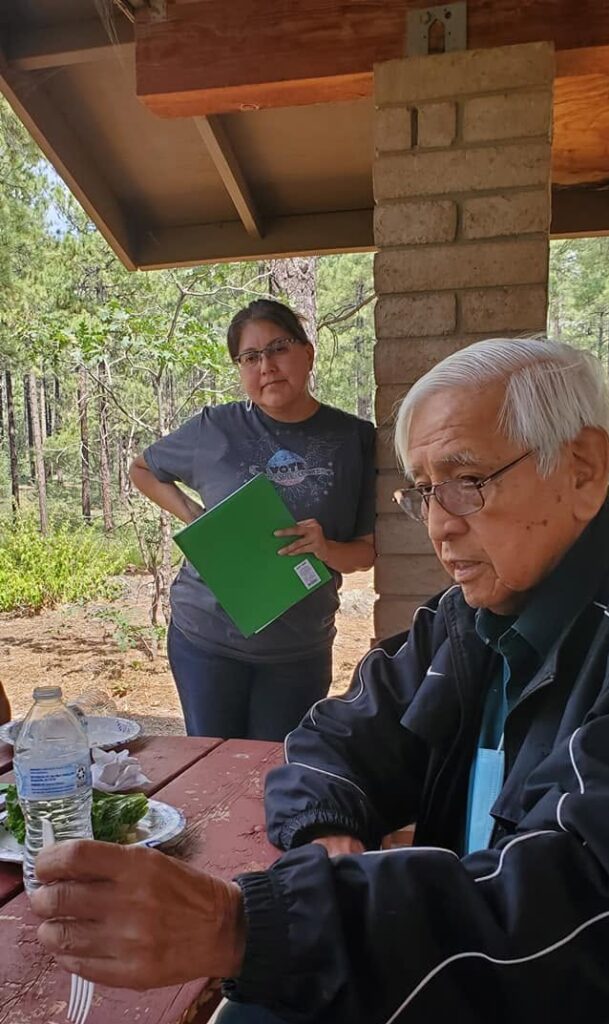
Peterson Zah, Parrish’s mentor and the first president of the Navajo Nation, collaborates with Parrish at one of the first community meetings in Navajo County in 2020.
It was at ASU where she met Peterson Zah, the first president of the Navajo Nation and the university’s advisor on Indian affairs. Zah became her mentor and a close, lifelong friend, who passed away in 2023. Parrish worked with Zah for nearly a decade to help increase Native student and faculty representation enrollment at ASU.
Not yet sure of her career path — education or politics? — Parrish was awarded a visiting fellowship at Harvard University and went on to earn a master’s degree in public policy from Harvard’s John F. Kennedy School of Government. She was later hired by Rock the Vote as the Southwest field organizer to increase voter registration with youth in Arizona and New Mexico. And that’s when she knew she had found her calling. “I learned a lot and loved it. And as they say in this line of work, I was hooked!”
For the next eight years, Parrish traveled around the country working on various presidential, congressional, and Native candidate campaigns, building on her knowledge and expertise in politics and community organizing. While working in Washington D.C. with EMILY’s List, a political action committee to help elect pro-choice Democratic women, Parrish got a call from her longtime mentor Zah to come back home to Arizona, where her community needed her, he said. Navajo County Democrats were looking for someone to organize Navajo voters in the county, and she got the job.
“My husband was already in Phoenix setting up his job, and with COVID sending people home to work, it just made sense for me to be back home in Arizona,” she recalls, realizing that she had come full circle. “I finally got to put all my political experience to use in my home state, in my home county, and for my home tribe.”
Parrish worked with the county Democratic party until she founded her nonprofit, Arizona Native Vote, in 2023.
Her plans for the Luce Fellowship
In her Luce Fellowship application, Parrish writes that what Arizona needs most of all is “a permanent civic framework that helps people understand the nature of political power and how it can be used to benefit Native people.” Sharing a surprising statistic, she says that Arizona has never sent a tribal citizen to Congress.
“We need more Native Americans in the state legislature and in the court system. I will use this fellowship to facilitate conversations and actions to create a space to start moving this work along,” states the 2026 Luce Indigenous Knowledge Fellow.
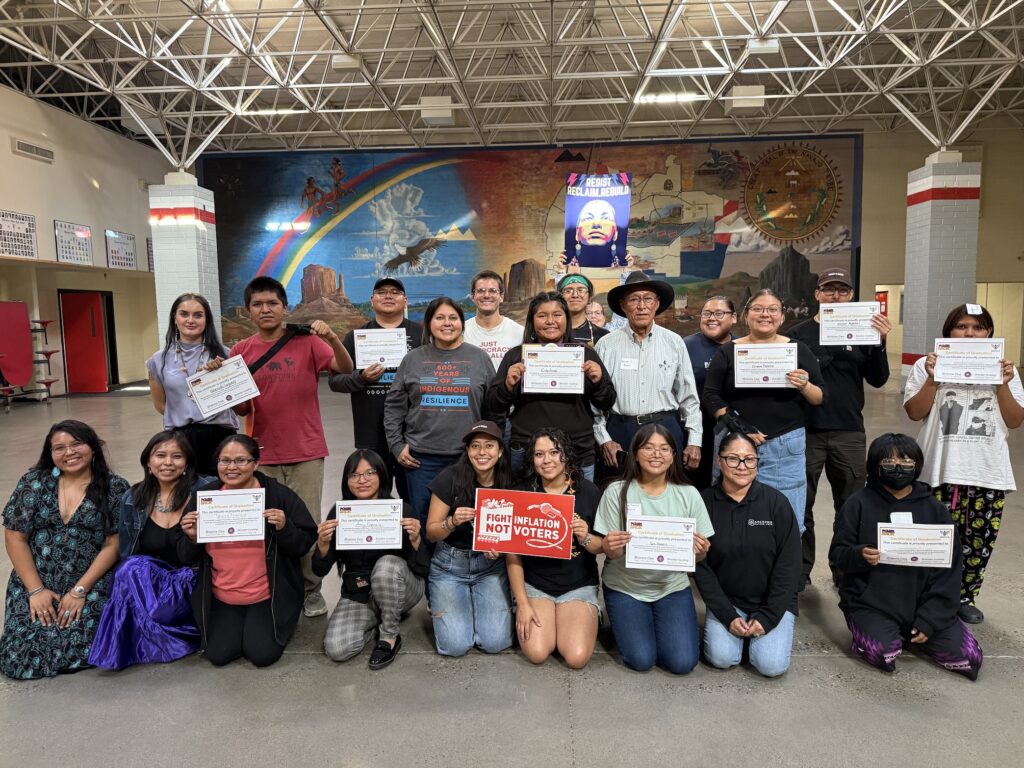
Youth and elders from Arizona tribes gather for an election protection training in Kayenta, Arizona.
Reaching these goals will be a long road, and Parrish says the journey starts with educating Native youth. Much of Arizona Native Vote’s current work, she explains, centers on building pathways for young people. “We need more young people organizing the community and not sitting around and waiting. We want them to create their own things with passion and provide them with the necessary resources and encouragement.”
Fellowship funds will also give Parrish the freedom to work more deeply and urgently with elder Navajo, Hopi, and Apache women, the firekeepers and culture keepers, documenting and videotaping their stories to help transfer voting knowledge and passion to Native youth. “These women have been doing this work for years. They are our voting warriors and advocates, and we are losing them.”
Parrish will host a series of community circles to bring together elders and Native youth to facilitate rich, intergenerational conversations around public service, community organizing, elections, protecting voting rights, policy, and sovereignty, to name a few key topics.
“The gathering of elders and youth, the concept of mentoring and collaboration, can be a year-round initiative to create opportunities where the energy and excitement of the youth can be guided by the wisdom of their elders,” envisions Parrish.
‘The sky’s the limit’
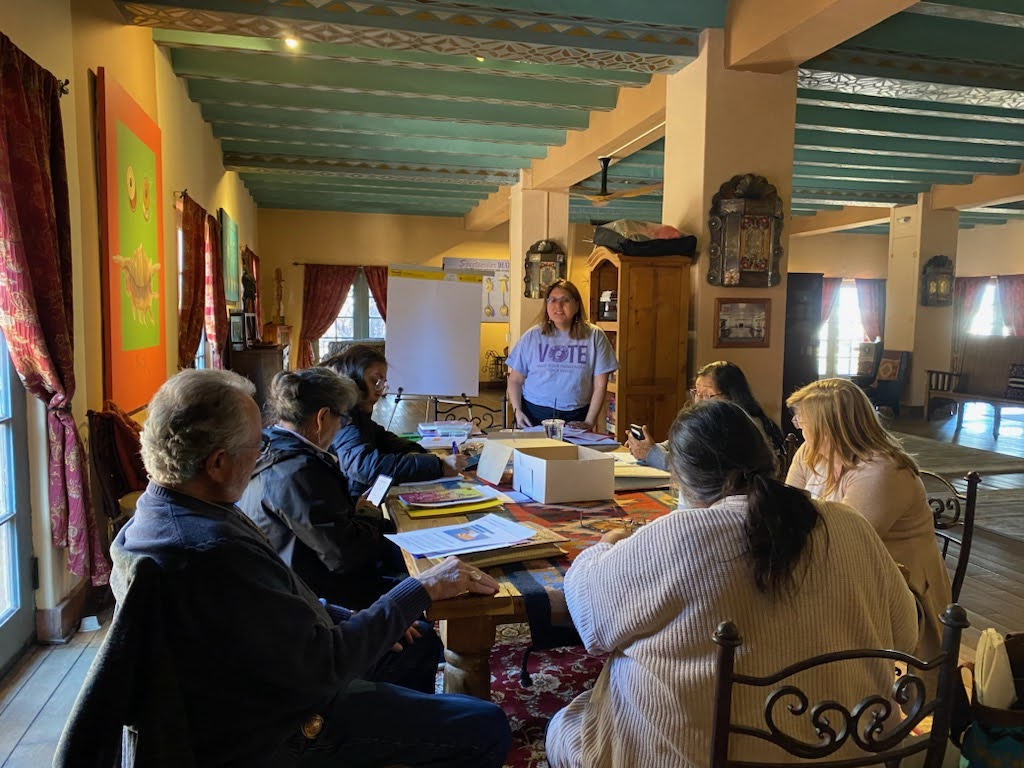
Parrish discusses early voting and get-out-the-vote strategy with her team in Winslow, Arizona.
Since Arizona Native Vote is a nonpartisan organization, working outside the party structure, Parrish is confident it can reach more voters and have a significant impact on Arizona politics. “The sky’s the limit with our nonprofit. We can be anywhere and go anywhere.”
And speaking of skies, Parrish is looking to Montana, “Big Sky Country,” for inspiration on how to set up a political power infrastructure in Arizona. “I want Arizona to be more like Montana. They have a dozen Native people in the state legislature, and they have been building toward that for more than 30 years,” she says. “And I want Arizona to be a little bit like New Mexico, in that they were the first state to pass the first-ever Native American Voting Rights Act.”
The end goal, declares Parrish, is increasing voter turnout, Indigenous political representation, and being policy-ready. And Arizona Native Vote’s strategy appears to be paying off. According to the organization’s internal data, of the 23,000-plus voters Parrish and her staff reached out to in 2024, 20% of those people were more likely to vote in the presidential election than in previous elections. “It takes a lot of handholding, explaining, and educating. We like to be in community with voters and make sure the process is accessible and not so scary.”
The big question is, does Parrish have any political ambitions of her own? “I have been asked that a lot over the years. Gloria Steinem even encouraged me to run for office.” She admits, “I have tinkered with the idea of running for my local county seat or for the board of supervisors because they need a lot of help there, too.”
For now, Parrish is content working behind the scenes. “I know what it takes to run a campaign, and I’m not sure I want to do that right now.”
But the idea is not off the table.