Lynn Mad Plume
Blackfeet Nation
Blackfeet Nation
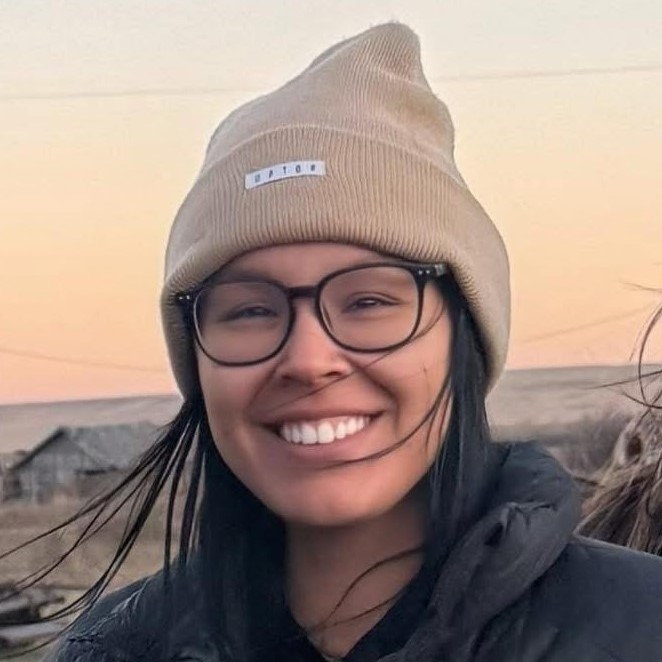
Lynn Mad Plume and her family have a deep connection to horses. “My grandma taught me that, as Amskapi Piikani-Blackfeet people, our relationship with horses is something other tribes have long recognized. Horses hold a deep place in our culture and way of life.” She adds that horses changed the way Blackfeet, a nomadic people, hunted and traveled from camp to camp. “They completely changed our way of life, for the better.”
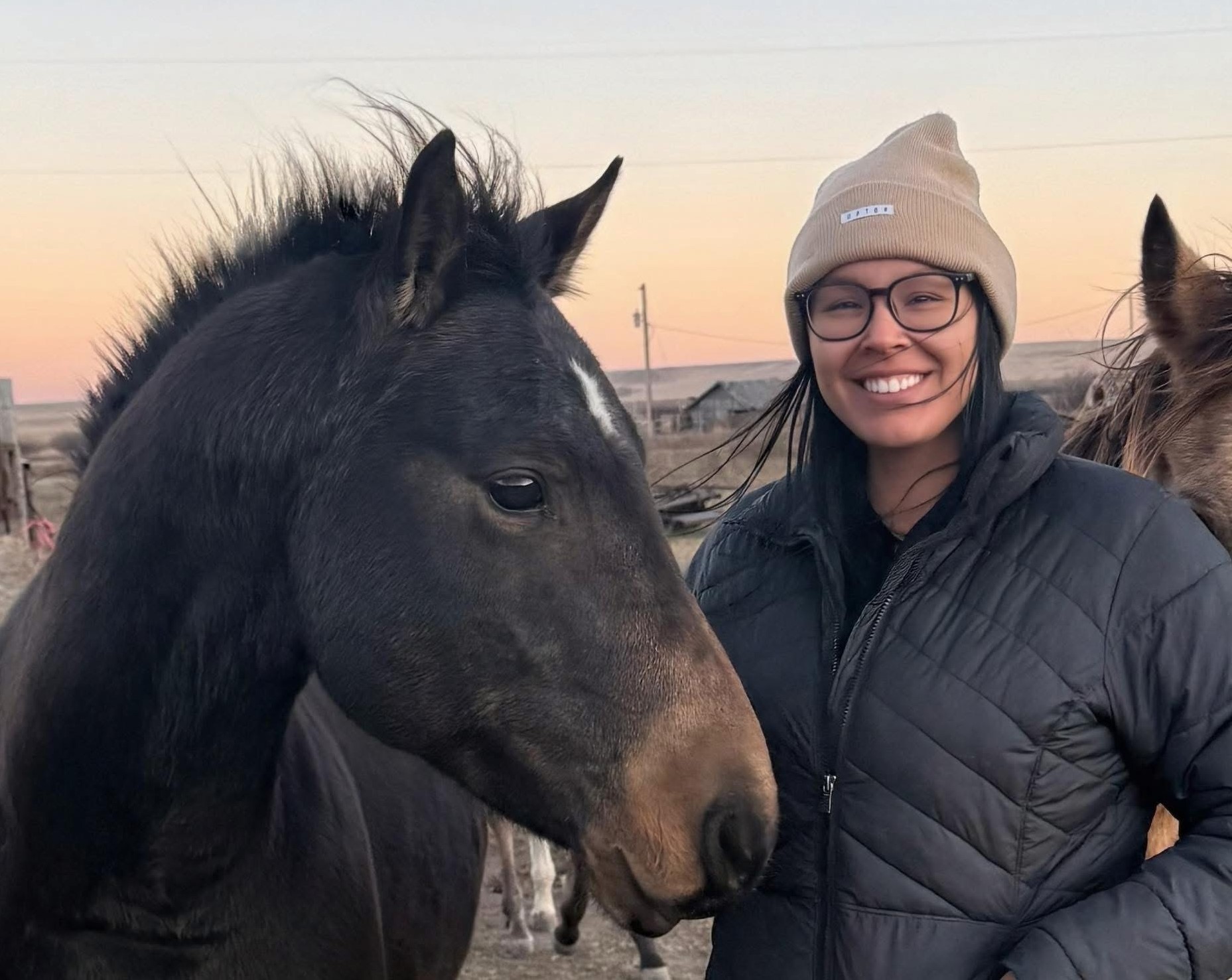
The 2025 Luce Indigenous Knowledge Fellow poses with one of her many horses, “Gilded in Gold,” nicknamed “Gilly.”
Horses have been a part of Mad Plume’s everyday life for as long as she can remember. “We didn’t have much, but we had our horses and the land.” She grew up on the Blackfeet Nation reservation in a sacred and culturally significant region known as Two Medicine. “We have always been here.” She proudly shares that she is a direct descendant of Chewing Black Bones, considered one of the last of the great warriors of the Blackfeet Nation.
Mad Plume, now 33, laughs when she tells people that she was put on a horse before she could even walk. Her great-grandfather and his brothers built a small rodeo arena where people would gather to watch them ride horses.
Within the Blackfeet culture, horses are valued as medicine. “They have that special healing power, just by being themselves. Horses really call your spirit back.” Mad Plume says that her family wanted to share this special healing power with others. In 2022, they founded Two Powers Land Collective, a nonprofit organization that “offers equine-assisted psychotherapy and equine-assisted learning grounded in Indigenous traditions … to nurture the physical, emotional, and spiritual well-being of both people and horses.”
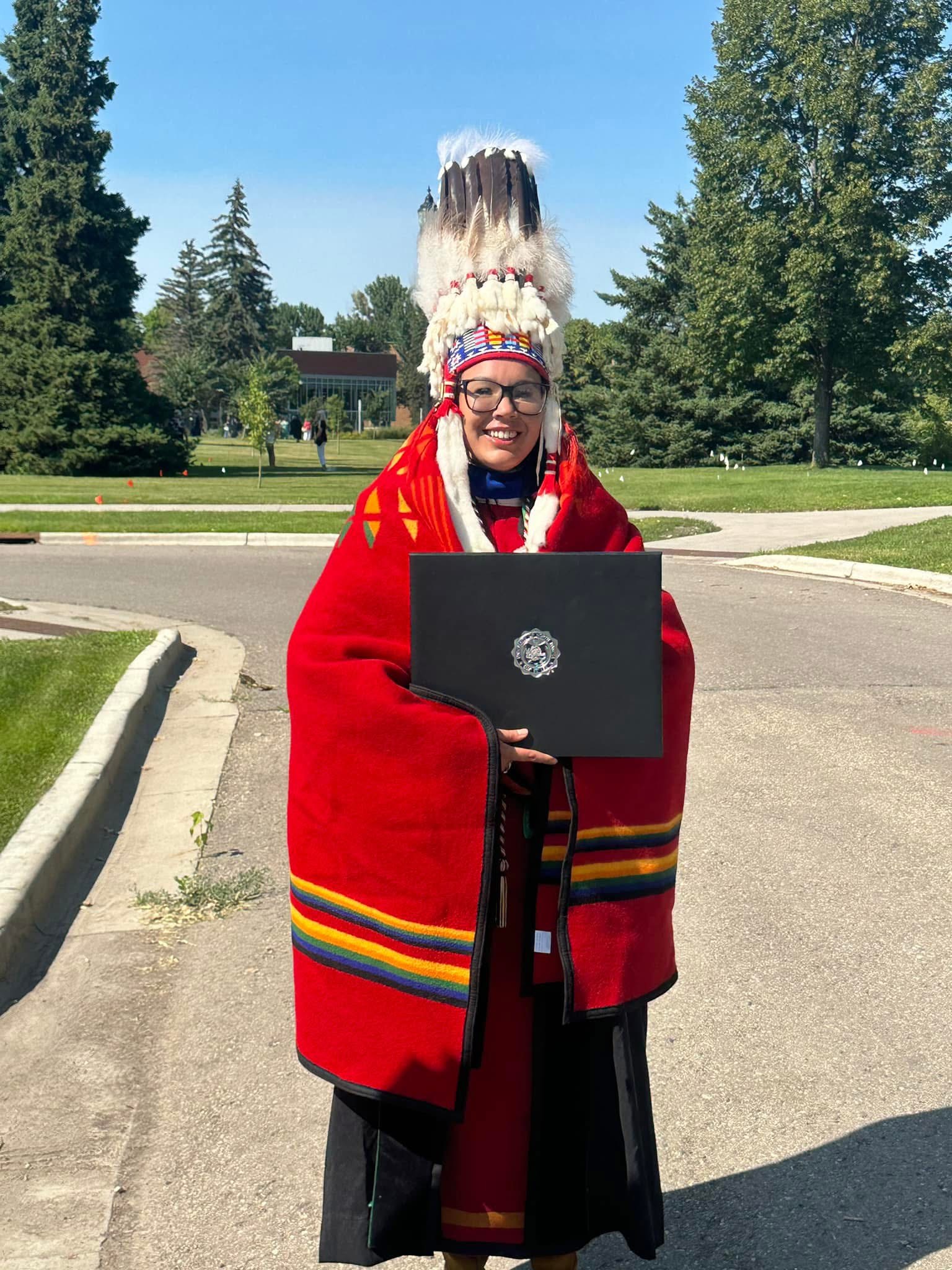
Mad Plume displays her Ph.D. in Indigenous health from the University of North Dakota in a traditional Blackfeet headdress. “Each one is made with meaning from the land and carries its own story. Wearing it shows respect for our culture, the land, and the values I’m expected to live by,” she explains.
Running the equine therapy program is truly a family affair, with certain family members lending their own special expertise. Mad Plume, the executive director and oldest of six children, recently earned her Ph.D. in Indigenous health and develops the organization’s programs. Co-founder and sister, Erika, is a licensed clinical social worker specializing in addiction counseling who was accepted into the University of Denver’s Equine-Assisted Mental Health Practitioner Program at the Institute for Human-Animal Connection; and another sister, Kelsey, is an animal science major with plans to attend veterinary school.
All three sisters are currently training to become Certified Therapeutic Riding Instructors and plan to complete certification this year.
Mad Plume is also quick to acknowledge her parents’ invaluable contributions. “We would not be able to do what we do without their support.” Her father handles the feeding and day-to-day caretaking of the horses; and her mother runs Two Powers’ Holding Hope Search and Rescue (SAR) team — Montana’s first Indigenous-mounted equine SAR team to help with Missing and Murdered Indigenous People (MMIP) cases in the state.
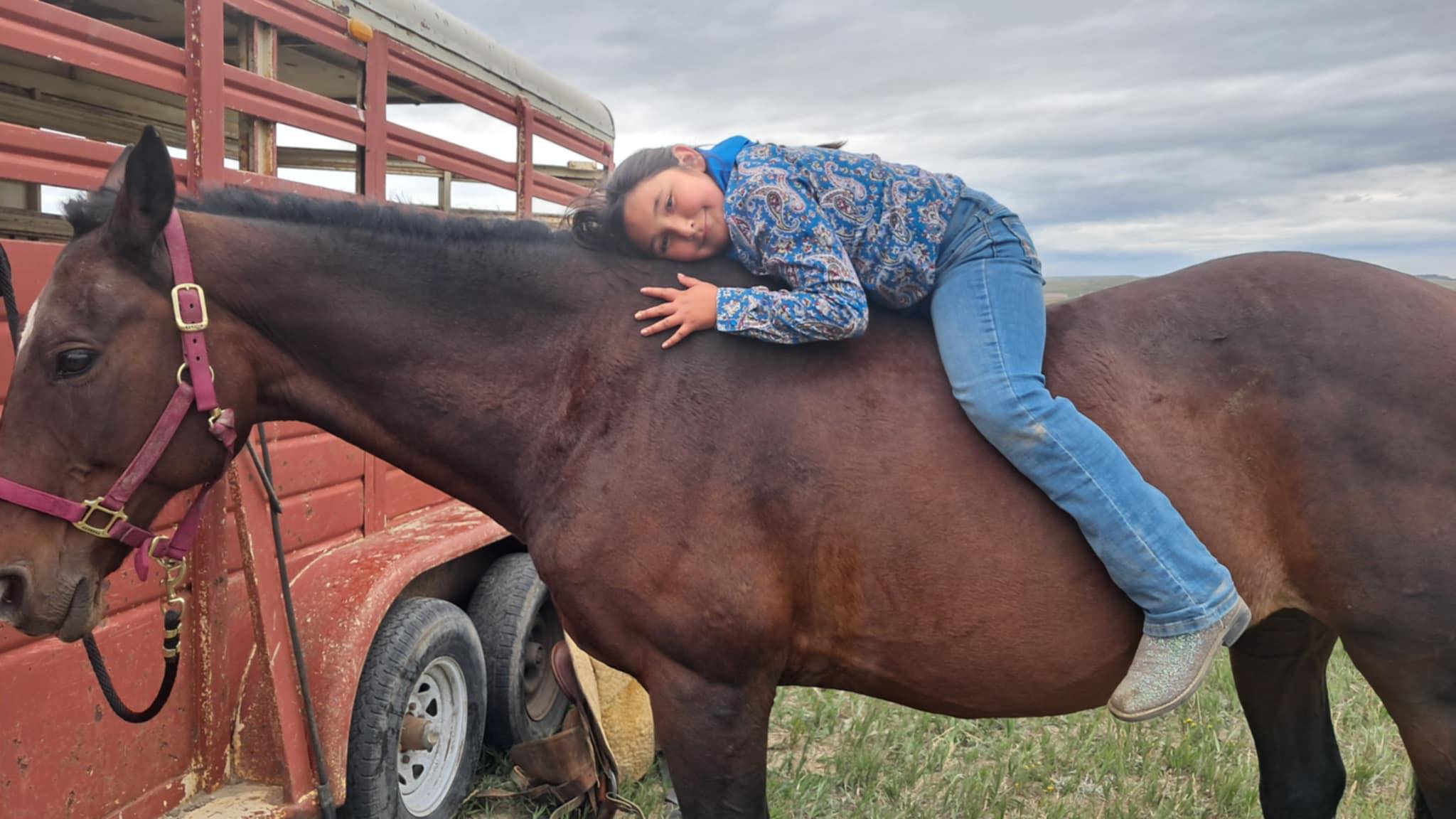
At the core of Two Powers Land Collective is a mission to help heal Indigenous youth facing intergenerational trauma, cultural disconnection, and grief from the loss of relatives. “Culturally, you always start with the youth. So, we do a lot of camps and programs for our youth, ages 8 to 12, involving horse handling, riding, and storytelling to foster personal growth, healing, and cultural connection with horses because the Blackfeet youth need to learn that we are ‘the people of the horse,’” says Mad Plume, who First Nations has selected as a 2025 Luce Indigenous Knowledge Fellow.
As a Luce Fellow, Mad Plume aims to develop an equine-assisted therapy model for youth resilience programming, heritage connection, and land-based learning that can be replicated and adapted by other Indigenous communities.
How a brother’s love of horses is helping to heal Indigenous people
Some years ago, when Mad Plume and her younger brother, Wyatt — whose traditional name is “White Rider” — were discussing their plans for the future, he told her, “If it were up to me, I would be in Two Medicine with my horses all day.” His horses gave him peace and sanctuary. Sadly, Wyatt passed away in 2024 — but not before he saw his vision become the genesis of Two Powers Land Collective.
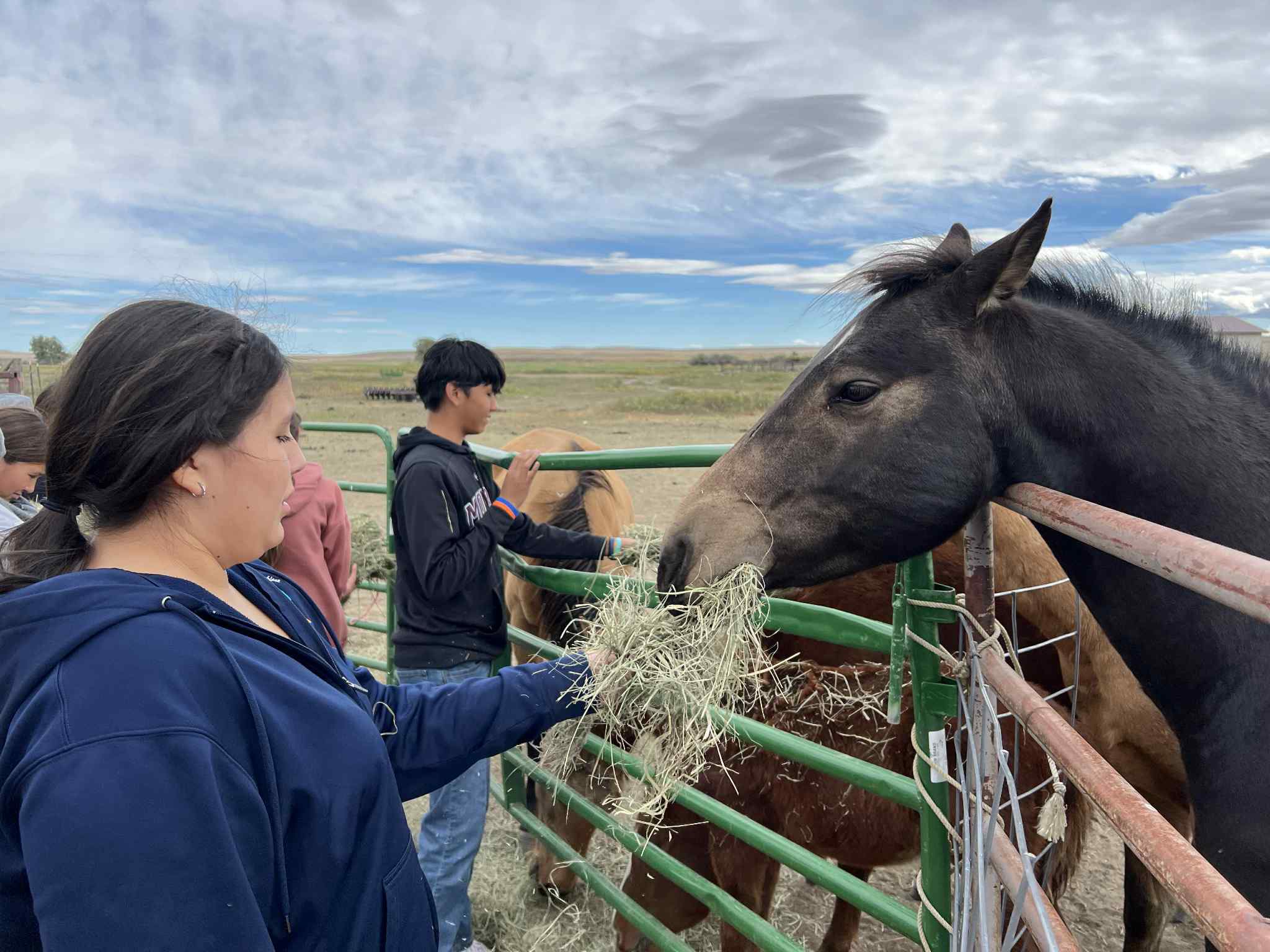
The healing ranch named after Mad Plume’s late brother, Wyatt, has helped many Indigenous youths heal from trauma and other difficulties.
Today, the White Rider Healing Ranch is a central initiative to the nonprofit organization — named after the brother who had a profound love for horses. It is a special place where Indigenous people facing mental health challenges, trauma, and substance abuse come to heal through the company of horses.
Recently, the White Rider Healing Ranch was selected as a program partner for the Horses for Mental Health Campaign. “We are the only Indigenous-led organization out of over 100 organizations that they work with,” Mad Plume shares with excitement about this new collaboration.
The healing ranch has fostered many successful outcomes. Mad Plume recalls one young man who stayed on track toward sobriety by volunteering for ranch work, including repairing fences and exercising horses. “He found a welcome space where he could heal, one that provided him with a positive outlet. And that’s exactly what we envisioned Wyatt’s ranch to be.” She also recalls a shy, timid girl who lit up whenever she was around horses. “This young girl became this bigger person and wasn’t quiet anymore when she was on a horse.”
With the help of the Luce Fellowship, Mad Plume will further develop the Ponokamita Academy, a year-round program for Indigenous youth rooted in Blackfeet horsemanship, language, and cultural teachings. Each student is assigned an individual horse to grow with. As an extension to the academy, the Ponokimita summer camp was launched last July and is open to the public.
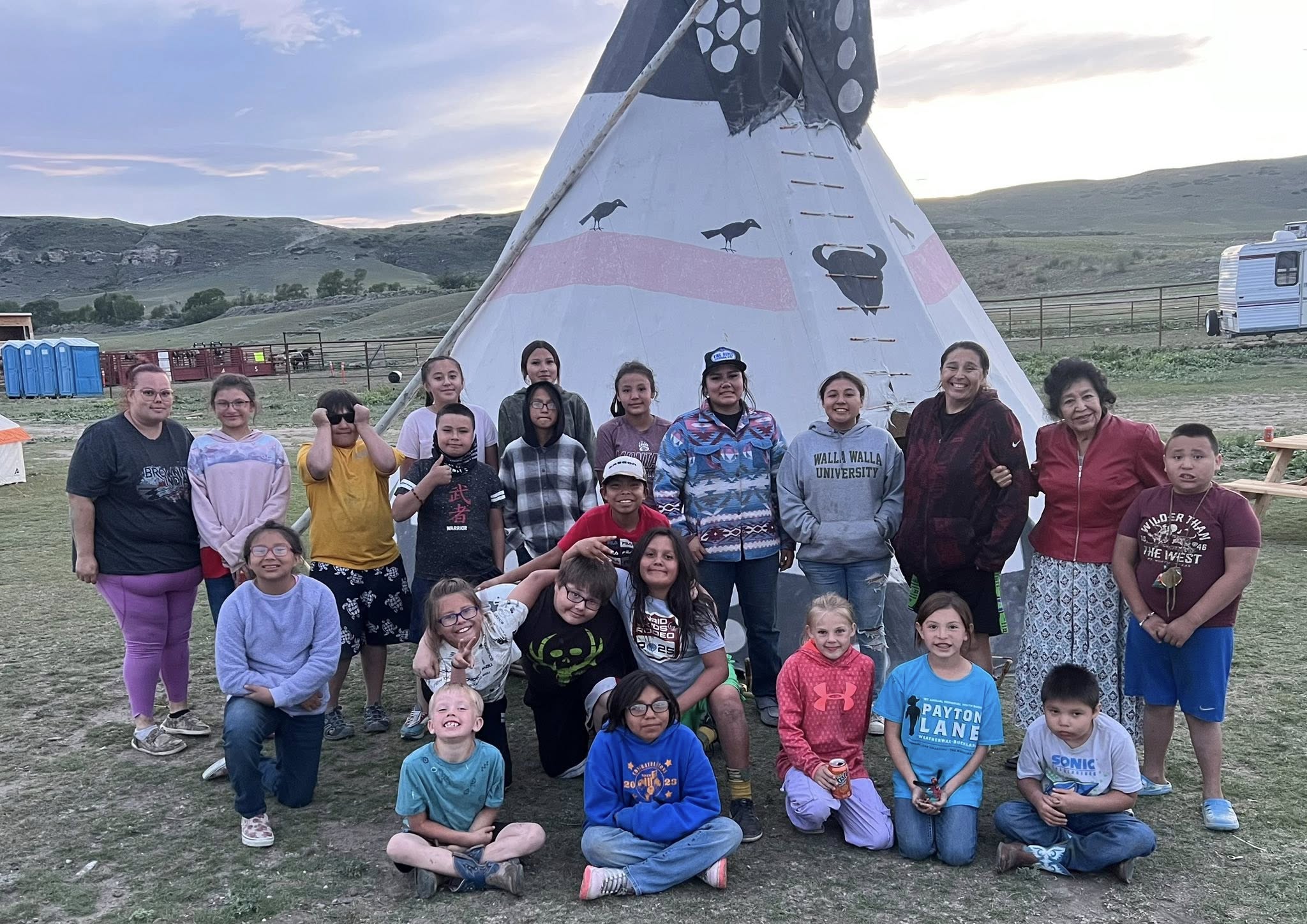
At the 1st annual Ponokamita camp last July, campers gathered with parents and counselors for a language lesson and storytelling with a matriarch from the Mad Plume family.
In yet another effort to help heal the youth in the community, Two Powers Land Collective recently partnered with a local mental health organization in Browning to offer equine therapy at the ranch to Native youth undergoing mental health therapy.
Working on a BIG idea
According to the 2025 Luce Indigenous Knowledge Fellow, equine therapy programs are abundant throughout Indian Country; however, the term “equine therapy” is often used broadly, even when approaches and training differ. As the field moves toward clearer standards and credentials, many Indigenous-led models remain outside of these systems, despite the deep expertise within Native communities.
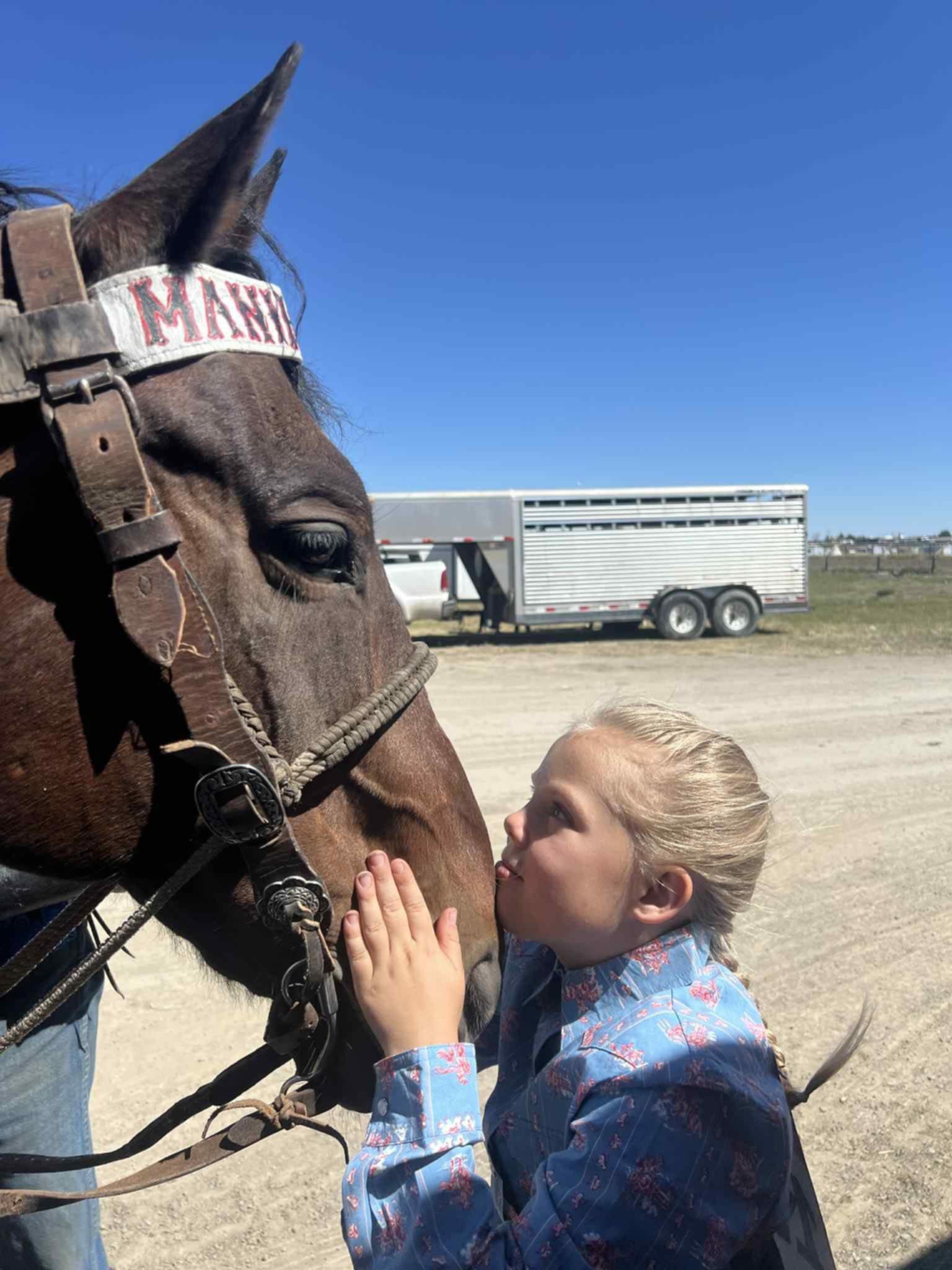
Ponokamita academy student Lizzy Steward bonds with her horse Jetson before they compete in a rodeo.
“There are so many of us Indigenous people in this equine-assisted services space that I think it is time for us to come together to create one model,” says Mad Plume.
Her long-term goal is to host the first-ever global gathering of Traditional Indigenous Horsemanship Practitioners, with the aim to establish the International Council of Indigenous Horse People. She is resolute: “We need to create a credential for ourselves, rather than one being created for us.”
With fellowship funds, Mad Plume has been able to make important connections already toward that vision. “Everyone I talk to agrees that it is time to make this council happen. I like to think this is something that can happen within the next two years, even the gathering aspect of the project.”
Mad Plume was recently hired by the Johns Hopkins Center for Indigenous Health, where she serves as a Project Manager on an equine therapy initiative based in Rapid City. She works remotely from Browning and at White Rider Healing Ranch, a program of Two Powers Land Collective.
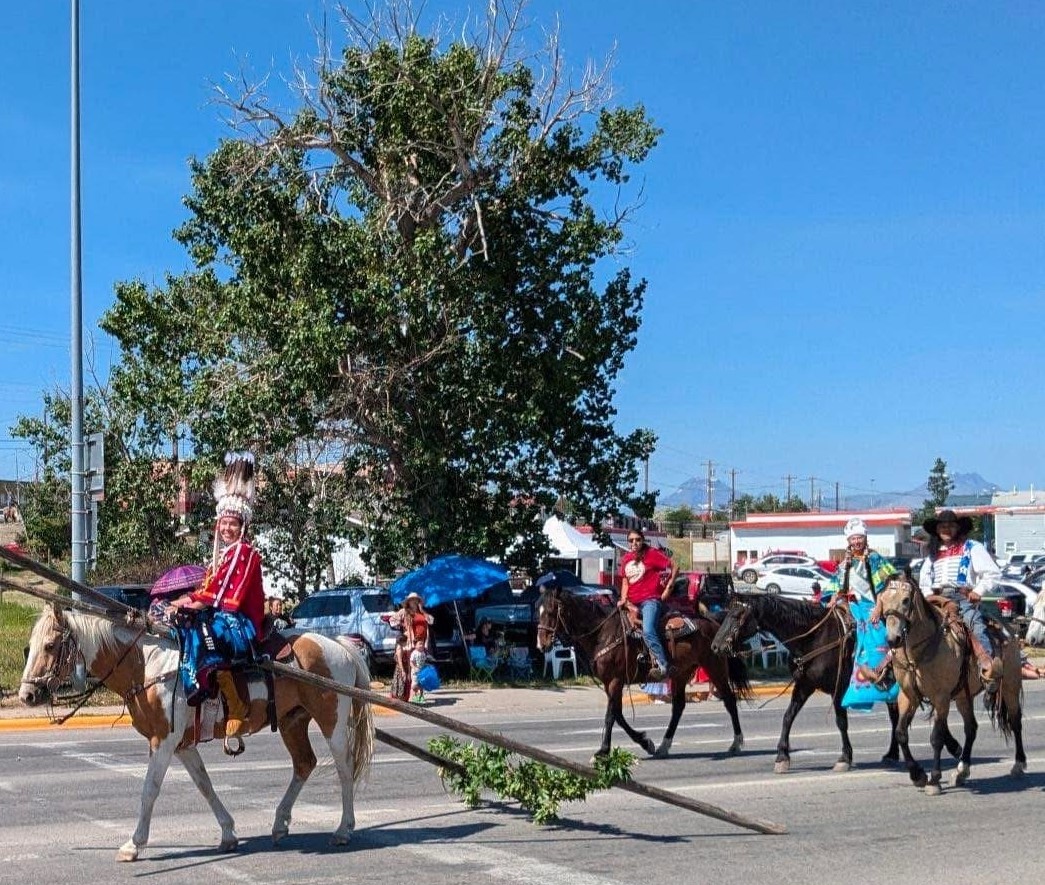
Mad Plume leads her family in a Blackfoot travois at the annual parade. A travois is a V-shaped sled made from two poles and rawhide to carry goods, kids, and elders—first by dogs, later by horses—and it was once an important part of daily life for the Blackfeet people.
It is a busy time for the Luce Fellow, but an exciting one. “Through our ongoing efforts … we want our youth to have a place to turn to, and we want our people to have a place to heal; a place where they can remember and call our ways back.”