Project
American Indian and Alaska Native people live on and near tribal homelands, in rural communities and small towns, and across metropolitan regions. Families, Native organizations, and tribal governments maintain relationships across the boundaries that agencies and funders use to plan programs. Which boundaries decision-makers use can change who is visible in a needs assessment, where outreach happens, and where resources are directed.
Through the Research and Advocacy for Native Economic Justice program, First Nations examines where Native people live, how populations are distributed within federally recognized Native areas, and how population counts changed in and around those areas from 2000 to 2020. The research gives tribal leaders, Native organizations, funders, and public agencies a clearer basis for planning and investment guided by tribal and community priorities.
What the 2020 Census reveals
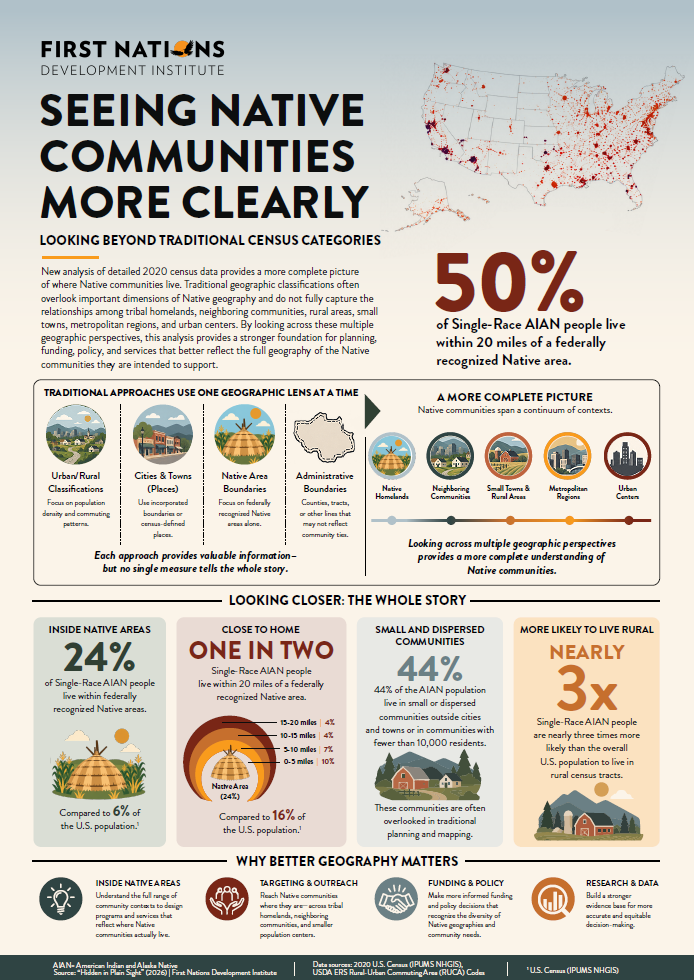
- Small towns and places outside census boundaries matter. Roughly 44 percent of people who reported American Indian or Alaska Native alone or with one other race lived outside a census place or in a place with fewer than 10,000 residents
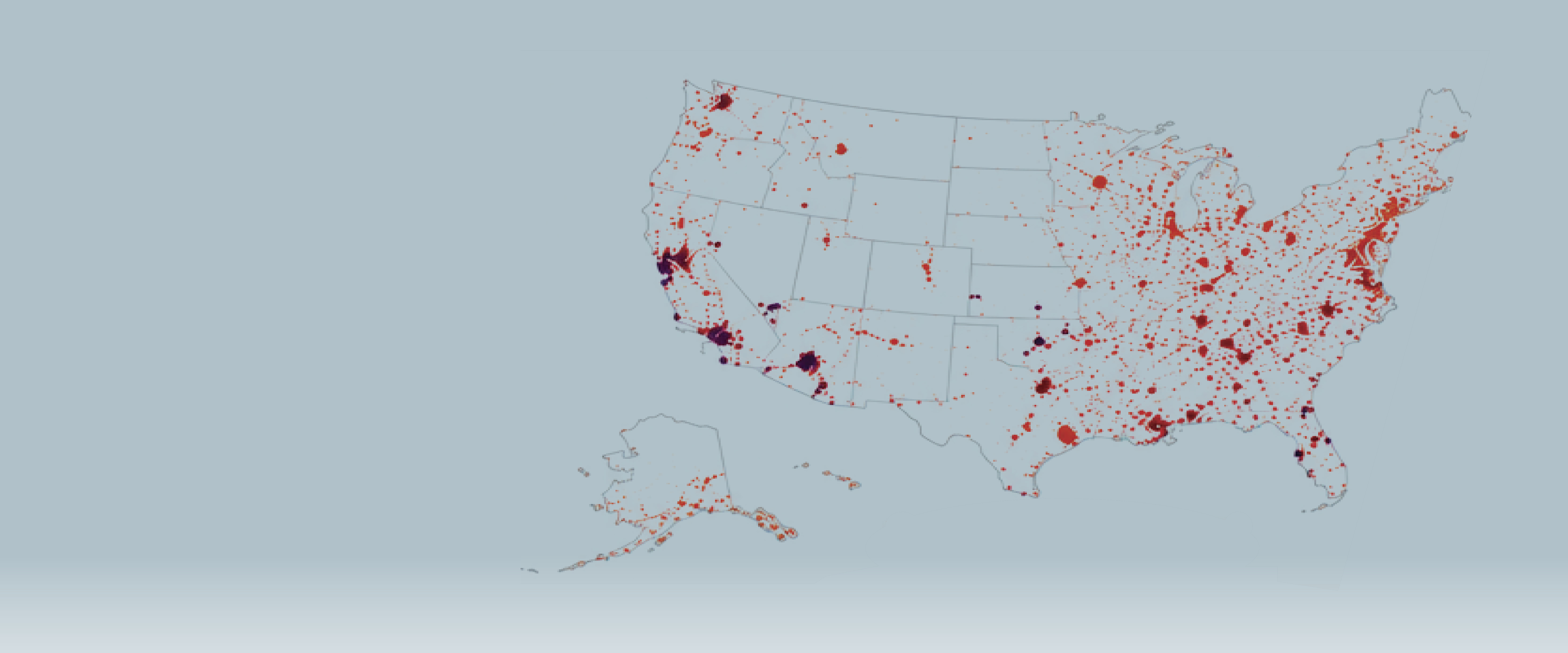
- Many Native people live near the boundaries used to plan programs. About 24 percent of people who reported American Indian or Alaska Native as their only race lived inside a federally recognized Native area. Counting people inside those areas and those living up to 20 miles beyond their boundaries brings the share to about half.
- Population patterns vary within Native areas. In some areas, at least half of Native residents live in one population center. In others, residents live across several centers or are more widely dispersed. Those patterns can shape decisions about where to locate services and how to reach residents across a region.
Use the research to guide funding and outreach
When defining a grant’s geographic focus or planning a service area, compare the proposed boundary with where Native residents live. A needs assessment that stops at a Native-area boundary can leave out nearby towns and rural communities that are relevant to regional planning. A single rural or metropolitan label can also leave important differences in settlement patterns out of view.
Funders and public agencies can explain which population and geographic measures they use and work with tribal governments and Native organizations to determine where additional outreach, transportation, or services would support community priorities. Tribal nations determine their own citizenship. Tribal records, locally defined service areas, and community knowledge help interpret census patterns and guide decisions about whom programs serve.
This project has culminated in a series of resources designed to empower supporters and funders in investing in Native communities.
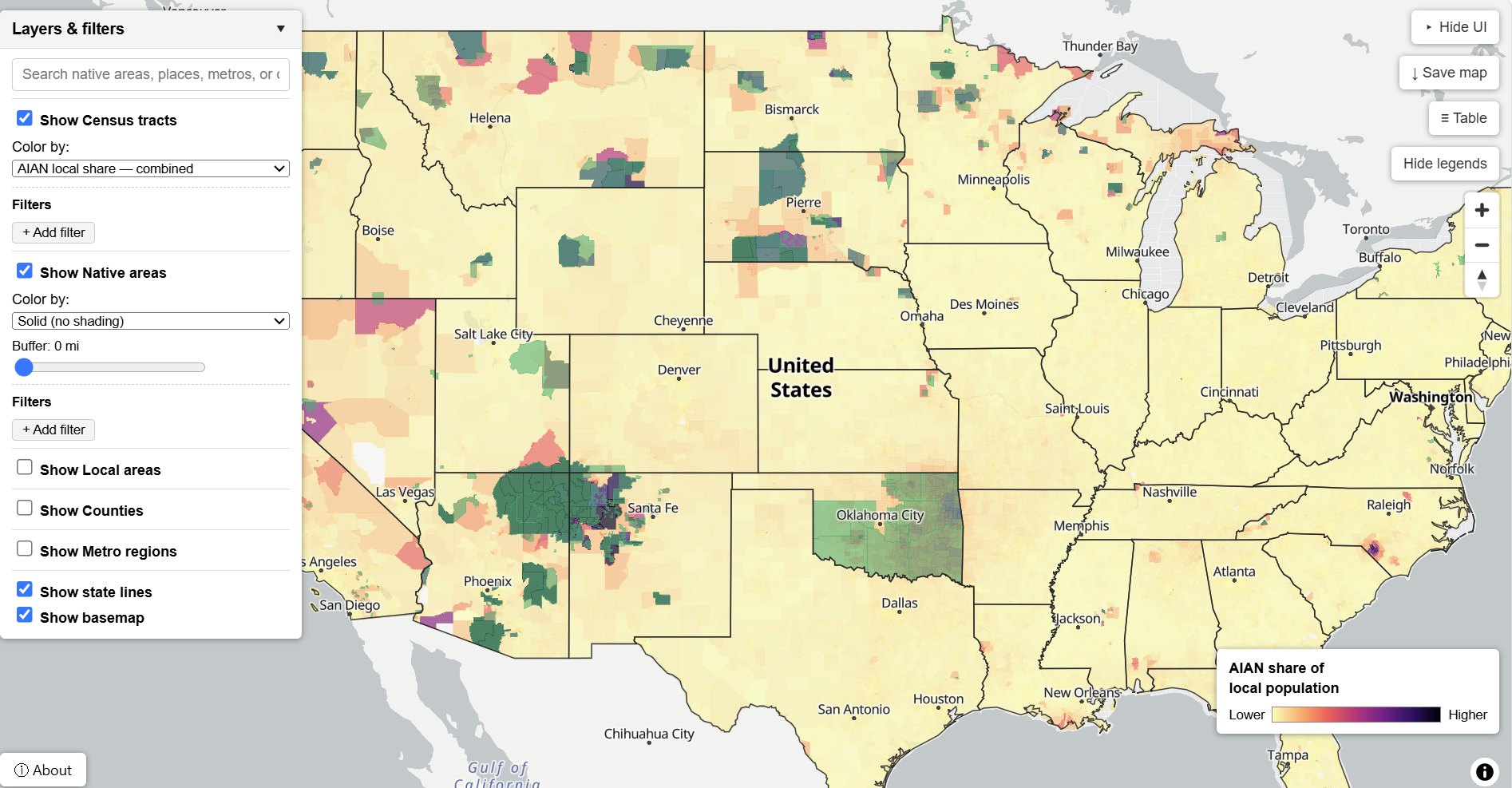
- American Indian and Alaska Native Mapping Tool is an interactive resource to explore Native American populations using 2020 Census data.
- Hidden in Plain Sight examines where American Indian and Alaska Native people lived in 2020, looking across community size, rural and urban settings, proximity to federally recognized Native areas, and local economic and demographic conditions.
- Describing Native Community Contexts examines how Native residents are distributed within federally recognized Native areas and how those settlement patterns can inform infrastructure, transportation, and service planning. (Coming soon!)
- Sensitivity Analysis for Describing Native Community Contexts. Researchers tested whether settlement patterns changed when they adjusted the minimum population for a center, the distance used to group census blocks, or the rules for assigning categories. Most of the 387 classified Native areas kept their original category under each test. These categories offer a starting point for regional comparisons, with local knowledge helping readers interpret the results for individual areas. (Coming soon)
- Population Change On and Around Native Areas examines how census population counts changed inside Native areas and in nearby communities from 2000 to 2020. It gives readers a way to consider population change across a region when planning outreach and investment. (Coming in early 2027)
Research prepared by NR Brouwer and Alex Richard Zhao for First Nations Development Institute.