Impact Story
The Black Hills are revered by many tribal nations across Turtle Island. The place holds deep significance for the Pte Oyate (Buffalo People), who are inherently connected to this sacred landscape. Their creation stories and ceremonies are tied directly to the Black Hills. “We come from the Black Hills. There is a lot of history underneath and all around them,” shared Tonia Stands (Oglala Lakota), mother and founder of Magpie Buffalo Organizing.

Magpie Buffalo Organizing members outnumber pro-uranium miners during the Edgemont Public Comment session.
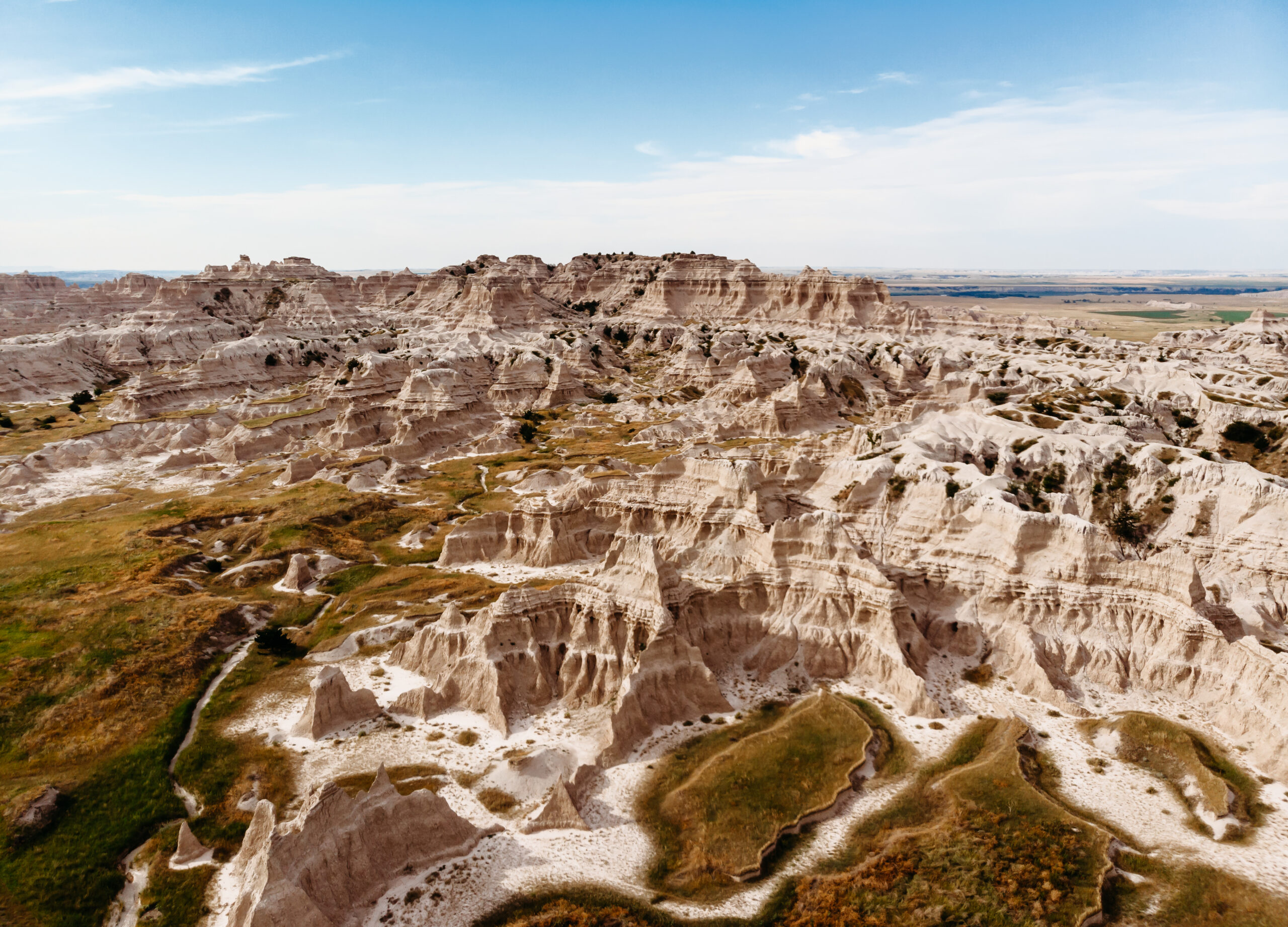
Known as HeSapa to the Lakota, Dakota, and Nakota people, the Black Hills are considered the oldest mountain range in North America. Located in southwestern South Dakota and extending into eastern Wyoming, the Black Hills have been facing environmental injustice since the late 1800s due to mining of fossil fuels, like coal and native element minerals, including uranium, silver, and gold.
This ongoing degradation of sacred land ignited a fire in Stands as she gained a better understanding of how uranium mining was affecting the health of her community.
Uranium mining leaves a lasting mark on communities, cultures, and lands. It creates a legacy that can cause serious, even fatal health issues, contaminates water and soil, and destroys habitat. Contaminated water and soil impact the health of ceremonial plants and animal relatives. “We are responsible for our animal relatives, as they provide us with sacred materials – feathers, hides, and rattles,” said Stands.
Her responsibility and drive to protect the Black Hills prompted the beginnings of Magpie Buffalo Organizing, a grassroots organization spreading awareness of the harmful impacts of mining in and around Pte Oyate traditional homelands and opposing additional mining efforts.
The Great Race
The history of the Great Race goes back to the Pte Oyate origin story and a new era of the Black Hills when this sacred land wouldn’t be sacred anymore. Stands shared:
“The Great Race is an ancient story we tell in the winter by campfire. It is a sacred story that we keep, but I will share what I can about what happened. A Great Race called all the relatives together to discuss a time coming when nothing would be sacred. To determine who could survive what was to come, there would be a great race around the Black Hills. Only the winner – the strongest and most powerful – could survive and would be responsible for the protection of the land. The Great Race happened between all the animals, including the turtles. The magpie, racing for the people, won the race. This meant the Pte Oyate would serve as the stewards of the land.”
Today, the Great Race continues. During summer solstice, a 500-mile run occurs around the base of the Black Hills. This run – the Sacred Hoop 500 – honors the tradition of running around the Black Hills to remind the Pte Oyate of their roles and responsibilities to steward and protect the Black Hills and animal relatives. The race is as old as Stands, 47 years of age.
“My A’te/dad is a runner, and he would put me in a backpack and run with me when I was a baby. We’ve always run in the Great Race. It’s in our marrow, bones; it’s in our blood,” shared Stands.
The race continues
Over the years, mining has increased significantly in the area. Now, federal policies have accelerated projects under FAST-41, a process that further threatens harmful and rapid development, including the proposed Dewey-Burdock uranium mining project. The Dewey-Burdock InSitu Recovery (ISR) Uranium Project – expected to support the United States’ nuclear fuel supply chain – is the ninth to receive FAST-41 coverage since President Trump’s second term started. This proposed project would use in-situ leach mining.
In-situ leach mining is greatly impacting the Great Plains tribes, including their health, rivers, and ceremonial practices. In-situ leach mining of uranium is a process where a groundwater aquifer containing uranium ore is injected with a chemical solution, dissolving the uranium ore, and then pumped back out from another well.
This process impacts the environment in various ways, including groundwater and soil degradation and contamination. Currently, there is an increased demand for uranium to support nuclear reactors. According to Stands, Wyoming is promoting nuclear energy, which warrants significant concerns from tribal communities already impacted by uranium mining waste.
Stands emphasized that Pte Oyate ceremonies are under imminent threat and questioned how aquifers – that Native and non-Native communities rely on – are being maintained and cleaned post-mining activities. “We have a right to know these things. Radioactivity doesn’t discriminate. We are ceremonial people, and our ceremonies are now radioactive in every aspect.”

Magpie Buffalo Organizing members visit Craven Canyon, another area in South Dakota under threat from exploratory drilling.
The way forward
To further advance its work, Magpie Buffalo Organizing is strategizing with other nonprofit environmental organizations, tribal governments, and individuals to share environmental justice resources and influence policy change. In addition, it hosts community events such as the Sacred Hoop Run and Winter Camp to connect and bring people together.
According to Stands, a common misunderstanding of opposition work is that “everyone thinks that environmental laws will protect everyone equally, but they don’t. Native people need to know our rights about accessing, managing, and protecting land, water, air, and resources and what we can demand around standards of quality and quantity. We have to know about mining and its impact on our land.”
To encourage all people to protect their lands, lifeways, and people, Stands shares the following message to all:
“Dare to Care. Go camp, connect with the land, or conduct a ceremony off the reservation. Care for the animals, our silent relatives. Connect with them. See what they drink; they might be drinking the same water we are drinking. We use their feathers, so that might get us sick if they are sick. We are all related, we are all connected. Dare to care to read and understand your tribal historic preservation codes, water codes, water compacts, treaties, etc. And most importantly, understand where your water comes from.”
The founder of Magpie Buffalo Organizing will continue to carry the tradition of the Great Race forward. Her advocacy and education work will continue until HeSapa remains protected and healthy under Lakota stewardship.