News
Thought Leadership
First Nations is committed to helping tribes and Native non-profits nationwide. The Native Agriculture and Food Systems Investments program serves Native communities to advance Native food sovereignty and security, strengthen tribal food economies, and support the living relationship between community, place, and foods.
Federal funding cuts are deepening across the nation, and Indian Country is being hit especially hard. These cuts are not experienced in isolation by tribal communities—they reverberate across generations, programs, and sovereign nations, compounding long-standing disparities. At this pivotal point in history, we must acknowledge the far-reaching consequences of political decision-making and call on policymakers to uphold Tribal Sovereignty and honor the treaty obligations that are the foundation of the United States’ relationship with Native nations.
Federal Cuts to Local Foods Purchase Assistance
In March 2025, the United States Department of Agriculture (USDA) cut $500 million from the Local Food Purchase Assistance Cooperative Agreement Program (LFPA), which supports local and regional food systems by purchasing food from historically underserved producers and distributing it to communities facing food insecurity. The decision to terminate the program was made by the Trump administration and the Department of Government Efficiency (DOGE), citing a shift toward “long-term, fiscally responsible initiatives.” However, this decision has had detrimental impacts on tribal food distribution programs.
The LFPA was established in 2021 under the American Rescue Plan Act to fund states, tribal governments, and U.S. territories. In its initial round, LFPA supported 29 tribes with contracts ranging from $139,921 to $5,500,000, totaling $24,171,568, funded through the Commodity Credit Corporation (CCC). In 2023, the USDA expanded the program with LFPA, providing additional resources to support food banks and producers. The second round of funding supported 64 tribes with an additional $104,399,581—an increase of over 300%—demonstrating growing federal investment in tribal food systems.
Setbacks in the Great Lakes Region
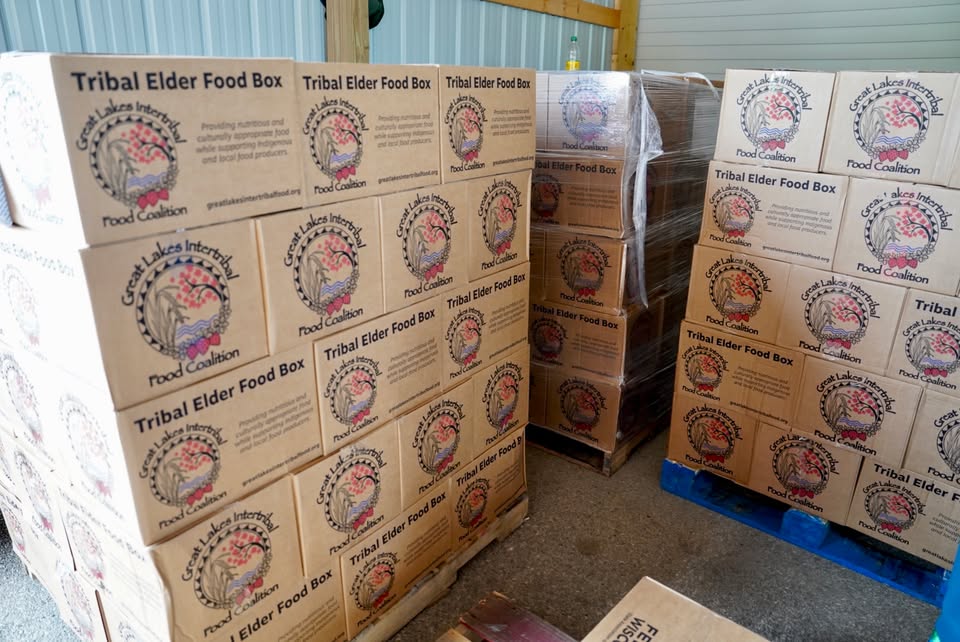
The cuts to the LFPA have a direct impact on tribes across the nations. For example, the cancellation of the Menominee Nation’s LFPA contract displaced $3 million in future funding for the Tribal Elder Food Box Program (TEFBP), which serves all 11 tribes in Wisconsin under the Great Lakes Intertribal Food Coalition. The program has supplied over 90,000 food boxes and created opportunities for 40 Indigenous growers, producers, and ranchers who planned to supply food. Feeding the Native elder population is a top priority for Native communities, and the monthly packages provide a consistent offering of traditional foods, including corn, bison, fish, wild rice, apples, maple syrup, and produce. Beyond food distribution, the program strengthens intertribal trade routes, demonstrating how tribes in the Great Lakes region collaborate to rebuild food systems.
 Funding cuts extend beyond direct tribal contracts. Wisconsin’s LFPA funding, which also supported local food producers, was among those eliminated, further interfering with regional food systems and raising concerns about how many other tribes across the country face similar challenges as tribal and state-level resources are reduced.
In early February, recognizing the importance of strengthening tribal food systems, Wisconsin Gov. Tony Evers allocated $1.5 million for the 2025 TEFBP food distribution season through the Wisconsin Department of Agriculture, Trade, and Consumer Protection (DATCP). Wisconsin’s investment highlights the growing recognition of tribal food networks in addressing food insecurity.
TEFBP had originally secured funding for both the 2025 and 2026 seasons under its LFPA contract. With federal support now withdrawn, the DATCP funds can ensure the 2025 program continues as planned. However, the program is now in a race against time to replace the lost 2026 funding. Like many other impacted programs, TEFBP must seek alternative funding for previously secured resources, doubling the burden on tribes working to maintain critical food access initiatives.
It is worth noting that not all tribes have access to similar state-level support, exposing disparities in how tribal food programs are able to respond to LFPA funding cuts as sovereign tribal nations.
Covering the Funding Gap
Food sovereignty was identified as a major priority for Monacan citizens in their Priority Climate Action Plan. In 2019, the Monacan Indian Nation established a food bank in Virginia and built a successful food distribution program. With LFPA funding, they launched the Walut Pí:se (Food is Good) Project to support local farmers, provide healthy foods to tribal citizens and underserved communities, and foster economic growth. The program partnered with 19 food distributors, distributed 1,300 meals monthly, and hosted producer gatherings.
With the cancellation of their LFPA contract, the Monacan Indian Nation was left with a $19,000 bill that will not be reimbursed. They have used discretionary funds to cover the costs and continue paying their purchaser, a Monacan elder, to source products from Native and local producers. However, they are uncertain about how to sustain the program at its current level. Replenishing the lost funds pushes the short-term funding gap closer to $30,000, according to Sally Latimer, director of the Monacan Indian Nation Food Bank.
Having to bridge this funding gap with other sources creates a ripple effect, where one shortfall leads to another. The tribe previously relied on a multi-year LFPA contract that covered 60% of food purchases, allowing staff to focus on managing their food program rather than constantly seeking emergency funding. Now, with the abrupt loss of federal support, they must divert resources toward fundraising to sustain the progress they have made. It remains unclear how many other tribes are in this exact funding predicament, left covering costs without reimbursement.
Funding Loss and Strain Across the Department
The USDA recently suspended $500 million from The Emergency Food Assistance Program (TEFAP), which is designed to provide food to low-income Americans through food banks, pantries, and meal programs. These funds are administered at the state level, meaning tribes cannot receive TEFAP funds directly from the USDA, limiting their self-determination. The challenges affect tribal governments that wish to operate food assistance programs independently and Native communities that rely on food distribution.
Tribal governments are significantly affected by the recent USDA $660 million budget cuts to the Local Food for Schools (LFS) program, which provided tribes and states with the ability to procure locally sourced, unprocessed, or minimally processed foods for schools and childcare institutions. The impacts range from the quality of meals provided to Native students to economic implications for Native farmers who supply food to educational institutions. This hinders food sovereignty and reduces the ability of schools to integrate traditional and locally produced foods into their meal programs.
Last year, the USDA decided to consolidate the Food Distribution Program on Indian Reservations (FDPIR) logistics under a single provider, Paris Brothers, which caused significant interruptions in food deliveries to tribal communities. Implemented without comprehensive tribal consultation, the change led to delayed and incomplete shipments, severely affecting food access for many Native American households. Tribal leaders voiced concerns over the lack of consultation, highlighting the unforeseen challenges of this decision. The USDA acknowledged these issues and eventually allocated emergency funds to prevent future program interruptions and food shortages, underscoring the need to involve tribal governments in decision-making.
Government Accountability for Legal Obligations
The U.S. government’s legal responsibility to support Native food systems is grounded in treaties, federal law, and the trust responsibility. For example, the 1855 Treaty of Point No Point, upheld in United States v. Washington (1974), guarantees the S’Klallam, Skokomish, and Chimakum Tribes the right to fish. The Indian Self-Determination and Education Assistance Act (1975) empowers tribes like Spirit Lake Nation, Cheyenne River Sioux Tribe, and others to manage FDPIR food distribution, ensuring that culturally appropriate foods reach their communities.
Further, the federal trust responsibility reaffirmed in Cherokee Nation v. Georgia (1831) obligates the United States to protect tribal lands, resources, and food security. Programs like FDPIR and the 2018 Farm Bill’s Tribal Food Sovereignty provisions help fulfill this duty by enabling tribes to purchase and distribute traditional foods.
Honoring treaties, laws, and trust obligations means recognizing these agreements and actively supporting the tangible efforts and self-determination of tribes in strengthening Native food systems today.
Renewing Commitments in the Face of Disruption
The recent budget cuts by the USDA are disrupting tribal food systems, halting distribution programs, stalling efforts to expand Native food production, and undermining key partnerships. Native communities are working to feed their elders, children, and neighbors, yet they continue to face systemic neglect and policy failures. As tribal nations transform outdated, stigmatized food bank models into culturally relevant spaces, the very resources meant to support these initiatives are being taken away. Rather than investing in tribal food sovereignty, policymakers are withdrawing funding at a time when food insecurity is rising, and the cost of living continues to increase.
Since our founding, First Nations has supported Tribal Food Sovereignty, recognizing that food is central to culture, health, and economic stability. Each year, Native communities renew their commitments to their foods and acknowledge their responsibilities to food, land, and community. Since the COVID-19 pandemic, First Nations’ Native Agriculture and Food Systems Investments program has provided 73 tribes and Native-led organizations $1,344,732 in grant funding to strengthen food security and distribution. Sustaining these efforts requires more than a handful of grants—it demands long-term commitments from policymakers and funders to uphold long-term fiscal responsibility.
To join First Nations in strengthening Native food security and Native communities, there are many ways to show support:
Written By:
A-dae Romero-Briones, Vice President, Policy & Research, California Tribal Fund, Native Agriculture and Food Systems Investments
Richard Elm-Hill, Associate Director, Native Agriculture and Food Systems Investments
Ethan Gallegos, Senior Program Officer, Native Agriculture and Food Systems Investments