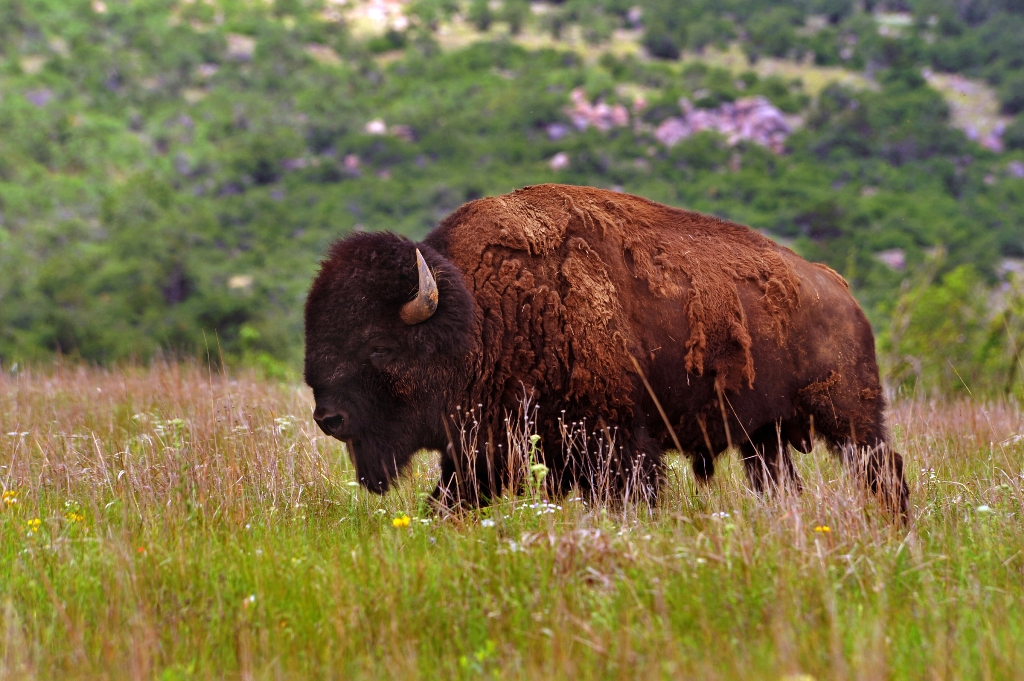
The American buffalo, an eco-cultural species, is critical to sustaining Native cultures and lifeways and the healthy function of grassland ecosystems. The importance of the American buffalo cannot be overstated as it is central to tribal identity, culture, ceremony, livelihoods, and food systems.
Because the health of Tribes and American Buffalo are strongly connected, direct support for tribally led initiatives is needed to ensure traditional knowledge and practices are restored alongside this culturally revered species.
Building on First Nations’ efforts to improve the health of grasslands, First Nations is supporting tribal efforts to restore buffalo in Montana and Wyoming – two states with limited grantmaking support from in-state foundations.
Made possible with support from the Freeman Foundation, this project provides financial, technical, and networking support to Tribes in Montana and Wyoming, as well as professional development opportunities to other tribal and community representatives leading buffalo restoration efforts.
To date, the partners listed below are receiving support to develop conservation plans to restore buffalo and/or build staff capacity to grow buffalo work through ecotourism, community engagement, youth programming, and partnership development to improve herd health and landscape connectivity:
Additionally, partners are receiving tailored technical assistance (TA) on a wide range of diverse needs such as strategic planning for buffalo restoration, connectivity mapping, collaboration, marketing, and grant writing.
This technical assistance will increase tribal capacity to access larger funding opportunities.
Learn more about programs and initiatives through First Nations’ Stewarding Native Lands program.
Community Partner Spotlight
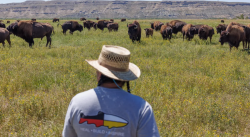
How a Dream to Bring Back Wild Buffalo is Slowly Decolonizing Tribal Land
With support from the Wind River Tribal Buffalo Initiative, the InterTribal Buffalo Council, made up of dozens of Tribes on the Great Plains, is purchasing private land, reenrolling it as tribal land, and designating it as wildlife habitat for buffalo. Here, IBC Vice President and Eastern Shoshone member Jason Baldes describes how the IBC has so far added 25,000 wild buffalo to more than 65 herds on Tribal lands, including 163 on the Wind River Indian Reservation. Read more.
Wind River Tribal Buffalo Initiative is a First Nations community partner through our Indigenous Partnership to Advance Native American Communities and Producers project and our new American Buffalo Restoration on Tribal Lands in Montana and Wyoming project, launched this week with support from the Freeman Foundation.
Photo credit Sofia Jaramillo for HuffPost