Impact Story
As they have for millennia, tribes and Native communities have long pursued federal funding opportunities to continue stewarding and managing their lands and natural resources. Yet, efforts are continually hindered due to chronic underinvestment, eligibility requirements such as federal cost-share, and inadequate outreach by federal programs to engage tribes and Native communities on federal programs and opportunities.
In recognition of these challenges, First Nations often partners with the U.S. Department of Agriculture to increase investment in and with tribal communities. In the past few years, First Nations has been working with the U.S. Forest Service (USFS) to serve as a Community Navigator. Through this partnership, First Nations provides tailored technical assistance and capacity support grants to tribes and Native-led organizations.
In 2025, First Nations invested $1.750 million through 35 grants to grow tribal capacity to engage in Forest Service opportunities. Of the grants awarded, the Penobscot Nation and Stillaguamish Tribe of Indians received funding to support ongoing timber management and forest-thinning efforts, respectively.
From east to west, these tribes are advancing forest management in alignment with their tribal values.
Penobscot Nation
The Penobscot people have inhabited the Penobscot River watershed in what is now Maine for thousands of years. The watershed is what connects the Penobscot Nation to their Wabanaki relatives – the Passamaquoddy Tribe, the Mi’kmaq Nation, and the Houlton Band of Maliseet Indians.
“The river is probably one of the most special things about our homelands. Our people were named after this river,” expressed Chuck Loring, Penobscot Nation’s director of Department of Natural Resources (DNR). This connection echoes that of many tribal communities across the Nation, whose creation stories, lifeways, and cultural practices are inherently connected to the lands and waters.

A young bull moose peeks through fall foliage after a recently completed timber harvest in Penobscot territory.
The Penobscot Nation’s Forestry Program manages over 128,000 acres of reservation, trust, and fee lands within the state of Maine. Its mission is to sustainably manage the forest resources of the Penobscot Nation for multiple uses, including hunting, fishing, gathering, and recreation. The Community Navigator grant has allowed the tribe to expand capacity by hiring a tribal member as a forestry technician, a priority for the DNR as it works to maintain autonomy and empower the next generation of leaders.
Because the nation manages a multi-jurisdictional landscape and must meet the growing needs of the Forestry Program, the new technician is engaged in a range of critical tasks, including pre-sale timber cruising, supervision of a Youth Conservation Corps, and more.
The Penobscot Nation is committed to connecting young tribal members to the land and preparing them to fulfill Penobscot’s natural resources priorities. With added capacity support, the Forestry Program has expanded opportunities for tribal youth to participate in seasonal stewardship activities, from forest monitoring and cultural plant education, to strengthening their connection to their ancestral homelands. Loring emphasized, “Having youth presence out there is important. That’s the future of this department and the tribal administration.”
The Penobscot Nation DNR hopes to continue training in natural resources and expanding opportunities to fill the department’s positions with as many tribal members as possible. Additional plans include building trails and providing access for tribal members to reconnect with medicinal plants.
The DNR is collaborating with the Cultural Resources Department to design and develop interpretative signs for the medicinal plants and other culturally relevant plant species as a learning opportunity for tribal members.

A 4-year-old timber harvest from the Carrabassett Valley fee lands stewarded by the Penobscot Nation.
Stillaguamish Tribe of Indians
The Stillaguamish Tribe of Indians have inhabited and stewarded the lands and waters of the Stillaguamish River watershed and surrounding areas since time immemorial. Located within the 1855 Point Elliott Treaty area, the South Fork of the Stillaguamish watershed consists largely of federal forest lands, with pockets of state and private lands.
For the tribe, the health of these forests is deeply connected to its reserved treaty rights. “The forest health relates directly to treaty rights and the ability for tribal members to hunt and gather and have access to important cultural resources for both subsistence and ceremonial purposes,” explained Jennifer Sevigny, wildlife program manager for the Stillaguamish Tribe’s Natural Resources Department.

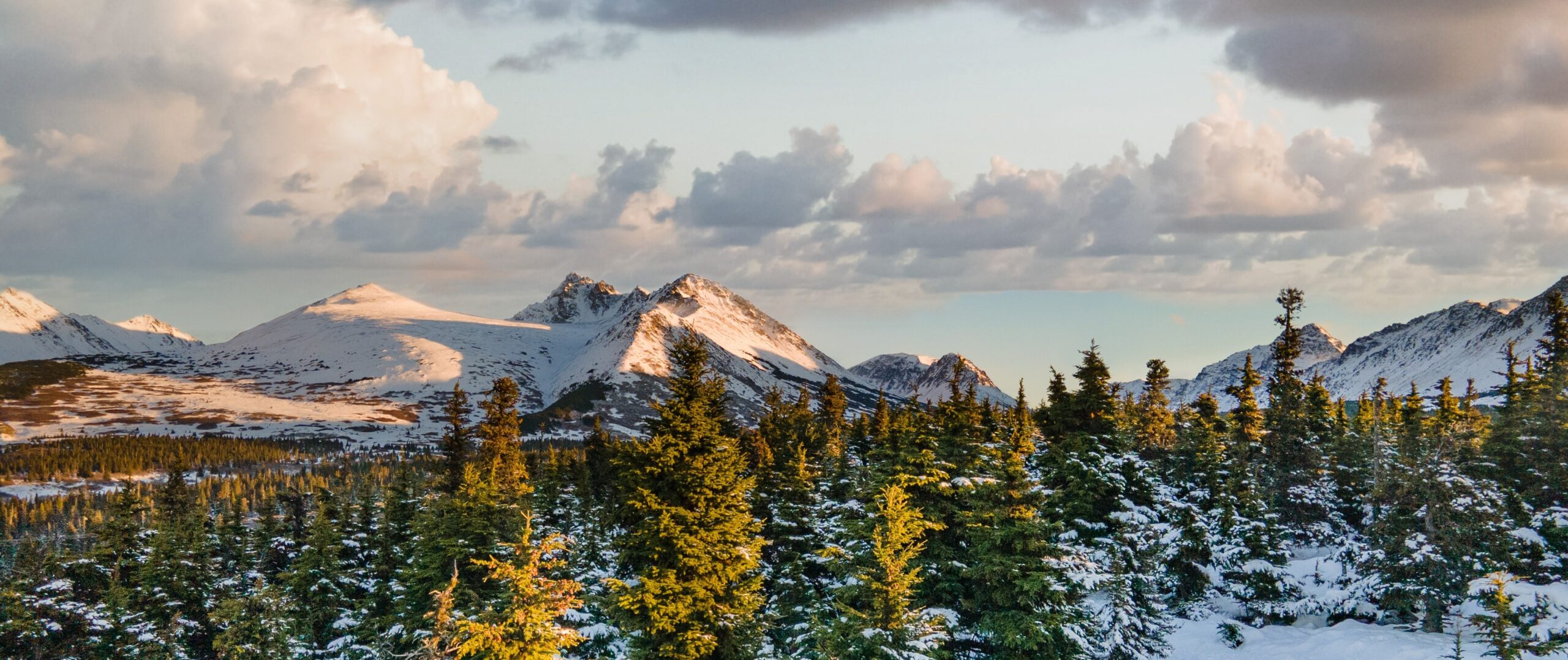
Big Four Mountain along the upper South Fork Stillaguamish River.
The tribe’s Wildlife Program manages healthy and sustainable wildlife populations throughout the tribe’s ceded area to protect treaty resources for future generations.
One of these efforts includes elk herd management. According to Sevigny, Wildlife Program staff have been collaring elk and mapping home range and movement corridors for over a decade. Because they noticed a lack of elk presence in the South Fork Stillaguamish watershed, they turned from mapping movement to mapping connectivity between corridors. What they thought should have been ideal habitat in the South Fork watershed turned out to be unsuitable.
“There was no understory, no food, and no light getting into these old forest stands that are supposedly 80 years old,” Sevigny stated.
“Forest stands 80 years and older are considered old growth because of their age, even though they lack the characteristics and function of an old growth forest,” said Amanda Summer, wildlife biologist for the tribe.
A thinning treatment in the works
This discovery ultimately led to the design of the new thinning treatment that will be implemented in the South Fork Stillaguamish watershed. Designed and implemented through a partnership with interagency and nonprofit partners, the new thinning treatment will result in increased forest complexity to enhance wildlife habitat.
The Community Navigator grant has allowed for continued capacity for two tribal wildlife biologists to maintain and expand upon these ongoing forest thinning efforts. The grant came at a time when the tribe was already in conversation with their partners to create improved forest conditions to benefit wildlife, fisheries, and insects. “It’s a collection of people who are coming together with different interests really, but we all share a common goal, which is to revive our forests, bring back forests that are healthy with good, vertical complexity and structure, and ultimately benefit everybody,” stated Sevigny.

Pre-thinning treatment.

Post-thinning treatment.
The tribe’s program manager further explained that the new thinning treatment is different from conventional forestry approaches because the USFS is allowing the tribe to apply new thinning approaches in large tracts of forested lands by creating a sub-canopy vegetation layer to allow more sunlight and snow to reach these areas.
“The USFS allowed us to actually choose a thinning approach that was going to allow for bigger gaps in the landscape. That’s what is different from what the USFS has done in the past and probably what they will be doing in the future,” Sevigny said.
In 2018, prior to the start of thinning treatments in the South Fork Stillaguamish watershed, the tribe partnered with interagency and nonprofit partners to create a protocol that would allow the tribe to complete pre-treatment surveys of songbirds during their nesting period. According to Sevigny and Partners in Flight, birds are good indicators in measuring treatment effectiveness and overall ecosystem health, and they are easy to monitor.
In 2022, thinning commercial stands within the South Fork Stillaguamish watershed began. Because the USFS has access and capacity to harvest and treat only “commercial” stands within the South Fork Stillaguamish watershed, the project has thus far only focused on “commercial” stands. However, by next year, the tribe is hoping to begin treatment of “non-commercial” stands.
It is imperative for tribal voices to be heard and traditional knowledge to be incorporated into federal land management decision-making processes. Both the Penobscot Nation and Stillaguamish Tribe have stressed the importance of building and strengthening relationships with their federal partners and conservation groups when working toward common goals of safeguarding and stewarding traditional lands.
Specifically, for the Stillaguamish Tribe of Indians, its hope is to maintain and strengthen relationships with local and national USFS partners so that the tribe can have more of an active role in forest management planning.
These two tribes – from east to west – illustrate how capacity-building support grants, such as First Nations’ Community Navigator grant, are crucial for maintaining tribal relationships with federal entities and partners to accomplish collaborative conservation efforts, such as habitat restoration, biodiversity, community and cultural well-being, and overall ecosystem health. Continued investment in tribal stewardship is imperative to uphold traditional knowledge and honor Tribal Sovereignty.