News
Thought Leadership

Charitable giving in any way is valuable. Whether it’s your time, talent, or treasure, giving to others is an opportunity to be part of something greater than oneself. It also provides immediate and important support to the people and causes you care most about.
Supporters of First Nations are essential to our mission and our ability to best serve Native communities. Our individual donors are part of our First Nations family, and we honor their financial commitments to our organization with transparency, respect, and responsibility.
Many First Nations’ donors choose to give through their Donor-Advised Funds, or DAFs.
A Donor-advised fund is a charitable giving account that people set up through a community foundation or financial service company. Once the account is established, donors are empowered to give through their DAF to qualified charities of their choice.
The following are many reasons people choose Donor-Advised Funds for their charitable giving.

They want to save money on their taxes. Giving through a DAF provides tax benefits, including tax-free growth on donations. It also provides flexibility to make decisions about their charitable giving before the December 31st deadline every year.
They want to give to more than one charity. Through a Donor-Advised Fund, people can support multiple charitable organizations through one donation, simplifying record-keeping and tax reporting. It also creates an opportunity to focus on overall interest areas, such as environmental work or strengthening Native communities. Donors can also consolidate many years’ worth of donations into a single tax year and allow for charities to receive the donations over time.
They want to give something besides cash. Through a Donor-Advised Fund, people can donate stocks and other securities, including private corporate stocks, publicly traded stocks, mutual fund shares, bonds, bitcoin and other cryptocurrencies, and interests from life insurance, hedge funds, or oil and gas royalties. Giving long-term appreciated securities can also minimize capital gains taxes.
They are beginning to think about retirement, and they want to include charitable giving in their long-term financial plans. Establishing a Donor-Advised Fund lets people create a personal charitable legacy in line with their other retirement goals.
One of my favorite things about my career as the Director of Individual Giving for First Nations is talking to people about their backgrounds and interests and the affinity they have for our mission. Folks want to be involved, and they appreciate First Nations’ approach to investing in Native communities. We do not swoop in with top-down solutions. We listen to their stories and needs and invest in the solutions that they know will work for their own communities – traditional knowledge and local, Native-led initiatives. I love bringing together people who want to make a difference with the programs and projects First Nations leads, in ways that support the work, but also engage and inspire donors.
As part of my position, I help people navigate the landscape of Donor-Advised Funds and provide information typically needed by community foundations or financial service companies.
For donors who already have a Donor-Advised Fund, First Nations offers a free tool through our partner, FreeWill. This tool integrates with existing DAF custodians, making it easier and streamlined to recommend where donors would like grants allocated, communicate wishes to First Nations, and make grant recommendations.
Whether you are just learning about Donor-Advised Funds or you want to further optimize your current charitable giving methods, please know I’m here to help. My aim is to make sure donors are informed, assured, and excited about the many successes they’re helping to accomplish – all in ways that make the most sense for their situation.
Thank you always,
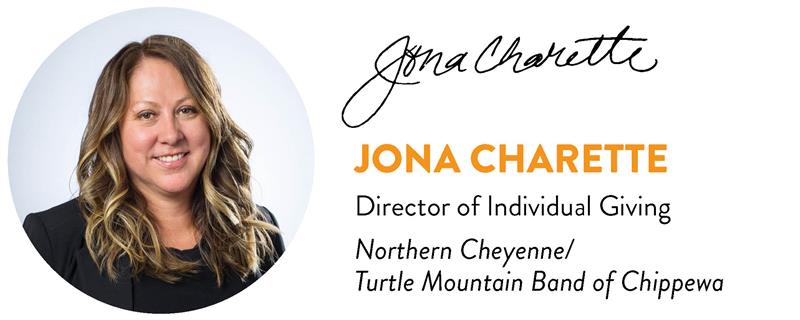
Contact me at jcharette@firstnations.org.