Impact Story
Held in partnership with Tahoma Peak Solutions, First Nations’ 2024 Food Sovereignty Summit hosted in Suquamish, Washington, centered Native approaches to sustaining Native food systems, caring for land, and strengthening Tribal Sovereignty and partnerships between Native nations.
A Tradition Continues
First Nations’ biannual Food Sovereignty Summit began in 2013 through a partnership with the Oneida Nation. The summit was envisioned to convene a national forum for sharing, learning, and collaborating to build healthy food systems throughout Native communities, discuss and respond to the external threats on Tribal Sovereignty, and create systems change that strengthens Tribal food sovereignty. Since then, the Food Sovereignty Summit has brought together hundreds of attendees.
The last time the event took place was in 2019 at the Oneida Nation of Wisconsin. In subsequent years, the pandemic and its resulting impacts placed this important summit on a brief hold.
This fall, the Food Sovereignty Summit resumed, welcoming over 200 Tribal leaders, food practitioners, and colleagues to the Coast Salish homelands and to the lands of the Suquamish Tribe. The theme of the summit was “Swimming Upstream: Native Foodways in a Modern World” acknowledging a return to our homes, Native food systems and lifeways, and our collective journey to restore our food systems.
The summit began with greetings from the Suquamish Tribe, writing in the summit agenda:
“On behalf of the Suquamish people, it is our pleasure to welcome you to our homelands. The Suquamish people, known as the ‘People of the Clear Salt Water,’ have lived along these shores for millennia, and our connection to this land and sea continues to define who we are. As you walk these lands, you are standing on the ancestral territory of Chief Seattle and the Suquamish people, where our traditions, culture, and ways of life continue to thrive. It is a great honor to have you here as we gather to strengthen our food systems, share knowledge, and work together to ensure that our future generations inherit a healthy, vibrant, and sustainable way of life.”
Local Learnings
Hosting the food summit in the Pacific Northwest created a geographic and timely opportunity to celebrate the 50th anniversary of the Boldt Decision, a critical ruling of Judge George Boldt on February 12, 1974, in the U.S. v. Washington case that reaffirmed the 1850s tribal treaty rights to fish on traditional lands.
The ruling secured tribal rights to fish where their communities are accustomed to, whether on or off reservation lands, and recognized tribes as co-managers of the fisheries in Washington, entitling them to half the state’s catch. This ruling and subsequent decisions have leveraged the tribe’s treaty-protected rights to traditional foods and to a healthy environment to maintain their cultural food source.
The conference reception on Tuesday featured a viewing of “Fish War,” a documentary on the 1974 ruling. And during a Wednesday luncheon session, attendees revisited the pressures that led to the landmark decision, the significant impact it had on tribal management of fisheries and resources in the state, and the current issues facing tribal fisheries.
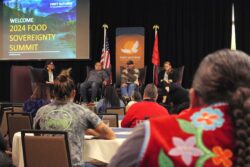
The Luncheon on the Boldt decision featured moderator Valerie Segrest and panelists Louie Ungaro, Jay Julius, and Theresa Sheldon (pictured left to right).
Attendees also had the opportunity to engage in Suquamish traditions during Culture Night at Kiana Lodge, hosted by the Suquamish Canoe Family. Attendees and Suquamish community members were invited to enjoy traditional songs, dances, food, and films.
Screenings included “Bring Them Home/Aiskótáhkapiyaaya,” which chronicles a decades-long initiative by members of the Blackfoot Confederacy to bring the buffalo, known as iinnii, back to the Blackfeet Reservation and rewild them. Directors Ivan MacDonald and Ivy MacDonald were in attendance to present the film along with Executive Producer Melissa Grumhaus.
Another film featured was “Covenant of the Salmon People,” an award-winning documentary portrait of the Nimiipuu, currently in north-central Idaho, who continue to adhere to their sacred relationship and obligations to the Chinook Salmon. A final film included “Usugilix Awakun: We Are Working Together, a film that focuses on the Qawalangin Tribe of Unalaska and the many ways the Qawalangin Tribe of Unalaska is preserving ancestral traditions and the culture and health of its community.
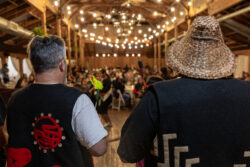
Culture Night at Kiana Lodge provided a warm welcome to Suquamish traditions.