Impact Story
Language is a vital asset for Native people and communities. It defines who we are and where we come from, capturing value systems that cannot be translated into English.
At First Nations’ Future Leaders Summit this summer, three community partners who are keeping Native languages alive through education and youth outreach came together to showcase their projects and share best practices and lessons learned. Here, these partners further amplify their experiences, uplifting Native language revitalization efforts and ensuring Native lifeways, traditional knowledge, stewardship practices, culture, and artistry are passed down.
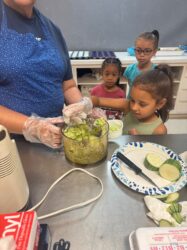
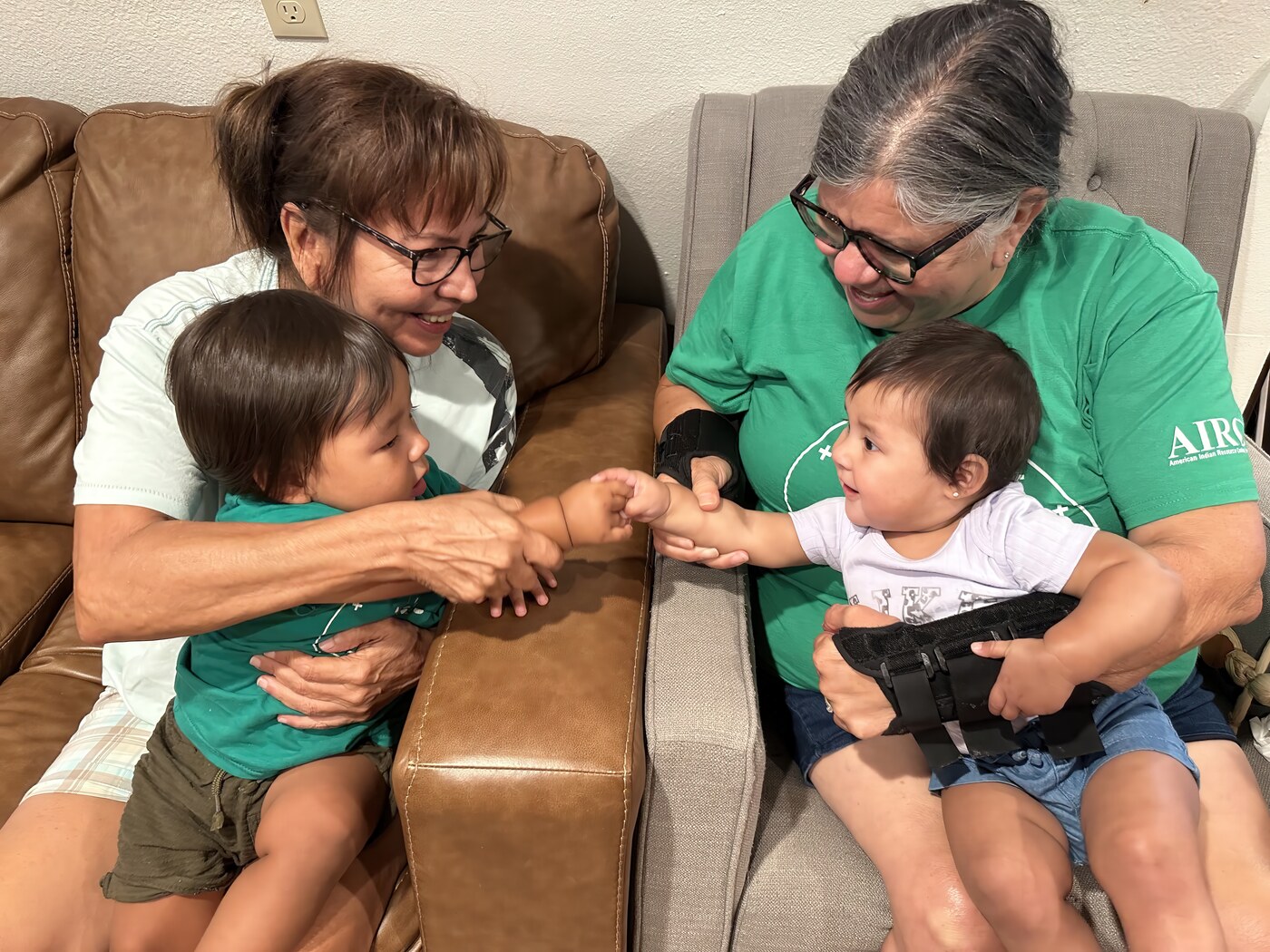
Elders and youth work together to make muffins from zucchini harvested during camp.
Celebrating ‘Language as Medicine’ for the Chickahominy Indian Tribe
Located in Providence Forge, Virginia, the Chickahominy Indian Tribe is a partner through First Nations’ Native Youth and Culture Fund. Thanks to growing programs like the tribe’s Summer Culture Camp, the Chickahominy language is being spoken aloud for the first time in over 200 years.
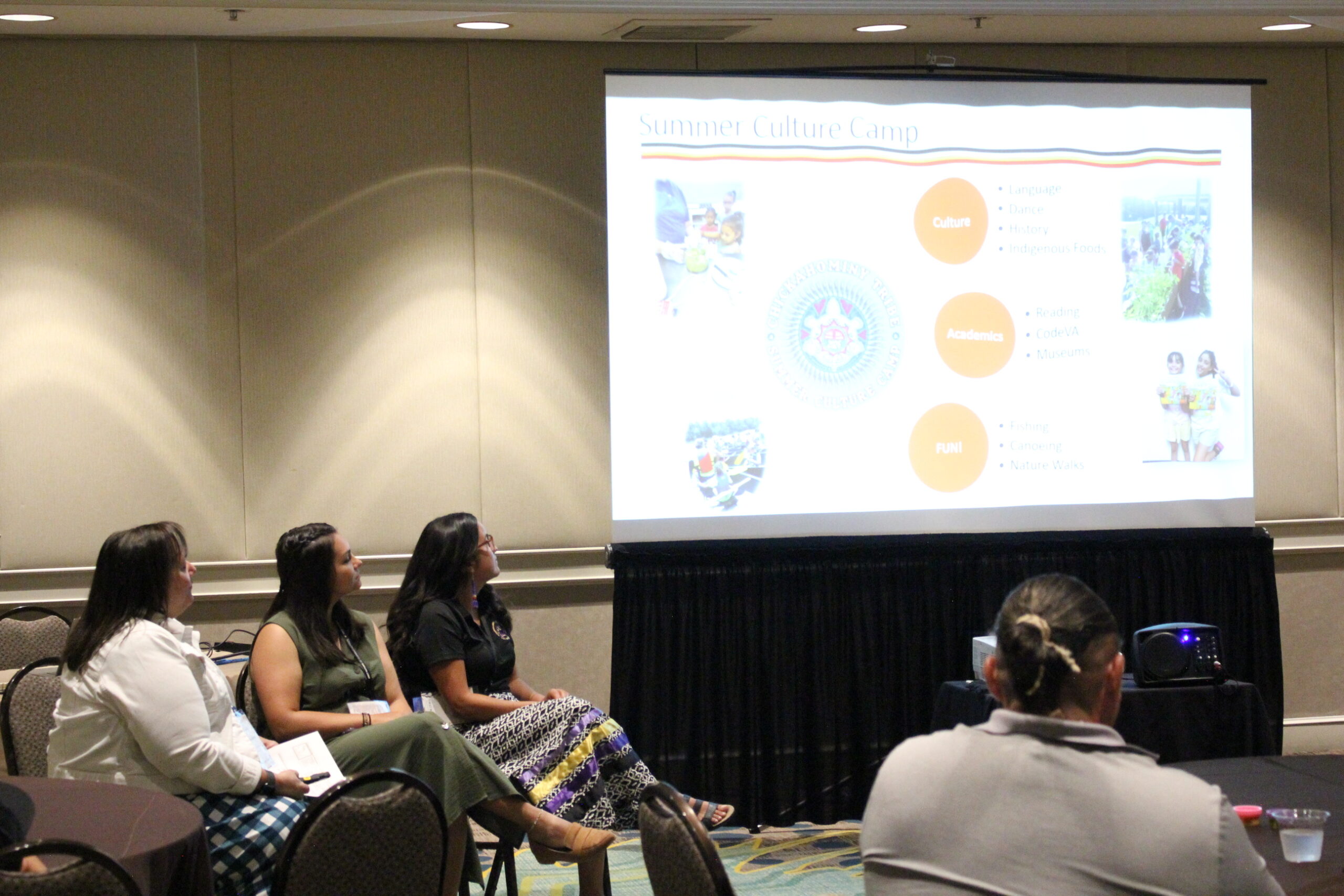
Program Management and Compliance Office (PMCO) Director Lenora Adkins describes how their camp combines academics and experiential learning to teach the Powhatan Algonquian language – and the lifeways and culture embedded in it – all through the adventure of camp. The tribe’s goal is to establish an after-school program that teaches children using modern media and technology. At the same time, just like the camp, elders and youth interact and share knowledge on Native art forms, stewardship practices, and the workings of tribal leadership.
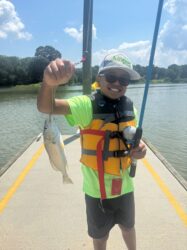
A camp participant learns about Native stewardship and resources through adventures like fishing at Machicomoco.
The Summer Culture Camp Director is Jessica Stewart, a former teacher, and she works hard to make sure the learning experience is fun. As a summer camp, there is plenty of fishing, canoeing, and nature walks, but through it all, Native language is reinforced through art, dance, and activities. Using an interactive resource called “Language Passports” (developed by Language Program Manager Kayla Locklear), campers focus daily on speaking Powhatan Algonquian, introducing themselves in the language and using key words and phrases. Every week, campers are given a new word, then tasked with writing the word, speaking it out loud, and teaching it to three people. Campers also access audio tools so they can hear the language being spoken by people of different ages.
Incorporating the intergenerational aspect of the summer camp, the Chickahominy Indian Tribe is evolving every year, further reclaiming a tribal language that was almost lost. “We are seeing our youth and elders coming together, and this camp is a unique opportunity to help each other,” says Adkins.
Learn more and support this project directly here.
Passing Down Native Culture at the Chámmakilawish Pechanga School
Created in 2003, the Chámmakilawish Pechanga School in Temecula, California, is a community partner through First Nations’ California Tribal Fund. Starting as a preschool program headed by a tribal member and linguist, the school now has 35 staff serving students from preschool to fifth grade through a dual-language immersion curriculum. With Chamtéela – the traditional language of the Pechanga Band of Indians – infused into every component, the school is committed to providing a strong foundation in education and tribal culture and passing on this knowledge to future generations.
Core to this strategy is intentional growth and development to make sure the school can serve the whole community. To this end, in addition to classes for students, they offer Chamtéela language classes to support staff, a Rosetta Stone application, “Mommy and Me” classes, and a language internship for tribal members. The tribe also has its own publishing company to ensure the language is recorded and shared. Through their tools, they are breaking barriers to proficiency. Program Manager Chelsea Gonzalez says that hearing the vocabulary has created greater retention for students, staff, and the community as a whole. With these digital resources, kids can “hear” words in the language, increasing their comfort and confidence in speaking.
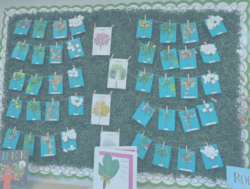
Language is infused throughout the Chámmakilawish Pechanga School, from signage, to bulletin boards, to textbooks and resources.
Gonzalez says they also work to bring people into the program at their level. “We meet people where they are. We build programming into the day, making it easier to access and promoting language across the community and school, not just the teachers,” she says. “We all have a responsibility in this.”
Gonzalez asserts that the focus on language has resulted in increased confidence in students. Informal observations across classrooms have shown that some students, who have traditionally struggled in academic subject areas, have a natural and innate ability to acquire the language quicker. “Language is going to be the way that they see a path forward and serve their communities,” she says.
Learn more and support this project directly here.
Preserving the Art of Zuni Storytelling
A longtime community partner of First Nations, Zuni Youth Enrichment Project works to promote resilience among Zuni youth, so they will grow into strong and healthy adults who are connected with Zuni traditions. The organization provides dedicated services to youth, fostering physical activity, arts, leadership, connection to land, and more. ZYEP has expanded through the years, starting with a summer camp, and evolving into the multi-faceted community organization that it is today.
Zuni, New Mexico, is one of the longest inhabited villages in the word. The Native language there is Shiwi’ma Benanne, which is a language isolate, meaning it is not connected with any other known language. Knowing this, the ZYEP team shares culture, traditions, and art with Zuni youth, all with a focus on passing down the Zuni language.
Tahlia Natachu-Eriacho, executive director for ZYEP and a former ZYEP summer camp counselor herself, says that, for Zuni, prayers and connection to land is an essential aspect of the language, so it is imperative to make sure that it is shared and taught in a safe, engaging learning environment.
“Our elders know language is sacred, so they don’t want to speak with errors,” she says. “At the same time, our kids want to learn it, but they’re afraid to make mistakes.”
Natachu-Eriacho says the ZYEP approach is to let people know it’s okay to not be perfect – the value is to continue to speak, out loud and with each other.
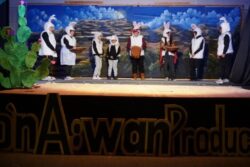
Delapna:we productions are “For Zuni, By Zuni,” from the stage, to the costumes, to the props.
With support from First Nations to uplift Zuni oral history through theater and creative arts, this approach led to a collaboration between ZYEP, A:shiwi A:wan Museum & Heritage Center, Edaakie Arts, ShiwiSun Productions, and other Zuni community members. The collaboration became Ho’n A:wan Productions, which translates to “Belonging to all of us.”
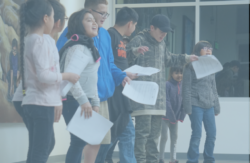
Scripts connect fluent role models who speak Zuni well and youth who are learning to read Zuni.
Ho’n A:wan Productions converted Zuni audio recordings from the 1960s into written scripts. Community members of all ages are now invited to join a theater program, in which their traditional oral stories are transformed into stage productions. Using the Zuni storytelling tradition of delapna:we, language, culture, and values are taught while participants gain a sense of belonging, confidence, and pride.
The live performances intertwine modern and old stories, and create opportunities to speak the language and to film and rehearse at culturally significant sites. Community members and elders hear Zuni spoken by young people, participants become more confident in speaking Shiwi’ma Benanne, and families become more engaged.
So far, ZYEP has created eight productions, and evaluation of the program is overwhelmingly positive: 90% of youth who’ve engaged in the productions say they believe speaking the Zuni language is important, and 100% of respondents say traditional Zuni stories are important to them.
Learn more and support this project directly here.
Investing in the Future
Indeed, all three community partners are experiencing increased confidence in youth and pride in elders as a result of their programs. There is hope, potential, and excitement for the future. All agree upon a need for support and long-term funding, and all underscore the urgency for Native tribes and organizations everywhere to uplift and revitalize Native languages.
Adkins of Chickahominy Indian Tribe advises organizations with plans to create a language and youth program to start where they are – even if it’s focusing on teaching simple greetings and phrases in their Native language. Natachu-Eriacho of ZYEP adds, “Make it simple and fun. Don’t get caught up in specifics. Language is fluid and approaches should be too.”
Natachu-Eriacho also recommends perseverance. “Recognize that these programs take time, and it can take eight years to see results,” she says. “But it’s worth it. It’s an investment in not only kids but teachers, elders, and the whole community.”