Impact Story
If one seed can give birth to a giant oak tree, imagine what a group of motivated Cherokee mothers can accomplish.
In 2018, Melissa Lewis became a new mother. She and her husband (both Cherokee) were determined that their son’s first spoken word would be in Cherokee. However, as second-language learners who spoke English in their home, the couple wasn’t sure how to make that happen.
“We reached out to fluent speakers and other mothers with a similar vision to explore how our children and the next generation could learn the language,” explains Lewis, whose professional background is in child and family development. “I knew that starting language and culture as early as possible, even prenatally, would give these kids a leg up.”
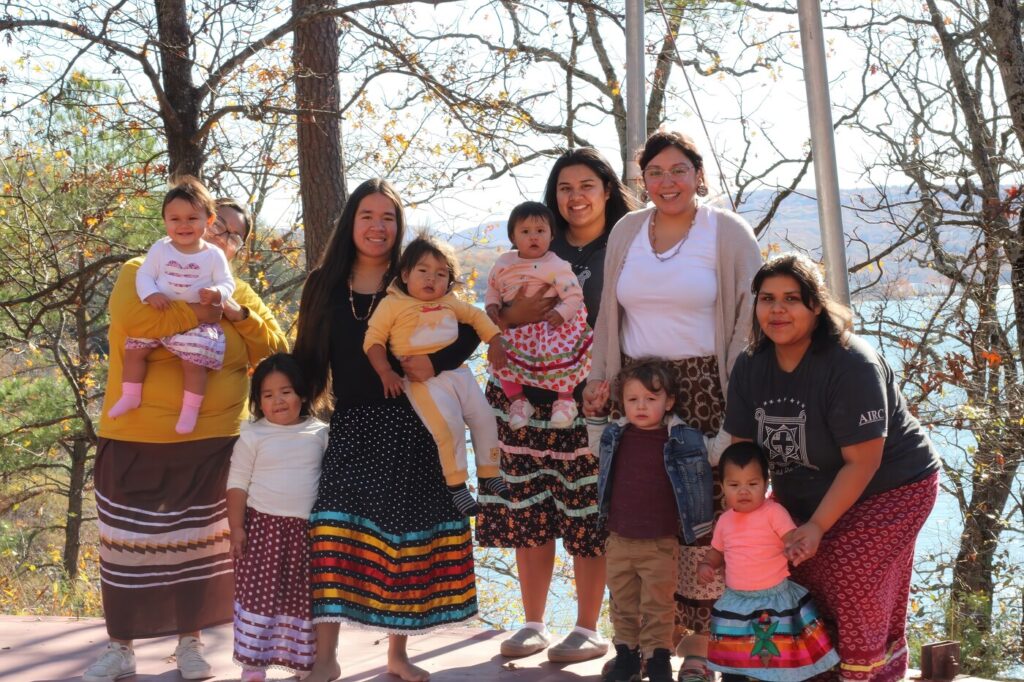
Launched in 2018 by a group of Cherokee mothers, Little Cherokee Seeds is growing the next generation of language-learners and speakers.
Through a partnership with the nonprofit American Indian Resource Center (AIRC), housed on the Cherokee Nation Reservation in Oklahoma, Lewis and a small group of like-minded Cherokee women launched Little Cherokee Seeds — a first-of-its-kind Cherokee language and culture immersion program for mothers and infants.
What started as a weekly Saturday morning class for moms and kids ages 0-3 has evolved into a year-round language immersion program that taps into Cherokee lifeways as the curriculum. “Our method is to immerse children in an environment that mimics how first-language speakers learned the Cherokee language — in a family atmosphere where kids observe and participate in daily, hands-on practices using only the Cherokee language,” says Lewis.
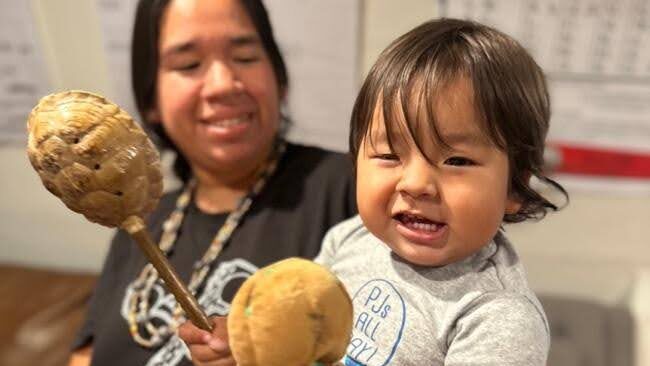
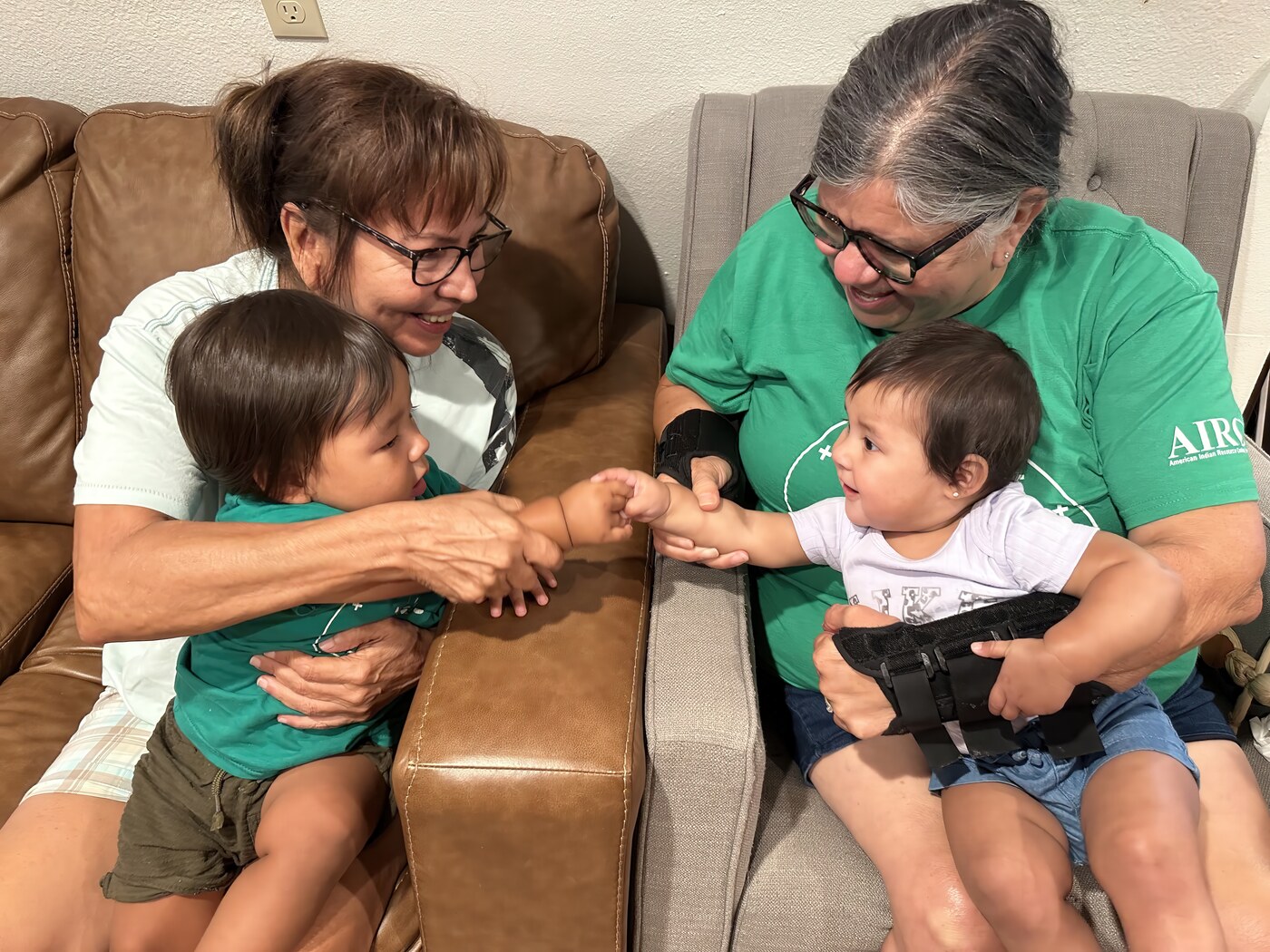
Children ages 0-3 participate in daily, hands-on cultural practices using only the Cherokee language.
First Nations has been proud to support the mission of Little Cherokee Seeds through our Native Language Immersion Initiative (NLII). Launched in 2017, NLII supports the strength and continuity of the nearly 150 Native languages spoken today. Native cultures and languages are deeply interconnected, carrying knowledge, identity, and community values across generations. As communities lead efforts to revitalize and expand language use, this work plays a vital role in sustaining vibrant, thriving Native nations.
Over the last seven years of the language initiative, First Nations has helped grow new generations of Native speakers and strengthened 39 Native language immersion programs — like Little Cherokee Seeds — throughout Indian Country, awarding 62 grants totaling over $5 million.
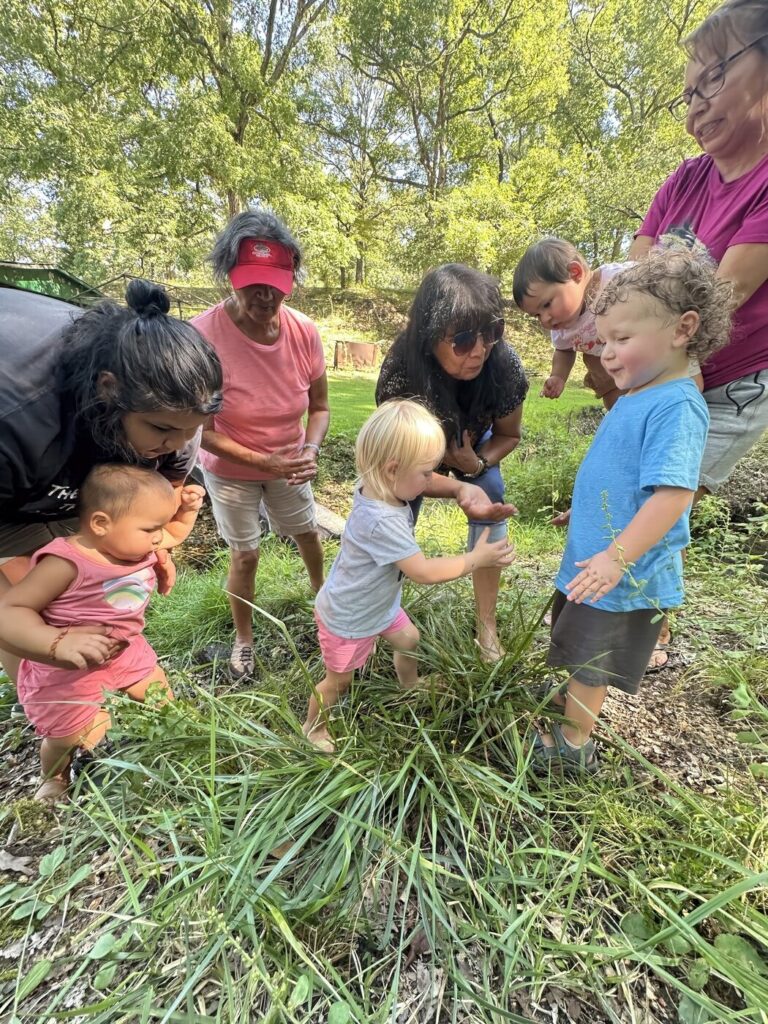
The staff has discovered that children are more engaged and responsive when they are involved in outdoor activities.
‘We’re not creating Cherokee speakers. We’re creating Cherokees.’
According to Lewis, Cherokee is a verb-based language and one of the most difficult languages to learn. “The verbs can be conjugated, on average, 20,000 different ways,” the Little Cherokee Seeds co-founder explains its complexity.
The teachers at Little Cherokee Seeds believe that language is best learned when students are actively doing something. So instead of learning the challenging language through rote memorization while sitting in a classroom, babies and young children are absorbing it through everyday activities, indoors and outdoors, with their mothers.
“We don’t have teaching materials, books, or coloring pages. No plastic toys, no screens. Instead, our curriculum is based around more than 100 traditional cultural and seasonal activities, such as cooking, basketmaking, gardening, walking in the woods, gathering seeds, and foraging for wild onion, the children’s favorite activity — all done in the Cherokee language,” says Phyllis Sixkiller, a co-founder and fluent speaker who has been teaching the Cherokee language in her community for more than 40 years. “To learn the language, children must be surrounded by it daily, no English. They must be immersed in it and become that language.”
And that includes the mothers, too. “Cherokee people are matrilineal and matriarchal. Mothers, aunts, and grandmothers are the backbone of our society,” says Lewis, “so we want moms to learn and use the language as much as they can. But also, be knowledgeable about Cherokee cultural practices. We think of them as ‘matriarchs in training.’ They will eventually be the women who help take care of their community and we want them to have all the Cherokee skills, values, and language that they can possibly have.”
Thanks to the generosity of AIRC, Little Cherokee Seeds runs its program on 260 acres of lakefront land leased to AIRC through the Army Corps of Engineers. “Our classroom is a cabin in the woods!” Sixkiller says with amazement. “We have discovered that children are more engaged and responsive when they are involved in outdoor activities. We have a traditional food garden, a tea garden, pollinator gardens, a medicine garden, and a textile garden. Not to mention, the kids see amazing wildlife, too. Yesterday, we saw deer and turtles!”
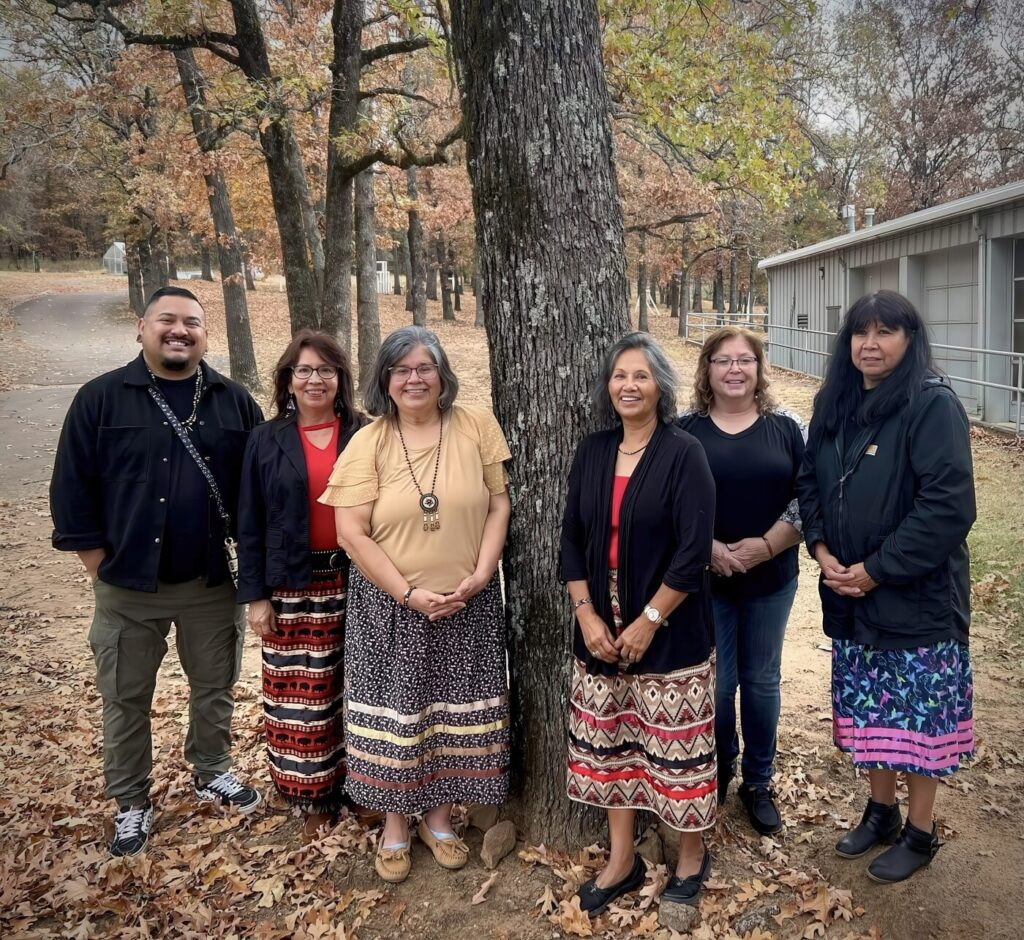
The Army Corps of Engineers leased lakefront land to American Indian Resource Center, a Little Cherokee Seeds partner, for the language-immersion program. “Our classroom is a cabin in the woods!” says one staffer.
Language-learning and language revitalization are also connected to a positive mental outlook, according to Lewis. She was part of a research team that discovered, on an international level, that speaking and learning Indigenous languages were related to improved physical and mental health, especially in the prevention of suicide and alcohol abuse.
“Our vision is to see thriving Cherokee communities; Cherokees who know and live their language, values, and culture, and therefore, will be healthy, balanced, and happy people,” Lewis spells out the overall goal.
To drive this message home, the Little Cherokee Seeds staff made t-shirts this year imprinted with this profound statement: “We are not creating Cherokee speakers. We are creating Cherokees.”
How the seeds of language are growing
When the Little Cherokee Seeds program started almost eight years ago, there were only two fluent speakers working with just a few babies. Today, the staff is comprised of five fluent speakers and one second-language learner who all work closely with seven babies and toddlers and their mothers.
In December 2025, Little Cherokee Seeds handed diplomas to two Cherokee children, the program’s first-ever graduates. The 3-year-olds and their mothers had been immersed in 3,000 hours of Cherokee language and culture throughout their three years in the program. They will further their studies in Little Cherokee Sprouts, the next step for young language learners, until they are 5 years old.
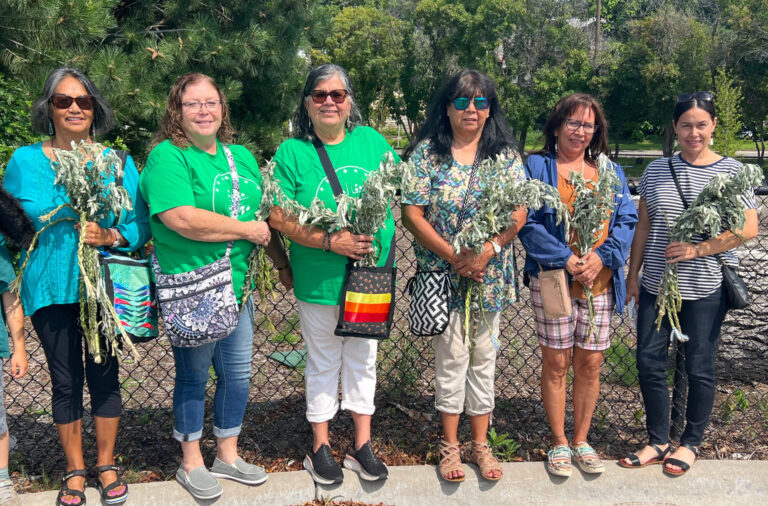
The Little Cherokee Seeds staff is comprised of five fluent speakers and one second-language learner. They all work closely with seven babies and toddlers and their mothers.
One of the most surprising and welcome outcomes of Little Cherokee Seeds is that older children, who are not officially part of the immersion program, are starting to speak the language at home, too. “We have learned that anything moms say to their babies at home, the older siblings — ages 10, 11, and 12 — are repeating the same words to the babies. Like the word for ‘mother’ in Cherokee,” shares Lewis.
Another remarkable benefit of the language immersion program is that participating Cherokee families are eating healthier, as well. Through foraging in the woods and learning how to cook traditional meals — activities that are part of the curriculum — the percentage of precolonial Cherokee foods that participating families are eating has increased from 19% to 28% in one year, according to Lewis.
“It has gone the best way I could possibly imagine,” she says.
Here is what other participating mothers are saying about their experience with the Little Cherokee Seeds program:
“We eat healthier now, and we talk and show our actions in a gentler way to our children.”
“Learning and speaking Cherokee has brought peace into my life.”
“I feel like I am Cherokee, other than just knowing it.”
“I have a new sense of identity instilled in me.”
Sixkiller, a lead teacher, says it best: “It is important to pass on this language to future generations because it is their path, it is who they are. To me, that’s how you survive as a Cherokee — knowing your language and knowing who you are.”
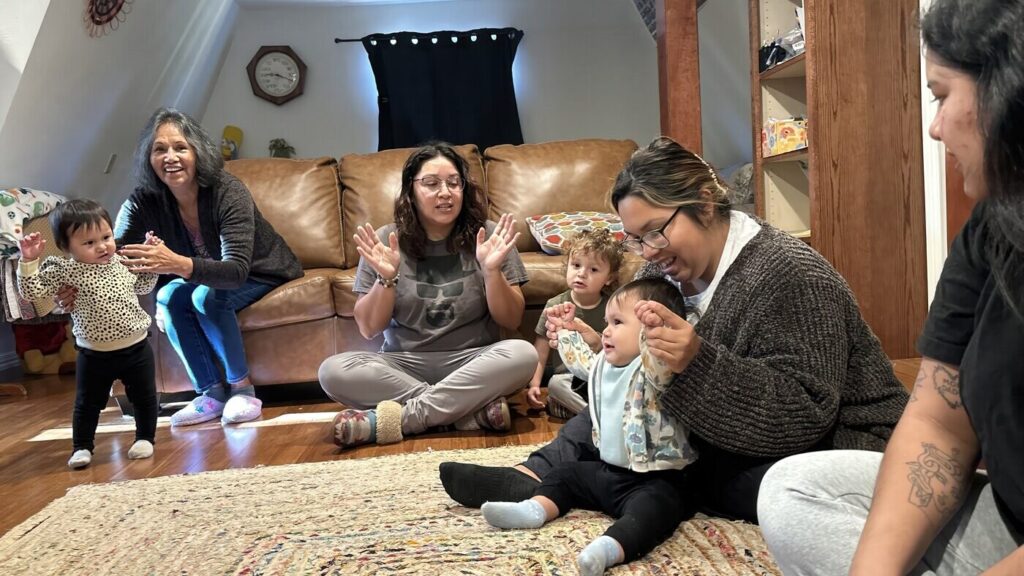
The language-learning curriculum is designed around more than 100 traditional cultural and seasonal activities, indoors and outdoors, such as cooking, basketmaking, gardening, walking in the woods, gathering seeds, and foraging — all done in the Cherokee language.
Much gratitude to our generous partners!
First Nations is grateful for the generous support of our Native Language Immersion Initiative from valued donors across the country. Originally established as a three-year program with a $2.1 million challenge grant from the National Endowment for the Humanities, which First Nations matched, this initiative to help preserve Native languages and culture has grown in size and scope to include contributions from Bezos Family Foundation, Lannan Foundation, Kalliopeia Foundation, NoVo Foundation, Sunderland Foundation, Wells Fargo, and Yocha Dehe Wintun Nation.
Last year, First Nations launched the “Language is Life” giving campaign in support of our Native Language Immersion Initiative, matching dollar for dollar up to the campaign goal of $500,000. Funds will help tribes and Native-led organizations support new generations of Native American language speakers and establish infrastructure and models for successful Native language immersion programs, like Little Cherokee Seeds.