Resource
Webinar

Co-Stewardship and Co-Management Webinar Series

2026

These webinars continue First Nations’ co-stewardship and co-management series with a focus on Tribal Co-Management Legislation, Intertribal Coalitions, and the Indigenous Stewardship of National Forests Case Study Report. This series is made possible with generous support from the Doris Duke Foundation.

Webinar 1: Tribal Co-Management Legislation

Presented by Sara Clark, the first installment explores how current developments in co-management legislation like the Tribal Self-Determination and Co-Management in Forestry Bill are impacting co-stewardship and co-management work in Indian Country. Clark is a partner at Shute, Mihaly & Weinberger, LLP, where she works extensively with Tribes and Tribal organizations to help implement beneficial fire projects on public lands and advance beneficial fire policy at the state and federal levels.

About the Speaker

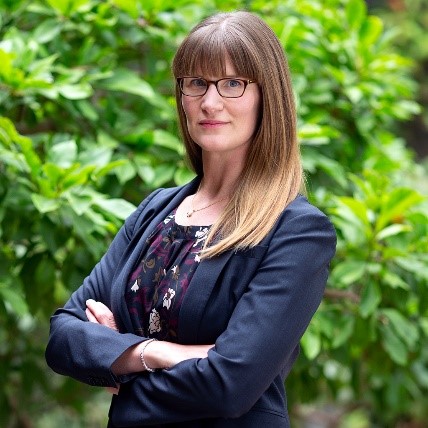
Sara A. Clark is a Partner at Shute, Mihaly and Weinberger LLP, a public interest law firm located in San Francisco. She regularly represents nonprofit organizations and tribes on issues related to conservation, cultural resource protection, land use, the California Environmental Quality Act, and fire. She helps her non-profit and tribal clients advocate for progressive environmental and cultural resource outcomes in administrative proceedings and in state and federal courts. She also works with land trusts to navigate complex conservation issues, and regularly assists Indian Tribes on issues of Tribal Sovereignty and jurisdiction.

Webinar 2: Intertribal Coalitions

This webinar explores how Tribes with shared interests in co-stewardship and co-management opportunities can work together as Intertribal Coalitions to collectively explore and enter into co-stewardship and co-management agreements. Hillary Hoffmann will explore how tribal consortiums can be structured to protect individual tribal interests and how to ensure inclusive participation and representation.

About the Speaker

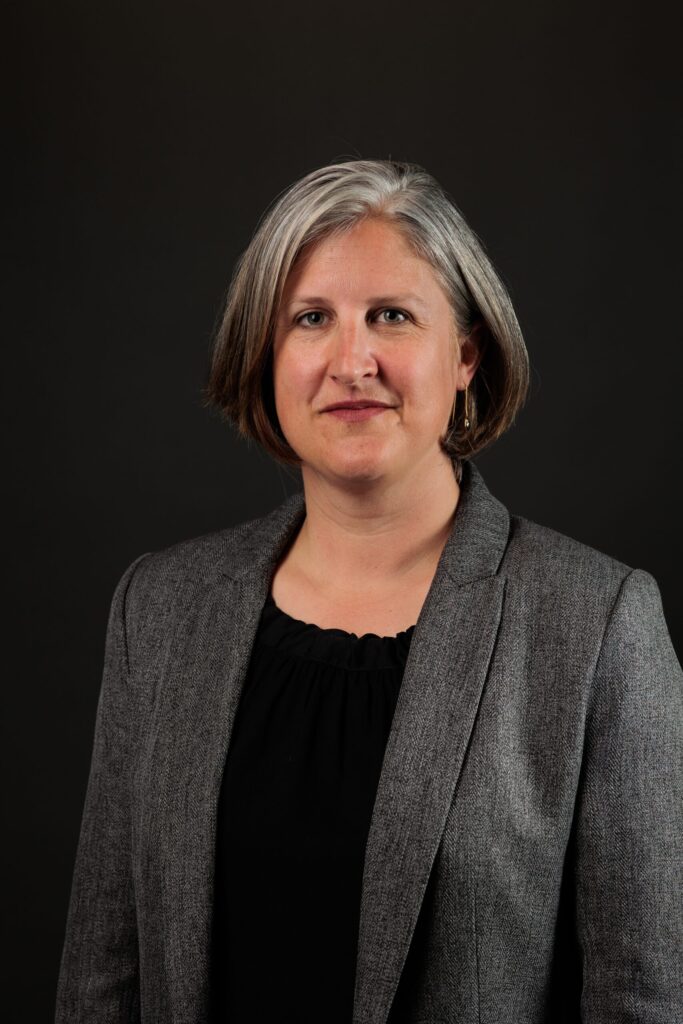
Hillary Hoffmann served as Co-Director of the Bears Ears Inter-Tribal Coalition from 2022-2025, where her primary areas of responsibility were collaborative land planning and implementation, and intergovernmental relations. She led the team that drafted, negotiated, and secured over 300 individual recommendations of the Bears Ears Commission to their federal agency collaborative planning partners at the BLM and U.S. Forest Service during the development of the first collaborative Resource Management Plan for a national monument in U.S. history. Hillary has recently returned to her academic roots teaching Federal Indian Law and Natural Resources Law, serving as a Visiting Professor at Vermont Law and Graduate School and an Adjunct Professor at Boston College Law School. Hillary has published two books, a book chapter, and numerous articles on topics related to collaborative management, Tribal natural resources stewardship, Tribal cultural resources, and Tribal environmental governance, including in the Yale Journal on Regulation. She is a member of the American Law Institute and received the Richard Brooks Faculty Scholarship Prize from Vermont Law and Graduate School in 2020. Hillary graduated from the University of Utah S.J. Quinney College of Law, where she served on the Utah Law Review and was named the 2001 Richard L. Dewsnup Fellow in Natural Resources Law.

Webinar 3: Indigenous Stewardship of National Forests Case Study Report

In 2024, First Nations hosted a four-part webinar series on Indigenous Stewardship of National Forests that highlighted case studies from eight Tribes and one tribal commission and culminated in a new report available in October 2025. In this webinar, contributors discuss learnings that informed the report.

About the Speakers

Martin Nie is Professor of Natural Resources Policy and Director of the Bolle Center for People and Forests at the W.A. Franke College of Forestry and Conservation at the University of Montana. He specializes in federal public lands, resources and wildlife policy. Much of his work focuses on the challenges and opportunities in managing shared resources that cross boundaries amongst federal, state and tribal sovereign governments. He is co-author (with Monte Mills) of several articles, reports and other writing focused on Tribal co-management, including “Bridges to a New Era: A Report on the Past, Present, and Potential Future of Tribal Co-Management on Federal Public Lands” (Public Land & Resources Law Review, 2021), “Bridges to a New Era, Part II: A Report on the Past, Present and Potential Future of Tribal Co-Management on Federal Public Lands in Alaska,” (Columbia Journal of Environmental Law, 2022), and “Planning a New Paradigm: Federal Public Lands Planning and Tribal Co-Stewardship” (Colorado Environmental Law, 2025), and others.

Monte Mills is a Professor of Law and Director of the Native American Law Center at the University of Washington School of Law. Monte’s research and writing focuses on the intersection of Federal Indian Law, Tribal Sovereignty, and natural resources as well as race and racism in law and legal education. He has published several law review articles and serves as a co-author on two textbooks: American Indian Law, Cases and Commentary and Native American Natural Resources Law. Monte also co-authored A Third Way: Decolonizing the Laws of Indigenous Cultural Protection, which was published by Cambridge University Press in July 2020. Prior to joining the UW faculty, Monte was a professor and Co-Director of the Margery Hunter Brown Indian Law Clinic at the Alexander Blewett III School of Law at the University of Montana. Prior to his time at the University of Montana, Monte was the Director of the Legal Department for the Southern Ute Indian Tribe in Colorado, an in-house counsel department that he helped organize and implement in 2005 following completion of a unique two-year in-house attorney training program. As Director of the Tribe’s Legal Department, Monte represented and counseled the Tribe on a broad array of issues, including litigation in tribal, state and federal courts, legislative matters before the Colorado General Assembly and the United States Congress, and internal tribal matters such as contracting, code-drafting, and gaming issues.

Tommy Cabe is a tribal member of the Bird Town Community and The Forest Resource Specialist for the Eastern Band of Cherokee Indians Natural Resource Department. He studied environmental and natural sciences at several higher education institutions before discovering his interest in forestry. While completing the forestry program at Haywood Community College in 2000, he was employed by the Eastern Band of Cherokee Indians Environmental Department as an Air Quality Technician before advancing to the evolving Water Quality Program as the Nonpoint Source Coordinator. There, he managed several projects on tribal lands to minimize pollution in the tribal watersheds. Tommy also served as the Tribal Environmental Planner, where he oversaw both the Air Quality Program and the Non-Point Source program.