Resource
Publication
To download this file, fill out the form below.
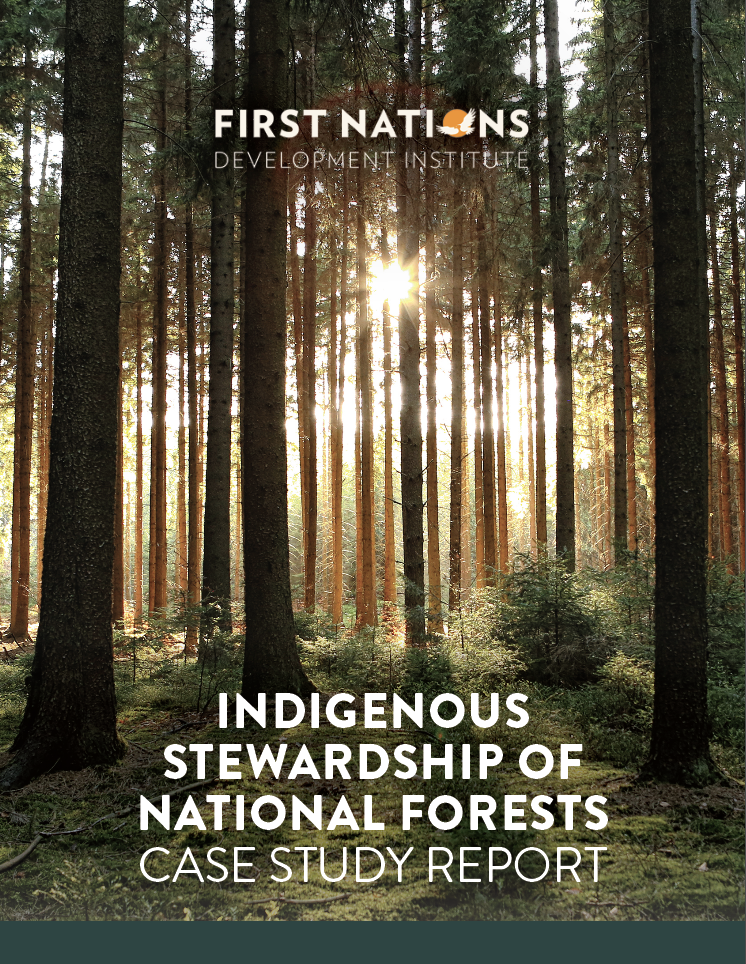
Under the Stewarding Native Lands’ Woven Lands Initiative, First Nations is supporting new models, investments, and tools to secure and expand Native stewardship of tribal homelands. To uplift this work, the Indigenous Stewardship of National Forests Case Study Report features prominent examples of stewardship by Tribal Nations on public lands administered by the U.S. Forest Service (USFS).
The report was created to highlight diverse tribal interests and pathways toward successful co-stewardship with the USFS, sharing experiences and innovations spearheaded by tribes to ensure Native stewardship responsibilities to land, water, and wildlife can be fulfilled.
First Nations thanks the following tribes and tribal commission for their expertise and dedication whose case studies inform this report.
We also thank Confederated Salish and Kootenai Tribes, Pablo, Montana, who joined with these tribes and tribal commission to present their co-management work in First Nations’ “Indigenous Stewardship on National Forest Lands Webinar Series.”