Impact Story
Through the Native Youth and Culture Fund, First Nations has been investing in Native communities since 2002, providing financial assistance to support the perpetuation of traditional knowledge, spirituality, and the intergenerational transfer of knowledge systems. In 2024, First Nations included a focus on structured day and overnight camp programs in Native communities. With generous funding from the Margaret A. Cargill Philanthropies, First Nations distributed $600,000 through 10 two-year grants across tribal communities.
While these camps include many conventional activities found in non-Native programs, such as swimming, outdoor time, and games, their teachings dive deeper and play an important role in promoting traditional cultural activities and language. Many camps include instruction in their traditional languages and cultural practices, and their structure and staff provide the space and cultural foundation for campers to build confidence and lifelong friendships, while also accessing traditional knowledge.
Additionally, these camps provide an opportunity for community members of all ages to connect with youth and strengthen their own understanding of their language and cultural practices. Many camps mention former participants who return to the program as volunteers, interns, or camp counselors. Camp leaders speak of intentionally developing leadership skills in their older campers and interns, and encouraging them to teach as they learn in order to grow the next generation of community leaders.
Programs with language instruction often include opportunities to practice their learning at home, including providing stickers for household objects, support with mapping out family connections in the language, and classes for parents and guardians to bring back the language in all settings.
“This a big part of what we’re doing to bring back the language. It’s not just during the day, but around the clock,” says Halay Turning Heart, administrator of the Yuchi (Euchee) Language Project, a longtime community partner of First Nations and current Native Youth and Culture fund grantee.
Right now, the 10 Native Youth and Culture Fund community partners have camps underway, and we are connecting with them throughout the summer to check in on their programs. As our outreach continues, we’re happy to share these updates from three of the community partners.
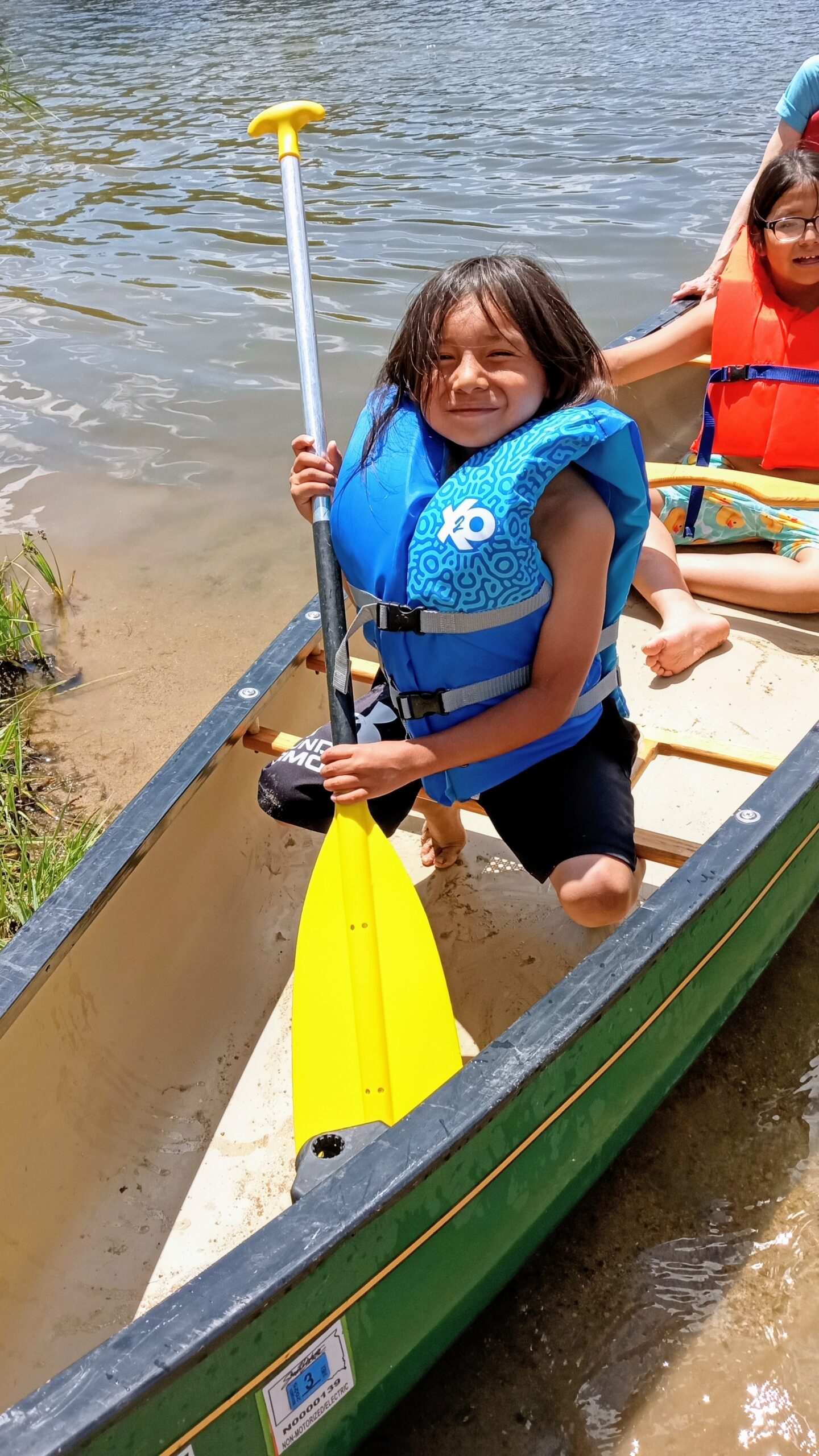
At Camp Laugh A Lot, Native youth connect with nature and healthy outdoor activities, while strengthening traditional ties to ancestral lands and Native cultures.
Camp Laugh A Lot
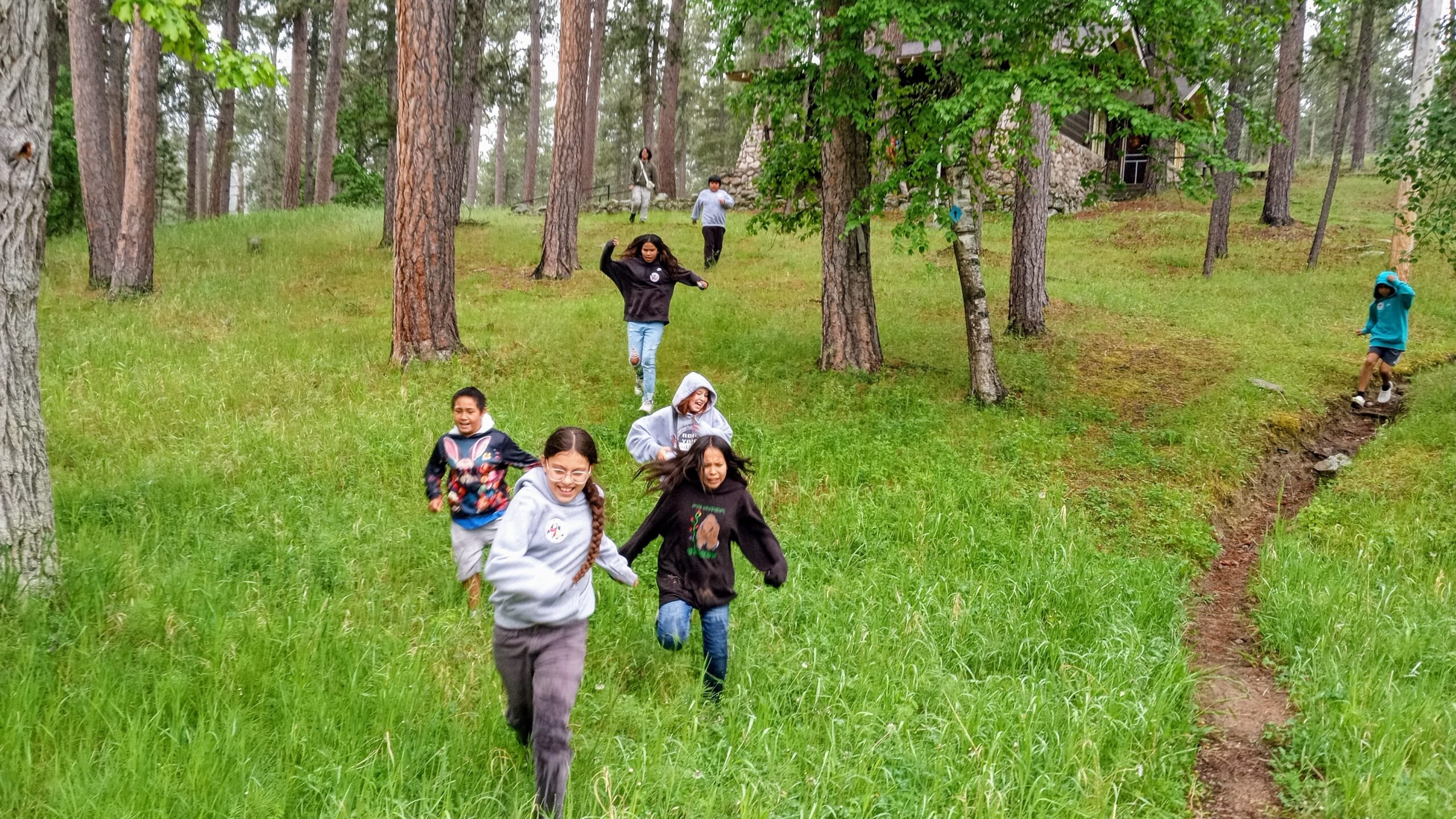
On the Pine Ridge Indian Reservation, Camp Laugh A Lot provides a series of camp opportunities, both through day camps and overnight trips, to bring Oglala Lakota youth to their homelands in the Black Hills. Campers come together to explore and enjoy nature, swim and canoe, and ride horses. In addition, the camp serves as a valuable language- learning opportunity, where counselors teach campers the Lakota words for plants and animals they encounter, provide space to practice Lakota, and supply books written in Lakota to read at night. The camp is such a joy for participants that many return as counselors later in life.
Camp Laugh A Lot is completely free and provides services for 100 to 150 youth every year. When asked about her aspirations, Board Director Virginia Ravndal mentioned the frustrations and injustice of Lakota community members needing to pay to access their sacred land in the Black Hills. “It is so fundamentally wrong for Lakota youth to pay to camp on the land that is theirs. … The ultimate insult is that the state park we often use is called Custer State Park. They’re paying the state to sleep on land named after Custer.” The camp hopes to raise funds to lease cabins or to help the tribe purchase their sacred sites.
Yuchi Language Project
Another grantee, the Yuchi Language Project (YLP), facilitates a day camp for Yuchi youth in Glenpool, Oklahoma. More than 60 campers attend camp each day, where they focus on the Yuchi language, craft, play traditional games, and prepare for ceremonies. Campers range in age from pre-school to college, and all come together for games of stickball, Yuchi football, and more. The camp offers space to practice at their ceremonial grounds, where they focus on learning songs and dances that will be used in upcoming ceremonies.
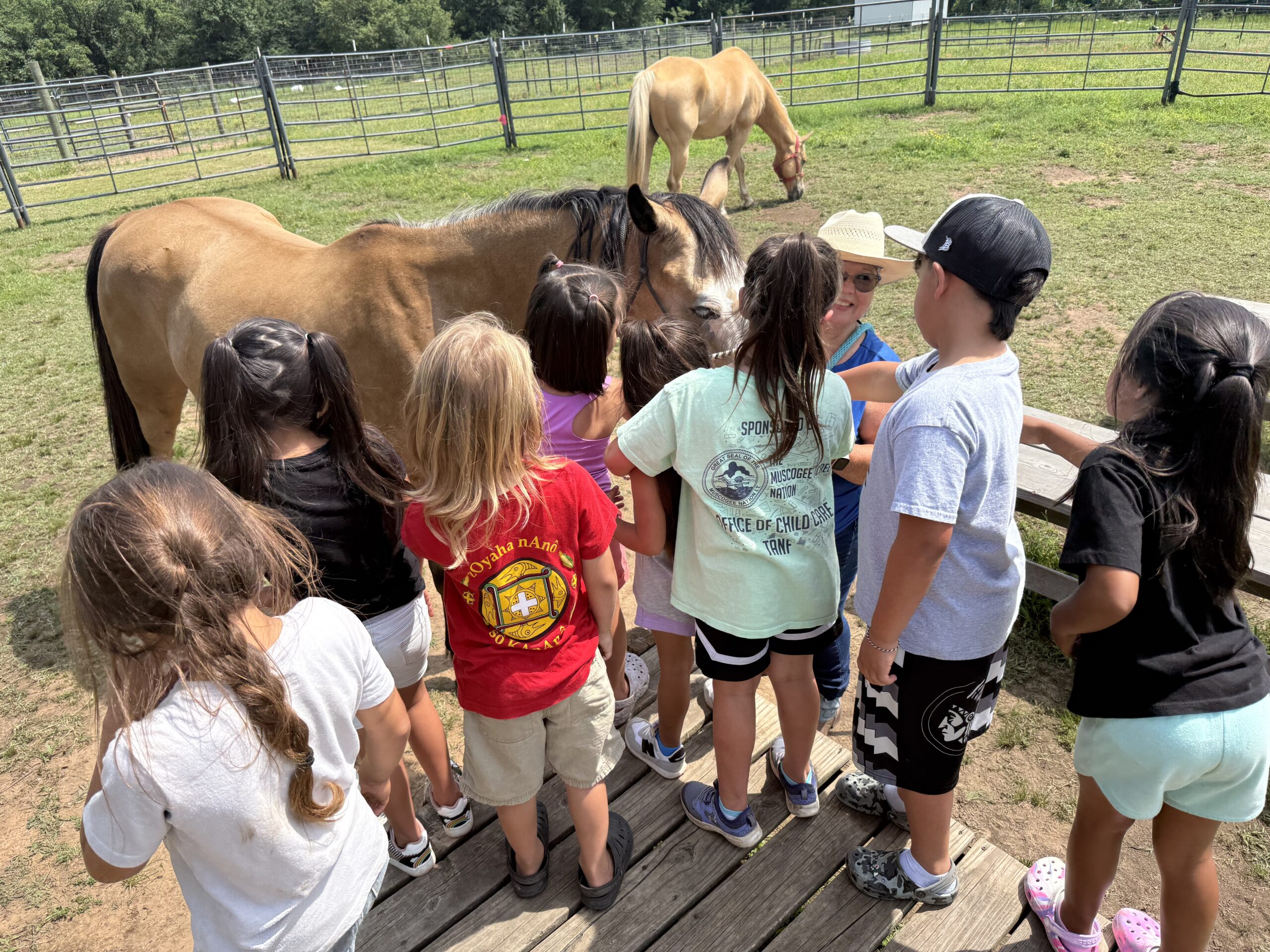
Campers learn Yuchi, which linguists identify as a language isolate, meaning it is unrelated to any other language.
The Yuchi language is a key component of the camp that flows through everything. YLP describes it as “one of the world’s most ancient and richest languages, carrying eons of tradition, history and a unique perspective on the world.” Campers learn the names of traditional medicines growing in the area, use Yuchi words as they are taught how to care for horses, and are instructed on both Yuchi and Plains Indian Sign Language by elders. The camp takes place on the recently returned Yuchi land base. “We haven’t had any land for close to 200 years. This is our first Yuchi land base where people can come together and do the activities that we’re re-learning. A lot of these things haven’t been done in generations,” says Turning Heart, who coordinates this work. This land return allows the community more space for partnership with other Yuchi businesses, including networking and partnerships that allow them to learn to care for buffalo.
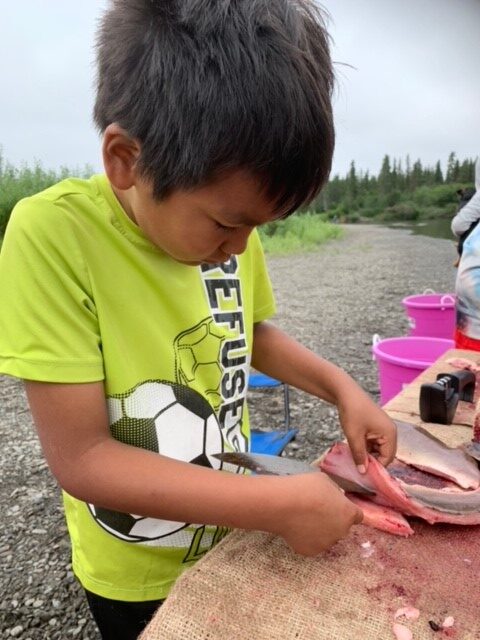
At the Native Village of Shaktoolik camp, a young boy learns how to cut a fish for the first time.
Native Village of Shaktoolik
In Western Alaska, the Native Village of Shaktoolik has offered camp programs for 20 years. Its work began with the leadership of Paul Asicksik, an elder in the community who dreamed of getting youth back out onto the land to learn and practice traditional foodways, speak their language, and learn from elders. These camps bring 40 to 50 youth up the Shaktoolik River, where they camp in cabins and spend one week fishing, foraging, berry-picking, and storytelling.
Two elders, one man and one woman, join the camps to share their wisdom and create intergenerational learning opportunities. Each year, the campers put together lists of their wants and hopes, and the team at the Native Village of Shaktoolik work together to make their requests happen. The camp provides an important opportunity for youth from the community to learn their subsistence traditions, including the processing of fish and identification of traditional plants.
These projects achieve phenomenal, community-wide impact that increases access to culture for their youth, even as they express a need for additional funding. Extra funding would allow camps to build out their staffing structures, growing the capacity of current staff and expanding the number of their employees to serve additional youth in the community.
For the Native Village of Shaktoolik, support from the Native Youth and Culture Fund has allowed it to increase staff pay for the first time in 20 years, finally rising above Alaska’s minimum wage of $8 per hour. In addition, all projects clearly demonstrate how inseparable Native language work and land access are from youth culture access. Through the reacquisition of their traditional lands, Native youth are able to connect with their homelands and learn about the places, plants, animals, and waters that their ancestors have known since time immemorial.
Stay tuned for additional program notes in coming newsletters, where we will continue highlighting the transformational work of these camps and other programs across Indian Country.