Impact Story
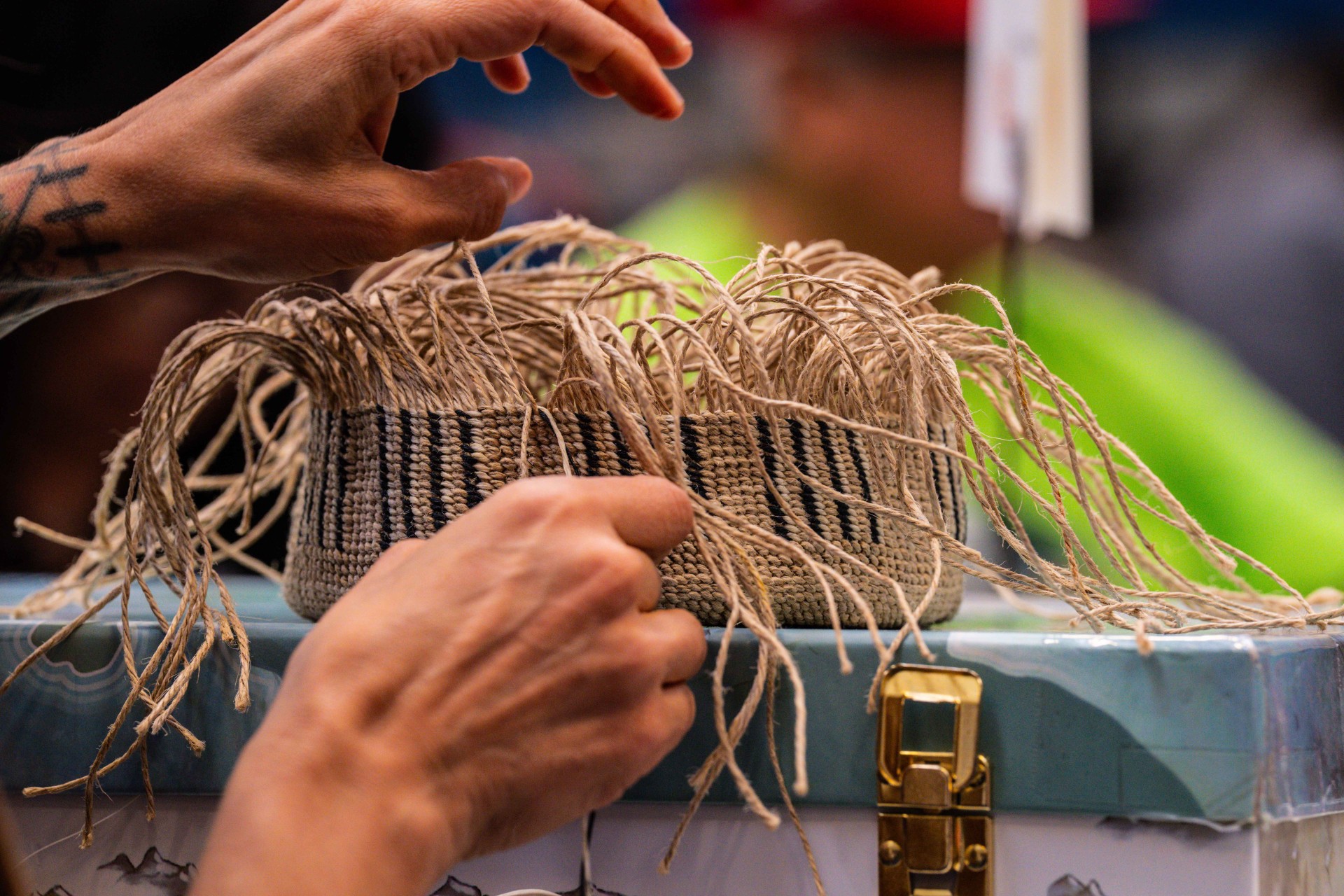
An artist from the Okanogan Basketweavers Association, a First Nations community partner, is hard at work. Photo by Jack George.
First Nations has long recognized that traditional art is woven into the fabric of Native communities and lifeways. From basket weaving, beadwork, sculpting, and pottery, to storytelling, quilling, textiles, and painting, Native art, in its many remarkable forms, is a treasured cultural asset, a priceless piece of history and heritage passed down through generations that embodies the beauty and resilience of the Native spirit.
In 2014, First Nations launched a program called the Native Arts Capacity Building Initiative, later renamed the Native Arts Initiative (NAI).
Its purpose? To revitalize, preserve, and uplift artistic and cultural assets in Indian Country whose survival have been threatened by colonization and the modern American way of life.
First Nations is happy to report that it has been highly successful in helping to strengthen and grow Native-led programming in the arts through the three pillars of the Native Arts Initiative: direct grants, networking, and in-person training and technical assistance.
The impressive and growing numbers tell the story best. Over the last decade, through the NAI, First Nations has awarded nearly $6 million in grants ― including mini-grants for professional development and COVID relief ― to more than 75 eligible Native-led nonprofits and tribal government programs serving Native artists in 12 states in the Upper Midwest, Southwest, and Pacific Northwest.
Between 2014 and 2024, NAI awards ranged from $15,000 to $200,000 over one and two years, per grantee. As a result, hundreds of arts programs throughout Indian Country are now thriving, thereby assuring the continuity of knowledge-sharing for future generations.

Beautifully painted gourds, created by artists from the Pala Band of Mission Indians, sit proudly on display. Photo by Jenny B Photography.
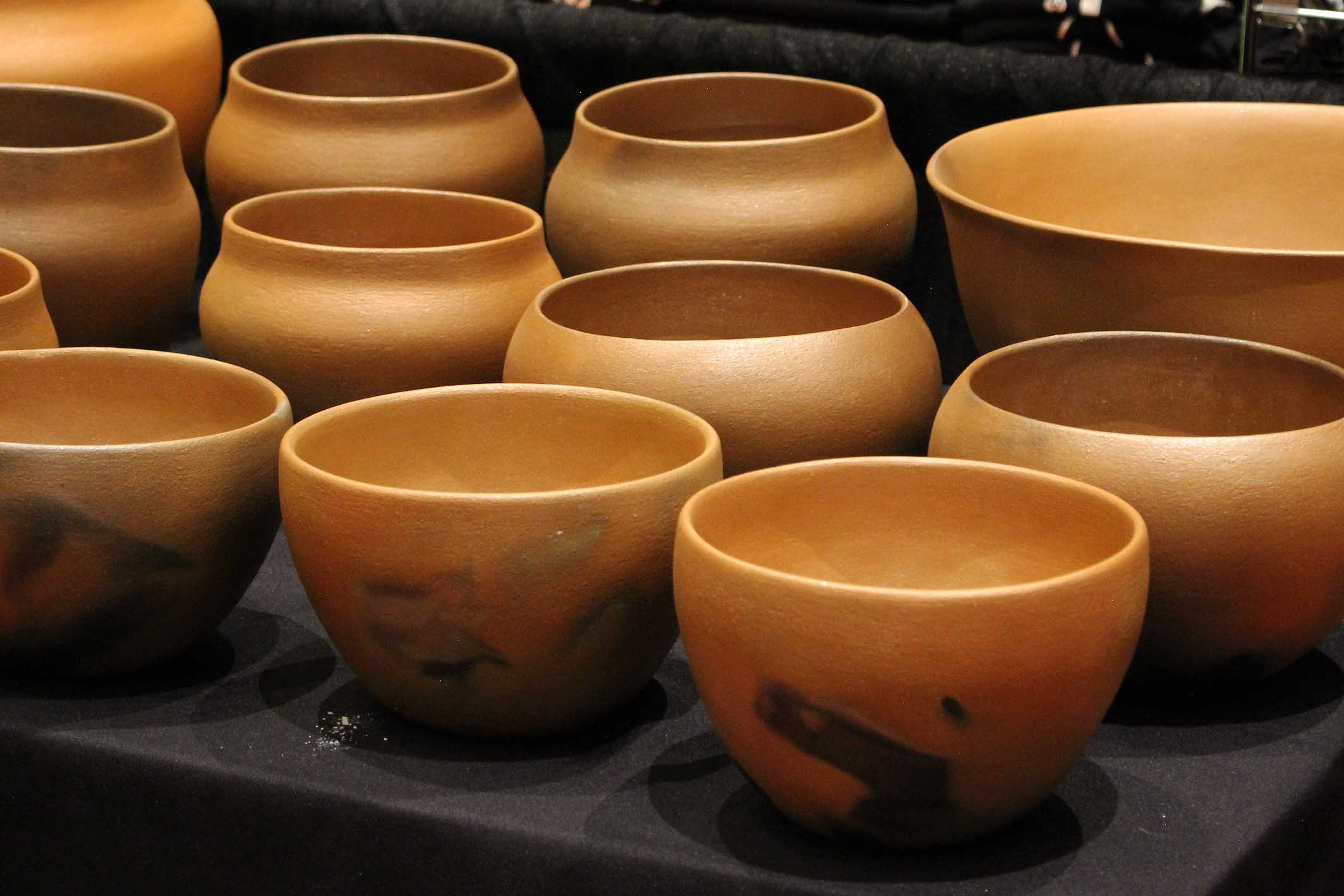
Programs like Hopi School Inc., which has increased the number of tribal members skilled in creating Hopi textiles, baskets, and moccasins. The Zuni Youth Enrichment Project used NAI funds to develop a new generation of pottery makers through a master/apprentice program. The White Earth Reservation Tribal Council organized workshops for emerging artists, provided career coaching for experienced artists, and hosted art exhibitions. And the Pine Ridge Area Chamber of Commerce invested NAI funds in supporting seven South Dakota artists in residence who mentored seven emerging artists; it also hosted a summer camp for tribal youth.
“Supporting Native artists means supporting the heart of our communities. Through the Native Arts Initiative, Native cultures and traditions continue to thrive, with artists leading the way,” says Catherine Bryan, First Nations’ vice president of grantmaking, communications, administration, and Native Arts, Language, and Knowledge program.
It is in this spirit of sharing the good news and good work of the NAI ― which has expanded to include the First Americans’ Cultural Treasures Initiative (CTI), funded by the Ford Foundation and Margaret A. Cargill Philanthropies ― that we highlight the impact stories of the following 2023-2025 NAI grantees:
Grantee: Tananáwit: A Community of Warm Springs Artists
Location: Warm Springs, Oregon
Art Project: Multigenerational pottery, moccasin beadwork, drum-making, and weaving classes

In the Pacific Northwest, there’s a nonprofit organization whose sole mission is to support and empower Native artists from its community. Tananáwit: A Community of Warm Springs Artists is a 100% Native-run organization started in 2013 by artists, for artists, from the Confederated Tribes of Warm Springs.
“Our whole job here is to support artists in our community to help them grow, promote them, and help sustain our community,” says Deb Stacona, Tananáwit’s executive director who stepped into that role in 2022 after running the gift shop at the Museum at Warm Springs for more than 20 years.
For Tananáwit, artists are at the heart of its organization. The staff is dedicated to helping traditional and contemporary artists create art, market it, price it, and sell it. “Our artists matter and we let them know they matter,” says Stacona.
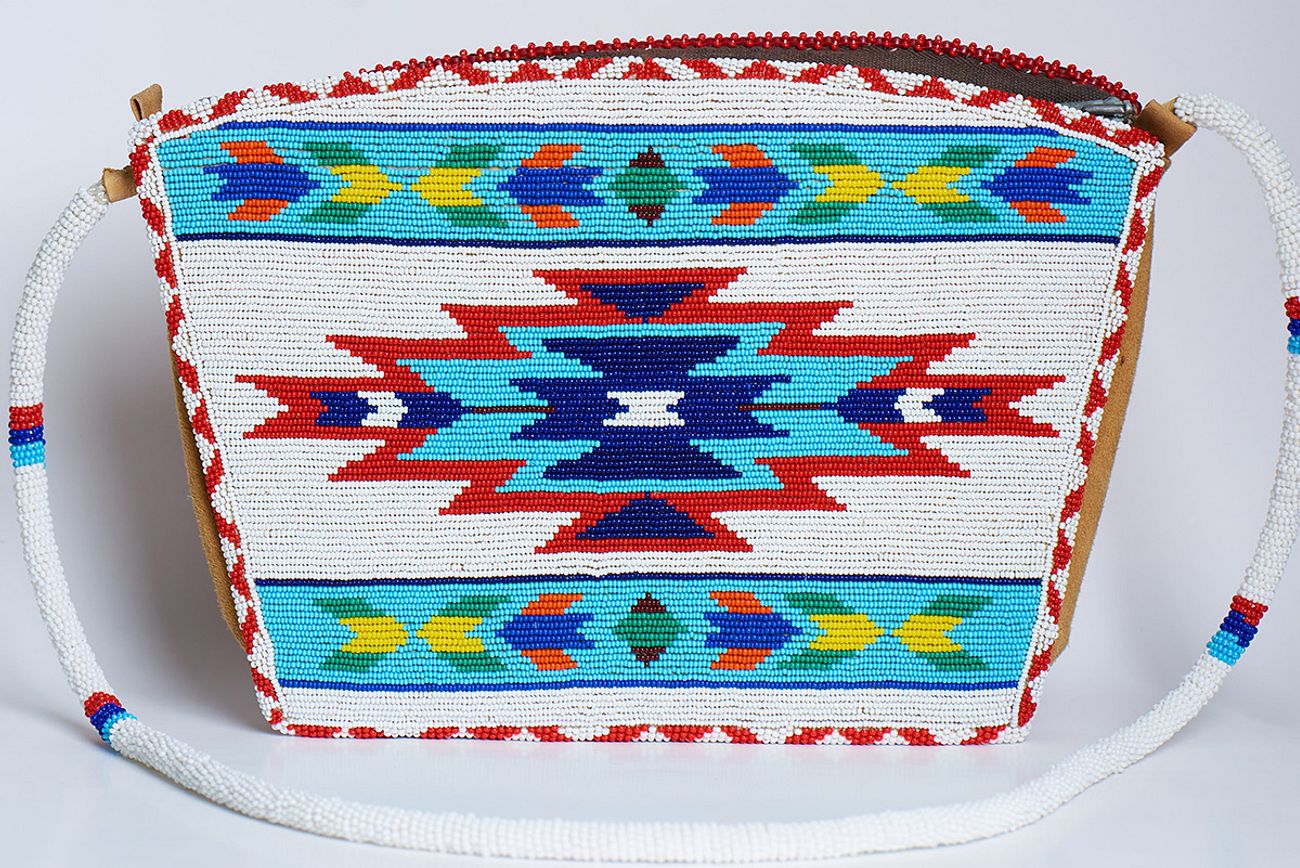
This beautifully detailed purse is an example of the exceptional beadwork produced by Tananáwit artists.
Artists are given a workspace, tools, supplies, and transportation, and they can sell their art on consignment in Tananáwit’s storefront or at the many art shows it hosts throughout the year. “We have gone from working with 20 artists to more than 55 right now. And it is still growing!” Tananáwit’s executive director says that more than 5% of the Confederated Tribes of Warm Springs community are artists. “Native art is really important, especially here in Oregon.”
With funding from First Nations’ Native Arts Initiative, Tananáwit aims to help sustain its Native culture long into the future by offering intergenerational arts and culture classes. Master artists deeply committed to knowledge-sharing teach youth, adults, and elders how to create Native art indigenous to the Columbia River plateau, such as pottery, painting, beadwork, photography, and weaving, to name a few of the popular offerings.
Stacona shares a story that beautifully illustrates the success of the intergenerational classes: “At the Youth Art Fair last year, a 12-year-old student learned how to make a miniature gathering basket called a ‘Wa’paas basket.’ When she was done, she held it up and we all clapped. It was amazing to see the look on her face,” recalls Stacona. The young girl’s confidence was uplifted by that positive experience, and she decided to make more baskets. “This time, she gifted them to the elders in our community. She walked up to me and said, ‘Here’s a basket for you.’ That’s what it’s all about!”
These gathering baskets are a good example of what Stacona considers a cultural treasure ― something useful, passed down through by generations of ancestors who made them to collect and gather food. “But later, we adorned them with designs or beadwork, not realizing it was art. And it evolved into a wonderful thing, a beautiful way to hold onto our culture.”

Native jewelry created by Tananáwit artists is one popular item sought out by a steady flow of repeat customers.
During COVID, the shop was closed for a bit. But since the re-opening, a steady flow of repeat customers has passed through. “The community and tourists have been really supportive of our artists,” says Stacona. She believes one of the top selling points for buying art through Tananáwit is that her staff can tell customers anything they want to know about the artists and the art they make. “Customers really like to know who they are buying from and supporting.”
With future arts funding, Tananáwit would like to improve its website and learn how to write grants. It also plans to add sewing and moccasin-making to its menu of classes.
This dedicated collective of artists, teachers, and staff will continue to brainstorm about the best arts and culture courses that will bring multiple generations together from the Confederated Tribes of Warm Springs to share, learn, and celebrate its Native history.
Grantee: Hopitutuqaiki (Hopi School Inc.)
Location: Kykotsmovi, Arizona
Art Project: Revive and restore traditional Hopi wares, garments, and regalia

Hopitutuqaiki (Hopi School Inc.) in Kykotsmovi, Arizona ― one of 12 Hopi villages and the seat of Hopi government ― is a year-round arts and language immersion school for primary-grade students that centers its curriculum around Hopi culture, language, and values.
Hopi students are taught to see the world through a Hopi lens.
“We know that many of our students are going to choose to stay on the reservation, so why not teach them the language and culture?” says Donna Humetewa Kaye, the school’s facilitator who is also an artist, designer, and mentor. School staff include community members from other Hopi villages who help create customized education programs for teachers and students.

In 2008, Hopitutuqaiki launched a Hopi language immersion and arts-based preschool for children ages 3 and 4.
The school believes that “every child is like a seed, and if each seed is nurtured, it will grow best in its own plot of earth.” With that philosophy in mind, the school launched a Hopi language immersion and arts-based preschool in 2008, for children ages 3 and 4, as part of the summer program.
Hopitutuqaiki hosts small classes, from four to eight people, in a modular building, using an in-person mentoring approach. Mentors are coached by Hopi School staff and include community experts that incorporate the use of Hopilavayi (Hopi Language) to instruct youth and other community members in traditional basket-making, pottery, textile-weaving, beading, traditional food preparation, moccasin-making, and more.
Most supplies are provided for the students, with few exceptions, and textbook curriculum is kept up to date and offered in each student’s primary language. Classes are available to anyone interested in participating, despite economic circumstances. The school will never turn anyone away who wants to take a class if they are unable to pay the tuition.
Kaye says the school taps into the knowledge-keepers within the Hopi community to mentor students, lead classes, and share Hopi traditions. “We have a lot of very skilled artists in our villages.”

Students can learn how to make their own moccasins.
Funding from First Nations will advance Hopitutuqaiki (Hopi School Inc.) efforts to revive and restore traditional Hopi wares, garments, and regalia. “I hope to guide the process of rejuvenating fading culture and loss of languages so our future Hopi generations can participate and articulate Hopi well, all the while acknowledging our current elders and those who’ve come before us on this vital journey,” Kaye writes on the school website.
Looking ahead, the immersion school would like to eventually offer more virtual classes, as it did during the pandemic, to reach Hopi participants who live off the reservation in urban settings.