News
Thought Leadership
This blog is the third in First Nations’ four-part series, sharing updates and ways to strengthen tribal renewable energy. It is by Director of Institutional Development Melissa Weatherwax and Director of Workforce Development Cheryl Madman of Blackfeet Community College, a community partner through First Nations’ Stewarding Native Lands climate focus area.
Tribal Colleges and Universities (TCUs) are unique Native-led institutions that uplift Native communities through education, economic development, programs and services, and cultural preservation. Tribal Colleges and Universities are the heartbeat of Native communities, serving as community institutions that center culture in education, provide critical services, and sustain local economies. There are 37 TCUs across Indian Country, seven of which are in Montana, including Blackfeet Community College (BFCC). BFCC is one of 29 original 1994 TCUs designated as Land Grant Institutions through the Equity in Educational Land Grant Status Act of 1994. In 1994, BFCC expanded its academic, cultural, and workforce programs out of a small extension program and started dreaming big.
BFCC is currently working toward becoming a net-zero campus to mitigate energy costs for the college and create a living lab for the campus and community. The college started their energy work in the early 90s through research focused primarily in wind and, in 2010, built one of the first LEED Platinum facilities, South Wind Lodge, on a Montana college campus. BFCC Land grant departments from Facilities, Workforce, USDA Extension, and Institutional Development have come together to achieve a broad and collective approach to this work, Oakanipstakii. The programs engage partners through sustainable practices at the forefront to integrate training, curriculum, community engagement and research. The programs have implemented short-term training schedules and community workshops, and have expanded partnerships across Native-led nonprofits and the U.S. Department of Energy.
This collaboration has also created the Blackfeet Energy Knowledge Sovereignty Institute (BEKSI), which brings together tribal organizations at the college to work on energy issues together, in a good way. In March 2026, the BEKSI team held a strategic planning session to determine areas of focus and develop short- mid- and long-term goals for the institute. This session led to the development of an interim board that has met monthly since the convening to ensure BFCC continues to move toward and achieve these goals.
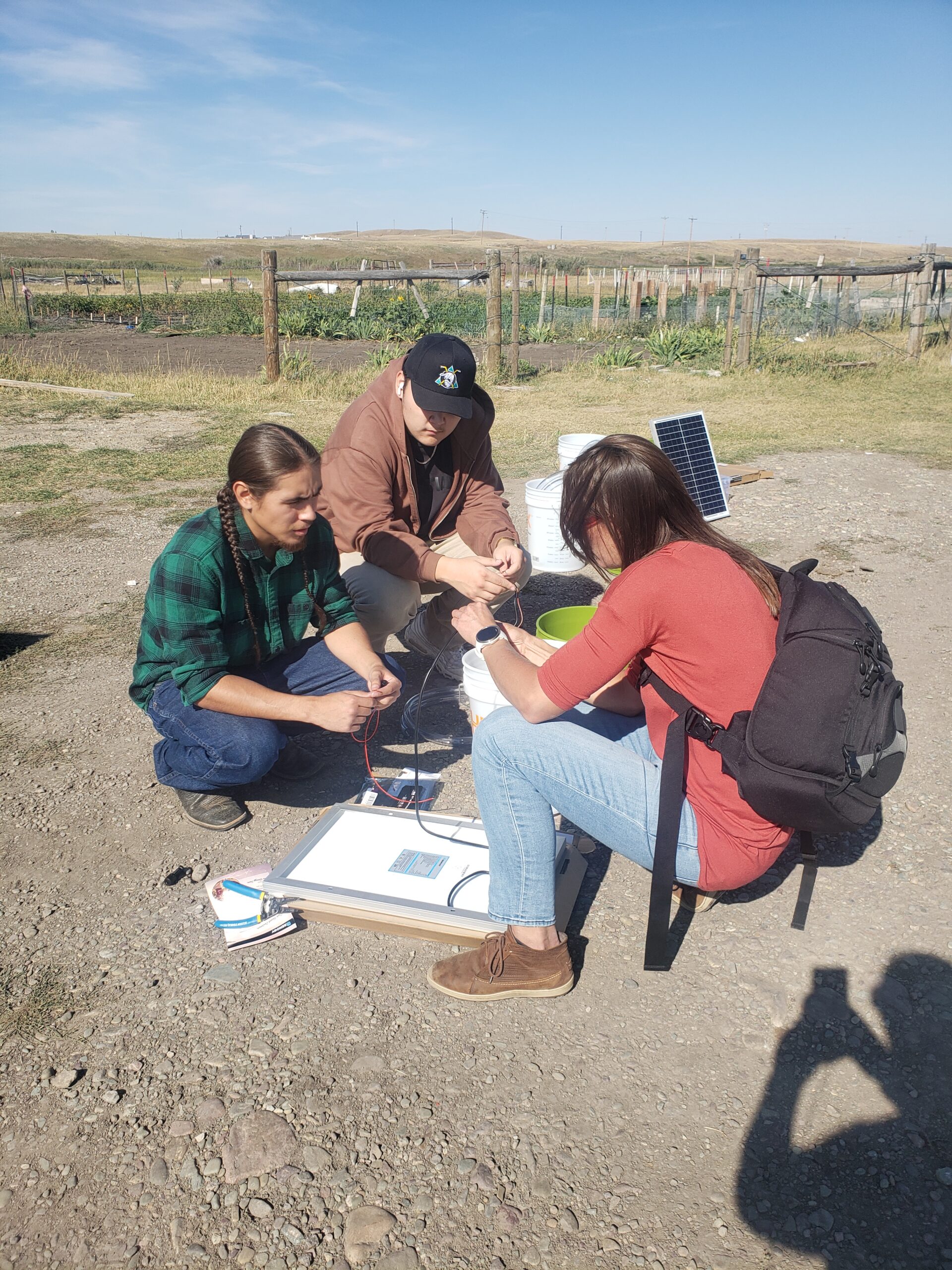
BFCC students participate in a solar workshop.
Learning About Renewable Energy through Community Workshops
In 2022, BFCC created a solar training program and corresponding curriculum to establish a pipeline for students interested in working in the renewable energy field. This program is designed to provide students with a hands-on learning experience that incorporates skill development rooted in Blackfeet cultural values. First Nations’ support has helped BFCC recognize the need to implement a cyclical approach that includes training in installation, maintenance, energy auditing, data analysis, community outreach, and mentorship. The college has trained 50+ students and community through CEUs and now has implemented energy coursework as a learning objective across the building trades curriculum.
Additionally, BFCC is bringing renewable energy opportunities to the student body and community. These efforts are shared with the community through annual presentations and events that highlight land grant programs at gatherings such as the Sustainability Gathering 2022, which showcased student faculty and staff work in energy and land. Centering around Kitowasin (land-our food) expresses the connection to natural and renewable resources, including a Blackfeet-significant species such as Ksikstakii (beaver). This gathering showcased student-led work around geothermal, beaver mimicry, and solar land management infrastructure.
The college has implemented spring gatherings to bring the community together, such as Fundamentals of Energy training, and has provided basic concepts for students as well as community members interested in energy. Gatherings create a ripple for broadening the conversation in the community about energy planning and partnerships such as those with housing and tribal programs.
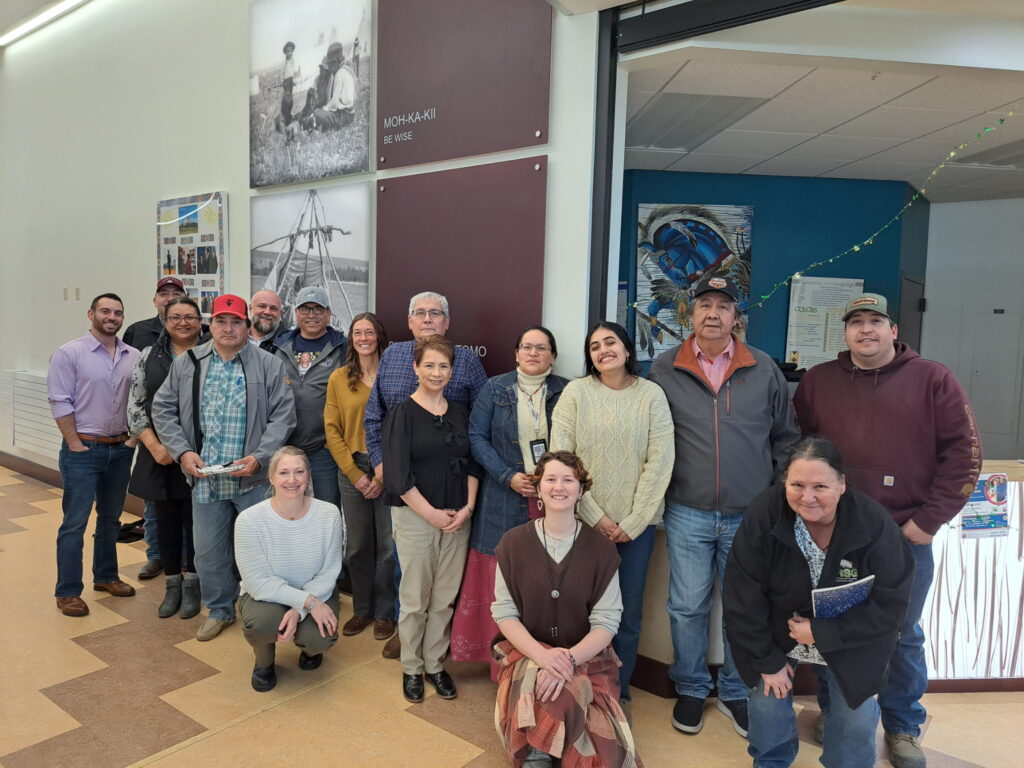
In March 2026 Blackfeet Energy Knowledge Sovereignty Institute (BEKSI) participated in a strategic energy planning session with Iniskim Consulting and Resilient Energy Solutions.
These efforts are important because it is the vision of BFCC to strengthen and enrich the Blackfeet Nation and universal community through quality education integrating the Nii-tsi-ta-pi – World of Knowledge. BFCC is providing access to quality educational programs that prepare students for achievement in higher education, meaningful employment, basic skills instruction, and continuing education while integrating the Blackfeet culture and language.
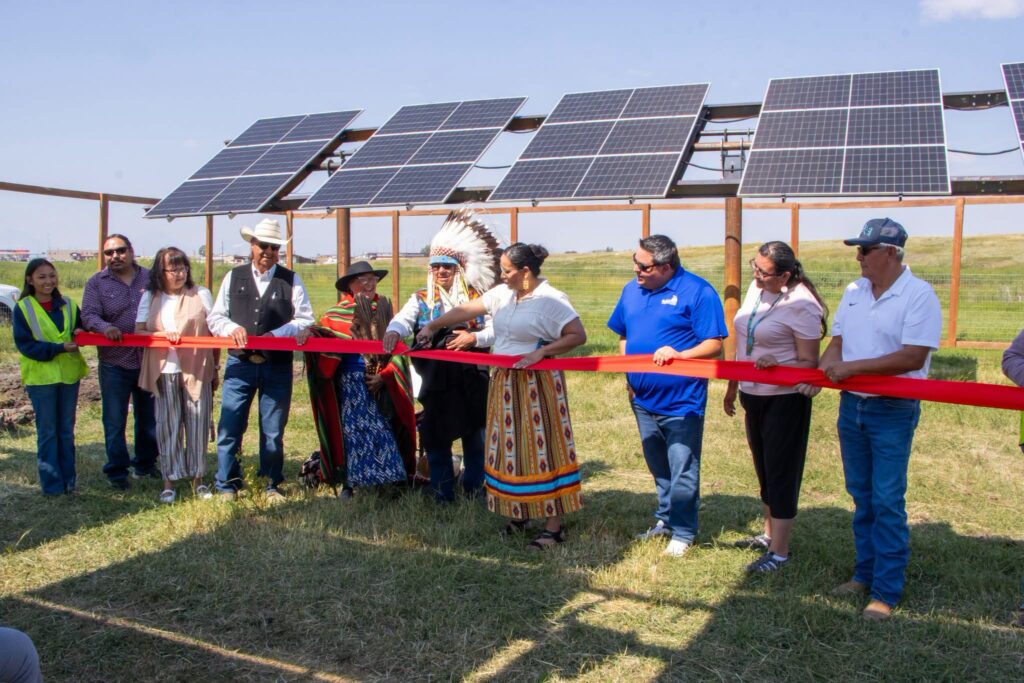
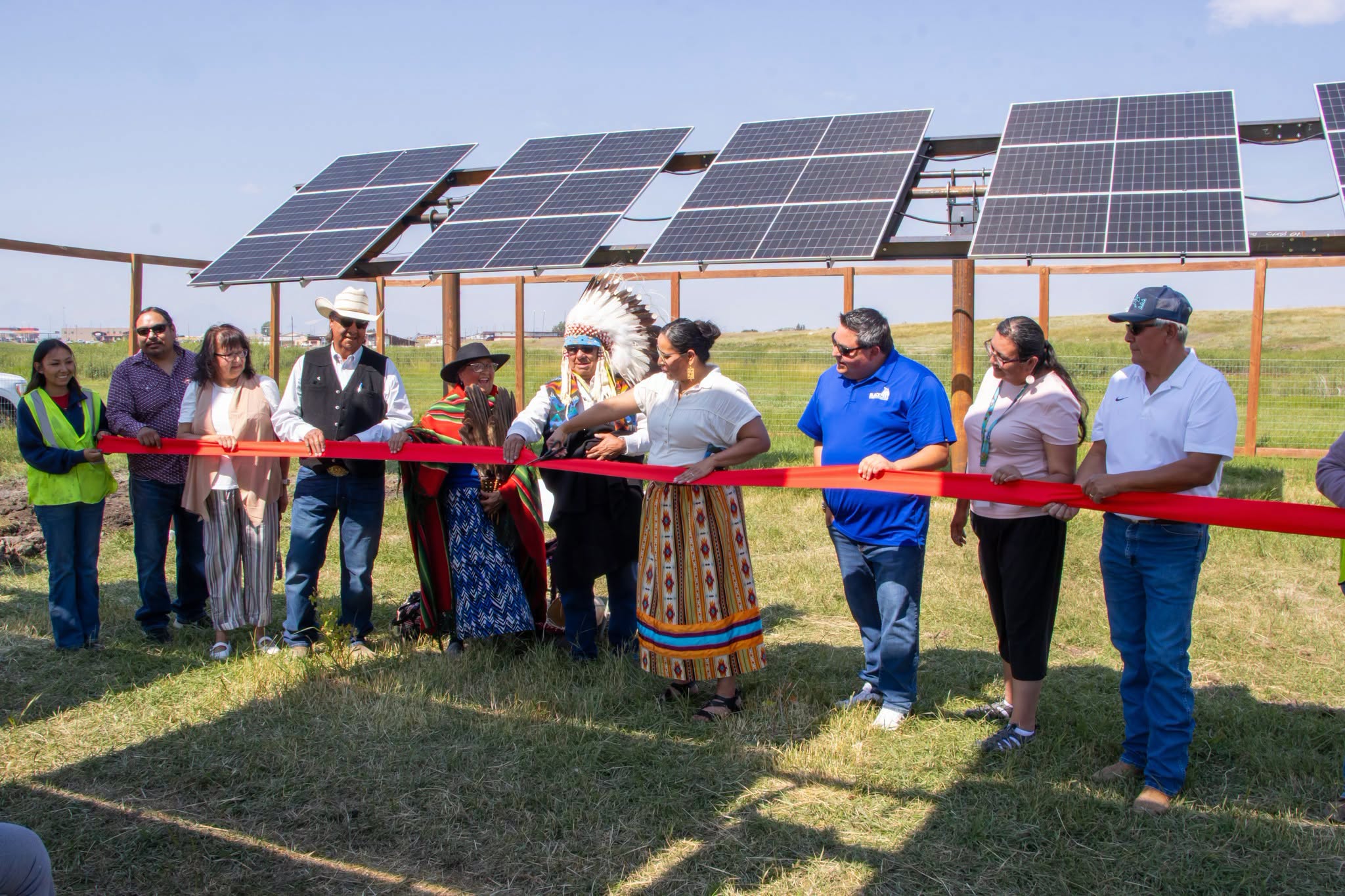
BFCC added a 20.54 kW agrivoltaic system and 2.37 kW water pumping station to campus through a 2026 Tribal Solar Accelerator Fund project.
Leading the Way
When developing the solar training program, college staff started discussing the dream of becoming a net-zero campus. This dream has since turned into a commitment to expand campus renewable energy capacity to become the first net-zero TCU. Throughout summer 2026, the college continued its energy support for food sovereignty by installing a 20.54 kW agrivoltaic system that will power greenhouse watering systems, while also providing shade to the existing native shrub food forest.
In addition, an off-grid 4 kW PV pump now supports a year-round watering system for the college’s new bison calf herd. In October, seven yearling iinii (bison) arrived on campus, turning another dream into reality.
Watch this video to learn more about BFCC’s efforts becoming the first college to own and steward buffalo on its campus.
The college plans to install 148 kW in summer 2027, tripling its currently installed 75 kW. This will support the meat processing and extension, the Yellow Bird Woman nursing building, and the central Beaver Painted Lodge. This installation will offset approximately 20% of the total electricity used on campus and completely offset the meat processing and extension and Yellow Bird Woman buildings. This effort is coupled with a swath of energy efficiency measures, bringing BFCC closer to their net-zero goal than ever before, even with new construction and growth.
All these efforts are driven by the college’s commitment to be ni-ta-pi-pa-ta-pi-tsin – living in a good way.
If you are interested in supporting this work: