News
Thought Leadership
This blog post introduces First Nations’ four-part series, sharing updates and ways to strengthen tribal renewable energy.
Nawa (Hello),
My name is Anaya Echo-Hawk, Development Officer at First Nations. I am often humbled by the opportunities I get to work on. This year I had the privilege of sharing space and conversation with what I could only describe as a roundtable of Native superheroes – First Nations’ second Tribal Renewable Energy Convening. As this event commenced, ideas flourished under the care of knowledge bearers who took the shape of Native engineers, project managers and developers, and more.
These leaders have been cultivating their knowledge amidst an ever-changing landscape, one that shifted significantly in 2022 with the introduction of the Inflation Reduction Act. This act funded $14 billion for tribal infrastructure, climate adaptation, and renewable energy development.
In 2024, First Nations hosted the inaugural Tribal Renewable Energy convening, bringing together Native-led and Native-serving organizations and programs that share a commitment to advancing renewable energy efforts across Indian Country. The intentions were to better support tribes and Native communities navigating this changing landscape, and coordinate efforts among resource providers.
Drawing on insights, First Nations published the Increasing Tribal Renewable Energy report, sharing highlights from the convening. Following the report, our Stewarding Native Lands team expanded our Climate Focus area with the launch of the Strengthening Tribal Renewable Energy Opportunities project. The report served as my guide into this conversation. Although I was new to the tribal renewable energy space, what felt familiar was tribes navigating barriers of funding. Often, the upfront capital required for renewable energy project development is out of reach for tribes, hindering progress and amplifying energy insecurity.
The second convening was hosted by Tribal Energy Alternatives and First Nations to support tribes and Native communities as they advance tribal renewable energy self-determination. The objectives were to develop a shared understanding of the current barriers impacting tribal renewable energy participation, identify collective action to address existing gaps, and create a shared framework for advancing tribal renewable energy projects.
I have immense gratitude for the conversations and people I met at the convening, each deepening my own understanding of renewable energy and its power for the lifeways and economies of Native communities. For me, this convening showcased the common ground between energy warriors and the supporters of First Nations. We continuously prioritize knowledge, research, and advocacy for sustainable outcomes for future generations. I am grateful for the chance to share this story with you.
The 2026 Tribal Renewable Energy Convening was hosted at Gila River Resorts & Casino – Wild Horse Pass on the Gila River Indian Reservation – home to the Akimel O’odham and Pee Posh people, who have stewarded their cultural resources for millennia. Attendees representing Tribal Energy Alternatives, Indigenized Energy, Red Cloud Renewable, Native Renewables, Sustainable Molokai, and the Alliance for Tribal Clean Energy – gathered in a sunlit conference room eager to reconnect and discuss tribal needs and challenges in renewable energy development. The group greeted each other and the space with warm regard – many had participated in the first convening in 2024.
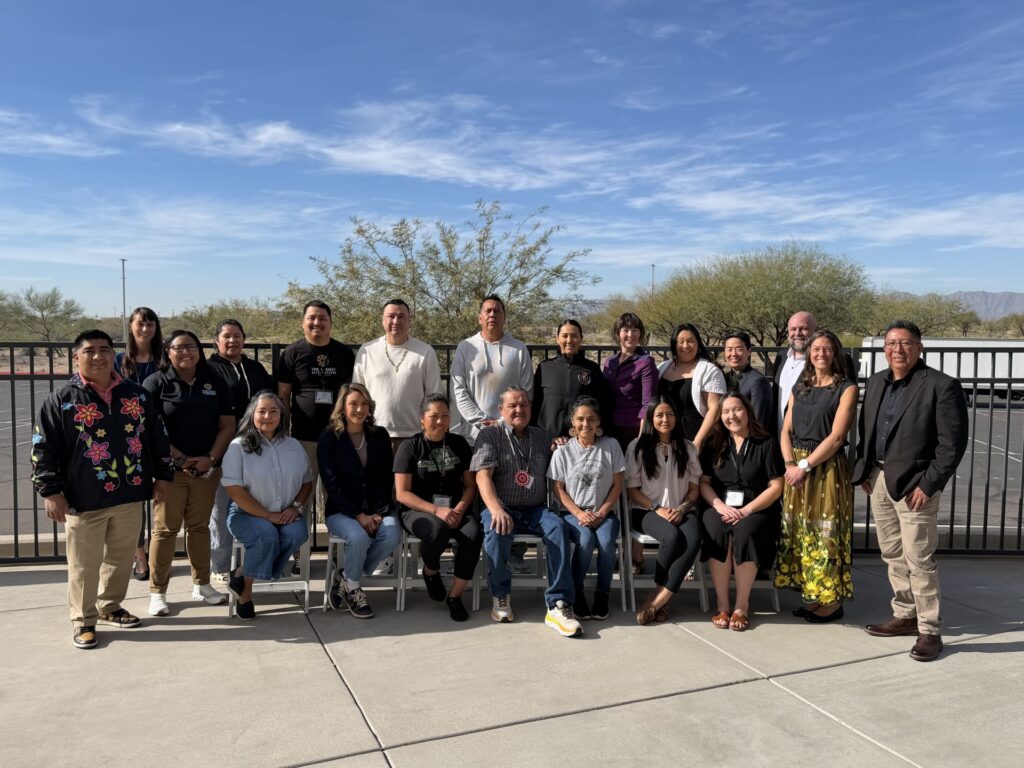
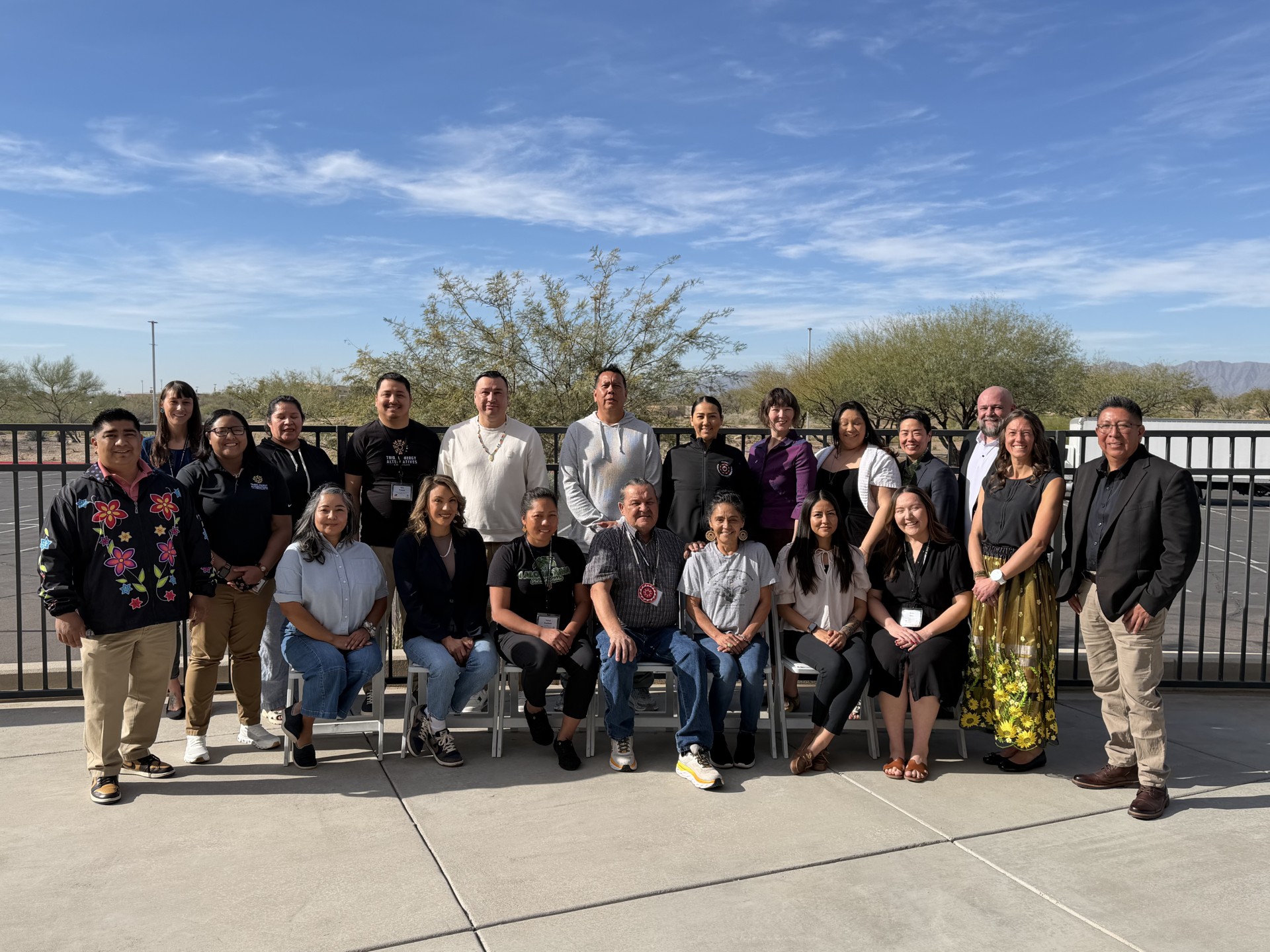
First Nations’ 2026 Tribal Renewable Energy Convening brought together representatives from Tribal Energy Alternatives, Indigenized Energy, Red Cloud Renewable, Native Renewables, Sustainable Molokai, and the Alliance for Tribal Clean Energy.
Over morning coffee and breakfast, attendees caught up on stories, laughter, and priorities for the day and a half ahead. To honor the ancestors of the land and the cultural legacy that shapes the Gila River community and landscape, and to start in a good way, a community elder, offered a blessing and song to begin the convening.
The elder began by welcoming us to the land that his people the Pee-Posh (Maricopa) and Akimel O’otham (Pima) call home. Here, renewable energy efforts have been already underway.
He shared news with attendees that last year the nation started construction on the country’s first solar-over-canal project. Called the Casa-Blanca Solar Project, this innovative effort will provide a sustainable source of energy for the community. The cornerstone project was also the first collaboration of a tribe and the U.S. Army Corps of Engineers Los Angeles District and served as the inaugural utilization of their Tribal Partnership Program.
The opening remarks and blessing set an example of what is possible for our communities when we work together. The first day provided time for conversations about the realities and opportunities of the renewable energy sector, with each attendee bringing their own knowledge and expertise.
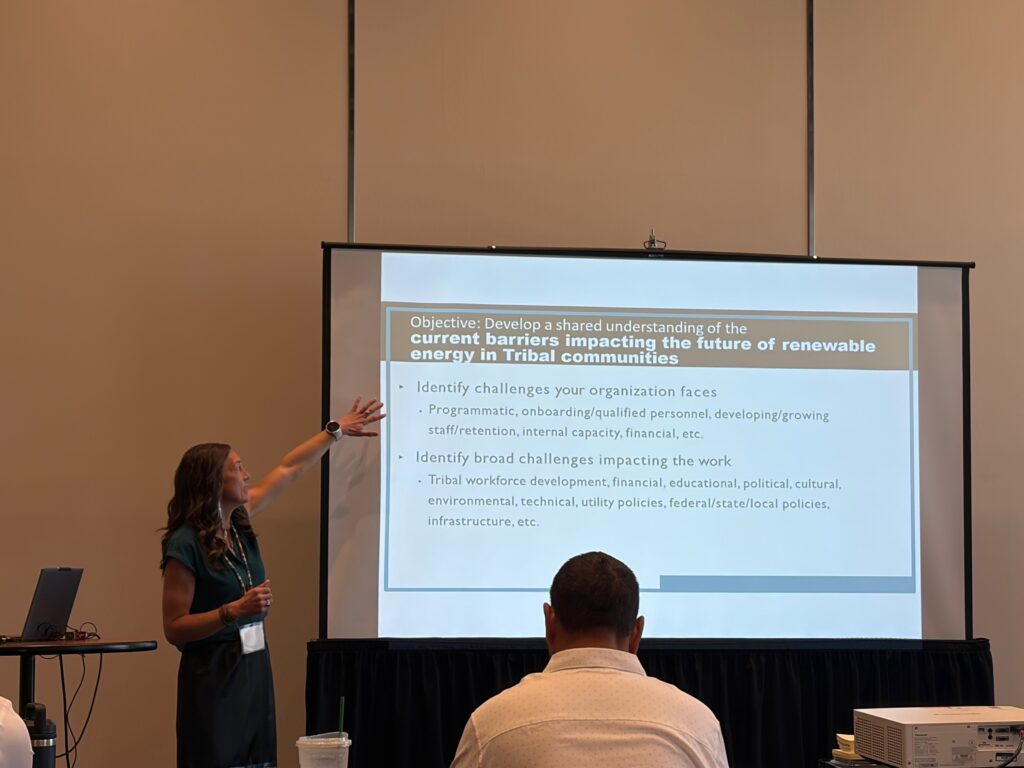
Stephanie Bostwick (Blackfeet) of Iniskim Consulting sets the stage for discussing barriers impacting the future of renewable energy in tribal communities.
As the event continued, the group identified several shared challenges, including the cancellation of the Solar for All program. Under the Trump Administration, the EPA administrator terminated the program, rescinding $7 billion of funding that was intended to expand renewable energy access to low-income communities, including tribes. This move was accompanied by increased federal support for fossil fuel development and the repeal of key renewable energy tax incentives through the One Big Beautiful Bill Act. Among the provisions eliminated were the Energy Efficient Home Improvement Credit and the Residential Clean Energy Credit, both of which had provided taxpayers with financial incentives to invest in residential renewable energy and energy-efficiency projects.
Another topic that arose when discussing challenges included complications with tariffs. At the time of the convening, the tariffs impacted the cost and availability of installation equipment. Often, tribes are the last leg of a circuit, leading to infrequent upgrades and higher energy bills due to having older systems. Many reservations encounter grids and utility lines that do not reach their communities at all, leading to infrequent and costly energy accessibility.
Further complicating renewable energy advancement in Native communities is navigating partnerships with federal, state, and other tribal entities, which can be lengthy and tedious. Hearing about the full breadth of these challenges was striking and further informed my understanding of the unique issues tribes must overcome to access clean energy.
During the first session focused on commonly faced challenges, I had the opportunity to meet Suzanne Singer, PhD (Diné), co-founder of Native Renewables. The mission of Native Renewables is to grow Indigenous-led solar power knowledge and solutions with Diné and Hopi families and communities. The organization recently celebrated its 10th year. Singer described how many installers begin the organization’s workforce development program and grow into highly skilled practitioners serving their own communities. The outcome is a regional network of Native experts who understand the technical systems and cultural context of the land.
Stewardship of cultural homelands was a shared priority among the attendees. During a session on fostering strategic alignment in advancing tribal renewable energy efforts Sust‘ainable Molokaʻi’ Director Tehani Kaaelekahi (Native Hawaiian) and Director of Energy Jennifer Yoshimura (Native Hawaiian) described renewable energy as one of 12 priority areas contributing to balance between land and people. Sustainable Molokai is committed to restoring ‘aina monoma (thriving people and abundant land) to Moloka‘i by uniting traditional practices with responsible, modern sustainability solutions. They framed these priorities as being all connected to the center or lōkahi (unity) and pono (harmony), which occur when the responsibility to land is upheld.
The final day of the convening reflected that same grounding in unity and responsibility. A development officer, a chemist, and a former tribal council member sat at my table during the last brainstorming session. What surfaced wasn’t a punchline, but a clear articulation of shared purpose. The group was tasked with defining our mission as a collective – what drives this work and why it matters.
Talia Martin (Shoshone-Bannock), a chemist and Co-Executive Director of Tribal Energy Alternatives, captured it succinctly: “Energy is at the intersection of everything in our lives.” Access to reliable energy shapes food and water safety, health outcomes, heating, and economic stability. The type of energy used further determines whether resources are conserved, or environmental harm is compounded. That understanding of what is at stake carried through to the last session, where conversation rounded out on what comes next.
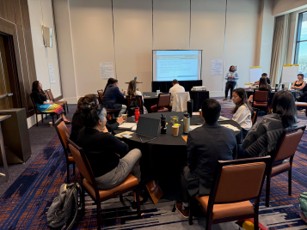
Talia Martin (Shoshone-Bannock) of Tribal Energy Alternatives shares some of the barriers impacting tribal renewable energy advancement
The commitment from the group was simple – to continue doing the work in service of tribes and Native communities. To do this, participants expressed a commitment to continuing quarterly meetings to strengthen and grow capacity through collaboration, shared knowledge, and values. Attendees formed a network of support, strength, and solutions called the Shared Sun Collective.
The Tribal Renewable Energy Convening was a unification of 20 individuals, representing seven organizations with one absolute truth. They are committed to a future were tribes and Native communities steward sustainable and accessible energy. They continue to navigate a minefield of federal instability and challenges, fueled by their dedication to tribal communities and hope for a more just future.
This is a reminder that we must be willing to commit to the future we want and take action to make it happen. Here is how you can help sustain the work:
Thank you for your support, helping power the lifeways and economies of Native communities with tribal renewable energy.
Warmest regards,
 Anaya Echo-Hawk
Confederated Tribes and Bands of the Yakama Nation, Pawnee, Paiute and Pit River
Development Officer