Jennifer Himmelreich
Senior Program Officer, Native Arts, Language, and Knowledge
Navajo
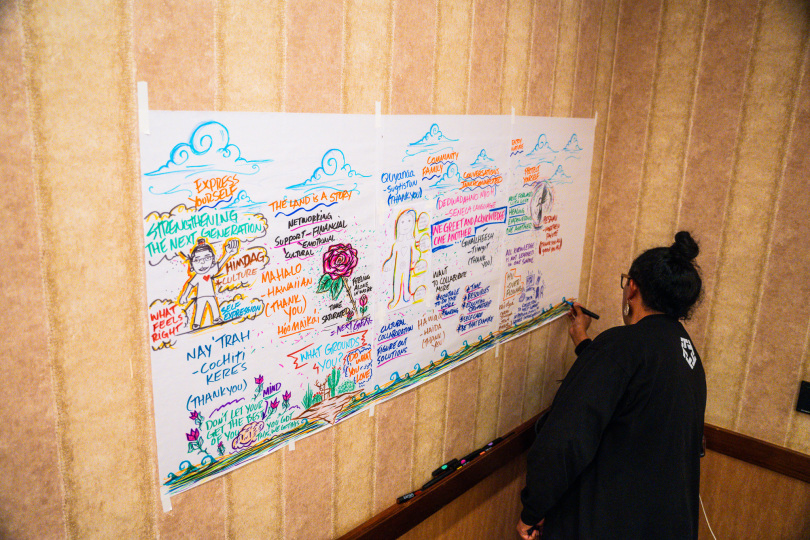
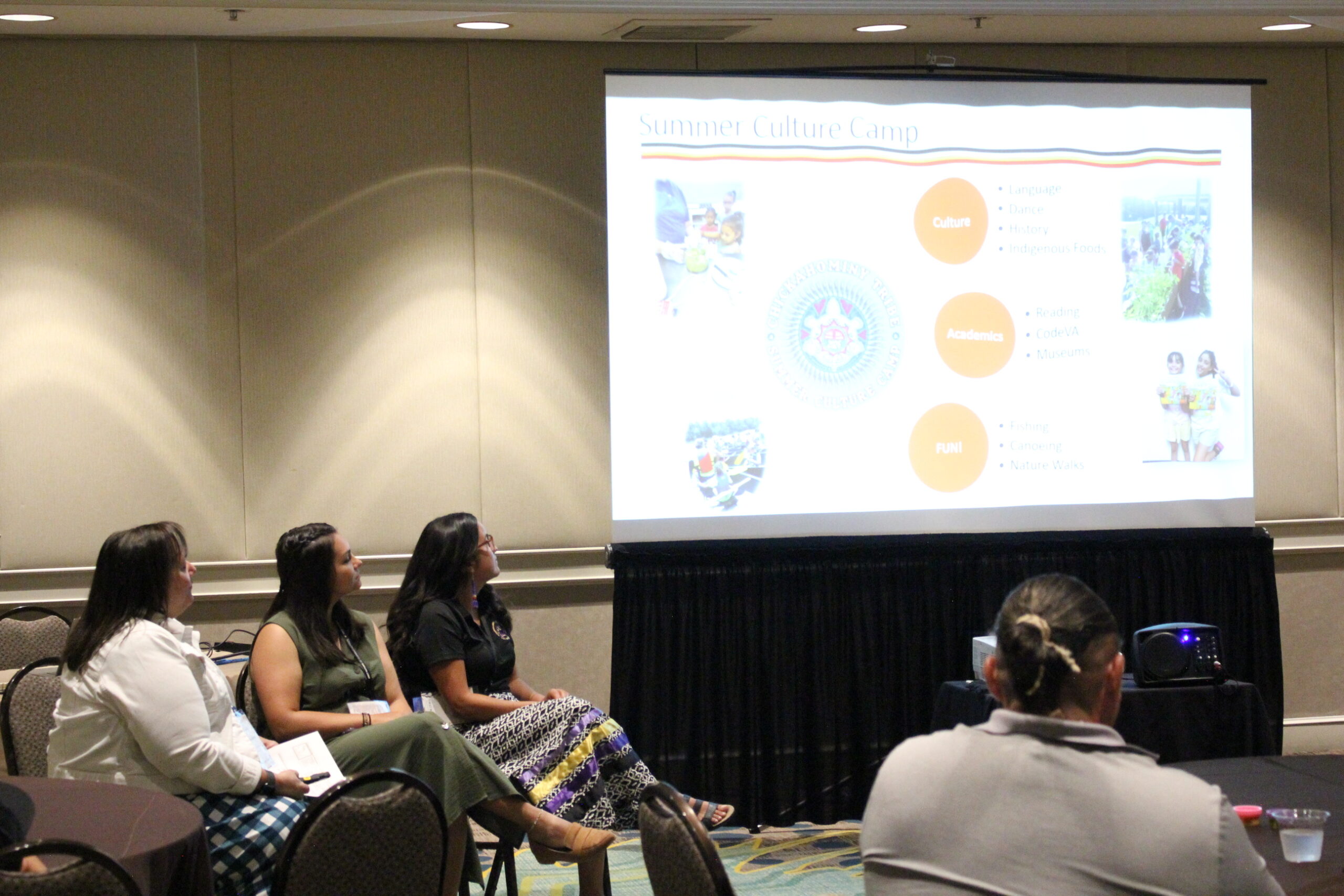
Language is a vital asset for Native people and communities. It defines who we are and where we come from, capturing value systems that cannot be translated into English. At First Nations’ Future Lead...
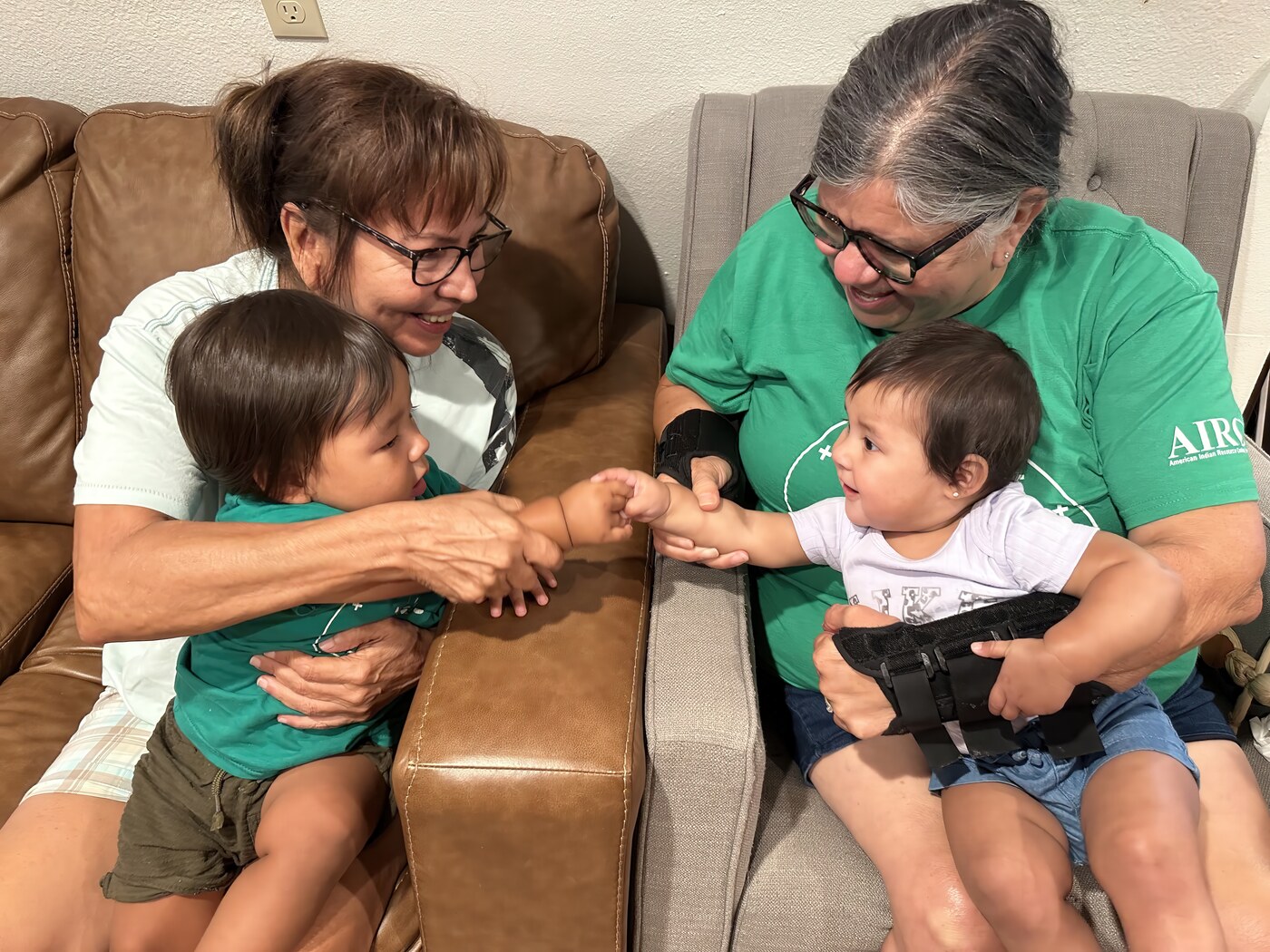
If one seed can give birth to a giant oak tree, imagine what a group of motivated Cherokee mothers can accomplish. In 2018, Melissa Lewis became a new mother. She and her husband (both Cherokee) were...
To produce a high-quality short film and professional photography package showcasing Wakanyeja Tokeyahci
Native Hawaiian
The project will create a comprehensive Hawaiian medium training program to prepare and support new language nest employees by increasing their skills and knowledge to better deliver Hawaiian language medium Pūnana Leo program.
Cherokee Nation
This project will 1) retain the current program components and participants and 2) leverage program resources to create a training handbook and provide training to program participants so they may graduate to teacher's aids.
Pueblo of Cochiti, New Mexico
The ultimate purpose of this project “Serving the Whole Child” is to provide a strong language immersion environment in which Cochiti children have the ability to honor their heritage by using a comprehensive cultural and academic curriculum that focuses on both the student’s academic success and supports their Keres fluency.
Menominee Indian Tribe of Wisconsin
The Menomini Lifeways Institute (MLI) will strategically leverage past Menomini yoU investments by utilizing the new Menomini yoU Language Campus to host a one year language immersion experience program which will increase the number of functional Menomini speakers and create new opportunities to expand community language capacity.
Tohono O'odham Nation of Arizona
Tohono O'odham is a 6b threatened language on the international "Expanded Graded Intergenerational Disruption Scale", meaning it is losing users. The purpose of NAAF’s efforts are to increase the number of Native speakers under the age of 20 in the District in order to preserve the O’odham language.
Confederated Salish & Kootenai Tribes of the Flathead Reservation
The project will increase language acquisition by providing language curriculum for the classroom; increase staff and student participation in language leadership and training; create opportunities for families to learn the language and experience language pertinent to ancestral Aboriginal territories; retain the fluency of the Salish language by recording fluent speakers.
Navajo Nation, Arizona, New Mexico, and Utah
The language nest will create a curriculum for age 4 for the new toddler classroom and utilize caretaker language apprentices to create new viable teachers who will assist in the classrooms.
Inter-Tribal
The Salish Immersion Language Nest Development Project will establish a Salish immersion language nest at Salish School of Spokane serving families with children aged 1 to 3 years with inter-generational, culture-based care, education, and support services.
Hoopa Valley Tribe, California
By leveraging resources to help fund one additional language teacher, we will increase the number of students served in our language immersion nest and create curriculum for current and future nest students and their families, as well as support our long-term efforts to create new Hupa language speakers and teachers.
Regional
The project will create and administer a Language Vitality Assessment and publish a comprehensive report on its findings in an effort to increase awareness and utilize the data on the current status of the state of endangerment of the CHamoru language in improving or creating new immersion programs.
Oglala Sioux Tribe
Our purpose is to increase exposure and daily use of the Lakota Language by Oceti Sakowin Community Academy students and their families by utilizing the cultural teachings, thought, language, and philosophy of the Oceti Sakowin people.
Nuchu Alive will create new position, Ute Language Intern, at KCA who will mentor with existing Elder language instructor and mentors to make the Ute language program more sustainable, passing to the next generation of teachers and increase student achievement in Ute language.
Other
The project will increase Yuchi Language proficiency in students, parents/caregivers, and language instructors by creating an intentional focus on the Yuchi worldview and deep cultural knowledge.
Ho-Chunk Nation of Wisconsin
The Ho-Chunk Youth and Families Language Immersion project will create a train-the-trainer language program for Youth Services employees who will participate in, then utilize the community based, game based, language immersion community language events in ten Ho-Chunk communities, increasing the Hoocąk language proficiency for K-12 students and their families.
Kalispel Indian Community of the Kalispel Reservation
The project will increase the presence of language in the community, and number of Kalispel language speakers helping to revitalize and retain the Kalispel language, creating language connections in the community and within families where language may have been lost. The curriculum and learning path will be shared with tribes.
Hualapai Indian Tribe of the Hualapai Indian Reservation, Arizona
The project will sustain a language immersion program where fluent Hualapai language consultants will conduct language immersion programming in each of the 4 head start classrooms 5 hours a day for the regular school year not including summer, continuing with the efforts made over the last 3 years.
Cherokee Nation
The project will create one Curriculum Developer (CD) to develop Language Arts curricula and workbooks for the 7th and 8th grades and formally document the curriculum development process.
Fort Belknap Indian Community of the Fort Belknap Reservation of Montana
-This project will create new material from raw language data that has sat dormant for 50-100 years. -This project will utilize a process that will help Aaniiih and Nakoda People retain their traditional stories in our own voices. -This process will allow us to control the narrative of our stories.
Rosebud Sioux Tribe of the Rosebud Indian Reservation, South Dakota
The ultimate purpose of this project is to create a deeper, richer Lakota language immersion school that will uplift and empower the next generations of Sicangu Lakota.
Yuchi Language Project and Salish School of Spokane Learning Exchange
Inter-Tribal
Our project will create a full-time position for a licensed Ojibwe-speaking teacher in Grandma's House to increase our educational success, use our space and age groups more effectively, expand the number of families and days of participation, augment development of curriculum, and obtain licensing to leverage educational and financial resources.
Central Council of Tlingit & Haida Indian Tribes
The Wooch Ée Tultóow project will increase the capacity of GHF by supporting creation of Lingít Yoo X̱'atángi curriculum and resources, who will utilize existing partners and educational settings to provide instruction to students ages preschool through fifth grade and monthly opportunities and resources for intergenerational language transmission.
Pueblo of Cochiti, New Mexico
KCLC will utilize and increase its Primary (3–6-year-olds), Elementary (6-9-year-olds), and Adolescent Erdkinder (12-18-year-olds) classroom’s capacity by developing teachers’ skills to be more consistent in their use of best language immersion and Montessori practices to better nurture and revitalize the Keres language, culture and traditions.
Inter-Tribal
This project retain and expand a program to train 30 adult speakers of n̓səl̓xčin̓ (Colville Salish) who have strong relationships with the children and families served by SSOS. These new speakers will be teachers mentors, advocates and role-models for inter-generational use and transmission of our critically endangered language, n̓səl̓xčin̓.
Santa Rosa Band of Cahuilla Indians, California
The project will utilize the already existing afterschool program to create language classes during the week to teach 5-12 year old’s the Cahuilla language. Ensuring the Cahuilla language is retained.
Absentee-Shawnee Tribe of Indians of Oklahoma
This project utilizes four interrelated objectives to create new mother-tongue speakers of Yuchi by reconnecting to the land using nature-based education.
Inter-Tribal
This project will train 13 new adult speakers of n̓səl̓xčin̓ (Colville Salish) who have strong existing relationships with the children and families served by Salish School of Spokane. These new speakers will be mentors, advocates and role-models for inter-generational use and transmission of our critically endangered language, n̓səl̓xčin̓.
Tuolumne Band of Me-Wuk Indians of the Tuolumne Rancheria of California
The project will create a learning environment for language immersion for our youth using our most valuable resource, our elders. The project will also help us retain an audio/visual archive of lessons taught through the program to be used for future lessons.
Native Hawaiian
We will more effectively teach a greater number of students and alleviate personnel shortages by restructuring our existing team of teachers to empower them to focus on specific subjects while being united under a common curriculum under which they will develop lesson plans that unify the school’s learning.
Other
The project will increase secondary school students’ Tlingit language fluency through bolstering emergent language teacher’s knowledge through a master-apprentice model, utilizing innovative technology to create three seasonal curriculum units. Leveraging the skills and knowledge of Tlingit Elders, this program will help revitalize Tlingit language in Southeast Alaska.
Oglala Sioux Tribe
The project purpose will be to increase the scope of the existing Thunder Valley Montessori program to include a new cohort of students and caregivers, leverage existing resources in curriculum development and expand community awareness of the immersion program across the reservation.
Absentee-Shawnee Tribe of Indians of Oklahoma
This project will address the Yuchi community's most critical need which is to create new speakers and restore the natural transmission of the Yuchi language in our homes by focusing on family based immersion.
Keweenaw Bay Indian Community, Michigan
Implement weekly Nookomis/Mishomis teachings for Migiziinsag, KBOCC Daycare, and College courses
Pueblo of Sandia, New Mexico
This project will create language support systems for children 6-18 to retain language skills during after-school programming and utilize community members who are interested in becoming language teachers to leverage language acquisition and retention.
Arapahoe Tribe of the Wind River Reservation, Wyoming
Lower Sioux Indian Community in the State of Minnesota
Increase capacity of at least 12 Dakota language teachers so they can expand Dakota language instruction from a total of 25 to 50 hours per week for their students--54 children ages birth to 5 years--in the Cansayapi Wakanyeza Owayawa Ti, Children Are Sacred School at Lower Sioux
Oneida Tribe of Indians of Wisconsin
This project will increase the number of proficient first language speakers within the Oneida community by creating an immersion-only classroom that utilizes the current On^yote’aka Tsi Nitwaw^not^ and Head Start “As it happens” curriculum.
Oglala Sioux Tribe
The purpose of the proposed project is to enhance our current effort to design and create an authentic Lakota language curriculum for our Lakota Montessori, Learners, and families.
Native Hawaiian
This project will create a village of speakers around our children by delivering curriculum for parents, caregivers, and community members that runs laterally with what the students and learning in school; and by creating an online community to increase the acquisition, fluency, and utilization of Hawaiian language outside of school.
Native Hawaiian
The project will increase Kūlaniākeaʻs internal capacity to produce culture-based educational materials for Native Hawaiian language learners in order to indigenize and reclaim the Hawaiian way of learning for students of different ages.
Oglala Sioux Tribe
Our approach to immersion is through interactive dialog that supports the students in speaking Lakota throughout the day, in social situations, practical work contexts, and artistic activities, as well as classroom lessons.
Crow Tribe of Montana
Crow Language Consortium will create more curricula to fulfill the needs of Chickadee Lodge. This project leverages CLC's existing Crow Summer Institute to provide pedagogical training. The Natural World book series and training will increase student fluency in Crow.
Other
The project will restore the vitality of the Yuchi language in our homes, ceremonies, churches, and community, by increasing the proficiency of young Yuchi learners and utilizing improved immersion teaching methods. It also seeks to train new apprentice instructors and accelerate language acquisition through the development of science-based language curriculum.
Standing Rock Sioux Tribe of North & South Dakota
The project will create a coherent Dakota/Lakota Pre-K immersion curriculum, utilizing age-appropriate language standards, and leveraging existing instructional materials to develop a complete framework and lesson script for teachers. The project will help retain the tribal language and increase access to high quality learning and teaching resources.
Confederated Salish & Kootenai Tribes of the Flathead Reservation
The project will create strong internal control by identifying and utilizing the core objectives of management and establish leadership succession that supports the success and progression of Nkwusm schools mission.
Inter-Tribal
This project will increase Ojibwe and Dakota language use and proficiency in and around our school community by building the capacity of Bdote Learning Center to deliver high quality immersion curriculum and utilize our resources to assist families in building their language skills.
Sisseton-Wahpeton Oyate of the Lake Traverse Reservation, South Dakota
The project will create new innovative immersion curriculum that will allow students to learn and retain language based knowledge as well as increase the amount of language learners who will become language speakers. This project is in line with our overall strategic plan to increase the number of fluent speakers.
Native Hawaiian
The initiative is an effort to create a public space where the academic Hawaiian language can be merged with cultural practice, increase the amount of young speakers who can perform Hawaiian roles as ceremonial leaders, orators, and storytellers, and establish consciousness of language and culture interdependency.
Confederated Tribes of the Colville Reservation
The project will create curricula in Okanagan Salish for our primary and elementary classrooms, increase the skill level of our teachers to utilize best language immersion practices, and assist our primary guide-apprentice to achieve certification as a Montessori primary guide.
Red Lake Band of Chippewa Indians, Minnesota
This project will leverage resources and increase the value of instruction at the Immersion Program classrooms by documenting “real-time” language and culture and create four seasonal lesson plan booklets in the Ojibwe language.
Cherokee Nation
The project will create two intern positions for CLMAP language immersion to further advance their language immersion proficiency skills and experience professional development necessary to pursue Cherokee Language Immersion Instruction. Additionally, interns will document their internship experience in order to formalize the internship process for future program availability.
Hoopa Valley Tribe, California
The Hupa Language Immersion Project will create a cohort of 15 Learner/Teachers to complete 60 hours of Hupa Language Classes in order to increase their fluency and immersion teaching capabilities. The project will also create 8 immersion curriculum units to implement in HTEA center-based, in-school, after-school, and summer programming.
Inter-Tribal
The Weetumuw School Expansion Project will create a new immersion classroom environment for rising first and second grade language nest students, enabling our Mukayuhsak Weekuw (Children's House) preschool and Kindergarten community to retain tribal families in our immersion programming, while simultaneously recruiting potential new teachers and students though language retreats.
Pueblo of Cochiti, New Mexico
KCLC will retain and leverage its Primary (2.5–6-year-olds) and Elementary (6-12 year olds) Keres language classrooms through best practices of language immersion and Montessori pedagogy to invigorate Cochiti Keres language/culture.
The project will utilize the newly created immersion curriculum to pilot educational best practices in the classroom, create a immersion teacher training strategy, increase access to high quality professional development, and leveraging staff and resources while transitioning from a program of SBC to a community serving school through SRCDC.
Pueblo of Cochiti, New Mexico
KCLC will utilize and increase its Primary (2.5–6-year-olds) and Elementary (6-9 year olds) classroom’s capacity by developing teachers’ skills to be more consistent in their use of best language immersion and Montessori practices to better nurture and revitalize the Keres language, culture and traditions.
Other
The project seeks to restore the vitality of the Yuchi language in our homes, ceremonies, churches, and community, by creating a new cohort of young Yuchi speakers through a year-round immersion program. It also seeks to increase language acquisition through the production of video learning materials and instructor certification.
Inter-Tribal
The project will increase the number of fluent parents in our school community, will create opportunities for parents to speak Salish with their children at school and at home, and will create new Salish math and literacy materials that will support in-school and at-home Salish numeracy and literacy.
Oglala Sioux Tribe
This program will utilize existing/new resources (school garden, hoop greenhouse, Lakota-fluent elders, Lakota-learning teachers, community outreach, organizational collaboration) to provide language immersion for 50-60 children, K-8, advancing LWS’s mission of incorporating Lakota language/culture into the daily curriculum with Waldorf experiential hands-on teaching methods, leading to ultimate goal of language fluency.
Arapahoe Tribe of the Wind River Reservation, Wyoming
Mission: Our goal is to raise the self-valuation of Arapaho individuals on the Wind River Reservation in order to increase success in education, employment and the development of community assets through collaboration with the Northern Arapaho tribal government, all local schools, communities, parents and fluent speakers of the Arapaho language.
Oneida Tribe of Indians of Wisconsin
This project will increase the number of proficient first language speakers within the Oneida community by creating an immersion-only classroom that utilizes the current On^yote’aka Tsi Nitwaw^not^ and Head Start “As it happens” curriculum.
Chickaloon Native Village
The expansion to our existing pilot project will increase the scope of our Ahtna language program. Through the development of blended curriculum and lesson plans we will expand immersion instruction in the classroom of our Ya Ne Dah Ah Tribal school.
Inter-Tribal
The Wâchônumuhucheek Wâânutam8ôk Project lays the groundwork for comprehensive state and tribal language teacher certifications for our growing preK - Grade 8 immersions school, while continually incorporating parent and family involvement into school design and students' grade level advancement in order to retain 90 percent of our current immersion cohort.
Nisqually Indian Tribe
The Nisqually project will help retain tribal traditions through the creation of a Nisqually Lushootseed specific language curriculum. Deliverables include the development and publishing of 84 Lushootseed alphabet, concept books, resources for student-created language books, training of 2-4 additional Lushootseed language teachers and creation of a Lushootseed font app.
Pascua Yaqui Tribe of Arizona
This initiative increases student centered language acquisition by utilizing an instructor professional development plan, retaining traditional cultural based pedagogical approaches for best practices/strategies of language attainment and retention. The initiative leverages itself on the current Language Enrichment Program at Frank Elementary and the Yaqui Cultural Framework incorporating Yaqui core values.
Akwesasne Mohawk
The Teacher Training program will increase the capacity of our current and new teachers to effectively impart traditional and standard curriculum while maintaining total immersion in the Kanienkeha (Mohawk) language, creating a strong learning foundation at all age levels.
Oglala Sioux Tribe
The purpose of the proposed project is to build our internal capacity and increase our knowledge base in the following areas: Lakota language fluency, teacher education, and the best practices in indigenous language revitalization.
Chickaloon Native Village
This project will preserve and increase daily use of our in peril Ahtna Athabascan language by piloting developed Ahtna language and cultural immersion curriculum and adopted testing assessment proficiency standards in the classroom of our Ya Ne Dah Ah School for a minimum of 20 hours of instruction each week.
Other
Kūkeao Native Hawaiian Science Language Resource is a Kama'aha Education Initiative (KEI). The project goal to rediscover Hawaiian scientific terminology and concepts found in ancestral texts for use by teachers in PreK-12 Hawaiian language immersion classroom. Achieving the project goal will increase the capacity of Ka ʻUmeke Kāeo Immersion School.
Nez Perce Tribe
Teacher Mentees will spend 1040 hours working with NPL staff and Elder Mentors. Language immersion methodology, curriculum study and development, and three intensive professional development trainings, will be utilized to increase the capacity of the NPL program and to create four new teachers to serve the on-reservation Nez Perce communities.
Pueblo of Cochiti, New Mexico
KCLC will utilize and increase its Primary (2.5–6-year-olds) classroom’s capacity by developing teachers’ skills to be more consistent in their use of best language immersion and Montessori practices and by refreshing the classroom materials and equipment to better nurture and revitalize the Keres language, culture and traditions.
Inter-Tribal
The project will retain Salish language and cultural traditions by passing them on to children and families, will increase the availability of Salish immersion education for children in the Spokane metro area, will increase the Salish proficiency of students, families, and teachers, and will create new Salish language curriculum materials.
Oneida Tribe of Indians of Wisconsin
This project will increase the number of proficient first language speakers within the Oneida community by creating an immersion-only classroom that utilizes the current On^yote’aka Tsi Nitwaw^not^ and Head Start “As it happens” curriculum.
Mashpee Wampanoag Tribe
The project will leverage existing language nest resources to increase grade level capacity through fourth grade, while retaining current parent volunteerism and creating monthly opportunities for citizen and tribal leadership involvement during the nest’s expansion into a language school, by incorporating surveys, focus groups, community-engaged curriculum design, and literacy materials.
Keweenaw Bay Indian Community, Michigan
This project will utilize the Migiziinsag program to help retain the Ojibwe language within the KBIC community and to increase classroom use by preparing our teachers, families, and the community with language learning opportunities.
Lac Courte Oreilles Band of Lake Superior Chippewa Indians of Wisconsin
The purpose of Agindamaadidaa! is to develop the next generation of fluent Ojibwemowin speakers and listeners who can accurately interpret written texts and express themselves in writing.
Ohkay Owingeh, New Mexico
The project will create a new avenue for community youth, ages 6-17, to increase language fluency rate by reinforcing existing language immersion programs in area schools. The project will enhance their ability to retain the language and will utilize community Tewa instructors who have obtained their Native Language Teaching License.
Navajo Nation, Arizona, New Mexico, and Utah
This project will retain Dine' language through daily 50% Dine' language immersion for 3 through 5 year old children and a 6 day Dine' language immersion camp for children in grades 1-8. It will also increase effective immersion instruction through ongoing mentorship of teachers by a Dine language immersion specialist.