This webinar will be the fourth installment of a webinar series focused on advancing innovative Tribal stewardship practices and partnerships within ancestral lands that are currently administered as national forests. This webinar will feature Vernon Vera, Tribal Councilman for the Tule River Tribe, and Ian Cummins, Tribal Forester for the Tule River Tribe, as well as Ron Goode, Tribal Chair of North Fork Mono Tribe, and Jesse Valdez, a research assistant for the North Fork Mono Tribe. Representatives will present their collaborative work to apply traditional values and practices with staff from the U.S. Forest Service.
The webinar was held on Wednesday, January 22, 2025, at 1 pm MT.
In the next installment in First Nations’ Tribal Co-Stewardship and Co-Management Webinar Series, Monte Mills, Professor of Law and Director of the Native American Law Center at the University of Washington School of Law, will illustrate the role of the Indian Self-Determination and Education Assistance Act, known as ISDEAA or Public Law 93-638, in the space of tribal co-stewardship and co-management. The webinar will cover the basics of ISDEAA, the types of agreements authorized by that law, and resources and examples for utilizing those agreements to pursue co-stewardship opportunities with the federal government.
This webinar was held on Thursday, November 7, 2024, at 1 pm MT.
About the Speaker
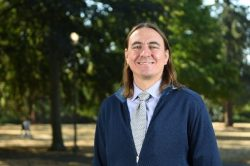
Monte Mills is a Professor of Law and Director of the Native American Law Center at the University of Washington School of Law. Monte’s research and writing focuses on the intersection of Federal Indian Law, Tribal Sovereignty, and natural resources as well as race and racism in law and legal education. He has published several law review articles and serves as a co-author on two textbooks: American Indian Law, Cases and Commentary and Native American Natural Resources Law. Monte also co-authored A Third Way: Decolonizing the Laws of Indigenous Cultural Protection, which was published by Cambridge University Press in July 2020. Prior to joining the UW faculty, Monte was a professor and Co-Director of the Margery Hunter Brown Indian Law Clinic at the Alexander Blewett III School of Law at the University of Montana. Prior to his time at the University of Montana, Monte was the Director of the Legal Department for the Southern Ute Indian Tribe in Colorado, an in-house counsel department that he helped organize and implement in 2005 following completion of a unique two-year in-house attorney training program. As Director of the Tribe’s Legal Department, Monte represented and counseled the Tribe on a broad array of issues, including litigation in tribal, state and federal courts, legislative matters before the Colorado General Assembly and the United States Congress, and internal tribal matters such as contracting, code-drafting, and gaming issues.
Adding to First Nations’ Tribal Co-Stewardship and Co-Management Webinar Series, the next installment, “Tribal Co-Stewardship and Cultural Fire,” will feature Sara Clark, partner at Shute, Mihaly & Weinberger LLP. Sara will discuss the practice of cultural burning and its relationship to prescribed fire and other fire management practices.
This webinar was held on Thursday, October 24, 2024, at 1 pm MT.
About the Webinar
Cultural burning has been practiced by Indigenous communities since time immemorial to steward plants and animals for food and materials, for ceremonial purposes, and for other purposes. Ecosystems adapted accordingly, becoming the fire-adapted and fire-dependent communities seen across North America today. As the wildfire crisis increases, many communities are looking to expand the use of this practice on both Tribal trust lands and other lands within the ancestral territories of modern Tribes. This webinar will explore the practice of cultural burning and its relationship to prescribed fire and other fire management practices, barriers to expanding its use, and the ways that agreements with state and federal agencies might address some of these barriers.
About the Speaker
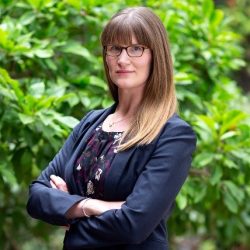
Sara A. Clark is a partner at Shute, Mihaly & Weinberger LLP, a public interest law firm dedicated to representing non-profit organizations, Tribes, and public agencies, based in San Francisco. She has worked extensively with Tribes, Tribal organizations, land trusts, and prescribed burn associations to help implement beneficial fire projects and advance beneficial fire policy at the state and federal level. She is the lead author of the Good Fire reports for the Karuk Tribe and served as a subject matter expert on issues related to cultural burning and Tribal sovereignty in the Wildland Fire Mitigation and Management Commission. She also serves as the Chair of the Board of Directors for Save the Redwoods League.
In this third installment of First Nations’ webinar series designed to advance understanding of innovative Indigenous stewardship practices and partnerships focused on ancestral lands that are currently administered as National Forests, tribal representatives will discuss their efforts to support Indigenous stewardship of forests in partnerships with the U.S. Forest Service in the Rocky Mountain Region.
The webinar will feature Kathryn McDonald, Tribal Relationship Specialist for the Confederated Salish and Kootenai Tribes, and Emmit Taylor, Fisheries Watershed Deputy Director for the Nez Perce Tribe. They will share their collaborative work to steward ancestral lands by restoring traditional values and practices with staff from the U.S. Forest Service.
The webinar was held on Thursday, October 17, 2024, at 1 pm MT.

In this third installment of First Nations’ Tribal Co-Stewardship and Co-Management Webinar Series, Beth Wright (Laguna Pueblo), Native American Rights Fund Staff Attorney, and Lauren Van Schilfgaarde (Cochiti Pueblo), Assistant Professor of Law for UCLA School of Law, will share about ways co-stewardship and co-management agreements are being utilized to access and protect sacred sites and cultural resources.
They will provide an overview of how these agreements are structured and discuss ways tribes can leverage different authorities, treaty rights, and religious freedoms to develop meaningful agreements for protecting sacred sites and cultural resources. They will also share examples from tribes across the nation that have been successful in developing such agreements and illustrate how these examples can be used as frameworks to advance this work.
In this second installment of First Nations’ Tribal Co-Stewardship and Co-Management Webinar Series, Noah Lee, Native American Rights Fund (NARF) fellow and a citizen of the Ho-Chunk Nation, covered the development of the Sovereign-to-Sovereign Cooperative Agreements Repository and the types of resources that can be found within the site. The goal of this database is to effectively consolidate the large variety of information and resources within this field of cooperative agreements to address common goals in land, water, and other environmental stewardship between Tribal Nations and other sovereigns.
In this second webinar of a new First Nations’ webinar series, Tribal representatives discuss efforts to support Indigenous stewardship of forest lands in partnership with the U.S. Forest Service in the East Region of the United States. The webinar features Alex Bohman, Forest Ecology Program Coordinator for the Great Lakes Indian Fish and Wildlife Commission Biological Services Division, and Tommy Cabe, Forest Resource Specialist for the Eastern Band of Cherokee Indians Natural Resource Department. Together, they present on their collaborative work to steward ancestral lands by restoring traditional values and practices with staff from the U.S. Forest Service.
Scroll down to access materials from Webinar 1: Great Lakes Region

In our role as a Community Navigator with the U.S. Forest Service, First Nations is joining the USFS and the National Indian Carbon Coalition to host informal “Office Hours” to discuss ideas and answer questions related to the Tribal Access to Emerging Private Markets for Forest Resilience or Climate Mitigation opportunity. The opportunity is designed to address Tribal-led forest resilience, climate mitigation, water quality, and carbon sequestration efforts. Up to $2 million per project is earmarked for Tribes to develop forest management plans, establish demonstration sites, and prioritize biodiversity protection. The grant deadline is extended to September 30, 2024.
Office Hours were held:
* June 26, 2024, at 1 pm MT
* July 17, 2024, at 1 pm MT
Webinar #1: Great Lakes Region
In this webinar, Tribal representatives discuss efforts to support Indigenous stewardship of forests in partnerships with the U.S. Forest Service in the Great Lakes region.
The webinar is the first of the Indigenous Stewardship on National Forest Lands Webinar Series that First Nations is hosting in collaboration with the U.S. Forest Service. This series will focus on highlighting the innovative Indigenous stewardship practices that Tribes are implementing and the partnerships that have been developed with the Forest Service to steward ancestral homelands that are currently administered as National Forests.
The webinar features Eric Clarke, Director of the Consortium for Cooperative Ecological Resilience for the Sault Ste. Marie Tribe of Chippewa Indians, and Keith Karnes, Director of Forestry for the Leech Lake Band of Ojibwe. Together, they present on their collaborative work to steward National Forest Lands by restoring traditional values and practices with staff from the U.S. Forest Service.

In this webinar, guest speakers Monte Mills and Martin Nie provide a brief history of tribal co-management and co-stewardship and explanations for how they differ. An overview of opportunities available under various federal authorities was also shared, along with considerations for capacity-building and pathways for effective implementation. In addition, how to strengthen agreements to protect tribal values and interests will also be discussed.
About the Speakers
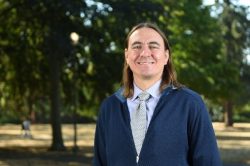
Monte Mills is a Professor of Law and Director of the Native American Law Center at the University of Washington School of Law.
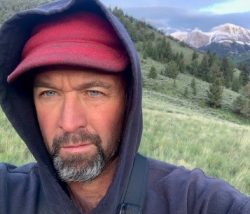
Martin Nie is a Professor of Natural Resources Policy and Director of the Bolle Center for People and Forests in the W.A. Franke College of Forestry and Conservation at the University of Montana.
For more information about this webinar, please email Brett Treadway, First Nations Program Associate, at btreadway@firstnations.org
As climate change continues to affect the natural world, Tribes should consider microgrids as one option to advance energy sovereignty. In particular, solar and storage microgrids are a renewable alternative that reduces energy insecurity and greenhouse gas emissions. Microgrids also keep resources in communities, lower energy expenses, and allow for predictable costs. Due to the remoteness of many Tribal members’ residences and the high cost of grid expansion, approximately 17,000 Tribal households have no access to electricity. Therefore, microgrids are a viable climate solution to increase community energy access.
In this webinar, a representative from Rocky Mountain Institute (RMI) presents general information about solar and storage microgrids. And, Tribal representatives from Blackfeet Community College, Blue Lake Rancheria, and Hualapai Tribal Utility Authority present an overview of their completed tribally led microgrid projects, highlighting project inspiration and benefits, financing, challenges, and recommendations.
Speakers
- Meredith Cowart, Senior Associate, Rocky Mountain Institute
- Melissa Weatherwax, Director of Institutional Development, Blackfeet Community College
- Heidi Moore-Guynup, Director of Tribal and Government Affairs, Blue Lake Rancheria
- Roger Wright, General Manager, Hualapai Tribal Utility Authority
Speaker Bios
Meredith Cowart is a Senior Associate in the Rocky Mountain Institute’s Carbon-Free Electricity Practice where she supports RMI’s e-Lab for energy communities work. Meredith has experience in mediation and dispute resolution and co-designed and facilitated multistakeholder negotiation processes on technically intensive environmental issues. She also has experience conducting research and analysis on forestry, energy, and climate change issues.
Melissa Weatherwax (Blackfeet) is the Director of Institutional Development at Blackfeet Community College. She comes from the Amskapii Pikunii and was raised near Browning, Montana on the Blackfeet Reservation. Melissa is a certified K-12 teacher and has worked at Blackfeet Community College for over 15 years. Her experience included educational systemic reform, coordinating Native Science Fellowships, and advancing the Tribal College net zero pledge.
Heidi Moore-Guynup serves as the Director of Tribal and Government Affairs for the Blue Lake Rancheria. She has extensive experience in community development, strategic planning, conflict resolution, and climate resilience. She is a member of several boards and advisory teams advancing issues associated with community benefits, green port implementation, MMIP protections, and more associated with the proposed offshore wind development. Prior to coming to BLR she served in many roles in TK-12 education. She’s been a school psychologist, principal, and district superintendent.
Roger Wright is the Generation Manager for the Hualapai Tribal Utility Authority and has been serving the Tribe since May 2023 in this role. He has previously been employed by the Aha Macav Power Service as Engineering Manager for the Fort Mojave Tribe’s wholly owned electric utility. He graduated from California State Polytechnic University in 1980 with a BS in Electrical and Electronics Engineering and spent the early years of his career working in the aerospace industry, primarily for DoD contractors. He has also spent some years teaching mathematics and computer system repair at the local community college.